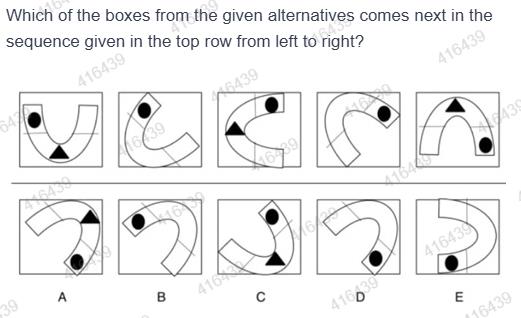
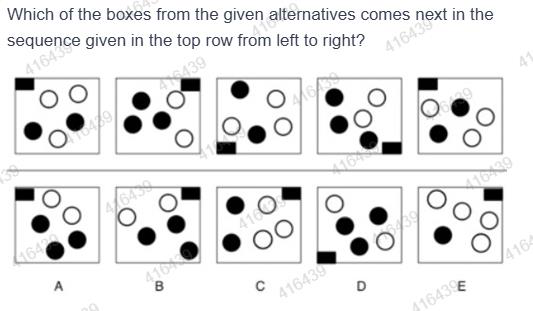
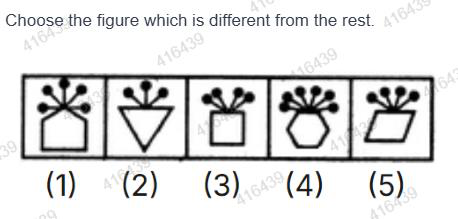
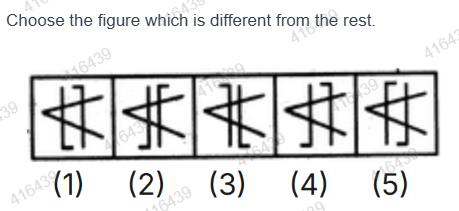
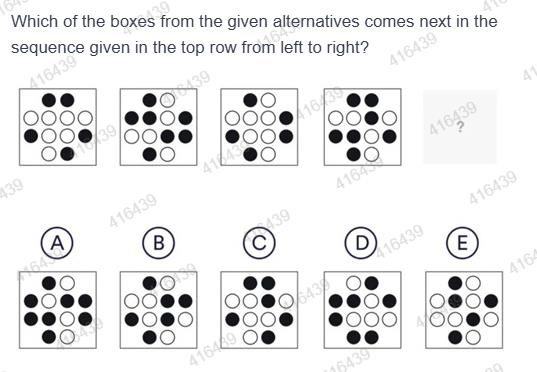
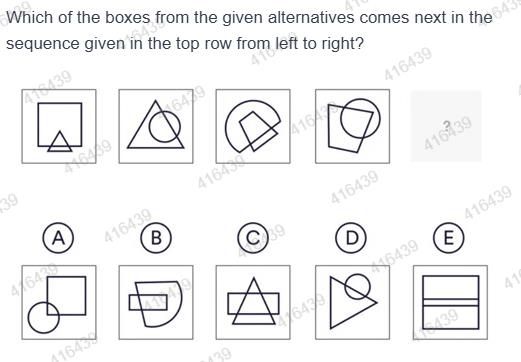
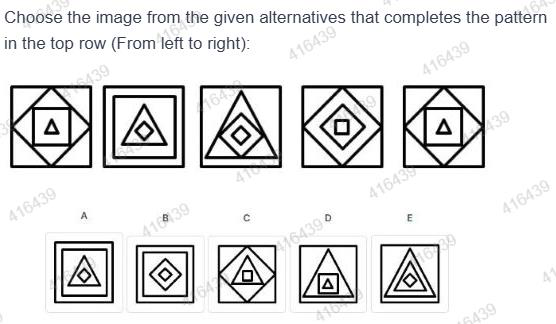
The sentences given in each question, when properly sequenced, form a coherent paragraph. Each sentence is labelled with a letter. Choose the most logical order of sentences from among the given choices to construct a coherent paragraph.
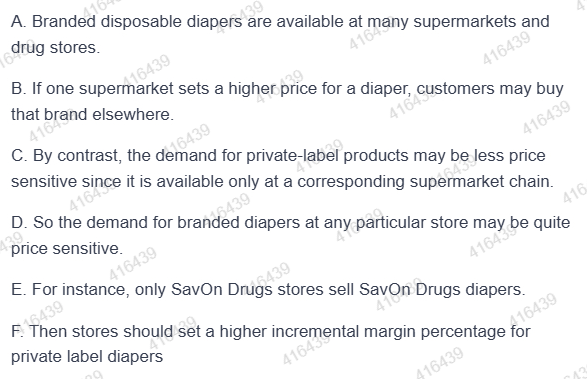
A. Branded disposable diapers are available at many supermarkets and drug stores.
B. If one supermarket sets a higher price for a diaper, customers may buy that brand elsewhere.
C. By contrast, the demand for private-label products may be less price sensitive since it is available only at a corresponding supermarket chain.
D. So the demand for branded diapers at any particular store may be quite price sensitive.
E. For instance, only SavOn Drugs stores sell SavOn Drugs diapers.
F. Then stores should set a higher incremental margin percentage for private label diapers
- AABCDEF
- BABCEDF
- CADBCEF
- DAEDBCF
- EAEDCFB
Show answerHide answer
Answer: C
Approach: Logical chain — fact, consequence, reason, contrast, example, conclusion.
Solution: A states the fact (branded diapers are sold everywhere). D draws the consequence with "So": demand at any one store is price sensitive. B explains why: a customer can simply buy the brand elsewhere. C begins the contrast ("By contrast") with private labels, available only at one chain. E gives the example of that private label (SavOn). F concludes with "Then": stores should keep a higher margin on private labels. Order: A-D-B-C-E-F.
Why the other options are wrong:
A (ABCDEF) / B (ABCEDF): put B before D, so the "So" in D no longer follows the availability fact it depends on.
D (AEDBCF): E is an example of a private label and cannot come before C introduces private labels.
E (AEDCFB): same E-misplacement, and B (branded-diaper reasoning) cannot come after the conclusion F.
Cetking shortcut: Link words decide it: "So" (D) right after the fact, "By contrast" (C) opens the second half, "For instance" (E) must follow what it exemplifies, "Then" (F) closes.
Answer: C
Rearrange the sentences given in the question into a proper sequence.
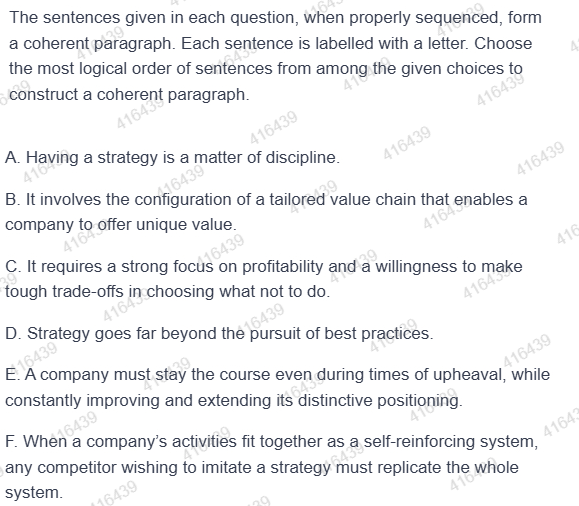
A. Having a strategy is a matter of discipline.
B. It involves the configuration of a tailored value chain that enables a company to offer unique value.
C. It requires a strong focus on profitability and a willingness to make tough trade-offs in choosing what not to do.
D. Strategy goes far beyond the pursuit of best practices.
E. A company must stay the course even during times of upheaval, while constantly improving and extending its distinctive positioning.
F. When a company's activities fit together as a self-reinforcing system, any competitor wishing to imitate a strategy must replicate the whole system.
- AACEDBF
- BACBDEF
- CDCBEFA
- DABCEDF
- EDABCEF
Show answerHide answer
Answer: A
Approach: Pronoun pairing + two idea blocks (discipline, then configuration).
Solution: Block 1 — discipline: A introduces "having a strategy is a matter of discipline"; C ("It requires... trade-offs") explains that discipline; E continues it (stay the course during upheaval). Block 2 — beyond best practices: D opens the new idea; B ("It involves the configuration of a tailored value chain") explains D; F ends with the system-fit consequence. Order: A-C-E-D-B-F.
Why the other options are wrong:
B (ACBDEF): B's "It involves configuration" explains D, so B cannot precede D.
C (DCBEFA) / E (DABCEF): A is the natural opener of the discipline block; ending with A or splitting A-C-E breaks it.
D (ABCEDF): B (value chain) is not about discipline and does not follow A.
Cetking shortcut: Each "It" (B, C) must sit right after the sentence it refers to: C after A (discipline), B after D (strategy beyond best practices).
Answer: A
Rearrange the sentences given in the question into a proper sequence.
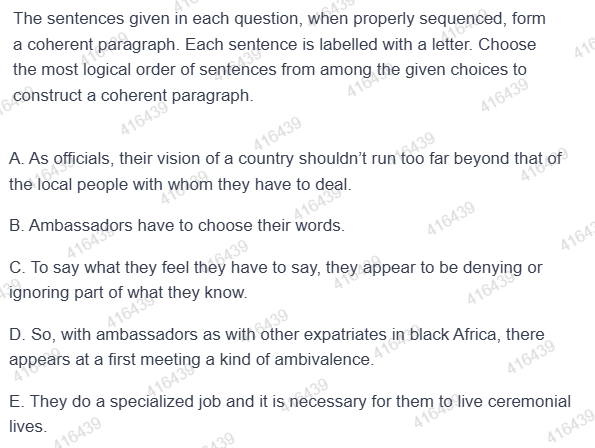
A. As officials, their vision of a country shouldn't run too far beyond that of the local people with whom they have to deal.
B. Ambassadors have to choose their words.
C. To say what they feel they have to say, they appear to be denying or ignoring part of what they know.
D. So, with ambassadors as with other expatriates in black Africa, there appears at a first meeting a kind of ambivalence.
E. They do a specialized job and it is necessary for them to live ceremonial lives.
- ABCEDA
- BBEDAC
- CBEADC
- DBCDEA
- EBACDE
Show answerHide answer
Answer: C
Approach: General statement, reasons, conclusion with "So", then explanation of the conclusion.
Solution: B opens (ambassadors must choose their words). E explains their position (specialized job, ceremonial lives). A adds the constraint "As officials..." (their vision must stay close to the local people's). D concludes with "So" — there is an ambivalence at a first meeting. C explains that ambivalence: to say what they must, they appear to deny part of what they know. Order: B-E-A-D-C.
Why the other options are wrong:
A (BCEDA) / D (BCDEA): C explains the ambivalence and cannot come before D introduces it.
B (BEDAC): "So" in D needs both reasons (E and A) before it.
E (BACDE): E (specialized job) describes ambassadors generally and belongs right after B, not at the end.
Cetking shortcut: All options start with B; locate the "So" conclusion (D) and its explanation (C) as the final pair.
Answer: C
Rearrange the sentences given in the question into a proper sequence.
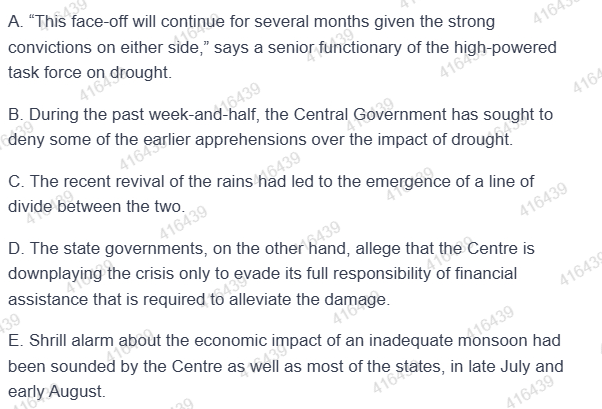
A. "This face-off will continue for several months given the strong convictions on either side," says a senior functionary of the high-powered task force on drought.
B. During the past week-and-half, the Central Government has sought to deny some of the earlier apprehensions over the impact of drought.
C. The recent revival of the rains had led to the emergence of a line of divide between the two.
D. The state governments, on the other hand, allege that the Centre is downplaying the crisis only to evade its full responsibility of financial assistance that is required to alleviate the damage.
E. Shrill alarm about the economic impact of an inadequate monsoon had been sounded by the Centre as well as most of the states, in late July and early August.
- AEBCDA
- BDBACE
- CBDCAE
- DECBDA
- EECBAD
Show answerHide answer
Answer: D
Approach: Chronology + "the two" reference + "on the other hand" pair.
Solution: E sets the background: both the Centre and the states had sounded the alarm. C — rains revived and a divide emerged "between the two" (Centre and states, named in E). B gives the Centre's side; D ("on the other hand") gives the states' side. A quotes an official on this face-off. Order: E-C-B-D-A.
Why the other options are wrong:
A (EBCDA): C's divide must be introduced before the two sides are described.
B (DBACE) / C (BDCAE): "the two" in C needs E first; D's "on the other hand" needs B before it.
E (ECBAD): A comments on the face-off and must come after both sides (B and D).
Cetking shortcut: "The two" (C) points straight back to E, and "on the other hand" (D) must follow B — only ECBDA keeps both.
Answer: D
Rearrange the sentences given in the question into a proper sequence.
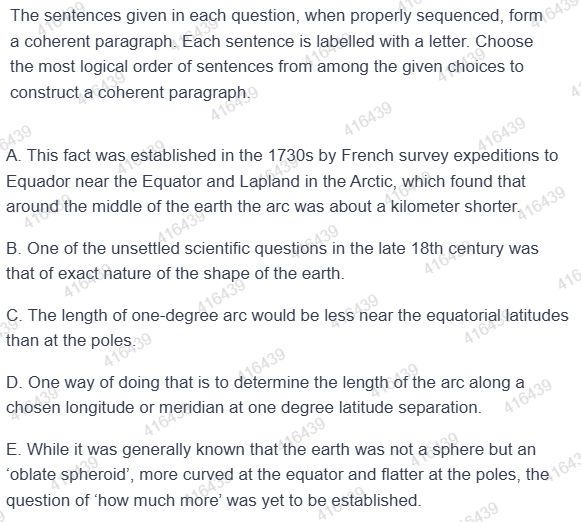
A. This fact was established in the 1730s by French survey expeditions to Equador near the Equator and Lapland in the Arctic, which found that around the middle of the earth the arc was about a kilometer shorter.
B. One of the unsettled scientific questions in the late 18th century was that of exact nature of the shape of the earth.
C. The length of one-degree arc would be less near the equatorial latitudes than at the poles.
D. One way of doing that is to determine the length of the arc along a chosen longitude or meridian at one degree latitude separation.
E. While it was generally known that the earth was not a sphere but an 'oblate spheroid', more curved at the equator and flatter at the poles, the question of 'how much more' was yet to be established.
- ABECAD
- BBEDCA
- CEDACB
- DEBDCA
- EBEDAC
Show answerHide answer
Answer: B
Approach: Question, refinement, method, expected result, confirmation.
Solution: B poses the question (exact shape of the earth). E narrows it: it was known to be an oblate spheroid, but "how much more" was open. D gives the method ("One way of doing that" = establishing how much more). C states what the method predicts (arc shorter near the equator). A confirms "This fact" with the 1730s expeditions. Order: B-E-D-C-A.
Why the other options are wrong:
A (BECAD): D's "doing that" must directly follow the open question in E, not come last.
C (EDACB) / D (EBDCA): B is the clear opener introducing the topic.
E (BEDAC): "This fact" in A refers to C, so C must precede A.
Cetking shortcut: "This fact" (A) needs a stated fact (C) just before it; "doing that" (D) needs a task (E) just before it — BEDCA.
Answer: B
Questions 156–160 share this
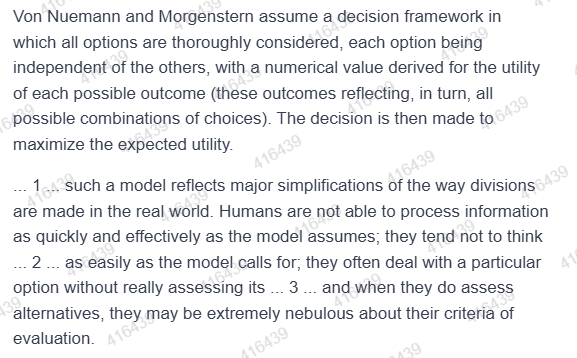
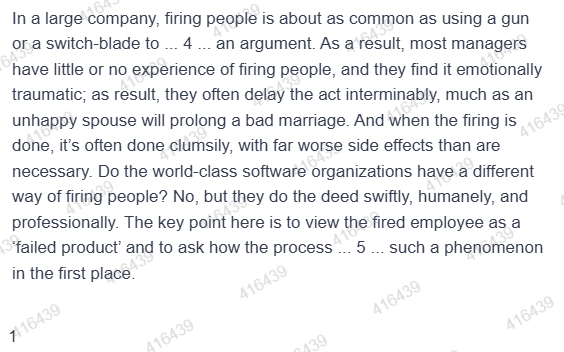
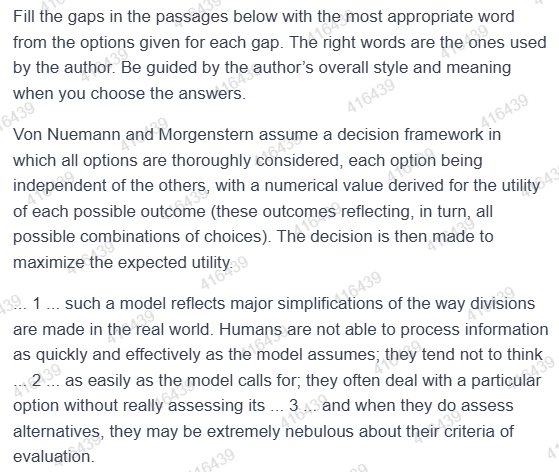
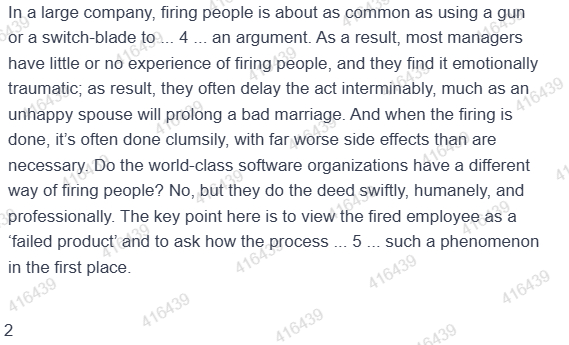
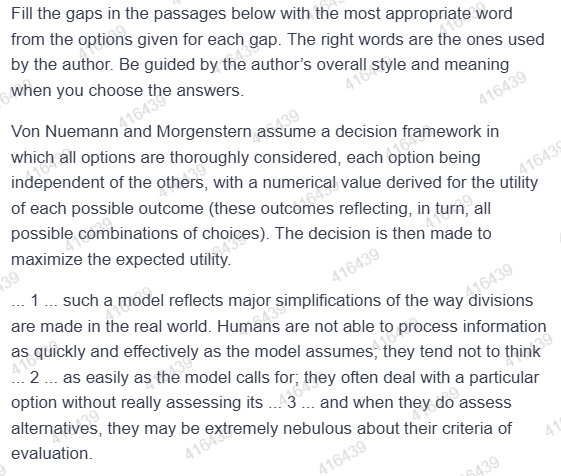
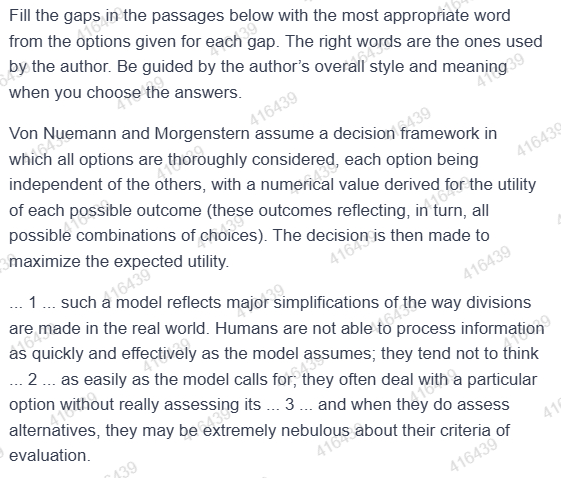
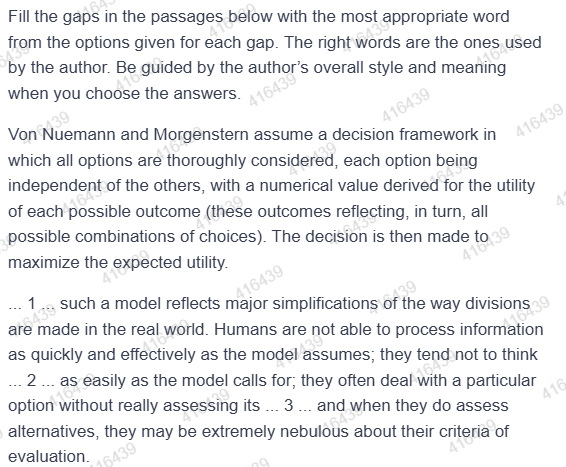
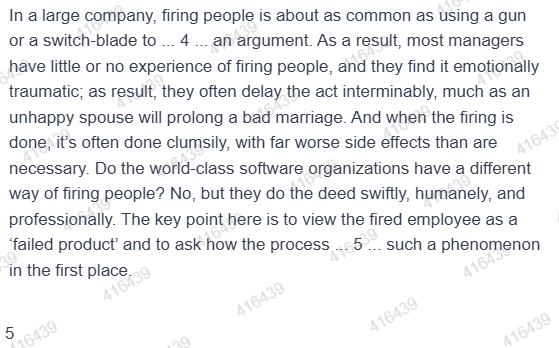
Cloze passage — shown as image.
Fill the gap numbered 1 in the passage with the most appropriate word (see figure).
- ARegrettably
- BFirstly
- CObviously
- DApparently
- EImportant
Show answerHide answer
Answer: C
Approach: Sentence-opening adverb that fits the author's tone.
Solution: The paragraph before describes an idealised model (all options considered, utility of every outcome computed). The blank opens the comment "___ such a model reflects major simplifications of the way divisions [sic: decisions] are made in the real world" — the author treats this as self-evident, so "Obviously" fits.
Why the other options are wrong:
A Regrettably: adds a sense of regret the author does not express.
B Firstly: no list of points follows.
D Apparently: suggests doubt, but the author is certain.
E Important: an adjective, ungrammatical as a sentence opener here.
Answer: C
Refer to the passage above ↑
Fill the gap numbered 2 in the passage with the most appropriate word (see figure).
- AQuantitatively
- BSystematically
- CScientifically
- DAnalytically
- EInterestingly
Show answerHide answer
Answer: A
Approach: Collocation with the model being described.
Solution: The model assigns "a numerical value" to each outcome. Humans "tend not to think ___ as easily as the model calls for", i.e. they do not think in numbers — "quantitatively".
Why the other options are wrong:
B Systematically / C Scientifically / D Analytically: humans do think this way to some extent; the model's special demand is numerical valuation.
E Interestingly: unrelated to manner of thinking in the model.
Cetking shortcut: Look back for a matching clue: "numerical value derived for the utility" = quantitative.
Answer: A
Refer to the passage above ↑
Fill the gap numbered 3 in the passage with the most appropriate word (see figure).
- AImplication
- BDisadvantages
- CUtility
- DAlternatives
- EAssets
Show answerHide answer
Answer: D
Approach: Parallel structure within the sentence.
Solution: The sentence reads: "they often deal with a particular option without really assessing its ___ and when they do assess alternatives..." The second half repeats the idea with "alternatives", so the first half must be "alternatives" — people consider one option without comparing it with the others.
Why the other options are wrong:
A Implication / C Utility: fit "assessing" but the follow-up "when they do assess alternatives" shows the missing word is alternatives.
B Disadvantages / E Assets: too narrow; the model compares options, not pros or cons of one.
Cetking shortcut: "...when they DO assess alternatives" repeats the blank word — the echo gives the answer.
Answer: D
Refer to the passage above ↑
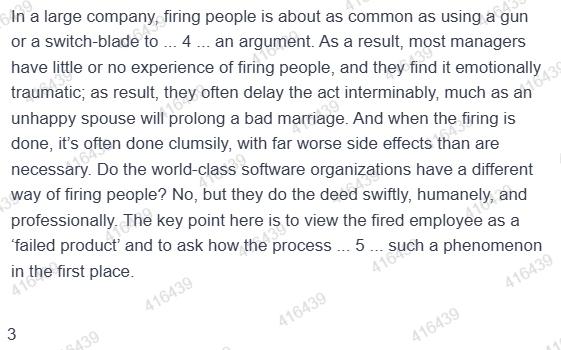
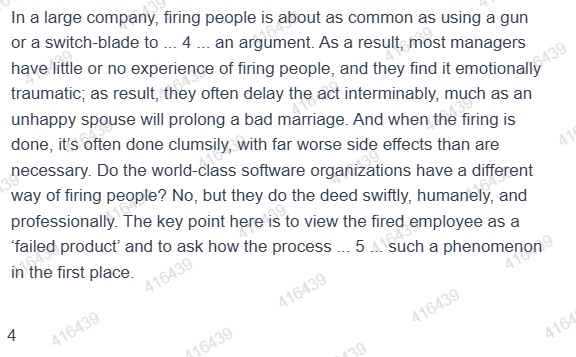
Fill the gap numbered 4 in the passage with the most appropriate word (see figure).
- AResolve
- BThwart
- CDefeat
- DClose
- EAssume
Show answerHide answer
Answer: A
Approach: Verb collocation with "argument".
Solution: Firing people is as rare in a large company as using "a gun or a switch-blade to ___ an argument". One "resolves" (settles) an argument; the violent tool is used to end the dispute.
Why the other options are wrong:
B Thwart / C Defeat: one defeats an opponent, not an argument in this sense.
D Close: "close an argument" is not the natural idiom.
E Assume: makes no sense.
Answer: A
Refer to the passage above ↑
Fill the gap numbered 5 in the passage with the most appropriate word (see figure).
- ADerived
- BEngineered
- CProduced
- DAllowed
- EDelivered
Show answerHide answer
Answer: D
Approach: Meaning in context — process that let a failure happen.
Solution: The fired employee is a "failed product", and the question is how the process "___ such a phenomenon in the first place" — i.e. how the hiring/managing process let it happen: "allowed".
Why the other options are wrong:
A Derived: one derives something from a source, not a phenomenon from a process.
B Engineered / C Produced: imply deliberate creation, too strong.
E Delivered: used for products, not for letting a failure occur.
Cetking shortcut: "In the first place" signals asking how it was permitted to happen — allowed.
Answer: D
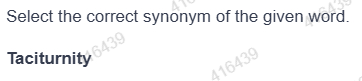
Select the correct synonym of the given word. (Taciturnity)
- ACalmness
- BStrength
- CPrecious
- DCourage
- EBeauty
Show answerHide answer
Answer: A
Approach: Word meaning — find the synonym.
Solution: Taciturnity means the habit of saying very little — reserve, quietness. The synonym is Calmness.
Why the other options are wrong:
B Strength, D Courage: qualities of character unrelated to speech.
C Precious: an adjective (valuable), wrong part of speech too.
E Beauty: unrelated.
Cetking shortcut: Taciturn = silent/reserved; of the options only "calmness" carries the quiet, composed sense.
Answer: A
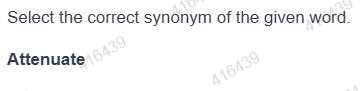
Select the correct synonym of the given word. (Attenuate)
- ARepent
- BMake Thin
- CForce
- DDivide
- ERule
Show answerHide answer
Answer: B
Approach: Word meaning — find the synonym.
Solution: Attenuate means to make thin or weak, to reduce in force. The synonym is Make Thin.
Why the other options are wrong:
A Repent: to feel regret.
C Force: the opposite idea (strength).
D Divide: to split.
E Rule: to govern.
Cetking shortcut: Root "tenuis" (Latin) = thin, as in tenuous.
Answer: B
Select the correct synonym of the given word. (Haughty)
- ACemetery
- BAdamant
- CImperious
- DRecover
- EDeadly
Show answerHide answer
Answer: C
Approach: Word meaning — find the synonym.
Solution: Haughty means arrogantly proud, looking down on others. The synonym is Imperious.
Why the other options are wrong:
A Cemetery: a burial ground (noun).
B Adamant: refusing to change one's mind — stubborn, not proud.
D Recover: a verb, get back.
E Deadly: causing death.
Answer: C
Select the correct synonym of the given word. (Reprisal)
- AIndulgence
- BRetribution
- CExpanse
- DReluctance
- ECautious
Show answerHide answer
Answer: B
Approach: Word meaning — find the synonym.
Solution: Reprisal means an act of retaliation, paying back an injury. The synonym is Retribution.
Why the other options are wrong:
A Indulgence: allowing oneself pleasure.
C Expanse: a wide area.
D Reluctance: unwillingness.
E Cautious: careful (adjective).
Answer: B
Select the correct synonym of the given word. (Condescend)
- AMystery
- BDeride
- CJoy
- DDisdain
- EComprehend
Show answerHide answer
Answer: D
Approach: Word meaning — find the synonym.
Solution: Condescend means to behave as if one is superior; to look down on someone. The synonym is Disdain.
Why the other options are wrong:
A Mystery / C Joy / E Comprehend: unrelated meanings.
B Deride: to mock or ridicule openly — an act of scorn, while condescension is a superior attitude; "disdain" (to regard as beneath oneself) is the closer match.
Answer: D
Select the correct antonym of the given word. (Axiom)
- AScenic
- BFlashy
- CAbsurdity
- DSubtle
- EDark
Show answerHide answer
Answer: C
Approach: Word meaning — find the antonym.
Solution: Axiom means a self-evident truth, an accepted principle. The antonym is Absurdity.
Why the other options are wrong:
A Scenic: having beautiful views.
B Flashy: showy.
D Subtle: delicate, hard to notice.
E Dark: lacking light.
Cetking shortcut: Only C is a noun about truth/sense — a self-evident truth vs. something plainly unreasonable.
Answer: C
Select the correct antonym of the given word. (Repudiate)
- AEmphasize
- BAbandon
- CDecline
- DModest
- EOrient
Show answerHide answer
Answer: A
Approach: Word meaning — find the antonym.
Solution: Repudiate means to reject, disown or refuse to accept. The antonym is Emphasize.
Why the other options are wrong:
B Abandon / C Decline: close to the meaning of repudiate (synonym-type distractors).
D Modest: an adjective, humble.
E Orient: to position or align.
Cetking shortcut: Strike out the synonyms first (abandon, decline); "emphasize" — to stress and affirm — is the only opposite-direction verb left.
Answer: A
Select the correct antonym of the given word. (Remonstrate)
- ADictate
- BNeglect
- CEndorse
- DStrengthen
- EAbandon
Show answerHide answer
Answer: C
Approach: Word meaning — find the antonym.
Solution: Remonstrate means to protest or object forcefully. The antonym is Endorse.
Why the other options are wrong:
A Dictate: to order.
B Neglect / E Abandon: to ignore or leave — not the opposite of protesting.
D Strengthen: to make stronger.
Answer: C
Choose the option that can be substituted for the given word/sentence: Extreme old age when a man behaves like a fool
- ANostalgia
- BSerendipity
- CDotage
- DSuperannuation
- EEthnicity
Show answerHide answer
Answer: C
Approach: One-word substitution for a stage of life.
Solution: Dotage = extreme old age marked by weakness of mind, when a person behaves foolishly.
Why the other options are wrong:
A Nostalgia: longing for the past.
B Serendipity: a happy chance discovery.
D Superannuation: retirement because of age / pension scheme — no foolish behaviour implied.
E Ethnicity: belonging to a cultural group.
Cetking shortcut: In one's dotage = senile; "dote" also means to be foolishly fond.
Answer: C
Choose the option that can be substituted for the given word/sentence: One who believes that all things and events in life are predetermined
- AExtremist
- BFatalist
- CTyrant
- DPuritan
- EEgalitarian
Show answerHide answer
Answer: B
Approach: One-word substitution for a belief.
Solution: A fatalist believes that all events are predetermined (fate) and cannot be changed.
Why the other options are wrong:
A Extremist: holds extreme political/religious views.
C Tyrant: a cruel ruler.
D Puritan: one with very strict moral/religious standards.
E Egalitarian: believes all people are equal.
Answer: B
Read each sentence to find out whether there is any grammatical error in it. The error, if any, will be in one part of the sentence. (Ignore the errors of punctuation, if any.)
He fell from a running train and would have died if the villagers did not get him admitted to a nearby hospital immediately.
- A

- B
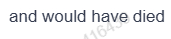
- C

- D

- E

Show answerHide answer
Answer: C
Approach: Third conditional (past unreal condition): if + had + V3, would have + V3.
Solution: The main clause "would have died" is a past unreal result, so the if-clause must be in the past perfect: "if the villagers had not got him admitted". "Did not get" (simple past) is wrong. The error is in part C.
Why the other options are wrong:
A "He fell from a running train": correct simple past.
B "and would have died": correct third-conditional result.
D "to a nearby hospital immediately": correct.
E No error: there is a tense error in C.
Cetking shortcut: "Would have + V3" in one clause → "had + V3" in the if-clause.
Answer: C
Read each sentence to find out whether there is any grammatical error in it. The error, if any, will be in one part of the sentence.
He deserted the path of honor in order to satisfy his ambition and then went down his doom very quickly.
- A

- B
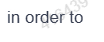
- C
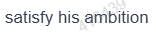
- D

- E

Show answerHide answer
Answer: D
Approach: Phrasal idiom: "go down to one's doom".
Solution: The idiom is "to go (down) to one's doom" — the preposition "to" is missing. Correct: "and then went down to his doom very quickly". The error is in part D.
Why the other options are wrong:
A "He deserted the path of honor": correct.
B "in order to": correct purpose phrase.
C "satisfy his ambition": correct.
E No error: the preposition is missing in D.
Cetking shortcut: When a verb of motion is followed by a destination noun (doom, death, ruin), check for "to".
Answer: D
Read each sentence to find out whether there is any grammatical error in it. The error, if any, will be in one part of the sentence.
This is one of the most interesting book I have ever read.
- A

- B

- C

- D

- E

Show answerHide answer
Answer: B
Approach: "One of the + superlative + plural noun".
Solution: "One of the ..." picks one item from a group, so the noun must be plural: "one of the most interesting books". The error is in part B.
Why the other options are wrong:
A "This is one of the": correct.
C "I have": correct present perfect.
D "ever read": correct.
E No error: "book" must be plural.
Cetking shortcut: "One of the" is always followed by a plural noun.
Answer: B
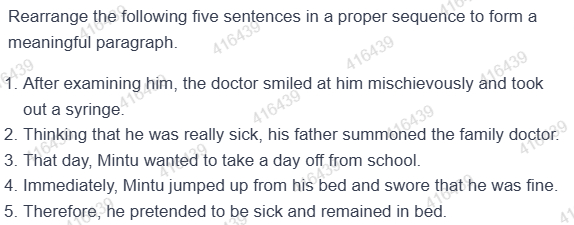
Rearrange the following five sentences in a proper sequence to form a meaningful paragraph.
1. After examining him, the doctor smiled at him mischievously and took out a syringe.
2. Thinking that he was really sick, his father summoned the family doctor.
3. That day, Mintu wanted to take a day off from school.
4. Immediately, Mintu jumped up from his bed and swore that he was fine.
5. Therefore, he pretended to be sick and remained in bed.
- A35214
- B35241
- C15234
- D34215
- E35412
Show answerHide answer
Answer: A
Approach: Narrative chronology.
Solution: 3 sets the scene (Mintu wants a day off). 5 follows with "Therefore" (he pretends to be sick). 2: his father believes it and calls the doctor. 1: the doctor examines him and takes out a syringe. 4: "Immediately" Mintu jumps up and says he is fine. Order: 3-5-2-1-4.
Why the other options are wrong:
B (35241): 4 (reaction) cannot come before 1 (the syringe that causes it).
C (15234): the doctor cannot appear before he is summoned.
D (34215): Mintu cannot jump up "immediately" before anything happens.
E (35412): same problem — 4 before the doctor is called.
Cetking shortcut: Find the trigger-reaction pair: syringe (1) → jumps up (4) must be the last two.
Answer: A
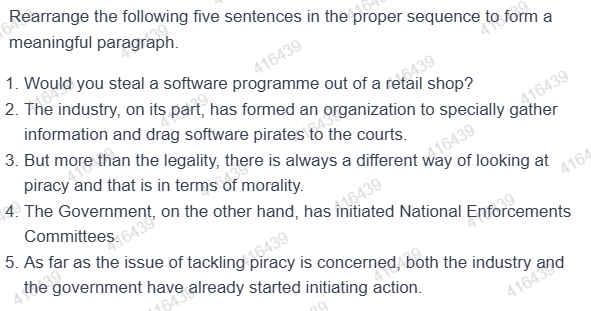
Rearrange the following five sentences in the proper sequence to form a meaningful paragraph.
1. Would you steal a software programme out of a retail shop?
2. The industry, on its part, has formed an organization to specially gather information and drag software pirates to the courts.
3. But more than the legality, there is always a different way of looking at piracy and that is in terms of morality.
4. The Government, on the other hand, has initiated National Enforcements Committees.
5. As far as the issue of tackling piracy is concerned, both the industry and the government have already started initiating action.
- A15243
- B53241
- C52413
- D52431
- E51243
Show answerHide answer
Answer: D
Approach: General statement → two parallel examples → shift → closing question.
Solution: 5 introduces the topic: both the industry and the government have acted. 2 ("The industry, on its part") and 4 ("The Government, on the other hand") give the two actions in that order. 3 shifts from legality to morality. 1 ends with the moral question to the reader. Order: 5-2-4-3-1.
Why the other options are wrong:
A (15243) / E (51243): the rhetorical question 1 fits after the morality point, not as the opener here.
B (53241): 3 ("more than the legality") must come after the legal actions 2 and 4.
C (52413): puts the moral question 1 before 3, which first introduces the morality angle.
Cetking shortcut: "Both the industry and the government" (5) names the order: industry (2), then government (4).
Answer: D
A proverb/idiom is given below together with their meanings. Choose the correct meaning of the proverb/idiom. To make clean breast of
- A
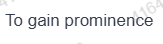
- B
- C

- D

- E

Show answerHide answer
Answer: C
Approach: Idiom meaning.
Solution: To make a clean breast of something = to confess it fully and frankly — "to confess without reserve" (option C).
Why the other options are wrong:
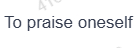
A To gain prominence / B To praise oneself / D To destroy before it blooms / E To appreciate someone: none relate to confessing.
Answer: C
A proverb/idiom is given below together with their meanings. Choose the correct meaning of the proverb/idiom. To catch a tartar
- A

- B

- C

- D

- E

Show answerHide answer
Answer: D
Approach: Idiom meaning.
Solution: To catch a tartar = to tackle someone who turns out to be far too strong for you; to meet more than your match. That is option D, "To deal with a person who is more than one's match".
Why the other options are wrong:
A To trap wanted criminal with great difficulty / B To catch a dangerous person: literal readings of "catch"; the idiom is about the catcher being overpowered.
C To meet with disaster: too general.
E To meet an old friend: unrelated.
Cetking shortcut: Story behind it: a soldier shouts he has caught a Tartar, but the Tartar will not let him go — the captor is the one trapped.
Answer: D
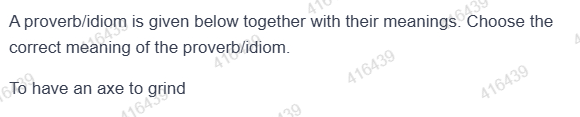
A proverb/idiom is given below together with their meanings. Choose the correct meaning of the proverb/idiom. To have an axe to grind
- A
- B
- C
- D
- E
Show answerHide answer
Answer: D
Approach: Idiom meaning.
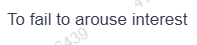
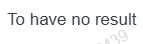
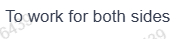
Solution: To have an axe to grind = to have a private, selfish motive behind what one does — "a private end to serve" (option D).
Why the other options are wrong:
A To fail to arouse interest / B To have no result: unrelated.
C To work for both sides: that is double-dealing.
E To be unbiased: the opposite — an axe to grind means bias.
Answer: D
A proverb/idiom is given below together with their meanings. Choose the correct meaning of the proverb/idiom. To pick holes
- A

- B
- C

- D

- E

Show answerHide answer
Answer: C
Approach: Idiom meaning.
Solution: To pick holes (in something) = to find faults, to criticise — "to criticise someone" (option C).
Why the other options are wrong:
A To find some reason to quarrel: "pick a quarrel", a different idiom.
B To destroy something / D To cut some part of an item: literal readings.
E To find escape routes: unrelated.
Answer: C
A proverb/idiom is given below together with their meanings. Choose the correct meaning of the proverb/idiom. gift horse in the mouth
- A

- B

- C

- D

- E

Show answerHide answer
Answer: B
Approach: Idiom meaning.
Solution: To look a gift horse in the mouth = to find fault with or be ungrateful about something received as a gift (from checking a gifted horse's teeth to judge its age). Option B.
Why the other options are wrong:
A Welcome a gift: the opposite.
C Be fastidious: too general.
D To be kind: unrelated.
E Examine a gift carefully: the literal action; the idiom stresses ungrateful fault-finding.
Answer: B
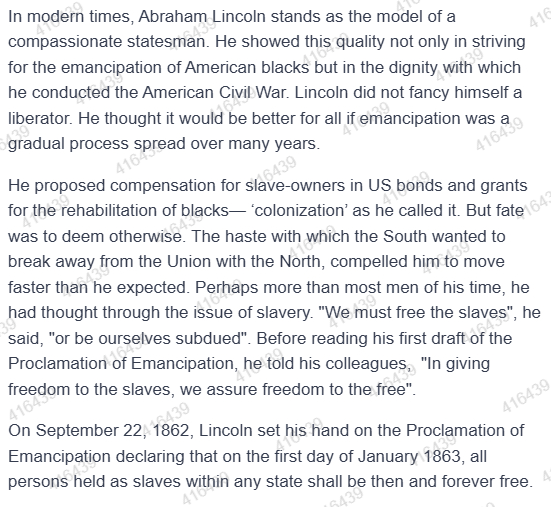
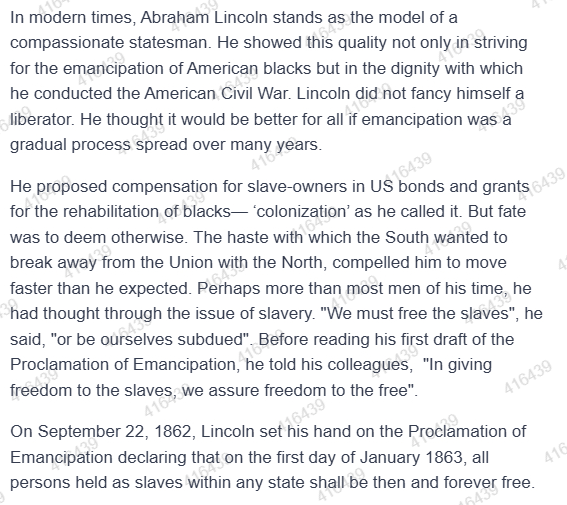
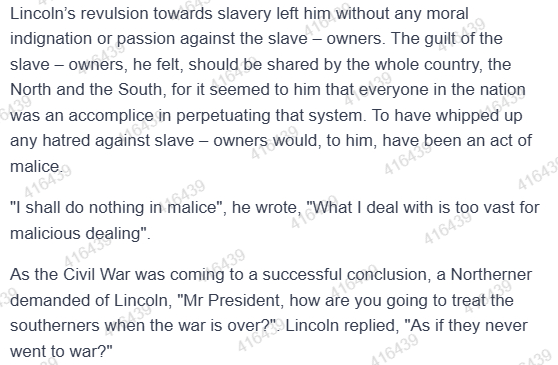
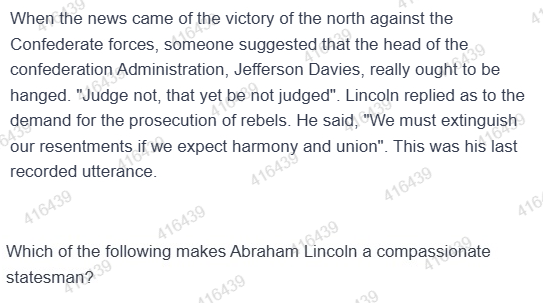
Questions 181–184 share this
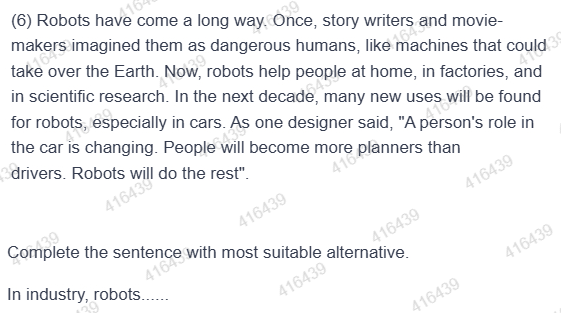
Reading Comprehension passage — shown as image.
What came in Lincoln's way of carrying out emancipation as a gradual process?
- A

- B

- C

- D

- E

Show answerHide answer
Answer: D
Approach: Specific detail — locate the line on gradual emancipation.
Solution: Para 2: Lincoln proposed compensation and "colonization", "But fate was to deem otherwise. The haste with which the South wanted to break away from the Union with the North, compelled him to move faster than he expected." So the South's haste to secede blocked the gradual process — option D.
Why the other options are wrong:
A His proposition of a grant for rehabilitation: part of his gradual plan, not the obstacle.
B His own over-enthusiasm: the text says he was compelled, not eager.
C Inadequate compensation: never mentioned.
E His ownership mindset: not in the passage.
Cetking shortcut: Signal phrase "But fate was to deem otherwise" — the answer is the very next sentence.
Answer: D
Refer to the passage above ↑
The sentence 'In giving freedom to the free' means
- A

- B

- C

- D

- E

Show answerHide answer
Answer: D
Approach: Inference — meaning of a quoted line from its context.
Solution: Lincoln said "We must free the slaves, or be ourselves subdued" and then "In giving freedom to the slaves, we assure freedom to the free." Freeing the slaves protects the freedom of those already free — i.e. it safeguards our own interests (option D).
Why the other options are wrong:
A "they will serve us better": the passage never talks of slaves serving anyone after freedom.
B "they will free themselves": not suggested.
C "honouring the concept of freedom": an abstract idea; the line is about securing the freedom of the free, as "or be ourselves subdued" shows.
E "we are helping them": only the slaves' side; the line is about "the free".
Cetking shortcut: Read the sentence just before the quote — "or be ourselves subdued" points to self-protection.
Answer: D
Refer to the passage above ↑
The term 'colonization' as used in the passage means
- A

- B

- C

- D

- E
Show answerHide answer
Answer: E
Approach: Vocabulary in context.
Solution: The passage: "grants for the rehabilitation of blacks — 'colonization' as he called it." So colonization means settling the freed slaves in a separate place of their own — a colony of (freed) slaves, option E.
Why the other options are wrong:
A Handing over slaves to slave-owners: the opposite of emancipation.
B Efforts by blacks to free themselves: not what the word refers to.
C Separate dwellings for slave-owners / D Rehabilitation for slave-owners: the rehabilitation was for blacks, not owners (owners got compensation).
Cetking shortcut: The dash defines the term: "rehabilitation of blacks — colonization" → resettling the freed slaves.
Answer: E
Refer to the passage above ↑
Which of the following makes Abraham Lincoln a compassionate statesman?
- A

- B

- C

- D

- E

Show answerHide answer
Answer: E
Approach: Inference — what shows his compassion.
Solution: Para 1: Lincoln "did not fancy himself a liberator. He thought it would be better for all if emancipation was a gradual process", with compensation for owners and rehabilitation grants for blacks. A slow plan that took care of every party is what the passage presents as his compassionate approach — option E.
Why the other options are wrong:
A His hesitation: not presented as a virtue.
B "His efforts to force the American blacks from slavery": "force" distorts the idea of freeing; the passage stresses gradual, not forced, change.
C His care and compassion: restates the question (circular) instead of naming what made him compassionate.
D Indifference in conducting the war: the passage praises his dignity in the war.
Cetking shortcut: Reject the circular option that repeats the question's own word ("compassion").
Answer: E
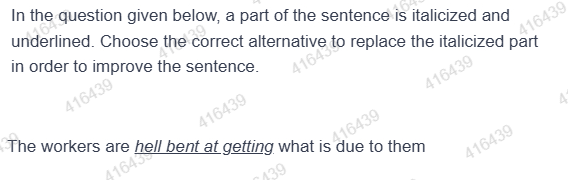
In the question given below, a part of the sentence is italicized and underlined. Choose the correct alternative to replace the italicized part in order to improve the sentence. The workers are hell bent at getting what is due to them
- A

- B
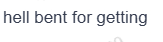
- C

- D
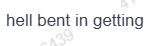
- E
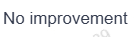
Show answerHide answer
Answer: C
Approach: Preposition with "hell-bent".
Solution: "Hell-bent" (determined at any cost) takes "on/upon" + -ing: "hell-bent upon getting". "At" is wrong. "Upon" is the formal form of "on", so option C "hell bent upon getting" corrects the sentence.
Why the other options are wrong:
A hell bent on getting: also an acceptable form; the key takes the formal "upon".
B for / D in: wrong prepositions with "bent".
E No improvement: "bent at" is incorrect.
Cetking shortcut: "Bent on/upon" = determined — never "bent at" or "bent for".
Answer: C
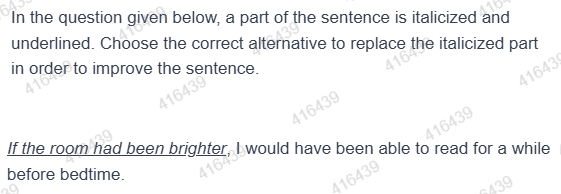
In the question given below, a part of the sentence is italicized and underlined. Choose the correct alternative to replace the italicized part in order to improve the sentence. If the room had been brighter, I would have been able to read for a while before bedtime.
- A

- B

- C

- D

- E

Show answerHide answer
Answer: C
Approach: Third conditional — inverted form.
Solution: The result "I would have been able to read" is a past unreal result, so the condition is past perfect. "Had the room been brighter" is the inverted (if-less) third conditional and is the improvement the question expects; note that option D repeats the original text, so the setter treats C as the preferred form.
Why the other options are wrong:
A If the room was brighter: simple past — second conditional, wrong with "would have been".
B If the room are brighter: subject-verb error.
D If the room had been brighter: identical to the given part, so it is not a replacement.
E No improvement: rejected because D already reproduces the original.
Cetking shortcut: Third conditional: "If + had + V3" = "Had + subject + V3".
Answer: C
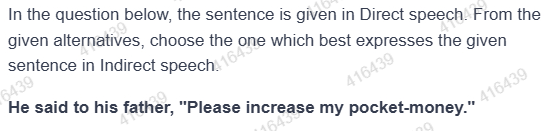
In the question given below, the sentence is given in Direct speech. Choose the alternative which best expresses the given sentence in Indirect speech: He said to his father, "Please increase my pocket-money."
- A

- B

- C

- D

- E

Show answerHide answer
Answer: C
Approach: Direct to indirect — imperative with "Please".
Solution: A request beginning with "Please" becomes "requested + object + to-infinitive"; "my" changes to "his". So: "He requested his father to increase his pocket-money."
Why the other options are wrong:
A keeps the direct speech with quotes.
B "pleaded his father ... please ... my": keeps "please" and "my" — not converted.
D "asked his father to": loses the polite request sense of "Please".
E "asked ... if he could": turns a request into a question.
Cetking shortcut: "Please" in direct speech → "requested" in indirect speech.
Answer: C
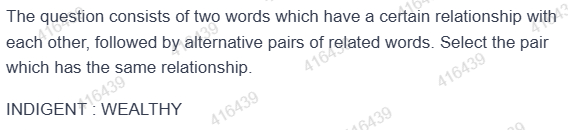
The question consists of two words which have a certain relationship with each other, followed by alternative pairs of related words. Select the pair which has the same relationship. INDIGENT : WEALTHY
- A

- B
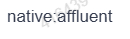
- C
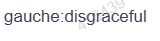
- D
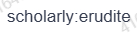
- E
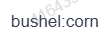
Show answerHide answer
Answer: C
Approach: Analogy — antonym pair.
Solution: Indigent (very poor) : Wealthy (rich) are opposites. The only pair built as an opposite is C, gauche (awkward, lacking grace) : graceful: the paper prints "disgraceful", clearly a slip for "graceful" (the antonym of gauche).
Why the other options are wrong:
A angry : rich / B native : affluent: unrelated words.
D scholarly : erudite: synonyms (both learned), not opposites.
E bushel : corn: unit : thing measured.
Cetking shortcut: Classify the stem pair first (antonyms), then delete every synonym or unrelated pair.
Answer: C
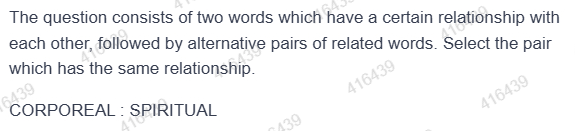
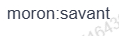
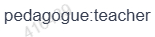
The question consists of two words which have a certain relationship with each other, followed by alternative pairs of related words. Select the pair which has the same relationship. CORPOREAL : SPIRITUAL
- A
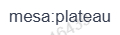
- B
- C

- D
- E

Show answerHide answer
Answer: B
Approach: Analogy — antonym pair.
Solution: Corporeal (bodily, physical) : Spiritual (of the soul) are opposites. Moron (very foolish person) : Savant (very learned person) are also opposites — option B.
Why the other options are wrong:
A mesa : plateau: near-synonyms (flat-topped landforms).
C foreigner : immigrant: related, not opposite.
D pedagogue : teacher: synonyms.
E colours : pallet: things on a palette — part/holder relation.
Answer: B
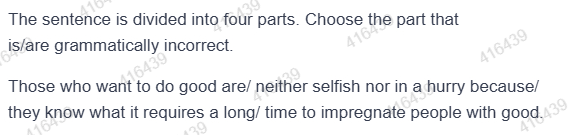
The sentence is divided into four parts. Choose the part that is/are grammatically incorrect.
Those who want to do good are / neither selfish nor in a hurry because / they know what it requires a long / time to impregnate people with good.
- A

- B

- C

- D

- E

Show answerHide answer
Answer: C
Approach: Conjunction "that" vs. relative "what".
Solution: "Know" needs a noun clause: "they know that it requires a long time". "What it requires a long time" is ungrammatical because "what" would need a missing object, but "a long time" already fills it. Error in part C.
Why the other options are wrong:
A "Those who want to do good are": correct.
B "neither selfish nor in a hurry because": correct neither-nor pair.
D "time to impregnate people with good": correct.
E No error: C is wrong.
Cetking shortcut: If the clause after "what" is already complete, "what" must become "that".
Answer: C
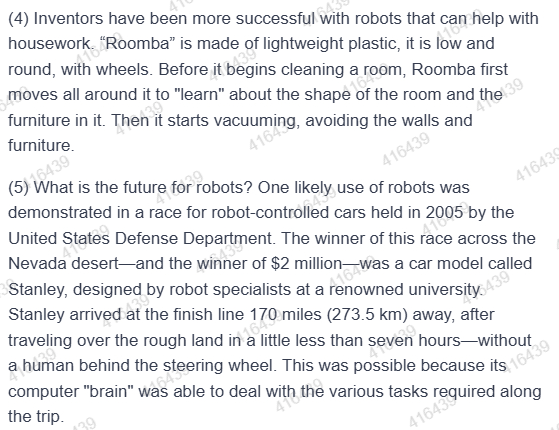
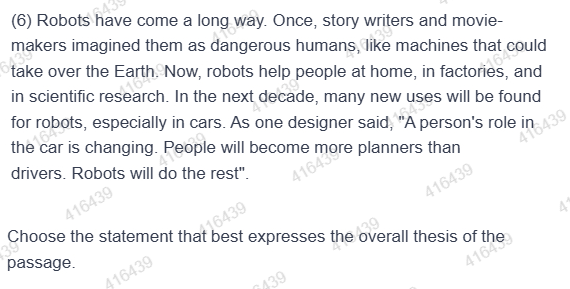
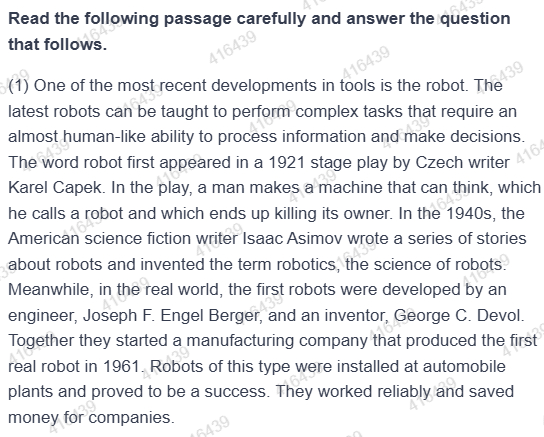
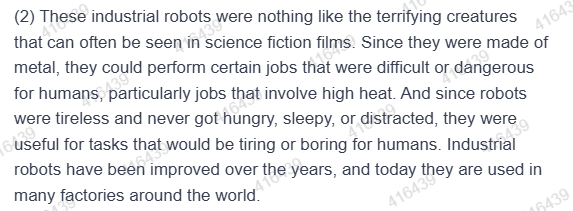
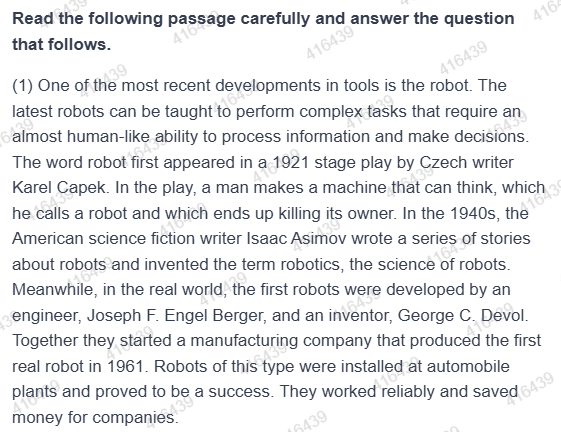
Questions 191–194 share this
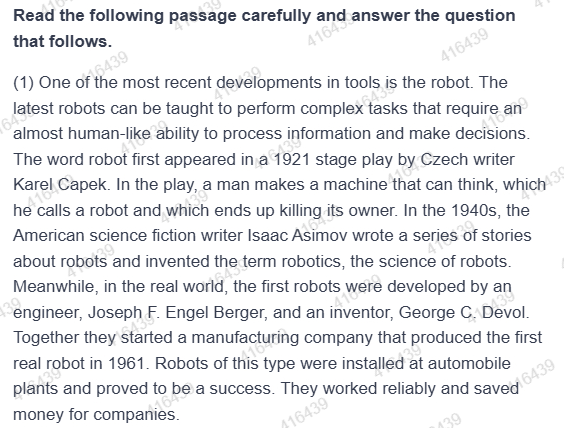
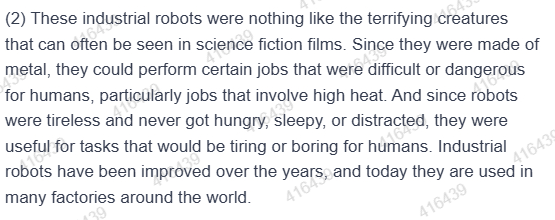
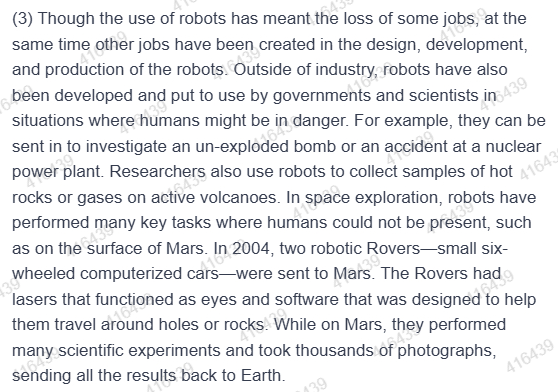
Reading Comprehension passage — shown as image.
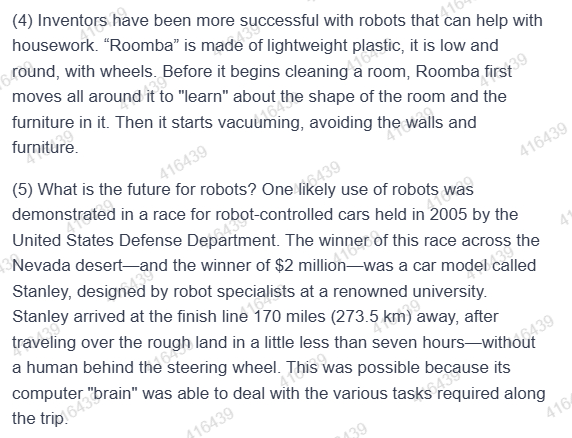
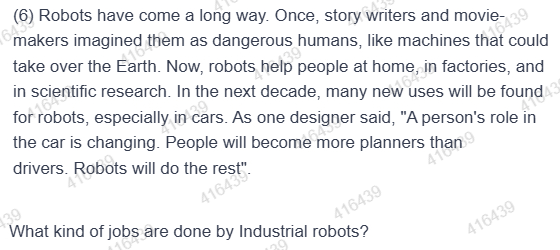
Choose the statement that best expresses the overall thesis of the passage.
- A

- B

- C

- D

- E

Show answerHide answer
Answer: C
Approach: Main idea — the statement that covers every paragraph.
Solution: The passage moves from the history of robots (1921 play, 1961 first robot) to industrial uses, scientific/space uses, home robots (Roomba) and robot cars, ending with "Robots have come a long way... Now, robots help people at home, in factories, and in scientific research." The idea that runs through all of it is that robots now perform many complex tasks — option C.
Why the other options are wrong:
A The word robot was invented in 1921: a single detail from para 1.
B Robots in industry and scientific research: covers only part of the passage (misses home use and cars).
D People won't drive cars in future: only the last paragraph's prediction.
E Loss of some jobs: one point from para 3.
Cetking shortcut: For thesis questions, test each option against the first AND last paragraph — only C fits both ("latest robots... complex tasks" / "robots have come a long way").
Answer: C
Refer to the passage above ↑
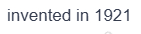
The first real robot was
- A

- B

- C

- D

- E
Show answerHide answer
Answer: A
Approach: Specific detail.
Solution: Para 1: Engelberger and Devol "produced the first real robot in 1961. Robots of this type were installed at automobile plants." Option A.
Why the other options are wrong:
B A machine that thinks like a person: the robot in Capek's play, which was fiction.
C Invented by a science fiction writer: Asimov coined "robotics", he did not build a robot.
D Looked and behaved like a human: para 2 says industrial robots were nothing like fiction's creatures.
E Invented in 1921: that was the word, not the real robot (1961).
Cetking shortcut: The word "real" in the question separates the 1961 robot from the 1921 fictional one.
Answer: A
Refer to the passage above ↑
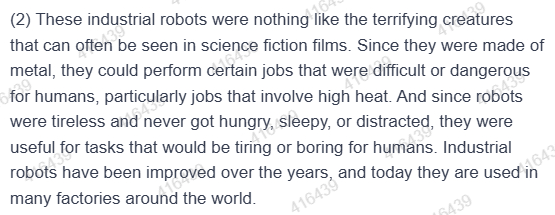
What kind of jobs are done by Industrial robots?
- A

- B

- C

- D

- E

Show answerHide answer
Answer: B
Approach: Specific detail.
Solution: Para 2: "they could perform certain jobs that were difficult or dangerous for humans, particularly jobs that involve high heat." Option B.
Why the other options are wrong:
A They saved money for companies: a result, not a kind of job.
C All kinds of jobs: overstated.
D Jobs that involve fewer humans / E Jobs needing less strength: not stated.
Answer: B
Refer to the passage above ↑
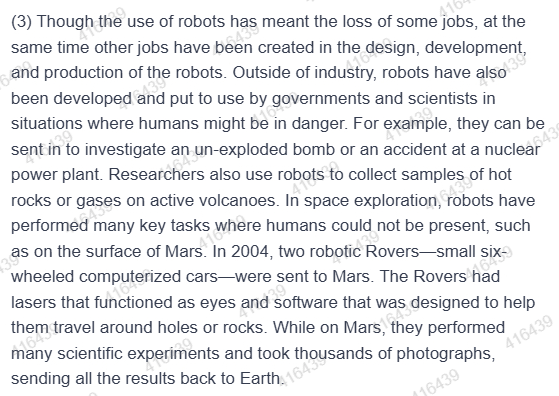
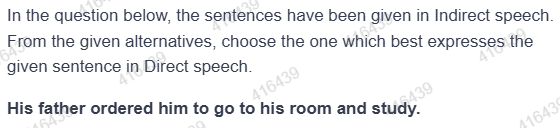
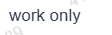
Complete the sentence with most suitable alternative. In industry, robots......
- A

- B

- C

- D

- E
Show answerHide answer
Answer: A
Approach: Specific detail — sentence completion.
Solution: Para 3: "Though the use of robots has meant the loss of some jobs, at the same time other jobs have been created in the design, development, and production of the robots." So in industry robots have taken away some jobs and created others — option A.
Why the other options are wrong:
B Caused factories to close: not stated.
C Look and behave like humans: para 2 says the opposite.
D Replace programmers and engineers: they create such jobs.
E "work only": incomplete and unsupported.
Answer: A
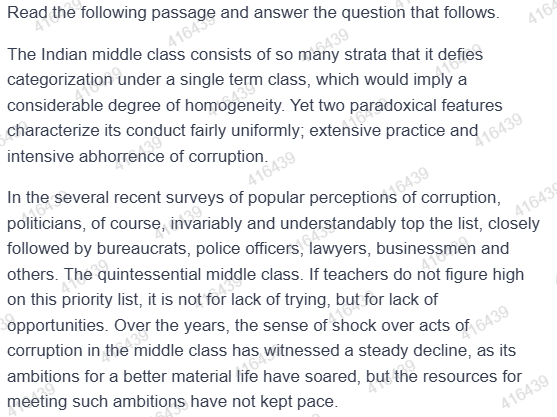
In the question given below, the sentence is given in Indirect speech. Choose the one which best expresses the given sentence in Direct speech: His father ordered him to go to his room and study.
- A

- B

- C

- D

- E

Show answerHide answer
Answer: A
Approach: Indirect to direct — order (imperative).
Solution: "Ordered him to go to his room and study" → a command in direct speech: His father said, "Go to your room and study." The pronoun "his" becomes "your", the order of actions (go, then study) is kept, and no added tone word is needed.
Why the other options are wrong:
B "Go and study in your room": changes the structure of the order.
C "shouted ... right now ... study room": adds words not in the original.
D "said firmly" / E "said politely": add a tone adverb and reorder the actions.
Cetking shortcut: Keep exactly the content of the order; reject options that add adverbs (firmly, politely, right now).
Answer: A
Questions 196–198 share this
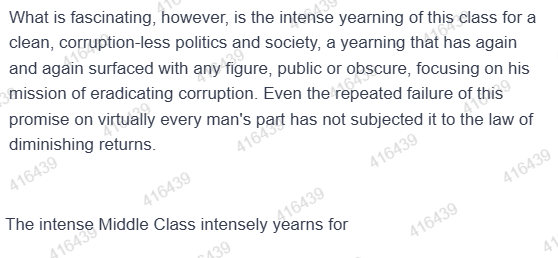
Reading Comprehension passage — shown as image.
The intense Middle Class intensely yearns for
- A

- B

- C
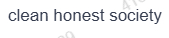
- D

- E

Show answerHide answer
Answer: C
Approach: Specific detail.
Solution: Last paragraph: "What is fascinating, however, is the intense yearning of this class for a clean, corruption-less politics and society." Option C (clean honest society).
Why the other options are wrong:
A Better material resources: their ambitions soared, but the "intense yearning" is for clean politics.
B Extensive practice of corruption: a fact about them, not a yearning.
D Law of increasing returns: misreads "not subjected to the law of diminishing returns".
E Freedom of speech: not mentioned.
Cetking shortcut: Match the question's word "intensely yearns" to "intense yearning" in the passage.
Answer: C
Refer to the passage above ↑
Teachers are not high on the list of corruption because they do not have ______ (see figure).
- ACourage
- BOpportunities
- CSupport
- DAmbition
- EWillingness
Show answerHide answer
Answer: B
Approach: Specific detail.
Solution: "If teachers do not figure high on this priority list, it is not for lack of trying, but for lack of opportunities." Option B.
Why the other options are wrong:
A Courage / D Ambition / E Willingness: the passage says they are "trying", so lack of will is ruled out.
C Support: not mentioned.
Answer: B
Refer to the passage above ↑
Meaning of the word 'stratified' as used in the passage: The Indian middle class is ______ (see figure).
- ADefiant
- BMysterious
- CHomogeneous
- DStratified
- EUnique
Show answerHide answer
Answer: D
Approach: Vocabulary in context / description of the middle class.
Solution: Para 1: "The Indian middle class consists of so many strata that it defies categorization under a single term class, which would imply a considerable degree of homogeneity." Many strata = stratified (divided into layers). Option D.
Why the other options are wrong:
A Defiant: "defies categorization" is about the term, not the class's attitude.
B Mysterious / E Unique: not stated.
C Homogeneous: the passage says the class is NOT homogeneous.
Cetking shortcut: "Strata" → stratified; "homogeneity" is denied, so C is the trap.
Answer: D
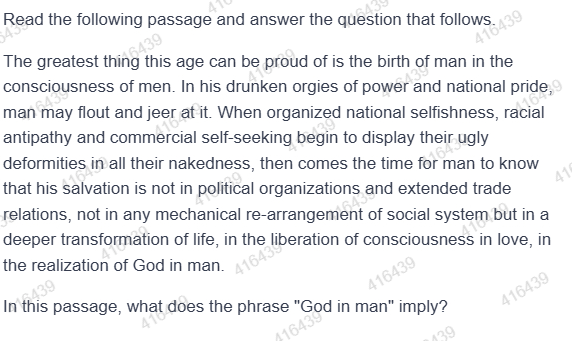
Reading Comprehension passage — shown as image.
In this passage, what does the phrase "God in man" imply?
- A

- B

- C

- D

- E

Show answerHide answer
Answer: D
Approach: Inference — meaning of a phrase.
Solution: The author says salvation lies not in politics or trade but "in a deeper transformation of life, in the liberation of consciousness in love, in the realization of God in man." "God in man" = the divine qualities present within human beings, to be realised by inner growth — option D.
Why the other options are wrong:
A God assuming the shape of man: an incarnation idea, not the author's point.
B Neither fully godly nor fully human: not suggested.
C Man transformed into God: overstates; the author speaks of realizing the divine within, not becoming God.
E The divine qualities of God: refers to God, not to man.
Answer: D
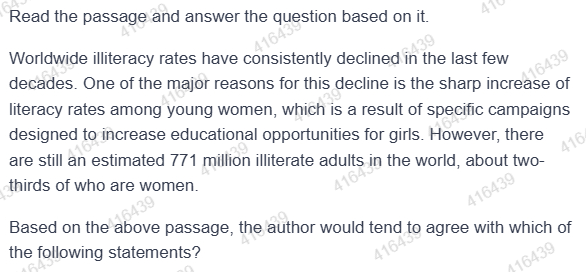
Reading Comprehension passage — shown as image.
Based on the above passage, the author would tend to agree with which of the following statements?
- A

- B

- C

- D

- E

Show answerHide answer
Answer: A
Approach: Inference — author's likely view.
Solution: The author credits the decline in illiteracy to "specific campaigns designed to increase educational opportunities for girls" and notes that two-thirds of the 771 million illiterate adults are still women. This shows the author values giving women the same access to education as men — option A.
Why the other options are wrong:
B Men need higher education more: contradicts the passage's focus on women's education.
C Women need medical care more than reading: medical care is never mentioned.
D Educated women have fewer children: a claim not made in the passage.
E Women have all opportunities: contradicted — most illiterate adults are women.
Cetking shortcut: In "author would agree" questions, reject any option that brings in a new topic (medical care, family size).
Answer: A
Look carefully for the pattern, and then choose which pair of numbers comes next.
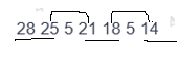
28 25 5 21 18 5 14
- A11,5
- B10,7
- C11,8
- D5,10
- E10,5
Show answerHide answer
Answer: A
Approach: Interleaved series — a repeating constant plus a main series with alternating differences.
Solution:
28, 25, 5, 21, 18, 5, 14, ...
The number 5 appears after every two terms.
Remove the 5s: 28, 25, 21, 18, 14 → differences −3, −4, −3, −4.
Next difference is −3: 14 − 3 = 11.
After 14 and 11 comes the pair-breaker 5 again.
So the next two terms are 11, 5.
Why the other options are wrong:
B (10,7), C (11,8): 7 and 8 break the repeating 5.
D (5,10): 5 cannot come before 11; 10 also breaks −3/−4.
E (10,5): 14 − 4 = 10 uses the wrong difference (−3 is due).
Cetking shortcut: When a number repeats at fixed gaps, strike it out first — the rest is usually a simple difference series.
Answer: A
Look carefully for the pattern, and then choose which pair of numbers comes next.
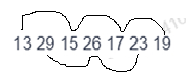
13 29 15 26 17 23 19
- A21,23
- B20,21
- C20,17
- D25,27
- E22,20
Show answerHide answer
Answer: B
Approach: Two alternating series.
Solution:
Odd positions: 13, 15, 17, 19 → +2 each time.
Even positions: 29, 26, 23 → −3 each time.
The last given term 19 is an odd-position term, so the next term belongs to the even series: 23 − 3 = 20.
Then the odd series continues: 19 + 2 = 21.
Next pair = 20, 21.
Why the other options are wrong:
A (21,23): puts the odd-series term first and repeats 23.
C (20,17): 17 already used; odd series is increasing.
D, E: neither number fits either series in order.
Cetking shortcut: Note which series the last given term belongs to — the very next term comes from the other series.
Answer: B
Questions 3–5 share this
Based on the criteria and the information provided below, assess the given candidate's eligibility or potential and thereby decide the action to be taken from among the given alternatives.
A public charitable trust desires to select Medical Officers for its rural hospital based on the following criteria:
The applicant must -
- (i) be holding MBBS degree with a minimum of 50% marks
- (ii) have a minimum of 4 years of experience of full-time practice in rural areas
- (iii) be ready to execute a bond of 3 years of service
- (iv) have good knowledge of the local language
In the case of the applicant who satisfies all other criteria except -
- (A) at (ii) above, but has 4 years of full-time experience of practice either urban or semi-urban areas and spent at least 5 years in rural areas any time during his life, be referred to Secretary of the Trust
- (B) at (iv) above, but has working knowledge of Hindi be referred to Assistant Secretary of the Trust.
- (C) at (i) above, but has a minimum of 45% marks at MBBS and has done M.S. or M.D., with a minimum of 50%, be referred to the Chief Medical Officer (C.M.O.)
- (D) at (iii) above, but is ready to give Rs. 25,000 as security money, be referred to the President of the Trust.
Case: Gauri did her M.D. after doing her MBBS. She is ready to execute three years bond of service. She has good command over local language as well as Hindi. She has practised for 5½ years in remote village out of her love for social service. She has obtained 77%, 88%, 47% and 56% at SSC, HSC, MBBS and M.D. respectively.
- ATo be selected
- BNot to be selected
- CRefer to Assistant Secretary
- DData inadequate
- ERefer to the CMO
Show answerHide answer
Answer: E
Approach: Selection-criteria check — test each of the 4 conditions; if exactly one fails, look for the matching exception clause; if data is missing, it is Data inadequate.
Solution:
(i) MBBS ≥ 50%: Gauri has 47% → fails.
(ii) 4 yrs rural practice: 5½ yrs in a remote village → OK.
(iii) 3-year bond: ready → OK.
(iv) Local language: good command → OK.
Only (i) fails, so check exception (C): MBBS ≥ 45% (47% ✓) and M.S./M.D. with ≥ 50% (M.D. 56% ✓).
Exception (C) applies → refer to the Chief Medical Officer.
Why the other options are wrong:
A: she does not meet (i) directly, so she cannot be selected outright.
B: exception (C) rescues her, so not rejected.
C: Assistant Secretary is for the language exception (B); her language is fine.
D: all required data is given.
Cetking shortcut: Scan the case for numbers below the cut-off first — the failed condition tells you which exception to read.
Answer: E
Refer to the passage above ↑
Case: Payal, after obtaining her MBBS and M.S., decided to practice in her native village for five years. She knows the local language very well. Her dispensary and small hospital were very popular in the nearby villages. She plans to go to U.S.A. and U.K. after spending 4 more years in India. She has secured more than 60% marks in all the examinations right from SSC to M.S. She is ready to execute a bond of 3 years of service.
- ATo be selected
- BNot to be selected
- CRefer to Assistant Secretary
- DData inadequate
- ERefer to the CMO
Show answerHide answer
Answer: A
Approach: Selection-criteria check — test each of the 4 conditions; if exactly one fails, look for the matching exception clause; if data is missing, it is Data inadequate.
Solution:
(i) MBBS ≥ 50%: more than 60% in every exam → OK.
(ii) 4 yrs rural practice: 5 years in her native village → OK.
(iii) 3-year bond: ready → OK (she plans to go abroad only after 4 more years, which is beyond the bond).
(iv) Local language: knows it very well → OK.
All four conditions are met → select.
Why the other options are wrong:
B: no condition fails.
C, E: referrals apply only when a condition fails.
D: every condition can be checked from the case.
Cetking shortcut: Extra details (plans to go abroad, popularity of her dispensary) are distractors — test only the four listed conditions.
Answer: A
Refer to the passage above ↑
Case: Raghav studied in rural areas while doing his schooling. His father is a farmer. He completed his MBBS in Mumbai and had six years of practice in a big city. He has good knowledge of the local language and working knowledge of Hindi. He is ready to execute a 3-year bond of service. He has done M.S. with 53% marks.
- ATo be selected
- BNot to be selected
- CRefer to Assistant Secretary
- DData inadequate
- ERefer to the CMO
Show answerHide answer
Answer: D
Approach: Selection-criteria check — test each of the 4 conditions; if exactly one fails, look for the matching exception clause; if data is missing, it is Data inadequate.
Solution:
(i) MBBS ≥ 50%: his MBBS percentage is not given (only M.S. 53% is stated) → cannot be checked.
(ii) 4 yrs rural practice: 6 years in a big city → fails; exception (A) could cover him (urban practice ≥ 4 yrs and schooling in rural areas), which would mean referral to the Secretary, not selection.
(iii) Bond: ready → OK.
(iv) Local language: good → OK.
Because the MBBS marks are missing, we cannot decide whether he satisfies (i), or whether exception (A) is the only one needed. Hence the data is inadequate.
Why the other options are wrong:
A: he fails (ii) directly, so he can never be selected outright.
B: he may qualify through exception (A), so rejection cannot be concluded.
C: Assistant Secretary is for the language exception; his language is fine.
E: CMO is for the MBBS-marks exception, and his MBBS marks are unknown.
Cetking shortcut: Tick each condition against the case; the moment a required figure (here MBBS %) is missing, Data inadequate is the answer.
Answer: D
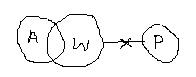
In the question given below, two statements are given, followed by two conclusions numbered I and II. You have to take the given two statements to be true even if they seem to be at variance from commonly known facts. Read the conclusion and then decide which of the given conclusions logically follows from the two given statements, disregarding commonly known facts.
Statements: No women teacher can play. Some women teachers are athletes.
Conclusions:
1. Male athletes can play.
2. Some athletes can play.
- AOnly 1 follows
- BOnly 2 follows
- CEither 1 or 2 follows
- DNeither 1 nor 2 follows
- EBoth 1 and 2 follow
Show answerHide answer
Answer: D
Approach: Syllogism — draw Venn diagrams; a conclusion follows only if it is true in every possible diagram.
Solution:
No women teacher (W) can play (P) → W and P are separate circles.
Some W are athletes (A) → A overlaps W.
Conclusion 1 — 'Male athletes can play': the statements say nothing about males → does not follow.
Conclusion 2 — 'Some athletes can play': A and P may or may not overlap (a case with no overlap is possible) → does not follow.
What does follow is 'Some athletes cannot play' — not given here.
Why the other options are wrong:
A, E: Conclusion 1 brings in 'males', an outside term.
B: A–P overlap is only a possibility.
C: the two conclusions are not a complementary pair, so 'either-or' does not apply.
Cetking shortcut: Some + No → 'Some ... not' conclusion only. Any positive 'some' between the outer terms fails.
Answer: D
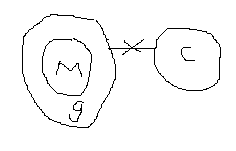
In the question given below, two statements are given, followed by two conclusions numbered I and II. You have to take the given two statements to be true even if they seem to be at variance from commonly known facts. Read the conclusion and then decide which of the given conclusions logically follows from the two given statements, disregarding commonly known facts.
Statements: All mangoes are golden in colour. No golden-coloured things are cheap.
Conclusions:
1. All mangoes are cheap.
2. Golden-coloured mangoes are not cheap.
- AOnly 1 follows
- BOnly 2 follows
- CEither 1 or 2 follows
- DNeither 1 nor 2 follows
- EBoth 1 and 2 follow
Show answerHide answer
Answer: B
Approach: Syllogism — draw Venn diagrams; a conclusion follows only if it is true in every possible diagram.
Solution:
All mangoes (M) are golden (G) → M inside G.
No golden thing is cheap (C) → G and C separate, so M and C are separate too.
Conclusion 1 — 'All mangoes are cheap': opposite of the definite 'No mango is cheap' → false.
Conclusion 2 — 'Golden-coloured mangoes are not cheap': all mangoes are golden and nothing golden is cheap → follows.
Why the other options are wrong:
A, E: Conclusion 1 contradicts the statements.
C: either-or needs a complementary pair where neither is definite; here 2 is definite.
D: Conclusion 2 does follow.
Cetking shortcut: All + No → No (All A are B, No B is C ⇒ No A is C).
Answer: B
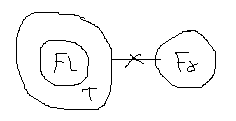
In the question given below, two statements are given, followed by two conclusions numbered I and II. You have to take the given two statements to be true even if they seem to be at variance from commonly known facts. Read the conclusion and then decide which of the given conclusions logically follows from the two given statements, disregarding commonly known facts.
Statements: All flowers are trees. No fruit is tree.
Conclusions:
1. No fruit is flower.
2. Some trees are flowers.
- AOnly 1 follows
- BOnly 2 follows
- CEither 1 or 2 follows
- DNeither 1 nor 2 follows
- EBoth 1 and 2 follow
Show answerHide answer
Answer: E
Approach: Syllogism — draw Venn diagrams; a conclusion follows only if it is true in every possible diagram.
Solution:
All flowers (Fl) are trees (T) → Fl inside T.
No fruit (Fr) is a tree → Fr outside T, so Fr is outside Fl as well.
Conclusion 1 — 'No fruit is flower': follows (Fr is completely outside T, which contains Fl).
Conclusion 2 — 'Some trees are flowers': conversion of 'All flowers are trees' → follows.
Why the other options are wrong:
A, B: each leaves out a conclusion that does follow.
C: either-or is only for a complementary pair where neither follows definitely.
D: both follow.
Cetking shortcut: 'All A are B' always converts to 'Some B are A'; No + All (reversed) → No.
Answer: E
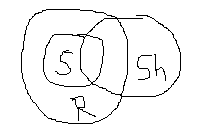
In the question given below, two statements are given, followed by two conclusions numbered I and II. You have to take the given two statements to be true even if they seem to be at variance from commonly known facts. Read the conclusion and then decide which of the given conclusions logically follows from the two given statements, disregarding commonly known facts.
Statements: Some swords are sharp. All swords are rusty.
Conclusions:
1. Some rusty things are sharp.
2. Some rusty things are not sharp.
- AOnly 1 follows
- BOnly 2 follows
- CEither 1 or 2 follows
- DNeither 1 nor 2 follows
- EBoth 1 and 2 follow
Show answerHide answer
Answer: A
Approach: Syllogism — draw Venn diagrams; a conclusion follows only if it is true in every possible diagram.
Solution:
All swords (S) are rusty (R) → S inside R.
Some swords are sharp (Sh) → Sh overlaps S, hence overlaps R.
Conclusion 1 — 'Some rusty things are sharp': the sharp swords are rusty → follows.
Conclusion 2 — 'Some rusty things are not sharp': all rusty things could be sharp (R inside Sh is possible) → does not follow.
Why the other options are wrong:
B, E: Conclusion 2 is only a possibility.
C: Conclusion 1 is definite, so 'either-or' does not apply.
D: Conclusion 1 does follow.
Cetking shortcut: With only positive statements, a negative conclusion can never be definite.
Answer: A
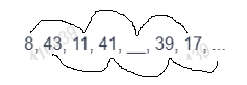
Look at this series: 8, 43, 11, 41, ___, 39, 17, ... What number should fill in the blank?
- A13
- B15
- C14
- D16
- E40
Show answerHide answer
Answer: C
Approach: Two alternating arithmetic series.
Solution:
Odd positions: 8, 11, __, 17 → +3 each time, so blank = 11 + 3 = 14 (check: 14 + 3 = 17).
Even positions: 43, 41, 39 → −2 each time.
Missing number = 14.
Why the other options are wrong:
A (13), B (15), D (16): do not keep the +3 step from 11 to 17.
E (40): belongs to the pattern of the even series, but the blank is an odd-position term.
Cetking shortcut: The blank sits between 11 and 17 in its own series — just take the midpoint: (11 + 17)/2 = 14.
Answer: C
Given below is a statement and two assumptions. These assumptions may or may not be implicit in the statement.
Statement: The best evidence of India's glorious past is the growing popularity of ayurvedic medicines in the world.
Assumption A: Ayurvedic medicines are popular in India.
Assumption B: Ayurvedic medicines are not popular in India.
Determine whether one or both assumptions are implicit or not in the given statement and choose the correct option from the options given below:
- AOnly Assumption A is implicit
- BOnly Assumption B is implicit
- CNeither Assumption A nor Assumption B is implicit
- DBoth Assumption A and Assumption B are implicit
- ENone of these
Show answerHide answer
Answer: C
Approach: Statement–Assumption — an assumption is implicit only if the speaker must take it for granted for the statement to make sense.
Solution:
The statement links India's glorious past to the growing popularity of ayurvedic medicines in the world.
A: 'Popular in India' — the claim is about worldwide popularity; the speaker need not assume anything about popularity within India → not implicit.
B: 'Not popular in India' — equally unnecessary; nothing in the statement depends on it → not implicit.
Neither assumption is required.
Why the other options are wrong:
A, B, D: each needs at least one assumption to be required, but the statement is silent on India.
E: C is a valid choice, so 'None of these' does not apply.
Cetking shortcut: When two assumptions are exact opposites about something the statement does not talk about, usually neither is implicit.
Answer: C
Given below is a statement and two assumptions. These assumptions may or may not be implicit in the statement.
Statement: "In order to bring punctuality in our office, we must provide conveyance allowance to our employees." - In charge of a company tells Personnel Manager.
Assumption A: Conveyance allowance will not help in bringing punctuality.
Assumption B: Discipline and reward should always go hand in hand.
Determine whether one or both assumptions are implicit or not in the given statement and choose the correct option from the options given below:
- AOnly Assumption A is implicit
- BOnly Assumption B is implicit
- CNeither Assumption A nor Assumption B is implicit
- DBoth Assumption A and Assumption B are implicit
- ENone of these
Show answerHide answer
Answer: B
Approach: Statement–Assumption — an assumption is implicit only if the speaker must take it for granted for the statement to make sense.
Solution:
The in-charge says: to bring punctuality (discipline), give a conveyance allowance (reward/benefit).
A: 'Conveyance allowance will not help in bringing punctuality' — this contradicts the speaker, who believes it will help → not implicit.
B: 'Discipline and reward should go hand in hand' — the proposal ties a discipline goal to a benefit; the speaker takes this link for granted → implicit.
Why the other options are wrong:
A, D: A is the opposite of the speaker's belief.
C: B is needed for the suggestion to make sense.
E: B is a valid choice.
Cetking shortcut: An assumption that contradicts the speaker's own recommendation is never implicit — strike it out first.
Answer: B
Given below is a statement and two assumptions. These assumptions may or may not be implicit in the statement.
Statement: The State government has decided to appoint four thousand primary school teachers during the next financial year.
Assumption A: There are enough schools in the state to accommodate four thousand additional primary school teachers.
Assumption B: The eligible candidates may not be interested to apply as the government may not finally appoint such a large number of primary school teachers.
Determine whether one or both assumptions are implicit or not in the given statement and choose the correct option from the options given below:
- AOnly Assumption A is implicit
- BOnly Assumption B is implicit
- CNeither Assumption A nor Assumption B is implicit
- DBoth Assumption A and Assumption B are implicit
- ENone of these
Show answerHide answer
Answer: A
Approach: Statement–Assumption — an assumption is implicit only if the speaker must take it for granted for the statement to make sense.
Solution:
Decision: appoint four thousand primary school teachers next year.
A: 'Enough schools exist to accommodate them' — a government would not plan 4,000 appointments without places to post them → implicit.
B: 'Candidates may not apply because the government may not appoint so many' — this doubts the decision itself; the government cannot be assuming its own decision will not be carried out → not implicit.
Why the other options are wrong:
B, D: B works against the decision.
C: A is necessary for the decision.
E: A is a valid choice.
Cetking shortcut: For a decision statement, the feasibility assumption (resources/places exist) is usually implicit; doubts about the decision are not.
Answer: A
In a row at a bus stop, 'A' is 7th from the left and 'B' is 9th from the right. They both interchange their positions. Now A becomes 11th from the left. How many people are there in the row?
- A15
- B16
- C17
- D19
- E21
Show answerHide answer
Answer: D
Approach: Order & ranking — total = position from left + position from right − 1.
Solution:
A is 7th from left; B is 9th from right.
After interchange, A stands at B's old place and is 11th from left.
So B's old place = 11th from left and 9th from right.
Total = 11 + 9 − 1 = 19.
Why the other options are wrong:
A, B, C: use A's original 7th position or forget to subtract/add correctly (e.g. 7 + 9 = 16).
E (21): adds 11 + 9 + 1.
Cetking shortcut: After a swap, the new position of one person + the old position of the other from the opposite end gives the total (minus 1).
Answer: D
Complete the series by filling the blank with suitable alternative
CMM, EOO, GQQ, ______, KUU
- AGRR
- BGSS
- CISS
- DITT
- EHSS
Show answerHide answer
Answer: C
Approach: Letter series — each letter moves by a fixed step.
Solution:
First letters: C, E, G, __, K → +2 each → I.
Second & third letters (same in each term): M, O, Q, __, U → +2 each → S.
Missing term = ISS.
Why the other options are wrong:
A (GRR), B (GSS): first letter G repeats instead of moving to I.
D (ITT): T is +3 from Q.
E (HSS): H is +1 from G.
Cetking shortcut: Check the first letter only: C→E→G→I→K. Only C and D start with I; the Q→S step then picks C.
Answer: C
Find the next term in the series
4, 6, 12, 14, 28, 30, ______
- A44
- B60
- C52
- D32
- E40
Show answerHide answer
Answer: B
Approach: Alternating operations series (+2, ×2).
Solution:
4 + 2 = 6
6 × 2 = 12
12 + 2 = 14
14 × 2 = 28
28 + 2 = 30
30 × 2 = 60
Why the other options are wrong:
D (32): applies +2 again instead of ×2.
A, C, E: fit no consistent operation.
Cetking shortcut: Differences 2, 6, 2, 14, 2 — every alternate difference is 2, so the other step must be a multiplication.
Answer: B
Complete the series
10000, 11000, 9900, 10890, 9801, ?
- A10781
- B10241
- C10423
- D10929
- E10900
Show answerHide answer
Answer: A
Approach: Alternating multipliers ×1.1 and ×0.9.
Solution:
10000 × 1.1 = 11000
11000 × 0.9 = 9900
9900 × 1.1 = 10890
10890 × 0.9 = 9801
9801 × 1.1 = 10781.1 → written as 10781
Check with alternate terms: 11000 → 10890 → 10781 is a fall of 1% each time (110, then 109), and 10000 → 9900 → 9801 also falls 1% each time.
Why the other options are wrong:
B (10241), C (10423), D (10929): none is about 1% below 10890.
E (10900): rises from 10890 instead of falling.
Cetking shortcut: Alternate terms 10000 → 9900 → 9801 drop by 1%, so 10890 − 1% ≈ 10890 − 109 = 10781.
Answer: A
Choose the number pair/group which is different from others.
- A70-80
- B54-62
- C28-32
- D21-24
- E14-16
Show answerHide answer
Answer: B
Approach: Odd one out — find the ratio common to most pairs.
Solution:
70 : 80 = 7 : 8
28 : 32 = 7 : 8
21 : 24 = 7 : 8
14 : 16 = 7 : 8
54 : 62 = 27 : 31 → not 7 : 8.
So 54–62 is the odd pair. (For 7 : 8, 54 should pair with 54 × 8/7, which is not a whole number.)
Why the other options are wrong:
A, C, D, E: all are in the ratio 7 : 8 (multiples 10, 4, 3, 2 of 7–8).
Cetking shortcut: Check if the first numbers are multiples of 7 (70, 28, 21, 14) — 54 is not.
Answer: B
Choose the number group from the given alternatives which is different from others.
- A71,7,3,17
- B67,71,3,5
- C41,5,3,47
- D37,14,19,7
- E11,3,5,17
Show answerHide answer
Answer: D
Approach: Odd one out — property shared by all numbers in a group (primes).
Solution:
A: 71, 7, 3, 17 → all prime.
B: 67, 71, 3, 5 → all prime.
C: 41, 5, 3, 47 → all prime.
D: 37, 14, 19, 7 → 14 = 2 × 7 is not prime.
E: 11, 3, 5, 17 → all prime.
Why the other options are wrong:
A, B, C, E: every number is prime.
Cetking shortcut: Look for the only even number greater than 2 — it cannot be prime.
Answer: D
If ROAST is coded as PQYUR in a certain language, then how shall SLOPPY be coded in that Language?
- AMRNAQN
- BNRMNQA
- CQNMRNA
- DRANNMQ
- ERANMNQ
Show answerHide answer
Answer: C
Approach: Letter-shift coding with alternating −2 / +2.
Solution:
ROAST → PQYUR: R−2=P, O+2=Q, A−2=Y, S+2=U, T−2=R.
Pattern: −2, +2, −2, +2, ...
SLOPPY: S−2=Q, L+2=N, O−2=M, P+2=R, P−2=N, Y+2=A (Y→Z→A).
Code = QNMRNA.
Why the other options are wrong:
A, B, D, E: correct letters in the wrong order, or wrong shifts (e.g. start with M/N/R).
Cetking shortcut: Only the first letter is needed: S − 2 = Q, and only option C starts with Q.
Answer: C
In a certain language if "health" is written as "GSKZDG", then "north" is written as ?
- AGSQNM
- BGSQMN
- CFSQNM
- DFSQMN
- EGSRNM
Show answerHide answer
Answer: A
Approach: Reverse the word, then shift each letter −1.
Solution:
health reversed = H T L A E H.
Each −1: H→G, T→S, L→K, A→Z, E→D, H→G = GSKZDG ✓.
north reversed = H T R O N.
Each −1: H→G, T→S, R→Q, O→N, N→M = GSQNM.
Why the other options are wrong:
B (GSQMN): last two letters swapped.
C, D: first letter F is −2 from H.
E (GSRNM): R is not shifted.
Cetking shortcut: Decode one letter: in GSKZDG the last letter G is H−1 and matches the first letter of 'health' reversed — so reverse first, then shift −1.
Answer: A
In a certain code language, BEAT is written as YVZG, then what will be the code of MILD?
- AONRW
- BOWNR
- CONWR
- DNROW
- ENORW
Show answerHide answer
Answer: D
Approach: Opposite-letter coding (A↔Z, B↔Y ...; position p ↔ 27 − p).
Solution:
BEAT → YVZG: B(2)↔Y(25), E(5)↔V(22), A(1)↔Z(26), T(20)↔G(7) ✓.
MILD: M(13)↔N(14), I(9)↔R(18), L(12)↔O(15), D(4)↔W(23).
Code = NROW.
Why the other options are wrong:
A, B, C, E: same letters in the wrong order.
Cetking shortcut: Remember the pair sum 27; M's opposite is N, so only D and E qualify, and I → R picks D.
Answer: D
Questions 23–25 share this
Directions: Study the following information carefully and answer the question that follows:
(i) A, B, C, D, E, F and G are seven persons wearing shirts of different colors-white, red, black, green, yellow, blue and violet-and trousers of different colors-blue, red, white, black, cream, yellow and indigo. The persons, color of the shirt and color of the trousers above are not necessarily in the same order. No person is wearing shirt and trousers of same color.
(ii) B is wearing red shirt and is not wearing cream or yellow trousers. D is wearing green shirt and indigo trousers. The color of A's shirt and F's trousers is same. The color of E's shirt and C's trousers is same. G is wearing blue shirt and E is wearing blue trousers. F is not wearing any yellow dress. A is not wearing a white shirt. Red and blue is not the combination of shirt and trousers of any of the persons.
What is the colour of G's trousers?
- AWhite
- BCream
- CGreen
- DIndigo
- ERed
Show answerHide answer
Answer: B
Approach: Matrix puzzle — fix the direct clues, then use the 'same colour' links and exclusions.
Solution:
Direct: B shirt red; D shirt green, trousers indigo; G shirt blue; E trousers blue.
Shirts left for A, C, E, F: white, black, yellow, violet. Trousers left for A, B, C, F, G: red, white, black, cream, yellow.
A's shirt = F's trousers → must be white, black or yellow. A is not white; F wears no yellow → black. So A shirt black, F trousers black.
B: not red (same as shirt), not cream/yellow, not black (taken) → white.
E's shirt = C's trousers → from white/yellow/violet ∩ red/cream/yellow → yellow. E shirt yellow, C trousers yellow.
A and G get red and cream; G (blue shirt) cannot wear red (no red–blue combo) → G cream, A red.
C and F shirts: white/violet (not fixed).
| Person | Shirt | Trousers |
|---|
| A | Black | Red |
| B | Red | White |
| C | White/Violet | Yellow |
| D | Green | Indigo |
| E | Yellow | Blue |
| F | Violet/White | Black |
| G | Blue | Cream |
G's trousers = Cream.
Why the other options are wrong:
A (White): worn by B.
C (Green): not a trouser colour.
D (Indigo): worn by D.
E (Red): red–blue combination is not allowed for G.
Answer: B
Refer to the passage above ↑
Who wears a violet colored shirt?
- AC
- BF
- CC or F
- DG
- EC or G
Show answerHide answer
Answer: C
Approach: Matrix puzzle — fix the direct clues, then use the 'same colour' links and exclusions.
Solution:
Direct: B shirt red; D shirt green, trousers indigo; G shirt blue; E trousers blue.
Shirts left for A, C, E, F: white, black, yellow, violet. Trousers left for A, B, C, F, G: red, white, black, cream, yellow.
A's shirt = F's trousers → must be white, black or yellow. A is not white; F wears no yellow → black. So A shirt black, F trousers black.
B: not red (same as shirt), not cream/yellow, not black (taken) → white.
E's shirt = C's trousers → from white/yellow/violet ∩ red/cream/yellow → yellow. E shirt yellow, C trousers yellow.
A and G get red and cream; G (blue shirt) cannot wear red (no red–blue combo) → G cream, A red.
C and F shirts: white/violet (not fixed).
| Person | Shirt | Trousers |
|---|
| A | Black | Red |
| B | Red | White |
| C | White/Violet | Yellow |
| D | Green | Indigo |
| E | Yellow | Blue |
| F | Violet/White | Black |
| G | Blue | Cream |
The violet shirt is worn by C or F — the clues do not fix which.
Why the other options are wrong:
A, B: each alone is not certain.
D, E: G wears a blue shirt.
Answer: C
Refer to the passage above ↑
What is the color of B's trouser?
- ABlack
- BWhite
- CIndigo
- DBlue
- EYellow
Show answerHide answer
Answer: B
Approach: Matrix puzzle — fix the direct clues, then use the 'same colour' links and exclusions.
Solution:
Direct: B shirt red; D shirt green, trousers indigo; G shirt blue; E trousers blue.
Shirts left for A, C, E, F: white, black, yellow, violet. Trousers left for A, B, C, F, G: red, white, black, cream, yellow.
A's shirt = F's trousers → must be white, black or yellow. A is not white; F wears no yellow → black. So A shirt black, F trousers black.
B: not red (same as shirt), not cream/yellow, not black (taken) → white.
E's shirt = C's trousers → from white/yellow/violet ∩ red/cream/yellow → yellow. E shirt yellow, C trousers yellow.
A and G get red and cream; G (blue shirt) cannot wear red (no red–blue combo) → G cream, A red.
C and F shirts: white/violet (not fixed).
| Person | Shirt | Trousers |
|---|
| A | Black | Red |
| B | Red | White |
| C | White/Violet | Yellow |
| D | Green | Indigo |
| E | Yellow | Blue |
| F | Violet/White | Black |
| G | Blue | Cream |
B's trousers = White.
Why the other options are wrong:
A (Black): F wears black trousers.
C (Indigo): D's.
D (Blue): E's; also red–blue not allowed.
E (Yellow): excluded for B directly.
Answer: B
Here are some words translated from an artificial language.
agnoscrenia means poisonous spider
delanocrenia means poisonous snake
agnosdeery means brown spider
Which word could mean "black widow spider"?
- Adeeryclostagnos
- Bagnosdelano
- Cagnosvitriblunin
- Dtrymuttiagnos
- Edeerydelano
Show answerHide answer
Answer: C
Approach: Artificial-language coding — isolate common parts and note the word order.
Solution:
agnos-crenia = poisonous spider; agnos-deery = brown spider → agnos = spider, crenia = poisonous, deery = brown.
delano-crenia = poisonous snake → delano = snake.
Order rule: the noun comes first, then the describing word (agnos-crenia = spider-poisonous).
'Black widow spider' = agnos + two new words (for black and widow) → agnos-vitri-blunin.
Why the other options are wrong:
A: contains deery (= brown).
B: contains delano (= snake).
D: 'agnos' is placed last, breaking the noun-first order.
E: brown snake.
Cetking shortcut: Eliminate any option using a known word for something else (deery, delano), then check where the noun sits.
Answer: C
Questions 27–30 share this
Read the following information carefully and answer the question that follows:
Sumeet, Philips, Wasim, Bishan and Chetan are five players of the College Cricket Team and their hometowns are Surat, Pune, Warangal, Bangalore and Chandigarh but not in that order. The five specialist slots of spinner, pace bowler, wicket keeper, batsman and captain are held by them, again not in the order of their names stated above.
- (i) Their names, hometowns and specialities do not start with the same letter.
- (ii) Neither Philips nor Wasim is the captain and they do not belong to either Surat or Bangalore.
- (iii) Sumeet is neither a wicket keeper nor a batsman.
- (iv) Pune is not Bishan's hometown.
- (v) The player who hails from Bangalore is a wicket keeper.
- (vi) The captain's hometown is Pune while the batsman does not hail from Warangal.
- APhilips
- BChetan
- CBishan
- DWasim
- ESumeet
Show answerHide answer
Answer: A
Approach: Three-way matrix (player–town–role) using first-letter exclusions.
Solution:
Rule (i): no name, town or role starts with the same letter as another in the same row (e.g. Sumeet ≠ Surat/Spinner, Philips ≠ Pune/Pace, Wasim ≠ Warangal/Wicket keeper, Bishan ≠ Bangalore/Batsman, Chetan ≠ Chandigarh/Captain; Pune ≠ Pace, Warangal ≠ Wicket keeper, Chandigarh ≠ Captain, Bangalore ≠ Batsman).
Philips and Wasim are not from Surat/Bangalore. Captain is from Pune and neither of them is captain → neither is from Pune.
Wasim ≠ Warangal → Wasim = Chandigarh; Philips = Warangal.
Captain (Pune) from Sumeet/Bishan/Chetan: Bishan ≠ Pune, Chetan ≠ Captain → Sumeet = Captain, Pune.
Bishan ≠ Bangalore → Bishan = Surat, Chetan = Bangalore = Wicket keeper.
Roles left (spinner, pace, batsman) for Philips, Wasim, Bishan: Bishan ≠ batsman, batsman not from Warangal (Philips) → Wasim = Batsman. Philips ≠ Pace → Philips = Spinner, Bishan = Pace bowler.
| Player | Hometown | Role |
|---|
| Sumeet | Pune | Captain |
| Philips | Warangal | Spinner |
| Wasim | Chandigarh | Batsman |
| Bishan | Surat | Pace bowler |
| Chetan | Bangalore | Wicket keeper |
Spinner = Philips.
Why the other options are wrong:
B Chetan: wicket keeper. C Bishan: pace bowler. D Wasim: batsman. E Sumeet: captain (and cannot be spinner by the first-letter rule).
Cetking shortcut: Start from the person with the most exclusions (Wasim: not Surat, Bangalore, Warangal, Pune) — he gets fixed first.
Answer: A
Refer to the passage above ↑
The Spinner's hometown is?
- AChandigarh
- BPune
- CWarangal
- DSurat
- EBangalore
Show answerHide answer
Answer: C
Approach: Three-way matrix (player–town–role) using first-letter exclusions.
Solution:
Rule (i): no name, town or role starts with the same letter as another in the same row (e.g. Sumeet ≠ Surat/Spinner, Philips ≠ Pune/Pace, Wasim ≠ Warangal/Wicket keeper, Bishan ≠ Bangalore/Batsman, Chetan ≠ Chandigarh/Captain; Pune ≠ Pace, Warangal ≠ Wicket keeper, Chandigarh ≠ Captain, Bangalore ≠ Batsman).
Philips and Wasim are not from Surat/Bangalore. Captain is from Pune and neither of them is captain → neither is from Pune.
Wasim ≠ Warangal → Wasim = Chandigarh; Philips = Warangal.
Captain (Pune) from Sumeet/Bishan/Chetan: Bishan ≠ Pune, Chetan ≠ Captain → Sumeet = Captain, Pune.
Bishan ≠ Bangalore → Bishan = Surat, Chetan = Bangalore = Wicket keeper.
Roles left (spinner, pace, batsman) for Philips, Wasim, Bishan: Bishan ≠ batsman, batsman not from Warangal (Philips) → Wasim = Batsman. Philips ≠ Pace → Philips = Spinner, Bishan = Pace bowler.
| Player | Hometown | Role |
|---|
| Sumeet | Pune | Captain |
| Philips | Warangal | Spinner |
| Wasim | Chandigarh | Batsman |
| Bishan | Surat | Pace bowler |
| Chetan | Bangalore | Wicket keeper |
Spinner (Philips) is from Warangal.
Why the other options are wrong:
A Chandigarh: Wasim (batsman). B Pune: captain. D Surat: Bishan (pace). E Bangalore: wicket keeper.
Answer: C
Refer to the passage above ↑
Chandigarh is the hometown of?
- ASumeet
- BWasim
- CPhilips
- DBishan
- EChetan
Show answerHide answer
Answer: B
Approach: Three-way matrix (player–town–role) using first-letter exclusions.
Solution:
Rule (i): no name, town or role starts with the same letter as another in the same row (e.g. Sumeet ≠ Surat/Spinner, Philips ≠ Pune/Pace, Wasim ≠ Warangal/Wicket keeper, Bishan ≠ Bangalore/Batsman, Chetan ≠ Chandigarh/Captain; Pune ≠ Pace, Warangal ≠ Wicket keeper, Chandigarh ≠ Captain, Bangalore ≠ Batsman).
Philips and Wasim are not from Surat/Bangalore. Captain is from Pune and neither of them is captain → neither is from Pune.
Wasim ≠ Warangal → Wasim = Chandigarh; Philips = Warangal.
Captain (Pune) from Sumeet/Bishan/Chetan: Bishan ≠ Pune, Chetan ≠ Captain → Sumeet = Captain, Pune.
Bishan ≠ Bangalore → Bishan = Surat, Chetan = Bangalore = Wicket keeper.
Roles left (spinner, pace, batsman) for Philips, Wasim, Bishan: Bishan ≠ batsman, batsman not from Warangal (Philips) → Wasim = Batsman. Philips ≠ Pace → Philips = Spinner, Bishan = Pace bowler.
| Player | Hometown | Role |
|---|
| Sumeet | Pune | Captain |
| Philips | Warangal | Spinner |
| Wasim | Chandigarh | Batsman |
| Bishan | Surat | Pace bowler |
| Chetan | Bangalore | Wicket keeper |
Chandigarh = Wasim.
Why the other options are wrong:
A Sumeet: Pune. C Philips: Warangal. D Bishan: Surat. E Chetan: cannot be from Chandigarh (same first letter); he is from Bangalore.
Answer: B
Refer to the passage above ↑
- AChetan
- BWasim
- CSumeet
- DBishan
- EPhilips
Show answerHide answer
Answer: D
Approach: Three-way matrix (player–town–role) using first-letter exclusions.
Solution:
Rule (i): no name, town or role starts with the same letter as another in the same row (e.g. Sumeet ≠ Surat/Spinner, Philips ≠ Pune/Pace, Wasim ≠ Warangal/Wicket keeper, Bishan ≠ Bangalore/Batsman, Chetan ≠ Chandigarh/Captain; Pune ≠ Pace, Warangal ≠ Wicket keeper, Chandigarh ≠ Captain, Bangalore ≠ Batsman).
Philips and Wasim are not from Surat/Bangalore. Captain is from Pune and neither of them is captain → neither is from Pune.
Wasim ≠ Warangal → Wasim = Chandigarh; Philips = Warangal.
Captain (Pune) from Sumeet/Bishan/Chetan: Bishan ≠ Pune, Chetan ≠ Captain → Sumeet = Captain, Pune.
Bishan ≠ Bangalore → Bishan = Surat, Chetan = Bangalore = Wicket keeper.
Roles left (spinner, pace, batsman) for Philips, Wasim, Bishan: Bishan ≠ batsman, batsman not from Warangal (Philips) → Wasim = Batsman. Philips ≠ Pace → Philips = Spinner, Bishan = Pace bowler.
| Player | Hometown | Role |
|---|
| Sumeet | Pune | Captain |
| Philips | Warangal | Spinner |
| Wasim | Chandigarh | Batsman |
| Bishan | Surat | Pace bowler |
| Chetan | Bangalore | Wicket keeper |
Pace bowler = Bishan.
Why the other options are wrong:
A Chetan: wicket keeper. B Wasim: batsman. C Sumeet: captain. E Philips: cannot be pace (same first letter); he is the spinner.
Answer: D
Here are some words translated from an artificial language.
migenlasan means cupboard
lasanpoen means boardwalk
cuopdansa means pullman
Which word could mean, "walkway"?
- Apoenmigen
- Bcuopeisel
- Clasandansa
- Dpoenforc
- Elasanforc
Show answerHide answer
Answer: D
Approach: Artificial-language coding — split compound words into parts.
Solution:
migen-lasan = cup-board; lasan-poen = board-walk → lasan = board, migen = cup, poen = walk.
cuop-dansa = pull-man (no common part with walkway).
Word order matches English (cup-board = migen-lasan).
'walkway' = poen + (new word for 'way') → poen-forc.
Why the other options are wrong:
A (poenmigen): migen = cup → 'walkcup'.
B (cuopeisel): no 'poen'.
C (lasandansa): board + man.
E (lasanforc): lasan = board → 'boardway'.
Cetking shortcut: Find 'walk' (poen) first, it must come first; then reject any second part that is already a known word.
Answer: D
Questions 32–34 share this
Study the following information and answer the question that follows:
A blacksmith has five iron articles A, B, C, D, and E, each having a different weight.
1) A weighs twice as much as B.
2) B weighs four-and-a-half times as much as C.
3) C weighs half as much as D.
4) D weighs half as much as E.
5) E weighs less than A but more than C.
Which of the following is the lightest in weight?
- AA
- BB
- CC
- DD
- EE
Show answerHide answer
Answer: C
Approach: Convert all weights into one variable and rank.
Solution:
Let C = x.
D = 2x (C is half of D).
E = 2D = 4x.
B = 4.5C = 4.5x.
A = 2B = 9x.
Check (5): E (4x) is less than A (9x) and more than C (x) ✓.
Order: A (9x) > B (4.5x) > E (4x) > D (2x) > C (x).
Lightest = C.
Why the other options are wrong:
A, B, D, E are 9x, 4.5x, 2x and 4x — all heavier than x.
Cetking shortcut: C is 'half of D' and B is a multiple of C — C is the base of every chain, so it is the lightest.
Answer: C
Refer to the passage above ↑
E is lighter than which of the following two articles?
- AA,B
- BB,C
- CA,D
- DA,C
- EB,D
Show answerHide answer
Answer: A
Approach: Convert all weights into one variable and rank.
Solution:
Let C = x.
D = 2x (C is half of D).
E = 2D = 4x.
B = 4.5C = 4.5x.
A = 2B = 9x.
Check (5): E (4x) is less than A (9x) and more than C (x) ✓.
Order: A (9x) > B (4.5x) > E (4x) > D (2x) > C (x).
E (4x) is lighter than A (9x) and B (4.5x).
Why the other options are wrong:
B, D: E is heavier than C.
C, E: E is heavier than D.
Answer: A
Refer to the passage above ↑
E is heavier than which of the following two articles?
- AA,C
- BD,C
- CB,C
- DA,B
- EA,C
Show answerHide answer
Answer: B
Approach: Convert all weights into one variable and rank.
Solution:
Let C = x.
D = 2x (C is half of D).
E = 2D = 4x.
B = 4.5C = 4.5x.
A = 2B = 9x.
Check (5): E (4x) is less than A (9x) and more than C (x) ✓.
Order: A (9x) > B (4.5x) > E (4x) > D (2x) > C (x).
E (4x) is heavier than D (2x) and C (x).
Why the other options are wrong:
A, E (A, C): E is lighter than A.
C (B, C): E is lighter than B.
D (A, B): E is lighter than both.
Answer: B
If it is possible to make a meaningful word from the 1st, 3rd, 6th, and 8th letters of the word "NOMINATION", then which will be the 3rd letter of the word? Mark X if no such word can be formed, Y if more than one such word can be formed.
- AN
- BI
- CM
- DX
- EY
Show answerHide answer
Answer: B
Approach: Word formation from selected letter positions.
Solution:
N O M I N A T I O N → positions 1 N, 2 O, 3 M, 4 I, 5 N, 6 A, 7 T, 8 I, 9 O, 10 N.
1st = N, 3rd = M, 6th = A, 8th = I → letters N, M, A, I.
Meaningful word: MAIN (only one).
3rd letter of MAIN = I.
Why the other options are wrong:
A (N), C (M): not the 3rd letter of MAIN.
D (X): a word can be formed.
E (Y): only one common English word (MAIN) can be formed.
Answer: B
Questions 36–38 share this
Study the following information carefully and answer the question that follows:
A, B, C, E, F, G and H are seven employees in an organization working in the departments of Administration, Accounts and Operations. There are at least two employees in each department. There are three females, one in each department. Each of the seven employees earns a different amount. F works in Administration and his only other colleague, G earns the maximum. C, the least earner, works in Accounts. B and E are brothers and do not work in the same department. A, husband of H, works in Accounts and earns more than each of F, B and E. The wife in the couple earns more than the husband.
In which department do three people work?
- AOperations
- BAccounts
- CAdministration
- DAccounts and Administration
- EOperation or Accounts
Show answerHide answer
Answer: B
Approach: Grouping + ranking with gender and couple clues.
Solution:
Administration: F and his only colleague G → exactly {F, G}; G earns the most.
Accounts: C (least earner) and A.
Remaining: B, E, H. B and E are in different departments → one in Accounts, one in Operations.
Operations needs at least 2 people → H must be in Operations.
Departments: Admin {F, G}; Accounts {A, C, B/E}; Operations {H, E/B}.
Females: one per department. F is male ('his'), A is a husband, B and E are brothers → females are G (Admin), C (Accounts), H (Operations).
Earnings: G highest; wife H > husband A; A > F, B, E; C lowest → G > H > A > {F, B, E} > C.
Three people (A, C and B/E) work in Accounts.
Why the other options are wrong:
A: Operations has 2 (H and one brother).
C: Administration has exactly 2 (F, G).
D, E: only Accounts has three.
Cetking shortcut: 'Only other colleague' closes Administration at 2 — then the 'at least two' rule forces H into Operations.
Answer: B
Refer to the passage above ↑
Which of the following is a group of females?
- AG,E,H
- BG,C,H
- CG,C,E
- DG,H,B
- EG,H,F
Show answerHide answer
Answer: B
Approach: Grouping + ranking with gender and couple clues.
Solution:
Administration: F and his only colleague G → exactly {F, G}; G earns the most.
Accounts: C (least earner) and A.
Remaining: B, E, H. B and E are in different departments → one in Accounts, one in Operations.
Operations needs at least 2 people → H must be in Operations.
Departments: Admin {F, G}; Accounts {A, C, B/E}; Operations {H, E/B}.
Females: one per department. F is male ('his'), A is a husband, B and E are brothers → females are G (Admin), C (Accounts), H (Operations).
Earnings: G highest; wife H > husband A; A > F, B, E; C lowest → G > H > A > {F, B, E} > C.
Females = G, C, H.
Why the other options are wrong:
A, C: E is a brother (male).
D: B is a brother.
E: F is male ('his').
Answer: B
Refer to the passage above ↑
What will be the position of A from the top when they are arranged in descending order of income?
- AFirst
- BSecond
- CThird
- DFourth
- EFifth
Show answerHide answer
Answer: C
Approach: Grouping + ranking with gender and couple clues.
Solution:
Administration: F and his only colleague G → exactly {F, G}; G earns the most.
Accounts: C (least earner) and A.
Remaining: B, E, H. B and E are in different departments → one in Accounts, one in Operations.
Operations needs at least 2 people → H must be in Operations.
Departments: Admin {F, G}; Accounts {A, C, B/E}; Operations {H, E/B}.
Females: one per department. F is male ('his'), A is a husband, B and E are brothers → females are G (Admin), C (Accounts), H (Operations).
Earnings: G highest; wife H > husband A; A > F, B, E; C lowest → G > H > A > {F, B, E} > C.
A is 3rd from the top (after G and H).
Why the other options are wrong:
A: G earns the maximum.
B: H (wife) earns more than A.
D, E: A earns more than F, B, E and C.
Answer: C
- A24
- B12
- C18
- D30
- E6
Show answerHide answer
Answer: B
Approach: Missing number in a grid — find one rule that works for every row.
Solution:
Rule: (middle × last) ÷ 2 = first.
Row 1: 24 × 6 = 144; 144 ÷ 2 = 72 ✓.
Row 2: 16 × 12 = 192; 192 ÷ 2 = 96 ✓.
Row 3: ? × 18 = 2 × 108 = 216 → ? = 216 ÷ 18 = 12.
Why the other options are wrong:
A (24): 24 × 18 = 432 = 4 × 10⁸.
C (18): 324.
D (30): 540.
E (6): 108 — misses the factor 2.
Cetking shortcut: When the first column is big and the others small, test product (and half/double of the product) first.
Answer: B
In a club of 30 people, all of them belong to at least one group - Chess, Drama and Art. 6 people belong only to the Art group. 5 people belong to all three groups. 2 people have joined the Chess and the Art group but not the Drama group. 15 people belong to the Art group. 2 people have joined only the Chess group. 3 people have joined only the Drama group.
How many people belong to exactly one group?
- A11
- B9
- C15
- D14
- E13
Show answerHide answer
Answer: A
Approach: Three-set Venn diagram — 'exactly one group' = sum of the 'only' regions.
Solution:
Only Art = 6, only Chess = 2, only Drama = 3.
All three = 5; Chess & Art only = 2.
Check with Art total 15: 6 + 5 + 2 + (Drama & Art only) = 15 → Drama & Art only = 2.
Check with total 30: 6 + 2 + 3 + 5 + 2 + 2 + (Chess & Drama only) = 30 → Chess & Drama only = 10. Data is consistent.
Exactly one group = 6 + 2 + 3 = 11.
Why the other options are wrong:
B (9), D (14), E (13): add or drop one of the 'only' regions.
C (15): is the Art total, not 'exactly one'.
Cetking shortcut: 'Exactly one' needs only the three 'only' numbers — they are given directly.
Answer: A
Questions 41–44 share this
Study the following information and answer the question that follows:
Seven specialist doctors, P, Q, R, S, T, U and V, visit a polyclinic on any one of the four days in a week, i.e. on Tuesday, Wednesday, Friday or Saturday.
At least one doctor but not more than two doctors visit the polyclinic on each of these days. Each of them is a specialist in different fields - ENT, Orthopaedics, Paediatrics, Neurology, ophthalmology, Radiology and Oncology.
S visits on Friday with Radiologist, Paediatrician does not visit on Saturday nor with T and V.
Oncologist U visits alone on Tuesday.
Q visits on Wednesday and he is not a Paediatrician.
R visits on Wednesday.
V is not a Radiologist.
Paediatrician visits with ENT specialist.
Neurologist visits on Friday.
P is neither Orthopaedics nor Radiologist.
On which of the following days do the specialists in Orthopaedic and Ophthalmology visit?
- ATuesday
- BWednesday
- CFriday
- DSaturday
- ETuesday and Saturday
Show answerHide answer
Answer: D
Approach: Day scheduling with specialities — count slots first, then place fixed people.
Solution:
U (Oncologist) is alone on Tuesday → the other 6 doctors fill Wed, Fri, Sat with at most 2 each → exactly 2 per day.
Wednesday: Q and R.
Friday: S and the Radiologist (S visits with the Radiologist, so S is not the Radiologist). The Neurologist visits on Friday → S = Neurologist.
Remaining P, T, V fill Friday's second slot (the Radiologist) and Saturday. V is not Radiologist, P is not Radiologist → T = Radiologist, Friday. P and V → Saturday.
Paediatrician not on Saturday, not with T or V, and visits with ENT → the Wednesday pair. Q is not Paediatrician → R = Paediatrician, Q = ENT.
Saturday: Orthopaedics and Ophthalmology; P is not Orthopaedics → P = Ophthalmologist, V = Orthopaedics.
| Day | Doctors |
|---|
| Tuesday | U – Oncology |
| Wednesday | Q – ENT, R – Paediatrics |
| Friday | S – Neurology, T – Radiology |
| Saturday | P – Ophthalmology, V – Orthopaedics |
Orthopaedics (V) and Ophthalmology (P) both visit on Saturday.
Why the other options are wrong:
A: Tuesday has only the Oncologist.
B: Wednesday has ENT and Paediatrics.
C: Friday has Neurology and Radiology.
E: both are on Saturday only.
Cetking shortcut: 7 doctors, 4 days, max 2 per day, one day with 1 → every other day has exactly 2. Fix that before anything else.
Answer: D
Refer to the passage above ↑
What is the profession of S?
- AOncologist
- BNeurologist
- CRadiologist
- DOphthalmologist
- EENT
Show answerHide answer
Answer: B
Approach: Day scheduling with specialities — count slots first, then place fixed people.
Solution:
U (Oncologist) is alone on Tuesday → the other 6 doctors fill Wed, Fri, Sat with at most 2 each → exactly 2 per day.
Wednesday: Q and R.
Friday: S and the Radiologist (S visits with the Radiologist, so S is not the Radiologist). The Neurologist visits on Friday → S = Neurologist.
Remaining P, T, V fill Friday's second slot (the Radiologist) and Saturday. V is not Radiologist, P is not Radiologist → T = Radiologist, Friday. P and V → Saturday.
Paediatrician not on Saturday, not with T or V, and visits with ENT → the Wednesday pair. Q is not Paediatrician → R = Paediatrician, Q = ENT.
Saturday: Orthopaedics and Ophthalmology; P is not Orthopaedics → P = Ophthalmologist, V = Orthopaedics.
| Day | Doctors |
|---|
| Tuesday | U – Oncology |
| Wednesday | Q – ENT, R – Paediatrics |
| Friday | S – Neurology, T – Radiology |
| Saturday | P – Ophthalmology, V – Orthopaedics |
S is the Neurologist: S visits on Friday with the Radiologist, so S is not the Radiologist, and the Neurologist must be on Friday.
Why the other options are wrong:
A: Oncologist is U (Tuesday).
C: Radiologist is S's companion T.
D: Ophthalmologist is P (Saturday).
E: ENT is Q (Wednesday).
Answer: B
Refer to the passage above ↑
What is the specialty of P?
- AENT
- BOphthalmologist
- CNeurologist
- DPaediatrics
- ERadiologist
Show answerHide answer
Answer: B
Approach: Day scheduling with specialities — count slots first, then place fixed people.
Solution:
U (Oncologist) is alone on Tuesday → the other 6 doctors fill Wed, Fri, Sat with at most 2 each → exactly 2 per day.
Wednesday: Q and R.
Friday: S and the Radiologist (S visits with the Radiologist, so S is not the Radiologist). The Neurologist visits on Friday → S = Neurologist.
Remaining P, T, V fill Friday's second slot (the Radiologist) and Saturday. V is not Radiologist, P is not Radiologist → T = Radiologist, Friday. P and V → Saturday.
Paediatrician not on Saturday, not with T or V, and visits with ENT → the Wednesday pair. Q is not Paediatrician → R = Paediatrician, Q = ENT.
Saturday: Orthopaedics and Ophthalmology; P is not Orthopaedics → P = Ophthalmologist, V = Orthopaedics.
| Day | Doctors |
|---|
| Tuesday | U – Oncology |
| Wednesday | Q – ENT, R – Paediatrics |
| Friday | S – Neurology, T – Radiology |
| Saturday | P – Ophthalmology, V – Orthopaedics |
P is the Ophthalmologist.
Why the other options are wrong:
A: ENT is Q.
C: Neurologist is S.
D: Paediatrics is R.
E: P is not the Radiologist (given); T is.
Answer: B
Refer to the passage above ↑
On which day of the week does T visit?
- AWednesday
- BTuesday
- CFriday
- DSaturday
- ETuesday or Saturday
Show answerHide answer
Answer: C
Approach: Day scheduling with specialities — count slots first, then place fixed people.
Solution:
U (Oncologist) is alone on Tuesday → the other 6 doctors fill Wed, Fri, Sat with at most 2 each → exactly 2 per day.
Wednesday: Q and R.
Friday: S and the Radiologist (S visits with the Radiologist, so S is not the Radiologist). The Neurologist visits on Friday → S = Neurologist.
Remaining P, T, V fill Friday's second slot (the Radiologist) and Saturday. V is not Radiologist, P is not Radiologist → T = Radiologist, Friday. P and V → Saturday.
Paediatrician not on Saturday, not with T or V, and visits with ENT → the Wednesday pair. Q is not Paediatrician → R = Paediatrician, Q = ENT.
Saturday: Orthopaedics and Ophthalmology; P is not Orthopaedics → P = Ophthalmologist, V = Orthopaedics.
| Day | Doctors |
|---|
| Tuesday | U – Oncology |
| Wednesday | Q – ENT, R – Paediatrics |
| Friday | S – Neurology, T – Radiology |
| Saturday | P – Ophthalmology, V – Orthopaedics |
T (Radiologist) visits on Friday with S.
Why the other options are wrong:
A: Wednesday is Q and R.
B: Tuesday is U alone.
D, E: Saturday is P and V.
Answer: C
Which of the following alternatives will come next in the series?
21 25 18 29 33 18 ? ?
- A37,41
- B41,44
- C43,18
- D36,41
- E38,41
Show answerHide answer
Answer: A
Approach: Interleaved series with a repeating term.
Solution:
21, 25, 18, 29, 33, 18, ?, ?
18 repeats after every two terms.
Remove it: 21, 25, 29, 33 → +4 each.
Next two: 33 + 4 = 37, 37 + 4 = 41 (then 18 would follow).
Answer: 37, 41.
Why the other options are wrong:
B (41,44), D (36,41), E (38,41): break the +4 step.
C (43,18): 18 comes only after two terms, and 43 does not follow 33.
Cetking shortcut: Strike out the repeating 18 — what remains is a plain +4 AP.
Answer: A
Analyze the question and decide whether the data given in the statements is sufficient to find an answer or not.
Question: A, B, C, D, and E scored different marks in different exams. From statements given below determine who has secured the last position.
Statement I: D has scored fewer marks than C and E.
Statement II: B has scored more marks than A.
- AData in Statement 1 is sufficient alone to determine the answer
- BData in Statement 2 is sufficient alone to determine the answer
- CData in either of the statements is sufficient to determine the answer
- DData provided in both the statements together are not sufficient to determine the answer
- ENone of these
Show answerHide answer
Answer: D
Approach: Data sufficiency — test each statement alone, then together.
Solution:
I: D < C and D < E. Nothing about A and B → last could be D, A or B. Not sufficient.
II: B > A. Nothing about C, D, E → not sufficient.
Together: candidates for last are D (below C, E) and A (below B). D vs A is unknown → not sufficient.
Why the other options are wrong:
A, B, C: neither statement alone settles it.
E: D exactly describes the case.
Cetking shortcut: Two separate chains with no link between them can never decide a single overall last.
Answer: D
Analyze the question and decide whether the data given in the statements is sufficient to find an answer or not.
Question: Four players P, Q, R, and S are playing cards. Who is R's partner in the game?
Statement I: Q is to the right of P and left of S.
Statement II: S is opposite to the P.
- AData in Statement 1 is sufficient alone to determine the answer
- BData in Statement 2 is sufficient alone to determine the answer
- CData in either of the statements is sufficient to determine the answer
- DData provided in both the statements together are not sufficient to determine the answer
- ENone of these
Show answerHide answer
Answer: C
Approach: Data sufficiency — test each statement alone, then together.
Solution:
Four players at a card table; partners sit opposite each other.
I: Q is to the right of P and to the left of S → Q sits between P and S, so P and S are opposite each other and R is opposite Q → R's partner is Q. Sufficient.
II: S is opposite P → the other two, Q and R, are opposite each other → R's partner is Q. Sufficient.
Each statement alone answers the question.
Why the other options are wrong:
A, B: each ignores that the other statement also works.
D: both are individually sufficient.
E: C is valid.
Cetking shortcut: With 4 people in pairs, knowing any one opposite pair (or one person's two neighbours) fixes the other pair.
Answer: C
Analyze the question properly and decide whether the data given in the statements is sufficient to find an answer or not.
Question: Parth was born on which date in the month of February 2004?
Statement I: Parth's birthdate is a prime number.
Statement II: Parth was born on the even date of the month.
- AData in Statement 1 is sufficient alone to determine the answer
- BData in Statement 2 is sufficient alone to determine the answer
- CData in either of the statements is sufficient to determine the answer
- DData provided in both the statements together are not sufficient to determine the answer
- ENone of these
Show answerHide answer
Answer: E
Approach: Data sufficiency — test each statement alone, then together.
Solution:
I: date is prime → 2, 3, 5, 7, 11, 13, 17, 19, 23, 29 → many possibilities. Not sufficient.
II: date is even → 2, 4, ..., 28 → many. Not sufficient.
Together: even and prime → only 2. Birth date = 2 February 2004.
So both statements together are needed — this choice is not listed among A–D.
Why the other options are wrong:
A, B: each alone leaves many dates.
C: neither alone works.
D: together they are sufficient.
Cetking shortcut: 2 is the only even prime — the moment 'prime' and 'even' meet, the answer is fixed.
Answer: E
A cube is divided into 343 identical cubelets. Each cut is made parallel to some surface of the cube. But before doing that the cube is colored with green on one set of adjacent faces, red on the second and blue on the third set. How many minimum cuts you have made?
- A15
- B18
- C12
- D7
- E13
Show answerHide answer
Answer: B
Approach: Cube cutting — n3 cubelets; 'set of faces' means a pair of opposite faces.
Solution:
343 = 73 → the cube is cut into 7 slices along each of the 3 directions.
7 slices need 6 cuts in one direction.
Total minimum cuts = 6 × 3 = 18.
Why the other options are wrong:
D (7): is the number of slices per edge, not cuts.
A, C, E: do not equal 3 × (n − 1).
Cetking shortcut: Minimum cuts for n × n × n = 3(n − 1).
Answer: B
A cube is divided into 343 identical cubelets. Each cut is made parallel to some surface of the cube. But before doing that the cube is colored with green on one set of adjacent faces, red on the second and blue on the third set. How many cubelets are coloured with exactly two colours?
- A49
- B55
- C60
- D25
- E45
Show answerHide answer
Answer: C
Approach: Cube cutting — n3 cubelets; 'set of faces' means a pair of opposite faces.
Solution:
343 = 73 → n = 7.
Each of the 3 colours is on one pair of opposite faces, so every edge of the big cube joins two faces of different colours.
Corner cubelets touch 3 faces → 3 colours (8 of them).
Edge cubelets excluding corners touch exactly 2 faces → exactly 2 colours.
Per edge: n − 2 = 5 cubelets; 12 edges → 12 × 5 = 60.
Why the other options are wrong:
A (49): is one face's total (7 × 7).
D (25): one face's inner cubelets (5 × 5).
B (55), E (45): miscount of edges.
Cetking shortcut: Exactly two colours (opposite faces same colour) = 12(n − 2).
Answer: C
In the following question, two statements numbered 1 and 2 are given. Read both the statements and decide which of the following answer correctly depicts the relationship between these two statements:
Statements:
1. The prices of petrol and diesel in the domestic market have remained unchanged for the past few months.
2. The crude oil prices in the international market have gone up substantially in the last few months.
- AStatement 1 is the cause and Statement 2 is its effect
- BStatement 2 is the cause and Statement 1 is its effect
- CBoth the Statement 1 and 2 are independent causes
- DBoth the Statements 1 and 2 are effects of independent causes
- EBoth the Statements 1 and 2 are effects of some common cause
Show answerHide answer
Answer: D
Approach: Cause–effect pair: check whether one statement produces the other, or each is the result of its own separate cause.
Solution:
Statement 2 (crude prices rising) would, if it acted on Statement 1, push domestic petrol/diesel prices up — not keep them unchanged. So 2 is not the cause of 1.
Statement 1 cannot cause a rise in international crude prices either.
Unchanged domestic prices are the result of a domestic pricing decision (government / oil companies absorbing the cost).
Rising crude is the result of global supply–demand factors.
So both statements are effects, each of its own, independent cause.
Why the other options are wrong:
A: domestic prices cannot move international crude prices.
B: a crude rise would cause a price hike, not a freeze.
C: both statements describe outcomes, not triggering events.
E: no single factor explains both a global price rise and a domestic freeze.
Cetking shortcut: If the expected effect of one statement is the opposite of what the other says, they are not cause–effect; ask "what caused each?"
Answer: D
In the following question, two statements numbered 1 and 2 are given. Read both the statements and decide which of the following answer correctly depicts the relationship between these two statements:
Statements:
1. The government has recently fixed the fees for professional courses offered by the unaided institutions which are much lower than the fees charged last year.
2. The parents of the aspiring students launched a severe agitation last year protesting against the high fees charged by the unaided institutions.
- AStatement 1 is the cause and Statement 2 is its effect
- BStatement 2 is the cause and Statement 1 is its effect
- CBoth the Statement 1 and 2 are independent causes
- DBoth the Statements 1 and 2 are effects of independent causes
- EBoth the Statements 1 and 2 are effects of some common cause
Show answerHide answer
Answer: B
Approach: Cause–effect pair: look for the time order and a direct link between the two events.
Solution:
Statement 2 happened last year: parents agitated against the high fees of unaided institutions.
Statement 1 happened recently: the government fixed much lower fees for those very institutions.
The government action directly answers the parents' complaint, and it comes after it.
So Statement 2 is the cause and Statement 1 is its effect.
Why the other options are wrong:
A: a later event (fee fixing) cannot cause an earlier one (last year's agitation).
C: the two are directly linked, not independent.
D: Statement 2 is the trigger, not an effect.
E: no third common cause is needed; 2 explains 1.
Cetking shortcut: Time words ("last year" vs "recently") usually tell you which statement is the cause.
Answer: B
In the following question, two statements numbered 1 and 2 are given. Read both the statements and decide which of the following answer correctly depicts the relationship between these two statements:
Statements:
1. The private medical colleges have increased the tuition fees in the current year by 200 per cent over the last year's fees to meet the expenses.
2. The Government medical colleges have not increased their fees in spite of price escalation.
- AStatement 1 is the cause and Statement 2 is its effect
- BStatement 2 is the cause and Statement 1 is its effect
- CBoth the Statement 1 and 2 are independent causes
- DBoth the Statements 1 and 2 are effects of independent causes
- EBoth the Statements 1 and 2 are effects of some common cause
Show answerHide answer
Answer: C
Approach: Cause–effect pair: decide whether either decision produces the other or whether they stand as separate decisions.
Solution:
Statement 1: private medical colleges raised fees by 200% (their own decision, to meet expenses).
Statement 2: government medical colleges kept fees unchanged despite price escalation (a separate government policy decision).
Neither decision produces the other — the private hike does not make government colleges freeze fees, and the freeze does not make private colleges raise fees.
Each is a separate, stand-alone decision that will set off its own consequences (e.g. demand shifting to government seats). So they are treated as independent causes.
Why the other options are wrong:
A / B: neither statement leads to the other.
D: the pair is read as two stand-alone decisions rather than outcomes of stated causes (the answer key takes C).
E: one college group raised fees and the other did not, so no single common cause drives both in the same way.
Answer: C
In the following question, two statements numbered 1 and 2 are given. Read both the statements and decide which of the following answer correctly depicts the relationship between these two statements:
Statements:
1. Most of the steel producing companies in the country have made considerable profit during the last financial year.
2. Many Asian countries have been importing huge quantities of steel from India.
- AStatement 1 is the cause and Statement 2 is its effect
- BStatement 2 is the cause and Statement 1 is its effect
- CBoth the Statement 1 and 2 are independent causes
- DBoth the Statements 1 and 2 are effects of independent causes
- EBoth the Statements 1 and 2 are effects of some common cause
Show answerHide answer
Answer: B
Approach: Cause–effect pair: find the business link between the two facts.
Solution:
Statement 2: many Asian countries are importing huge quantities of steel from India — i.e. big export demand.
Statement 1: most Indian steel companies made considerable profits last year.
Large export orders raise sales and revenue of steel producers, which shows up as profit.
So Statement 2 is the cause and Statement 1 is its effect.
Why the other options are wrong:
A: profits of Indian companies do not make other countries import steel.
C: the statements are directly linked.
D: Statement 2 is the driver, not an outcome.
E: the export demand itself explains the profits; no separate common cause is needed.
Cetking shortcut: Demand / orders → revenue → profit: whichever statement is about demand is usually the cause.
Answer: B
Questions 55–57 share this
Sixty-four players seeded from seed 1 to seed 64 participated in a knock-out tennis tournament. Seed 1 is the highest seed and seed 64 is the lowest seed. The tournament will be played in six rounds i.e., first round, second round, third round, quarterfinals, semi-finals and final. In the first round, the player with the highest seed (i.e., 1) will play with the player with the lowest seed (i.e., 64), which is designated Match No.1.
Similarly, the player with the second-highest seed (i.e., 2) would play with the player with the second-lowest seed (i.e., 63), which is designated Match No.2 and so on. In the second round, the winner of the Match No.1 of the first round will play with the winner of the Match No.32 of the first round and this match is designated Match No.1 of the second round.
Similarly, the winner of the Match No.2 of the first round will play with the winner of the Match No.31 of the first round and this match is designated Match No.2 of the second round and so on. In the similar pattern the subsequent rounds will be played.

If the player seeded 43 won the tournament, then which of the following players cannot be the runner-up?
- APlayer seeded 42
- BPlayer seeded 44
- CPlayer seeded 46
- DPlayer seeded 45
- EPlayer seeded 40
Show answerHide answer
Answer: C
Approach: Knockout bracket: the runner-up must come from the opposite half of the draw to the winner.
Solution:
Bracket rule (from the set): Round-1 match of seed s = min(s, 65−s); Round-2 match = min(m, 33−m); Round-3 match = min(m, 17−m); quarter-final = min(m, 9−m); semi-final = min(m, 5−m). Two seeds meet in the first round in which their numbers become equal.
Seed 43: 22 → 11 → 6 → QF 3 → SF 2 (lower half).
Seed 46: 19 → 14 → 3 → QF 3 → SF 2. Same Round-3 match as 43, so 46 would meet 43 in Round 3 and can never reach the final against him.
Seed 44: 21 → 12 → 5 → QF 4 → SF 1 (upper half) – can be runner-up. Seed 45: 20 → 13 → 4 → QF 4 → SF 1 – can. Seed 40: 25 → 8 → 8 → QF 1 → SF 1 – can.
So seed 46 cannot be the runner-up.
Why the other options are wrong:
B (44), D (45), E (40): all are in the other half (SF 1), so each can meet 43 in the final.
A (42): 23 → 10 → 7 → QF 2 → SF 2 — it is also in 43's half (they would meet in the semi-final), so strictly 42 also cannot be runner-up; the key takes 46, which sits in 43's own quarter.
Cetking shortcut: Fold the seed number: s → 65−s if s>32, then 33−, 17−, 9−, 5−. Same final number = same half.
Answer: C
Refer to the passage above ↑
Who could be the lowest seeded player facing the player seeded 12 in the finals?
- A57
- B63
- C62
- D59
- E65
Show answerHide answer
Answer: B
Approach: Knockout bracket: the final opponent must come from the half opposite to seed 12.
Solution:
Bracket rule (from the set): Round-1 match of seed s = min(s, 65−s); Round-2 match = min(m, 33−m); Round-3 match = min(m, 17−m); quarter-final = min(m, 9−m); semi-final = min(m, 5−m). Two seeds meet in the first round in which their numbers become equal.
Seed 12: 12 → 12 → 5 → QF 4 → SF 1 (upper half). Opponent must be in SF 2.
Try the lowest seeds first: seed 64: 1 → 1 → 1 → 1 → SF 1 (same half as 12) – not possible.
Seed 63: 2 → 2 → 2 → QF 2 → SF 2 (opposite half) – possible.
So the lowest-seeded player who can face seed 12 in the final is seed 63.
Why the other options are wrong:
A (57), C (62), D (59): all are higher seeds than 63, so not the lowest possible.
E (65): no such seed in a 64-player draw.
Cetking shortcut: Start from 64 and move upward; the first seed that lands in the other half is the answer.
Answer: B
Refer to the passage above ↑
If one of the matches was between the players seeded 23 and 46, then one of the matches in the tournament can be between players seeded
- A9 and 13
- B6 and 18
- C5 and 51
- D20 and 35
- E17 and 15
Show answerHide answer
Answer: A
Approach: Knockout bracket: if 23 met 46, find the round of that meeting and who was eliminated on the way.
Solution:
Bracket rule (from the set): Round-1 match of seed s = min(s, 65−s); Round-2 match = min(m, 33−m); Round-3 match = min(m, 17−m); quarter-final = min(m, 9−m); semi-final = min(m, 5−m). Two seeds meet in the first round in which their numbers become equal.
Seed 23: 23 → 10 → 7 → QF 2 → SF 2. Seed 46: 19 → 14 → 3 → QF 3 → SF 2.
Different quarters, same half ⇒ 23 vs 46 is the semi-final. So every other player of quarters 2 and 3 was knocked out inside his own quarter and never played anyone outside it.
9 and 13: 9 → 9 → 8 → QF 1; 13 → 13 → 4 → QF 4 — both in the other half; QF 1 vs QF 4 is the other semi-final, so 9 vs 13 is possible.
6 (QF 3) & 18 (QF 2): could only meet in the semi-final, which is 23 vs 46 – impossible.
5 & 51, 20 & 35, 17 & 15: each pair could meet only in the final, but 51, 35 (QF 3) and 15 (QF 2) were already eliminated – impossible.
Cetking shortcut: Players from the quarters of 23 and 46 are "frozen" inside their own quarters; reject any pair that needs one of them to go beyond it.
Answer: A
In the following question find out the alternative which will replace the question mark.
BFNM : EIQP :: RBGJ : ?
- AGHJK
- BWXYZ
- CUEJM
- DABCD
- EPQRS
Show answerHide answer
Answer: C
Approach: Letter analogy: find the shift applied to each letter of the first pair.
Solution:
B→E, F→I, N→Q, M→P: every letter moves +3.
Apply +3 to RBGJ: R→U, B→E, G→J, J→M.
So RBGJ : UEJM.
Why the other options are wrong:
A, B, D, E: none of these is a +3 shift of R, B, G, J (e.g. they do not start with U).
Cetking shortcut: Check only the first letter: R+3 = U — only option C starts with U.
Answer: C
Which of the region in the following figure represents students who play Volleyball or Football or both but not Basketball?
[Venn diagram of Volleyball, Basketball, Football with regions A–G: see figure]
- AA+G
- BA+D+G
- CC+D
- DA+C+D
- EA+G+D
Show answerHide answer
Answer: B
Approach: Venn diagram: take the union of two circles and remove everything inside the third.
Solution:
Volleyball circle = A, B, C, D; Football circle = D, C, F, G; Basketball circle = B, C, E, F.
Volleyball or Football (or both) = A, B, C, D, F, G.
Remove every region inside Basketball (B, C, F): left with A, D, G.
Required region = A + D + G.
Why the other options are wrong:
A (A+G): misses D, students who play both Volleyball and Football but not Basketball.
C (C+D) and D (A+C+D): include C, which lies inside Basketball, and miss G.
E (A+G+D) lists the same three regions as B; B is the keyed option.
Cetking shortcut: Shade the "NOT" circle first, then read the unshaded parts of the other two circles.
Answer: B
In a row of 26 girls, when Sakshi shifted four places towards the left, she became 10th from the left end. What was her earlier position form the right end of the row?
- A10th
- B14th
- C15th
- D12th
- E13th
Show answerHide answer
Answer: E
Approach: Ranking: undo the shift, then convert left rank to right rank with total = left + right − 1.
Solution:
After moving 4 places left she is 10th from the left.
So before moving she was 10 + 4 = 14th from the left.
Position from right = 26 − 14 + 1 = 13th.
Cetking shortcut: Right rank = N − left rank + 1.
Answer: E
Questions 61–63 share this
A + B means A is the son of B: A – B means A is the wife of B; A x B means A is the brother of B; A / B means A is the mother of B and A = B means A is the sister of B.
What does P + R – Q mean?
- AQ is the father of P
- BQ is the son of P
- CQ is the uncle of P
- DQ is the brother of P
- EQ is the nephew of P
Show answerHide answer
Answer: A
Approach: Coded blood relations: decode each symbol left to right and join the links.
Solution:
Codes: + = son of, − = wife of, × = brother of, / = mother of, = = sister of.
P + R: P is the son of R.
R − Q: R is the wife of Q, so Q is R's husband (male).
P is the son of R and R's husband Q ⇒ Q is the father of P.
Why the other options are wrong:
B, D, E: these put Q in P's generation or below, but Q is the husband of P's mother.
C: Q is P's parent's husband, i.e. father, not uncle.
Cetking shortcut: Mother's husband = father — two links collapse to one.
Answer: A
Refer to the passage above ↑
What does P x R + Q mean?
- AP is the sister of Q
- BP is the father of Q
- CP is the uncle of Q
- DP is the nephew of Q
- EP is the son of Q
Show answerHide answer
Answer: E
Approach: Coded blood relations: decode each symbol and combine.
Solution:
Codes: + = son of, − = wife of, × = brother of, / = mother of, = = sister of.
P × R: P is the brother of R (P is male).
R + Q: R is the son of Q.
P is R's brother, so P is also a child of Q; being male, P is the son of Q.
Why the other options are wrong:
A: P is male (brother), so not sister.
B, C, D: P is in the generation below Q, as Q's child.
Cetking shortcut: Sibling of a son = another child of the same parent; gender comes from the first link.
Answer: E
Refer to the passage above ↑
What does P= R + Q mean?
- AP is the daughter of Q
- BP is the wife of Q
- CP is the niece of Q
- DP is the sister of Q
- EP is the aunt of Q
Show answerHide answer
Answer: A
Approach: Coded blood relations: decode each symbol and combine.
Solution:
Codes: + = son of, − = wife of, × = brother of, / = mother of, = = sister of.
P = R: P is the sister of R (P is female).
R + Q: R is the son of Q.
P is R's sister, so P is also Q's child; being female, P is the daughter of Q.
Why the other options are wrong:
B: P is Q's child, not spouse.
C, E: niece/aunt need another generation link, which is not there.
D: P is the sister of R, not of Q.
Cetking shortcut: Sister of Q's son = Q's daughter.
Answer: A
Mohan said to Nitin, "That boy playing football is the younger of the two brothers of the daughter of my father's wife." How is the boy playing football related to Mohan?
- ASon
- BBrother
- CFather
- DNephew
- ECousin
Show answerHide answer
Answer: B
Approach: Blood relation by description: reduce the chain from the speaker outward.
Solution:
"My father's wife" = Mohan's mother.
"Daughter of my mother" = Mohan's sister.
"The two brothers of my sister" = Mohan himself and one more brother.
The boy playing football is the younger of these two brothers, i.e. Mohan's brother.
Why the other options are wrong:
A, C, D, E: the boy is a child of Mohan's mother, so he is in Mohan's own generation — a brother, not son/father/nephew/cousin.
Cetking shortcut: Father's wife's daughter's brother — every link stays in the same family, so the answer is a sibling.
Answer: B
Veena who is the sister-in-law of Ashok, is the daughter-in-law of Kalyani. Dheeraj is the father of Sudeep who is the only brother of Ashok. How Kalyani is related to Ashok?
- ASister-in-law
- BSister
- CMother
- DDaughter
- EMother-in-law
Show answerHide answer
Answer: C
Approach: Blood relation: build a small family tree from the clues.
Solution:
Sudeep is the only brother of Ashok; Dheeraj is the father of Sudeep (and so of Ashok).
Veena is the sister-in-law of Ashok and the daughter-in-law of Kalyani — so Veena is Sudeep's wife.
Kalyani's daughter-in-law is Sudeep's wife, so Kalyani is Sudeep's mother (Dheeraj's wife).
Ashok is Sudeep's sibling, so Kalyani is Ashok's mother.
Why the other options are wrong:
A, B: Kalyani is a generation above Ashok.
D: she is the parent, not the child.
E: mother-in-law would need Ashok to be married to her child; Ashok is her own child.
Cetking shortcut: Daughter-in-law of K + sister-in-law of A (whose brother is K's son) ⇒ K is the mother of both brothers.
Answer: C
A man is facing East. He turns 120° in the clockwise direction and then 210° in the anti-clock wise direction. Which direction is he facing now?
- ANorth
- BWest
- CNorth-East
- DNorth-West
- ESouth-East
Show answerHide answer
Answer: A
Approach: Direction by turning angles: find the net turn.
Solution:
Start facing East.
Turn 120° clockwise, then 210° anticlockwise.
Net turn = 210° − 120° = 90° anticlockwise.
90° anticlockwise from East = North.
Cetking shortcut: Cancel the turns first (net angle and its direction), then turn once from the starting direction.
Answer: A
Samesh starts walking from a point a walks 12 kms towards north. From there he turns right and walks 4 km, then he again turns right and walks 9 km. How far and in what direction is he from his starting point?
- A10 km North
- B10 km North-East
- C5 km North
- D5 km North-East
- E6 km North
Show answerHide answer
Answer: D
Approach: Direction and distance: net displacement on N–S and E–W axes, then Pythagoras.
Solution:
12 km North; turns right → faces East, walks 4 km; turns right → faces South, walks 9 km.
North–South: 12 − 9 = 3 km North.
East–West: 4 km East.
Distance = √(3² + 4²) = √25 = 5 km, direction North-East.
Why the other options are wrong:
A, B: 10 km ignores that 9 km is walked back South.
C, E: the 4 km East leg is ignored.
Cetking shortcut: 3-4-5 triangle: spot it without calculating.
Answer: D
A fires 5 shots to B's 3 but A kills only once in 3 shots while B kills once in 2 shots. When B has missed 27 times, A has killed how many?
- A20
- B30
- C40
- D35
- E25
Show answerHide answer
Answer: B
Approach: Ratio chain: convert B's misses to B's shots, then to A's shots and A's kills.
Solution:
B kills once in 2 shots ⇒ B misses 1 in every 2 shots.
B missed 27 times ⇒ B fired 27 × 2 = 54 shots.
A : B shots = 5 : 3 ⇒ A fired 54 × 5/3 = 90 shots.
A kills once in 3 shots ⇒ A killed 90 / 3 = 30.
Cetking shortcut: Kills of A = misses of B × 2 × (5/3) × (1/3) = 27 × 10/9 = 30.
Answer: B
A Printer numbers the pages of a book starting with 1 and uses 3189 digits in all. How many pages does the book have?
- A1000
- B1074
- C1025
- D1080
- E1098
Show answerHide answer
Answer: B
Approach: Digits used in page numbering: count digits block by block (1-digit, 2-digit, 3-digit, 4-digit pages).
Solution:
Pages 1–9: 9 × 1 = 9 digits.
Pages 10–99: 90 × 2 = 180 digits (total 189).
Pages 100–999: 900 × 3 = 2700 digits (total 2889).
Remaining digits = 3189 − 2889 = 300 ⇒ 300 / 4 = 75 four-digit pages.
Last page = 999 + 75 = 1074.
Cetking shortcut: Memorise 9, 189, 2889 as the digit counts up to pages 9, 99 and 999.
Answer: B
Sapna travels 10 kms. to the north, turns left travels 4 km and then again turns right and cover another 5 km. And then turns right and travels another 4 km. How far Sapna from the starting point and in which direction she is from the starting point?
- A15 km South
- B10 km North
- C15 km East
- D15 km North
- E10 km East
Show answerHide answer
Answer: D
Approach: Direction and distance: track each leg on a grid.
Solution:
10 km North.
Turns left → faces West, 4 km West.
Turns right → faces North, 5 km North.
Turns right → faces East, 4 km East — this cancels the 4 km West.
Net: 10 + 5 = 15 km North of the start.
Why the other options are wrong:
A: she never moves South.
B: ignores the second 5 km northward leg.
C, E: the East and West legs cancel, so there is no East displacement.
Cetking shortcut: Equal and opposite legs (4 W, 4 E) cancel — add only the North legs.
Answer: D
Questions 71–74 share this
A word arrangement machine, when given an input line of words, rearranges them following a particular rule in each step. The following is an illustration of input and the steps of rearrangement:
Input: before its court seeking permission to carry out a test.
Step I: its before court seeking permission to carry out a test.
Step II: its before carryout court seeking permission to a test.
Step III: its before carryout court permission seeking to a test.
Step IV: a its before carryout court permission seeking to test.
Step V: a its before carryout court permission seeking test to.
As per the rules followed in the above steps, find out in the given questions the appropriate step for the given input.
Which step is the last step for the given input?
Input: in this volume provides the
- A1
- B2
- C3
- D4
- E5
Show answerHide answer
Answer: C
Approach: Input–output (word sorting): one word is fixed per step in alphabetical order.
Solution:
Rule used: in each step the machine fixes the next word in dictionary (alphabetical) order at the left, after the words already fixed.
Input: in this volume provides the. Alphabetical order: in, provides, the, this, volume.
Step I: "in" is fixed first (already in place) — in this volume provides the.
Step II: "provides" is fixed — in provides this volume the.
Step III: "the" is fixed — in provides the this volume.
Now "this" and "volume" are already in order, so the arrangement is complete at Step III.
Cetking shortcut: Write the sorted order first; the last step is the step that fixes the last word that is out of place.
Answer: C
Refer to the passage above ↑
If the Input is: 'these many other clinicians and', which of the following steps would be 'and clinicians many these others'?
- A1
- B2
- C3
- D4
- E5
Show answerHide answer
Answer: C
Approach: Input–output (word sorting): fix one word per step in alphabetical order.
Solution:
Rule used: in each step the machine fixes the next word in dictionary (alphabetical) order at the left, after the words already fixed.
Input: these many other clinicians and. Alphabetical order: and, clinicians, many, other, these.
Step I: and these many other clinicians.
Step II: and clinicians these many other.
Step III: and clinicians many these other.
Step III matches the given line (the paper prints "others" for "other").
Cetking shortcut: Count how many words from the left are already in sorted order in the target line: and, clinicians, many = 3 ⇒ Step III.
Answer: C
Refer to the passage above ↑
Step III of a certain line of words is like this – in play role schooling vital, which of the following will definitely be the input?
- Ain play schooling vital role
- Bschooling play vital role in
- Cin schooling play vital role
- Din schooling play role vital
- Ein schooling vital role play
Show answerHide answer
Answer: B
Approach: Input–output (reverse): the machine moves one word per step into its alphabetical place at the left; the input that needs exactly three such moves to reach this line is the answer.
Solution:
Step III: in play role schooling vital (the first three words in, play, role are fixed).
Option B: schooling play vital role in → Step I: in schooling play vital role → Step II: in play schooling vital role → Step III: in play role schooling vital ✔ (three moves needed).
A (in play schooling vital role): only role is out of place — one move.
C (in schooling play vital role), D (in schooling play role vital), E (in schooling vital role play): in is already first, so only two moves are needed.
Why the other options are wrong:
A, C, D, E all reach the line in fewer than three steps, so it would not be Step III.
Cetking shortcut: An input that reaches this line only at Step III must have its first three sorted words (in, play, role) all out of place.
Answer: B
Refer to the passage above ↑
Which of the following will be Step II for an input – modern man is becoming a chronic victim?
- Aa becoming modern man is chronic victim
- Ba becoming chronic modern man is victim
- Ca modern man is becoming chronic victim
- Da becoming chronic is man modern victim
- Ea modern becoming chronic is man victim
Show answerHide answer
Answer: A
Approach: Input–output (word sorting): fix one word per step in alphabetical order.
Solution:
Rule used: in each step the machine fixes the next word in dictionary (alphabetical) order at the left, after the words already fixed.
Input: modern man is becoming a chronic victim. Alphabetical order: a, becoming, chronic, is, man, modern, victim.
Step I: a modern man is becoming chronic victim.
Step II: a becoming modern man is chronic victim.
Why the other options are wrong:
B: this is Step III (chronic also fixed).
C: "becoming" is missing from its place — not a valid step.
D, E: words appear out of the machine's order.
Cetking shortcut: At Step II exactly two words (a, becoming) are fixed at the left; the rest keep input order.
Answer: A
How many pairs of digits in the number 95137248 have the same number of digits between them as they would if the digits were arranged in ascending order?
- A4
- B2
- C3
- D5
- E6
Show answerHide answer
Answer: C
Approach: Digit pairs: compare the gap between two digits in the number with their gap in ascending order.
Solution:
Number: 9 5 1 3 7 2 4 8 (positions 1–8). Ascending: 1 2 3 4 5 7 8 9 (ranks 1–8).
A pair qualifies if |position difference| = |rank difference|.
(5, 3): positions 2, 4 → gap 2; ranks 5, 3 → gap 2 ✔.
(3, 8): positions 4, 8 → gap 4; ranks 3, 7 → gap 4 ✔.
(7, 4): positions 5, 7 → gap 2; ranks 6, 4 → gap 2 ✔.
No other pair matches ⇒ 3 pairs.
Cetking shortcut: Write the ascending rank under each digit (9→8, 5→5, 1→1, 3→3, 7→6, 2→2, 4→4, 8→7); a pair qualifies when the difference of positions equals the difference of ranks.
Answer: C
Group the given figures into three classes using each figure only once.
- A1,7,9 2,3,6 4,5,8
- B1,2,9 3,4,6 5,7,8
- C1,6,8 2,4,7 3,5,9
- D1,7,8 2,9,3 6,4,5
- E1,2,9 3,6,7 4,5,8
Show answerHide answer
Answer: A
Approach: Figure classification: group by the type of inner element.
Solution:
1, 7, 9: a smaller copy of the same shape sits inside (triangle in triangle, square in square, circle in circle).
2, 3, 6: a small copy of the same shape is attached at the edge/base of the bigger shape.
4, 5, 8: the shape is divided into equal parts by lines (square by diagonals, circle by a cross, triangle by lines from the vertices).
Groups: (1, 7, 9), (2, 3, 6), (4, 5, 8).
Why the other options are wrong:
B, C, D, E: each mixes a "divided" figure with a "same shape inside" figure in one group.
Cetking shortcut: Find one sure group (1, 7, 9 — concentric copies) and keep only the options containing it.
Answer: A
Which of the boxes from the given alternatives comes next in the sequence given in the top row from left to right?
- AA
- BB
- CC
- DD
- EE
Show answerHide answer
Answer: A
Approach: Figure series: track the arrow direction and the dot count separately.
Solution:
Arrow: up, down, right, left, up — a repeating 4-step cycle (up, down, right, left) ⇒ next: down.
Dots: 1, 2, 3, 4, 5 ⇒ next: 6 dots.
Option A has a down arrow with 6 dots.
Why the other options are wrong:
B: down arrow but only 3 dots.
C, D: arrow points right / up.
E: down arrow but 5 dots.
Cetking shortcut: Count dots first — it removes most options instantly.
Answer: A
Which of the boxes from the given alternatives comes next in the sequence given in the top row from left to right?
- AA
- BB
- CC
- DD
- EE
Show answerHide answer
Answer: D
Approach: Figure series: track rotation of the U, the triangle and the dot separately.
Solution:
The U-shape turns 45° clockwise each step: opening up → up-right → right → down-right → down ⇒ next: opening down-left.
The triangle appears in figures 1, 3, 5 (alternate) ⇒ figure 6 has no triangle.
The dot stays at the same arm end and rotates with the shape.
Option D: U opening down-left, no triangle, dot at the correct end.
Why the other options are wrong:
A, C: contain a triangle.
B: dot on the wrong arm.
E: shape turned 90° (opening left) instead of 45°.
Cetking shortcut: Use the triangle (alternate) to cut options first, then check rotation.
Answer: D
Which of the boxes from the given alternatives comes next in the sequence given in the top row from left to right?
- AA
- BB
- CC
- DD
- EE
Show answerHide answer
Answer: B
Approach: Figure series: track the black corner block and the circle colours.
Solution:
Black block: top-left → top-right → bottom-left → bottom-right → top-left ⇒ next: top-right.
The block pattern repeats every 4 figures, so figure 6 repeats figure 2's layout: 3 black and 2 white circles.
Option B has the block at top-right with 3 black and 2 white circles.
Why the other options are wrong:
A, C, D: block not at top-right.
E: block at top-right but mostly white circles.
Cetking shortcut: Fix the corner block first (only B and E remain), then compare circle colours.
Answer: B
Choose the figure which is different from the rest.
- A1
- B2
- C3
- D4
- E5
Show answerHide answer
Answer: A
Approach: Odd one out: check where the "lollipop" sticks attach and how many there are.
Solution:
In each figure the number of sticks equals the number of sides of the shape (pentagon 5, triangle 3, square 4, hexagon 6, parallelogram 4).
In figures 2–5 the sticks come out of the middle of a side.
In figure 1 they come out of a vertex (the apex of the pentagon).
So figure 1 is the odd one.
Why the other options are wrong:
2, 3, 4, 5: sticks rise from a side, following the common rule.
Cetking shortcut: Look at the point of attachment first — it is the only feature that differs.
Answer: A
Choose the figure which is different from the rest.
- A1
- B2
- C3
- D4
- E5
Show answerHide answer
Answer: D
Approach: Odd one out: compare the small hooks at the ends of the two vertical bars.
Solution:
Every figure has a "<" shape crossing two vertical bars, with one small hook at the top end and one at the bottom end.
In figures 1, 2, 3 and 5 the top hook and the bottom hook point in opposite directions (one left, one right).
In figure 4 both hooks point the same way (left).
So figure 4 is the odd one.
Why the other options are wrong:
1, 2, 3, 5: hooks face opposite directions, following the common rule.
Cetking shortcut: Ignore the big "<" — it is identical everywhere; focus only on the tiny hooks.
Answer: D
Select an item that does not belong to the group
- A1
- B2
- C3
- D4
- E5
Show answerHide answer
Answer: E
Approach: Odd one out: count the pieces in each row.
Solution:
In each figure, (pieces in top row) + (pieces in middle row) = pieces in bottom row.
Fig 1: 1 + 2 = 3 ✔. Fig 2: 1 + 3 = 4 ✔. Fig 3: 2 + 3 = 5 ✔. Fig 4: 3 + 5 = 8 ✔.
Fig 5: top 1 + middle 7 = 8, but the bottom row has more than 8 pieces ✘.
So figure 5 is the odd one.
Why the other options are wrong:
1–4: all satisfy top + middle = bottom.
Cetking shortcut: When figures are made of countable parts, test a simple addition rule row-wise.
Answer: E
Choosing from options A, B, C, D, E, which figure completes the series below?
- AA
- BB
- CC
- DD
- EE
Show answerHide answer
Answer: E
Approach: Figure series: track the centre dot and the dots around the star tips separately.
Solution:
Centre dot: absent, absent, present, present, absent ⇒ pattern in pairs ⇒ figure 6: absent.
Dots around the tips keep increasing from figure to figure (1, then 3, then more dots spreading to every tip); figure 6 must have more dots than figure 5.
Options without a centre dot: D and E. D has fewer tip dots than figure 5; E continues the increase.
Why the other options are wrong:
A, B, C: have a centre dot.
D: the tip dots decrease instead of increasing.
Cetking shortcut: Use the centre-dot pair pattern to cut to two options, then compare dot density.
Answer: E
Choosing from options A, B, C, D, E, which figure will come next in the series given in the first row from left to right?
- AA
- BB
- CC
- DD
- EE
Show answerHide answer
Answer: C
Approach: Figure series: track the colour order of the left bar and the right bar separately.
Solution:
Call a bar "U" if blue is on top and "K" if black is on top.
Left bar: U, U, K, K, U ⇒ pairs ⇒ next: U.
Right bar: K, U, U, K, K ⇒ next: U.
Figure 6: both bars blue on top — option C.
Why the other options are wrong:
A: both bars black on top.
B: left bar black on top.
D: right bar black on top.
E: left bar is blank.
Cetking shortcut: Split the figure into two independent sequences and solve each like a letter series.
Answer: C
Choosing from options A, B, C, D, E, which figure completes the series below?
- AA
- BB
- CC
- DD
- EE
Show answerHide answer
Answer: C
Approach: Figure series: track the special corner element, the triangle and the circle count.
Solution:
Special element (double circle / dot) moves clockwise one corner each step: top-left → top-right → bottom-right → bottom-left → top-left ⇒ next: top-right.
Triangle turns 90° each step (right angle at bottom-right → bottom-left → top-left → top-right → bottom-right) ⇒ next: right angle at bottom-left. Colour: black, black, white, white, black ⇒ next: black.
Plain circles drop one per figure (4, 3, 2, 1, 0) and the cycle restarts with all four.
Option C: four circles, double circle at top-right, black triangle with right angle at bottom-left.
Why the other options are wrong:
A: triangle white.
B: circles missing, dot instead of double circle.
D: triangle points the wrong way.
E: triangle white and special element at bottom-left.
Cetking shortcut: Triangle colour in pairs (black, black, white, white, black, black) cuts A and E straight away.
Answer: C
Choosing from options A, B, C, D, E, which figure will come next in the series given in the first row from left to right?
- AA
- BB
- CC
- DD
- EE
Show answerHide answer
Answer: C
Approach: Figure series: follow the chain of connected circles — the black "head" jumps to the free end of the previous chain.
Solution:
Fig 1: head at top-middle, chain ends at middle-right ⇒ Fig 2 head at middle-right.
Fig 2 chain ends at bottom-left ⇒ Fig 3 head at bottom-left.
Fig 3 chain ends at top-middle ⇒ Fig 4 head at top-middle.
Fig 4 chain ends at middle-left ⇒ Fig 5 head at middle-left.
Fig 5 chain ends at top-middle ⇒ Fig 6 head at top-middle: option C.
Why the other options are wrong:
A: head at bottom-left.
B: head at middle-left.
D: head at the centre.
E: head at bottom-right.
Cetking shortcut: Look only at where the previous chain ends — the next black circle is there.
Answer: C
Choosing from options A, B, C, D, E, which figure will come next in the series given in the first row from left to right?
- AA
- BB
- CC
- DD
- EE
Show answerHide answer
Answer: A
Approach: Figure series: track the flame size on each candle.
Solution:
Fig 1: all three flames small. Fig 2: first flame big. Fig 3: first two big. Fig 4: all three big.
Fig 5: all three big (they only change direction as a set).
Once a flame becomes big it stays big, so figure 6 must have three big flames.
Only option A has three big flames.
Why the other options are wrong:
B, C, D, E: each has at least one small flame.
Cetking shortcut: Big flames never shrink in the series — eliminate any option with a small flame.
Answer: A
Choosing from options A, B, C, D, E, which figure will come next in the series given in the first row from left to right?
- AA
- BB
- CC
- DD
- EE
Show answerHide answer
Answer: A
Approach: Figure series: compare base lines, column band colours and circles feature by feature, eliminating options.
Solution:
Figures 4 and 5 stand on base lines under every column, so figure 6 must have base lines under all three columns — this removes B and C.
In figures 1, 2 and 5 every column has a black top band; D's columns start with a red band — D is out.
Between A and E, A keeps three columns of 3, 1 and 2 bands with a small white, a big black and a medium white circle; this is the option that completes the series.
Why the other options are wrong:
B, C: base lines missing under some columns.
D: columns topped with red bands.
E: big circle is white and the black circle is on the right-hand column.
Answer: A
Choosing from options A, B, C, D, E, which figure will come next in the series given in the first row from left to right?
- AA
- BB
- CC
- DD
- EE
Show answerHide answer
Answer: C
Approach: Figure series: track number and colour of circles in the oval and the corner squares.
Solution:
Circles in the oval: 1, 2, 3, 4, 5 ⇒ next: 6.
Colours alternate black/white along the row (fig 4: b w b w; fig 5: w b w b w) ⇒ fig 6: b w b w b w.
Corner squares appear in even figures: 1 (fig 2), 3 (fig 4) ⇒ fig 6: 5 squares; in even figures the circles sit on the upper arc.
Option C: 6 alternating circles on the upper arc with 5 corner squares.
Why the other options are wrong:
A: circles scattered, 4 corner squares.
B: only 5 circles.
D: colours not alternating.
E: circles on the lower arc.
Cetking shortcut: Count circles first (must be 6) — only C and D remain; then check alternation.
Answer: C
Choosing from options A, B, C, D, E, which figure completes the series below?
- AA
- BB
- CC
- DD
- EE
Show answerHide answer
Answer: B
Approach: Figure series (element counting): count each element type in every figure and compare with the options.
Solution:
Counts in the question figures (white circles / squares / dotted circles / black circles):
Fig 1: 3 / 1 / 1 / 2. Fig 2: 3 / 0 / 1 / 0. Fig 3: 3 / 2 / 2 / 1. Fig 4: 3 / 2 / 0 / 2. Fig 5: 3 / 1 / 1 / 3.
Corner tally marks change along with these counts.
Option B completes the series.
Cetking shortcut: Make a quick count table per element type before comparing options.
Answer: B
Which of the boxes from the given alternatives comes next in the sequence given in the top row from left to right?
- AA
- BB
- CC
- DD
- EE
Show answerHide answer
Answer: B
Approach: Figure series: find the repeat cycle of each element separately.
Solution:
Triangle appears in figures 1 and 4 ⇒ every 3rd figure (1, 4, 7, …).
Black oval appears in figures 1 and 5 ⇒ every 4th figure (1, 5, 9, …).
Figure 6 is in neither cycle ⇒ the circle is empty.
Option B: empty circle.
Why the other options are wrong:
A: has the oval (next due in figure 9).
C: has both elements.
D, E: have one element each.
Cetking shortcut: When elements appear and vanish, write the figure numbers in which each appears and find its period.
Answer: B
Which of the boxes from the given alternatives comes next in the sequence given in the top row from left to right?
- AA
- BB
- CC
- DD
- EE
Show answerHide answer
Answer: A
Approach: Figure series: track the black square, the diagonal and the dot.
Solution:
Black square moves anticlockwise one corner each step: top-left → bottom-left → bottom-right → top-right → top-left ⇒ next: bottom-left.
The diagonal always starts from the square's corner ⇒ next diagonal runs bottom-left to top-right.
The dot appears in figure 3 ⇒ every 3rd figure ⇒ figure 6 has the dot.
Option A: square bottom-left, diagonal bottom-left–top-right, dot present.
Why the other options are wrong:
B: no dot.
C: square at bottom-right.
D: diagonal does not start from the square.
E: square at top-right, no dot.
Cetking shortcut: Square position cuts to A, B, D; the dot and diagonal settle it.
Answer: A
Which of the boxes from the given alternatives comes next in the sequence given in the top row from left to right?
- AA
- BB
- CC
- DD
- EE
Show answerHide answer
Answer: D
Approach: Figure series: track the opening of the U, the triangle and the dot.
Solution:
The opening of the U turns 90° clockwise each step: up → right → down → left → up ⇒ next: opening right (C-shape).
Triangle appears in alternate figures (2, 4) ⇒ figure 6 has a triangle, at the arm tip as in figure 2.
Dot rides along the curve with the shape; in a C-shape it sits on the curved left side, as in figure 2.
Option D matches figure 2's pattern: C-shape, triangle at the top arm, dot on the curve.
Why the other options are wrong:
A, E: no triangle.
B: opening faces left.
C: opening faces up.
Cetking shortcut: Figure 6 must equal figure 2 because the U repeats every 4 figures and the triangle every 2.
Answer: D
Which of the boxes from the given alternatives comes next in the sequence given in the top row from left to right?
- AA
- BB
- CC
- DD
- EE
Show answerHide answer
Answer: E
Approach: Figure series: count black circles in each figure.
Solution:
Black circles: Fig 1 = 5, Fig 2 = 7, Fig 3 = 5, Fig 4 = 7 ⇒ alternating 5, 7 ⇒ figure 5 has 5.
Option counts: A = 8, B = 6, C = 6, D = 7, E = 5.
Only E has 5 black circles.
Why the other options are wrong:
A: 8 black.
B, C: 6 black.
D: 7 black.
Cetking shortcut: Count only black circles — positions do not matter here.
Answer: E
Which of the boxes from the given alternatives comes next in the sequence given in the top row from left to right?
- AA
- BB
- CC
- DD
- EE
Show answerHide answer
Answer: B
Approach: Figure series: the overlap region of one figure becomes the main shape of the next.
Solution:
Fig 1: square and triangle overlap in a triangle ⇒ Fig 2's main shape is a triangle.
Fig 2: triangle and circle overlap in a circle cut by a straight edge ⇒ Fig 3's main shape is that cut circle.
Fig 3: the overlap is a quadrilateral ⇒ Fig 4's main shape is a quadrilateral.
Fig 4: the overlap of quadrilateral and circle is a circle cut by straight edges (a D-like shape) ⇒ Fig 5's main shape is that D-like shape.
Option B has the D-like shape (straight sides with a curved side) as its main figure.
Why the other options are wrong:
A, C, D, E: main shapes are a square, a triangle, a triangle and a rectangle — none is the arc-and-line overlap shape of figure 4.
Cetking shortcut: Mark the overlap in the last figure and look for an option whose big shape copies it.
Answer: B
Choose the image from the given alternatives that completes the pattern in the top row (From left to right):
- AA
- BB
- CC
- DD
- EE
Show answerHide answer
Answer: A
Approach: Figure series: nested shapes repeat with a cycle of 4.
Solution:
Fig 1: square ⊃ diamond ⊃ square ⊃ triangle. Fig 5 is identical to Fig 1 ⇒ the series repeats every 4 figures.
So Fig 6 = Fig 2: square ⊃ square ⊃ triangle ⊃ diamond.
Option A shows square ⊃ square ⊃ triangle ⊃ diamond.
Why the other options are wrong:
B: missing the triangle layer.
C: nesting order different (diamond outside).
D: triangle contains a square, not a diamond.
E: innermost is a triangle, not a diamond.
Cetking shortcut: When a later figure equals an earlier one, the next answer equals the figure after that earlier one.
Answer: A
Choose the image from the given alternatives that completes the pattern in the top row (From left to right):
- AA
- BB
- CC
- DD
- EE
Show answerHide answer
Answer: D
Approach: Figure series: track the grey sectors and each symbol separately around the 6 sectors.
Solution:
Grey pair moves one sector clockwise each step: (TR, L) → (R, TL) → (BR, TR) → (BL, R) → (L, BR) ⇒ next: (TL, BL).
Plus moves one sector anticlockwise: TL → L → BL → BR → R ⇒ next: TR.
Heart moves one sector anticlockwise: BL → BR → R → TR → TL ⇒ next: L.
Star moves one sector anticlockwise: R → TR → TL → L → BL ⇒ next: BR.
Option D: grey at TL and BL, plus at TR, heart at L, star at BR.
Why the other options are wrong:
A, C, E: grey sectors in the wrong place.
B: grey correct but the heart is not at the left sector.
Cetking shortcut: Fix the grey sectors first (B and D remain), then check one symbol.
Answer: D
Choose the odd one out:
- AA
- BB
- CC
- DD
- EE
Show answerHide answer
Answer: C
Approach: Odd one out: check left–right (vertical-axis) mirror symmetry.
Solution:
A: two concentric circles in the two bottom cells — mirror-symmetric.
B: crosses and dots placed in mirror pairs — symmetric.
D: two identical rectangles — symmetric.
E: two triangles that are mirror images — symmetric.
C: hearts in the top-right and bottom-left cells — diagonal placement, not mirror-symmetric.
Cetking shortcut: Fold each figure along the vertical centre line in your head; the one that does not match itself is odd.
Answer: C
Group the given figures into three classes using each figure only once.
- A1,3,9 2,5,8 4,5,8
- B1,5,8 4,6,7 2,3,9
- C2,5,9 1,3,8 2,6,7
- D1,8,9 4,6,7 2,3,5
- E1,2,9 4,6,7 8,3,5
Show answerHide answer
Answer: B
Approach: Figure classification: group by how the straight line relates to the figure.
Solution:
2, 3, 9: a closed shape (triangle, square, circle) cut right through by a line.
4, 6, 7: a shape with one side/line extended outward (circle with a tail, triangle with an extended side, square with an extended side).
1, 5, 8: open figures (arc, angle, bracket) with a line through them.
Groups: (1, 5, 8), (4, 6, 7), (2, 3, 9).
Why the other options are wrong:
A, C, D, E: none contains the group 2, 3, 9 (A and C even repeat figures).
Cetking shortcut: Spot the most obvious group (2, 3, 9: shape crossed by a line); only option B contains it.
Answer: B
Group the given figures into three classes using each figure only once.
- A1,2,4 3,5,6 7,8,9
- B1,7,8 3,5,6 2,4,9
- C1,3,4 2,8,9 5,6,7
- D1,7,8 2,3,6 4,5,9
- E1,4,8 2,3,6 7,5,9
Show answerHide answer
Answer: B
Approach: Figure classification: group by internal lines.
Solution:
1, 7, 8: plain shapes with no internal line (rectangle, hexagon, circle).
3, 5, 6: one internal line (pentagon/house with a vertical line, rectangle with a slanted line, triangle with a line).
2, 4, 9: divided into 4 parts (rectangle with both diagonals, window with a cross, circle with a cross).
Groups: (1, 7, 8), (3, 5, 6), (2, 4, 9).
Why the other options are wrong:
A, C, D, E: each mixes plain figures with divided figures.
Cetking shortcut: Count the parts each figure is divided into: 1, 2 or 4.
Answer: B