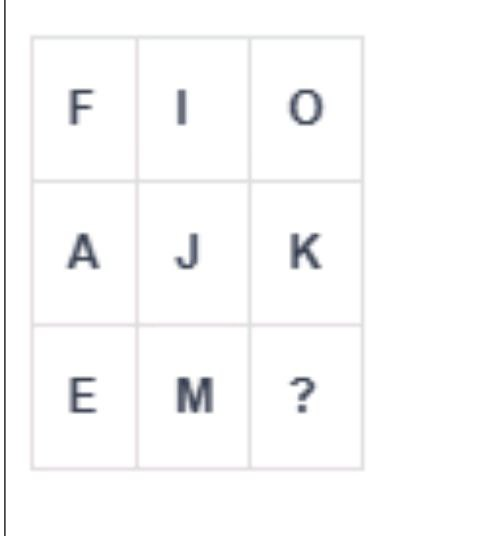
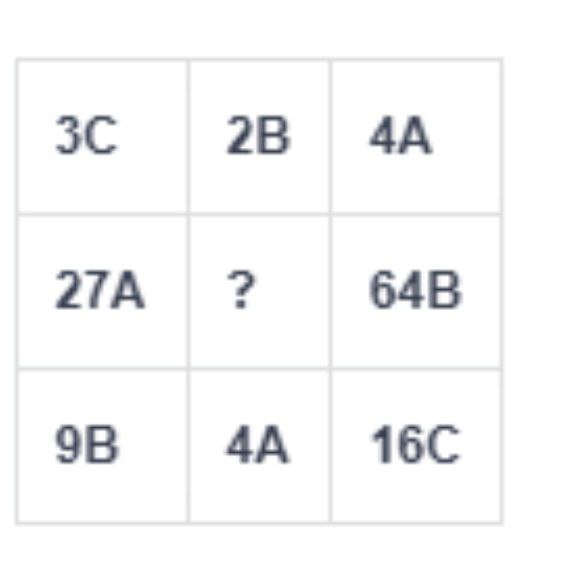
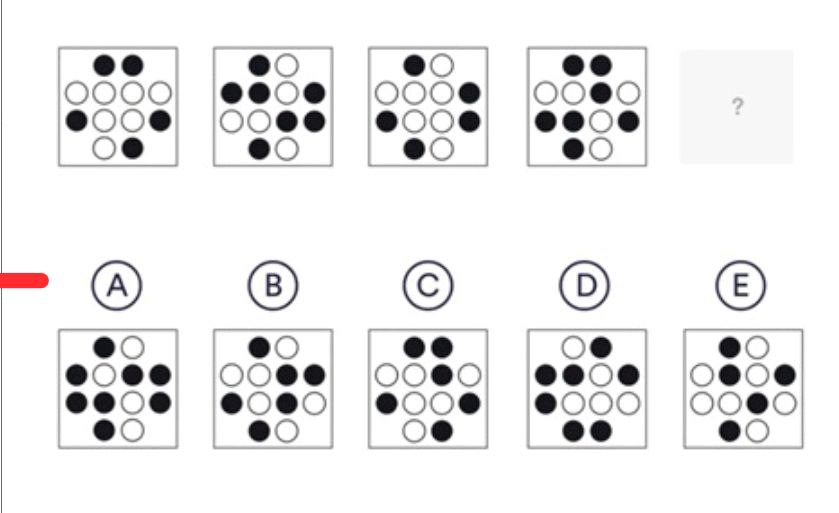
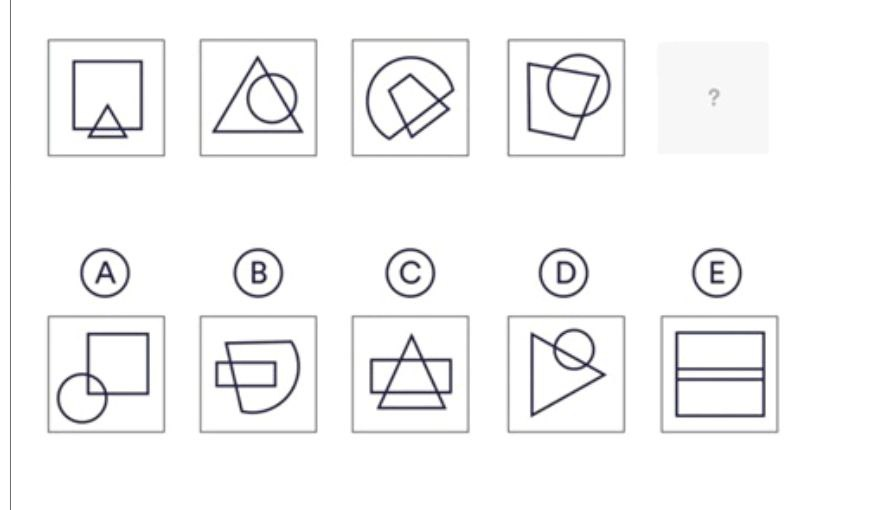
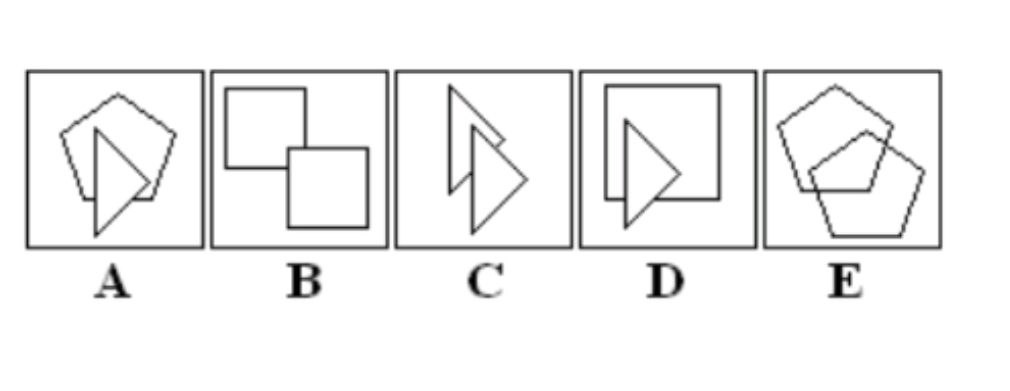
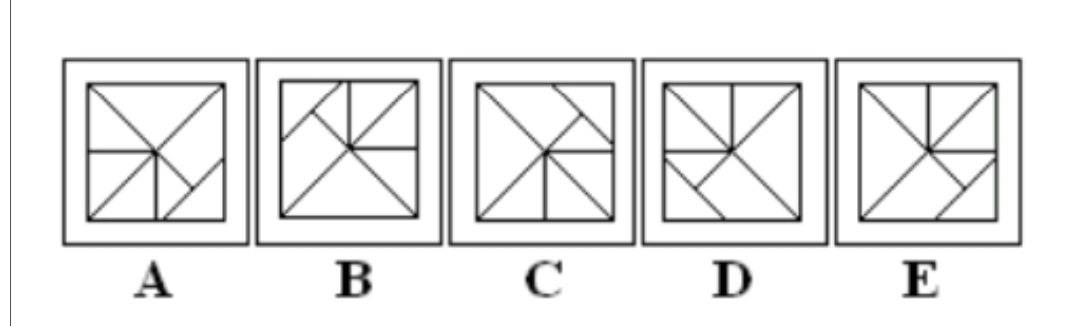
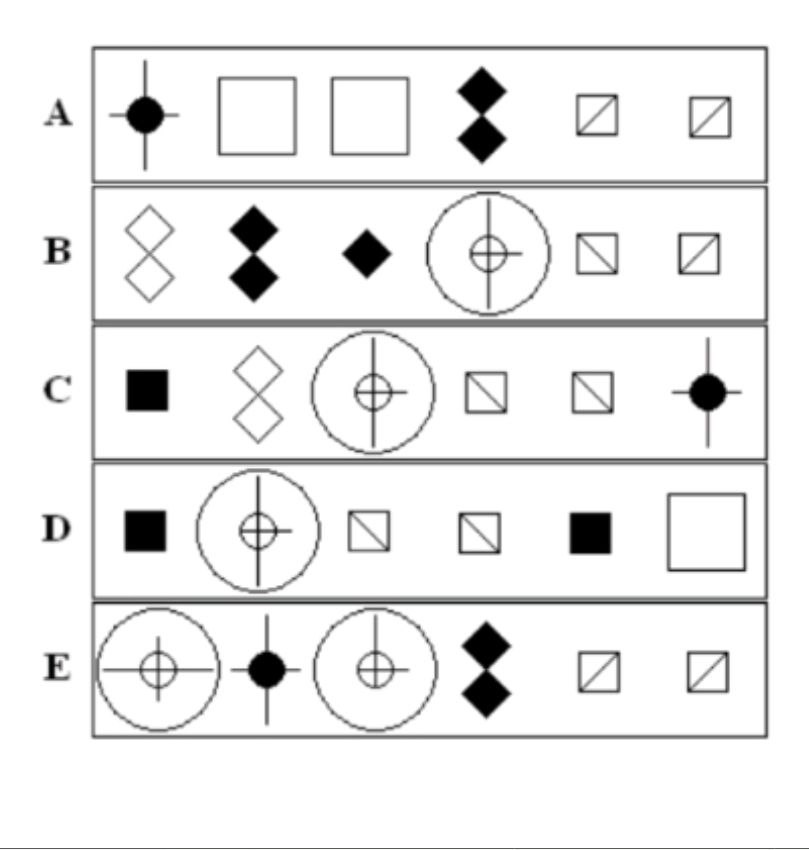
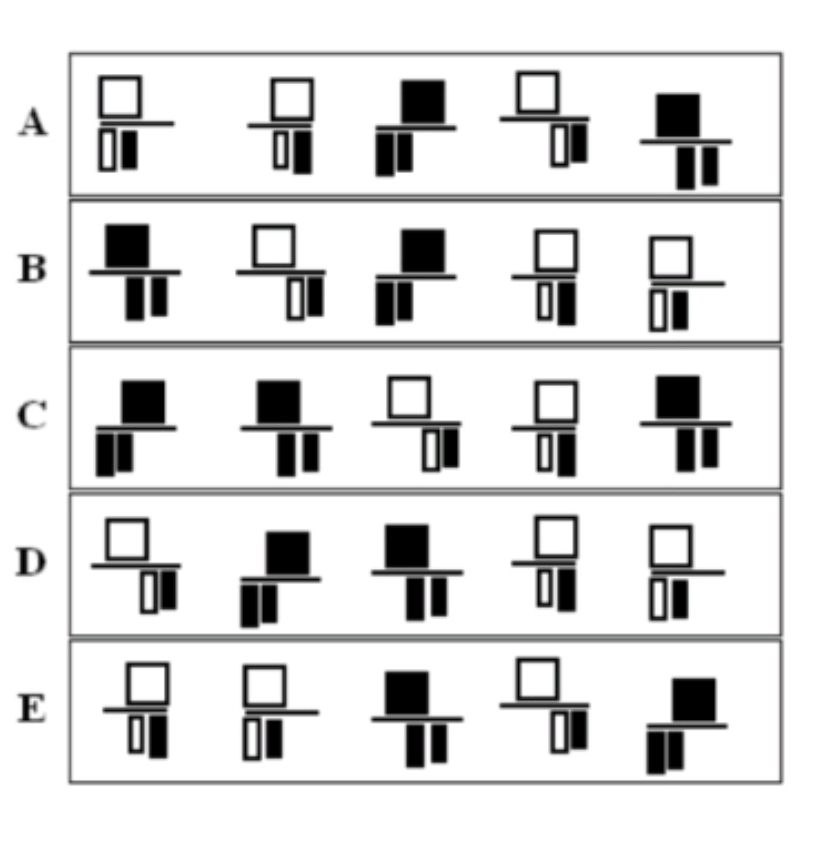
Questions 151–153 share this
Today, every major anthology of nineteenth century poetry includes examples of the work which Christina Rossetti produced during her long literary career. Born in 1830, she began composing verse at the age of eleven and continued to write for the remaining fifty-three years of her life. Her brother, Dante Gabriel Rossetti, himself a poet and painter, soon recognized her genius and urged her to publish her poems. By the time of her death in 1894, Rossetti had written more than eleven hundred poems and had published over nine hundred of them. Although this work has earned her recognition as the greatest woman poet of the Victorian Age, there is still no authoritative edition of her poetry
The word "anthology” (line I) means:
- Awriter
- Bpoem
- Ccollection
- Dpoet
- Ehistory
Show answerHide answer
Answer: C
Approach: Vocabulary in context — read the word in its sentence.
Solution: "Every major anthology of nineteenth century poetry includes examples of the work..." — an anthology includes works of many poets, so it is a collection of literary pieces.
Why the other options are wrong:
A writer / D poet: a person, cannot 'include examples of work'.
B poem: a single piece, not a container of many.
E history: a narrative of events, not a compilation of poems.
Cetking shortcut: If the word 'includes' many items, it must be a container noun — only 'collection' qualifies.
Answer: C
Refer to the passage above ↑
Christina Rossetti began writing poetry:
- Aonly after her brother urged her to do so.
- Bwhen she was fifty three years old.
- Cwhen she was very young.
- Dwhen her genius was recognized.
- Ewhen she started reading the works of other poets.
Show answerHide answer
Answer: C
Approach: Specific detail — locate the line and match the paraphrase.
Solution: "She began composing verse at the age of eleven" — i.e., when she was very young.
Why the other options are wrong:
A: brother urged her to publish, not to begin writing.
B: 53 is the number of years she kept writing, not her age at start.
D: recognition came after she had started writing.
E: reading other poets is never mentioned.
Answer: C
Refer to the passage above ↑
By 1894, Rossetti had
- Apublished only a few of the many poems she had written.
- Bpublished all the poems she had written.
- Cpublished more than eleven hundred poems.
- Dpublished over nine hundred poems.
- Enot published any of her poems.
Show answerHide answer
Answer: D
Approach: Specific detail — match the exact figure.
Solution: "Rossetti had written more than eleven hundred poems and had published over nine hundred of them."
Why the other options are wrong:
A: 900 of 1,100 is most, not 'only a few'.
B: not all — about 200 remained unpublished.
C: 1,100+ were written, not published.
E: contradicts the 900 published.
Answer: D
Questions 154–156 share this
If life exists on Mars, it is most likely to be in the form of bacteria buried deep in the planet’s permafrost or lichens growing within rocks, say scientists from NASA. There might even be fossilized Martian algae locked up in ancient lake beds, waiting to be found. Christopher McKay of NASA's Ames Research Centre in California told the AAAS that exobiologists, who look for life on other planets, should look for clues among the life forms of the Earth's ultra-cold regions, where conditions are similar to those on Mars.
Lichens, for example, are found within some Antarctic rocks, just beneath the surface where sunlight can still reach them. The rock protects the lichen from cold and absorbs water providing enough for the lichen's needs, said McKay.
Bacteria have also been found in 3-million-year-old permafrost dug up from Siberia. If there are any bacteria alive on Mars today, they would have had to have survived from the time before the planet cooled more than 3 billion years ago. Nevertheless, McKay is optimistic: "It may be possible that bacteria frozen into the permafrost at the Martian South Pole may be viable".
McKay said algae is found in Antarctic lakes with permanently frozen surfaces. Although no lakes are thought to exist on Mars today, they might have existed long ago. If so, the dried-out Martian lake beds may contain the fossilised remains of algae. On Earth, masses of microscopic algae form large, layered structures known as Stromatolites, which survive as fossils on lake beds, and the putative Martian algae might have done the same thing, said Jack Farmer, one of McKay’s colleagues.
The researchers are compiling a list of promising Martian lake beds to be photographed from spacecraft, said Farmer. Those photographed could help to select sites for landers that would search for signs of life, past or present. “If we find algae on Mars, I would say the universe is lousy with algae,” McKay said “Intelligence would be another question”.
The passage is primarily concerned with:
- Athe possibility of life on Mars
- Bselecting sites for Landers on Mars
- Cresearch on Mars
- Dfindings of Christopher McKay on Mars
- EAlgae found on Mars
Show answerHide answer
Answer: A
Approach: Main idea — find the thread that runs through every paragraph.
Solution: Para 1: life on Mars, if any, is likely bacteria/lichens/algae. Paras 2–4: Earth analogues (lichens in Antarctic rock, bacteria in permafrost, algae in frozen lakes). Para 5: lake beds to photograph to search for signs of life. Every paragraph is about the possibility of life on Mars.
Why the other options are wrong:
B: site selection is one detail in the last paragraph.
C: too broad — 'research on Mars' could be geology, climate etc.
D: the views are of several scientists, and they are hypotheses, not 'findings on Mars'.
E: algae have not been found on Mars; only possibly.
Cetking shortcut: Words like 'if', 'might', 'may be viable' signal the topic is a possibility.
Answer: A
Refer to the passage above ↑
The most primitive forms of life likely to exist on Mars are all the following except
- AVillus and space
- BBacteria
- CLichen
- DAlgae
- EMicrobes
Show answerHide answer
Answer: A
Approach: RC factual EXCEPT — tick off what the passage names.
Solution: The passage names bacteria (permafrost), lichens (within rocks) and algae (lake beds); all of these are microbes/simple life. "Villus and space" is never mentioned and is not a life form.
Why the other options are wrong:
B, C, D: each is explicitly named as a likely Martian life form.
E: bacteria and microscopic algae are microbes, so this is covered.
Answer: A
Refer to the passage above ↑
Which of the following statements is not true?
- AIf any bacteria are alive today on Mars, they must have survived from the time before the planet cooled
- BSpace photographs of Martian craters should reveal to the explorers signs of life there
- CBacteria frozen into permafrost at the Martian South Pole may be viable
- DOn digging up: more than 3 million years old Siberian permafrost has revealed bacteria
- EAlgae could have existed on Mars
Show answerHide answer
Answer: B
Approach: RC 'not true' — verify each option against the text.
Solution: The passage says researchers will photograph lake beds only to help select sites for landers, which would then search for life. Option B says photographs of craters should themselves reveal signs of life — both the object and the claim are wrong.
Why the other options are wrong:
A: stated — survivors from before the planet cooled.
C: McKay's quote, almost verbatim.
D: bacteria found in 3-million-year-old Siberian permafrost.
E: dried lake beds may contain fossil algae.
Cetking shortcut: In 'not true' questions, look for the option with a swapped noun or an overstated verb ('should reveal').
Answer: B
Questions 157–160 share this
Know Your Product. Believe in Your Product and sell with Enthusiasm.
These are the fundamental selling truths. If you don't know your product, people will resent your efforts to sell it, if you don't believe in it, no amount of personality and technique will cover that fact; if you can't sell with enthusiasm the lack of it will be infectious.
Nothing turns off a potential customer quicker than a salesman's lack of familiarity with his products. Have you ever walked into a department store, asked a clerk how a particular gadget or appliance worked, then stood by while he fiddled with the knobs and wondered out loud why they don't make things simple anymore? Even if he finally gets it to work, by that time your interest has diminished and you are not likely to make the purchase.
Knowing your product also means understanding the idea behind its projection, how it is perceived - the relationship between it and what someone wants to buy. How will it help the customer? What problem is it solving? What is its promise?
An understanding of these intangible features is at least as important as knowing a product's mechanical features. Yet precisely because they are intangible, and may even vary from customer to customer, they are more prone to being misinterpreted and misunderstood
Knowing your product also means understanding the image it is projecting. I believe all products project an image of some sort. It may be a positive one, which you want to promote, or a negative one, which you need to overcome.
The home computer industry, for instance, really didn't take off until it solved its image problem. Here was the device that saved time and simplified all sorts of tasks, yet it looked complicated and difficult to use. Until it was made to seem "friendlier", less forbidding, sales lagged.
What, according to the author, would selling without enthusiasm result in?
- ANo sale at all
- BAbsence of enthusiasm in the buyers as well
- CLack of confidence of the salesman in the product
- DLack of knowledge on part of salesman
- EComplaints from buyers
Show answerHide answer
Answer: B
Approach: Specific detail — decode the key word 'infectious'.
Solution: "If you can't sell with enthusiasm, the lack of it will be infectious" — the salesman's lack of enthusiasm spreads to the customer, so buyers also become unenthusiastic.
Why the other options are wrong:
A: too extreme; the text predicts lost interest, not 'no sale at all'.
C, D: these are the other two 'truths' (belief, knowledge), not results of low enthusiasm.
E: complaints are never mentioned.
Answer: B
Refer to the passage above ↑
What does the author say about the image your product should project?
- AIt is always in harmony with the customers' needs
- BIts knowledge is necessary for the product to sell
- CThe better the image is, the higher your product will sell
- DIt serves to lift up the stagnating sales
- EIt should meet the customer expectations
Show answerHide answer
Answer: B
Approach: Specific detail — find what the author actually says about image.
Solution: "Knowing your product also means understanding the image it is projecting... It may be a positive one, which you want to promote, or a negative one, which you need to overcome." Knowing the product is the first selling truth, so knowledge of the image is necessary for the product to sell. The computer example (sales lagged until the image problem was solved) supports this.
Why the other options are wrong:
A: the image may be negative, so it is not 'always in harmony' with needs.
C: a proportional 'better image → higher sales' rule is not stated.
D: lifting stagnating sales is one example, not a general claim about image.
E: customer expectations are not linked to image in the text.
Cetking shortcut: Pick the option that restates the author's own sentence ('knowing... means understanding the image'), not a generalisation built from an example.
Answer: B
Refer to the passage above ↑
How does the author relate the intangible features of a product to its mechanical ones?
- AThe intangible features are more powerful than the mechanical ones
- BThe mechanical features cause the sale of product
- CNot understanding mechanical features can stagnate the sales
- DThe product can be thoroughly known only by knowledge of both.
- EThe mechanical features should outsmart the intangible ones.
Show answerHide answer
Answer: D
Approach: Inference — read the comparison phrase exactly.
Solution: "An understanding of these intangible features is at least as important as knowing a product's mechanical features." Both are parts of 'knowing your product', so the product is thoroughly known only with knowledge of both.
Why the other options are wrong:
A: 'at least as important' does not mean 'more powerful'.
B: ignores intangible features.
C: true-ish from the clerk example but does not relate the two kinds of features.
E: no rivalry between the two is suggested.
Cetking shortcut: 'At least as important as' = equality floor → look for the 'both' option.
Answer: D
Refer to the passage above ↑
What according to the author caused the initial set-back in the computer industry?
- AThe misplacement of brand in the market.
- BThe lack of faith in the product capacity.
- CComputers were highly complicated.
- DCost was very high
- EQuality was not up to the mark.
Show answerHide answer
Answer: C
Approach: Specific detail — find the stated cause of lagging sales.
Solution: "Here was the device that saved time and simplified all sorts of tasks, yet it looked complicated and difficult to use. Until it was made to seem 'friendlier'... sales lagged." The cause is that computers came across as highly complicated — option C.
Why the other options are wrong:
A: brand placement in the market is not discussed.
B: the passage concedes the product's capacity (saves time, simplifies tasks); the doubt was about ease of use.
D: cost is never mentioned.
E: quality is never mentioned.
Cetking shortcut: When the passage praises a feature ('saved time') right before 'yet', the problem lies after 'yet'.
Answer: C
Questions 161–165 share this
If translated into English, most of the ways economists talk among themselves would sound plausible enough to poets, journalists, business people, and other thoughtful though non-economical folk. Like serious talk anywhere— among boat designers and baseball fans, say — the talk is hard to follow when one has not made a habit of listening to it for a while. The culture of conversation makes the words arcane. But the people in the unfamiliar conversation are not Martians. Underneath it all (the economist’s favourite phrase), conversational habits are similar Economics uses mathematical models and statistical tests and market arguments, all of which look alien to the literary eye. But looked at closely, they are not so alien They may be seen as figures of speech-metaphors, analogies, and appeals to authority.
Figures of speech are not mere frills. They think for us. Someone who thinks of a market as an invisible hand' and the organization of work as a production function' and its coefficients as being significant, as an economist does, gives the language a lot of responsibility It seems a good idea to look hard at his language.
If economic conversation were found to depend a lot on its verbal forms, this would not mean that economics would be not a science, or just a matter of opinion, or some sort of confidence game. Good poets, though not scientists, are serious thinkers about symbols; good historians, though not scientists, are serious thinkers about data Good scientists also use language. What is more (though it remains to be shown) they use the cunning of language, without particularly meaning to. The language used is a social object, and using language in a social act. It requires cunning (or, if you prefer consideration) attention to the other and present when one speaks.
The paying of attention to one's audience is called 'rhetoric", a word that I later exercise hard. One uses rhetoric, of course, to warn of a fire in a theatre or to arouse the xenophobia of the electorate. This sort of yelling is the vulgar meaning of the word, like the president's heated rhetoric' in a press conference or the 'mere rhetoric to which our enemies stoop. Since the Greek flame was lit, though, the word has been used also in a broader and more amiable sense, to mean the study of all the ways of accomplishing things with language: inciting a mob to lynch the accused, to be sure, but also persuading readers of a novel that its characters breathe, or bringing scholars to accept the better argument and reject the worse. The question is whether the scholar- who usually fancies himself an announcer of 'results' or a starter of 'conclusions free of rhetoric speaks rhetorically. Does he try to persuade? It would seem so. Language, I just said, is not a solitary accomplishment. The scholar doesn't speak into the void, or to himself. He speaks to a community of voices. He desires to be heeded, praised, published, imitated, honoured, en-Nobeled. These are the desires. The devices of language are the means. Rhetoric is the proportioning of means to desires in speech.
Rhetoric is an economics of language, the study of how scarce means are allocated to the insatiable desires of people to be heard. It seems on the face of it a reasonable hypothesis that economists are like other people in being talkers, who desire listeners when they go to the library or the laboratory as much as when they go to the office or the polls. The purpose here is to see if this is true, and to see if it is useful: to study the rhetoric of economic scholarship. The subject is scholarship. It is not the economy, or the adequacy of economic theory as a description of the economy, or even mainly the economist's role in the economy.
The subject is the conversation economists have among themselves, for purposes of persuading each other that the interest elasticity of demand for investment is zero or that the money supply is controlled by the Federal Reserve.
Unfortunately, though, the conclusions are of more than academic interest. The conversations of classicists or of astronomers rarely affect the lives of other people. Those of economists do so on a large scale. A well known joke describes a May Day parade through Red Square with the usual mass of soldiers, guided missiles, rocket launchers. At last come rank upon rank of people in gray business suits. A bystander asks, "Who are those?" "Aha!" comes the reply, "Those are economists: you have no idea what damage they can do!" Their conversations do it.
According to the passage, which of the following is the best set of reasons for which one needs to 'look hard’ at an economist's language?
A. Economists accomplish a great deal through their language.
B. Economics is an opinion-based subject.
C. Economics has a great impact on others lives.
D. Economics is damaging.
- AA & D
- BB & D
- CA & C
- DB & C
- EA & B
Show answerHide answer
Answer: C
Approach: Multi-statement inference — test each statement against the text.
Solution: A: "Figures of speech are not mere frills. They think for us... gives the language a lot of responsibility. It seems a good idea to look hard at his language." — true.
B: the author says dependence on verbal forms would not make economics 'just a matter of opinion' — false.
C: "The conversations of classicists... rarely affect the lives of other people. Those of economists do so on a large scale" — true.
D: the 'damage' line is a joke; the author does not call economics damaging — false.
So the set is A & C.
Why the other options are wrong:
A (A & D), B (B & D), D (B & C), E (A & B): each includes B or D, which the passage rejects.
Cetking shortcut: Kill B first (the author denies it outright) — that removes three options at once.
Answer: C
Refer to the passage above ↑
In the light of the definition of rhetoric given in the passage, which of the following will have the least element of rhetoric?
- AAn election speech
- BAn advertisement jingle
- CDialogues in a play
- DCommands given by army officers
- ESongs in concerts
Show answerHide answer
Answer: D
Approach: Apply the passage's definition to each option.
Solution: Rhetoric is "the study of all the ways of accomplishing things with language" by paying attention to one's audience — persuading, moving, convincing. Army commands are obeyed because of rank and discipline, not because the words persuade; they need the least attention to the audience's response.
Why the other options are wrong:
A: an election speech is classic persuasion.
B: a jingle is crafted to persuade buyers.
C: dialogues make readers/viewers believe characters 'breathe' — the passage's own example.
E: songs are shaped to move an audience.
Answer: D
Refer to the passage above ↑
As used in the passage, which of the following is the closest meaning to the statement The culture of the conversation makes the words arcane’?
- AEconomists belong to a different culture.
- BOnly mathematicians can understand economists.
- CEconomists tend to use terms unfamiliar to the lay person, but depend on familiar linguistic forms.
- DEconomists use similes and adjectives in their analysis.
- EEconomists are difficult to converse with.
Show answerHide answer
Answer: C
Approach: Meaning of a statement in context — read the sentences around it.
Solution: The words become arcane (obscure) because one has not 'made a habit of listening' to the conversation; yet 'underneath it all, conversational habits are similar' and models are really 'metaphors, analogies, and appeals to authority'. So economists use terms unfamiliar to a lay person but rely on familiar linguistic forms — option C.
Why the other options are wrong:
A: contradicted — 'the people in the unfamiliar conversation are not Martians'.
B: mathematics is only one tool; nothing says only mathematicians understand.
D: 'similes and adjectives' are not what the line means.
E: about difficulty of conversing, not about the words being obscure.
Answer: C
Refer to the passage above ↑
As used in the passage, which of the following is the closest alternative to the word arcane?
- AMysterious
- BSecret
- CCovert
- DPerfidious
- EClumsy
Show answerHide answer
Answer: A
Approach: Vocabulary in context.
Solution: Arcane = known or understood by very few; obscure. Talk that is 'hard to follow' for outsiders is mysterious to them.
Why the other options are wrong:
B Secret / C Covert: imply deliberate concealment, which economists do not attempt.
D Perfidious: treacherous.
E Clumsy: awkward — unrelated.
Answer: A
Refer to the passage above ↑
Based on your understanding of the passage, which of the following conclusions would you agree with?
- AThe geocentric and the heliocentric views of the solar system are equally tenable.
- BThe heliocentric view is superior because of better rhetoric.
- CBoth views use rhetoric to persuade.
- DScientists should not use rhetoric
- EEconomics is not as interesting as poetry.
Show answerHide answer
Answer: C
Approach: Conclusion question — pick the option consistent with the author's central thesis.
Solution: The author argues that scholars and scientists, who think they only announce 'results', actually speak rhetorically: 'Does he try to persuade? It would seem so.' Applied to any scientific debate, both sides use rhetoric to persuade — option C. This follows the thesis without claiming either side is right.
Why the other options are wrong:
A: the passage does not judge the truth of rival scientific views.
B: rhetoric is a means of persuasion, not proof of superiority.
D: opposite — the author says good scientists use language and rhetoric naturally.
E: no comparison of how interesting the subjects are.
Cetking shortcut: In author-agreement questions, reject options that pass value judgements the author never makes (B, D, E).
Answer: C
Questions 166–170 share this
TO EACH WHAT SHE DESERVES
The second plan we now have to examine is that of giving each person what she deserves. Many people, especially those who are comfortably off, think that this is what happens at present: that the industrious and sober and thrifty are never in want, and that poverty is due to idleness, extravagance, drink, betting, dishonesty, and bad character generally.
They can point to the fact that a laborer whose character is bad finds it more difficult to get employment than one whose character is good; that a farmer or country gentleman who gambles and bets heavily, and mortgages his land to live wastefully and extravagantly, is soon reduced to poverty; and that a man of business who is lazy and does not attend to it becomes bankrupt.
But this proves nothing but that you cannot eat your cake and have it too: it does not prove that your share of the cake was a fair one
It shows that certain vices and weaknesses make us poor, but it forgets that certain other vices make us rich. People who are hard, grasping, selfish, cruel, and always ready to take advantage of their neighbours, become very rich if they are clever enough not to overreach themselves.
On the other hand, people who are generous, public-spirited, friendly, and not always thinking of the main chance, stay poor when they are born poor unless they have extraordinary talents.
Also, as things are today, some are born poor and others are born with silver spoons in their mouths that is to say, they are divided into rich and poor before they are old enough to have any character at all.
The notion that our present system distributes wealth according to merit, even roughly, may be dismissed at once as ridiculous. Everyone can see that it generally has the contrary effect, it makes a few idle people very rich, and a great many hardworking people very poor.
Choose the correct statement: The passage says that
- Athe hard-working, sober and thrifty people never want something for themselves
- Bbad people always lose their money, and stay poor ever after
- Cespecially those who are comfortably off think that what one gets is what one deserves
- Dthe poor never want to be rich anyway; they prefer to be idle rather than work
- Ewe must make a plan to give each person what she deserves.
Show answerHide answer
Answer: C
Approach: Specific detail — match who holds which view.
Solution: "Many people, especially those who are comfortably off, think that this is what happens at present" — i.e., that each person gets what she deserves. Option C restates this.
Why the other options are wrong:
A: 'never in want' means never poor, not 'never want something'.
B: 'always... ever after' is extreme; the text gives examples, not a rule.
D: never said about the poor.
E: the plan is being examined, not recommended.
Answer: C
Refer to the passage above ↑
In the passage, which kind of people are not mentioned as likely to get rich quickly?
- ASelfish
- BCruel
- CGrasping
- DHard
- EAmbitious
Show answerHide answer
Answer: E
Approach: RC factual EXCEPT — tick off the listed traits.
Solution: "People who are hard, grasping, selfish, cruel, and always ready to take advantage of their neighbours, become very rich." 'Ambitious' is not in the list.
Why the other options are wrong:
A, B, C, D: all four appear verbatim in the passage.
Answer: E
Refer to the passage above ↑
What, according to the author, do generous and public-spirited people need to become rich?
- AA criminal mind
- BTo be born with silver spoon
- CExtraordinary talent
- DStrength of character
- ECruel nature
Show answerHide answer
Answer: C
Approach: Specific detail — find the 'unless' condition.
Solution: "People who are generous, public-spirited... stay poor when they are born poor unless they have extraordinary talents."
Why the other options are wrong:
A, E: criminal or cruel traits belong to the other group, not a need of the generous.
B: birth with a silver spoon is a separate observation.
D: strength of character is never linked to getting rich.
Answer: C
Refer to the passage above ↑
Which of the following about the author's thinking may be inferred from the passage?
- AThe poor should work harder to become rich
- BThe present system of distribution of wealth is biased in favour of rich
- CThe honest men should resort to trickery if they want to become rich
- DThe present system of government should give way to more progressive one
- EThere is nothing good or bad in making money
Show answerHide answer
Answer: B
Approach: Inference — stay within the author's last paragraph.
Solution: "The notion that our present system distributes wealth according to merit... may be dismissed at once as ridiculous... it makes a few idle people very rich, and a great many hardworking people very poor." So the system is biased in favour of the rich.
Why the other options are wrong:
A: the author says hard work does not make one rich.
C: no advice to use trickery.
D: government is never discussed — goes beyond the text.
E: the author clearly judges the outcome as unfair.
Answer: B
Refer to the passage above ↑
Which of the following is not a vice attributed to the poor by the rich?
- AIdleness
- BDrug Addiction
- CGambling
- DAlcoholism
- EBad character
Show answerHide answer
Answer: B
Approach: RC factual EXCEPT — translate each listed vice.
Solution: The rich attribute poverty to "idleness, extravagance, drink, betting, dishonesty, and bad character". Drink = alcoholism, betting = gambling. Drug addiction is not mentioned.
Why the other options are wrong:
A: idleness — listed.
C: gambling = betting — listed.
D: alcoholism = drink — listed.
E: bad character — listed.
Answer: B
Questions 171–180 share this
In the following passage, there are blanks, each of which has been numbered. These numbers are given below the passage as questions and against each, five words are suggested as alternative options, one of which fits the blank appropriately. Find out the appropriate words in each case.
Do women ...(1)... leadership differently than men do? And if so, will feminine leadership ...(2)... where ...(3)... leadership does not? A recent study suggests somewhat paradoxically that female managers ...(4)... their male ...(5)... even when the personal characteristics of both are very ...(6)... Of the two schools of thought, the structuralist theory argues that men and women do not receive the same treatment in the workplace and that stamping out ...(7)... bias would stamp out the observed ...(8)... In contrast, the socialization theory contends that men and women experience work differently because men see work as more ...(9)... to their lives. These ...(10)... explanations apart, today, business appears to be undergoing feminization of leadership
Select the most appropriate option to fill in blank no. 1
- Aexercise
- Bundertake
- Cempower
- Dauthorise
- Etolerate
Show answerHide answer
Answer: A
Approach: Cloze — choose the word that fits both grammar and the passage's logic/collocation.
Solution: The question is whether women use/practise leadership differently from men. The fixed collocation is exercise leadership (like exercise power, exercise authority).
Why the other options are wrong:
B undertake: used for tasks, journeys, responsibilities ('undertake a project'), not leadership.
C empower: one empowers people, not leadership.
D authorise: means to give permission.
E tolerate: means to put up with — wrong sense.
Cetking shortcut: Power/authority/leadership/control → 'exercise'.
Answer: A
Refer to the passage above ↑
Select the most appropriate option to fill in blank no. 2.
- Aaffect
- Bsucceed
- Ccompete
- Dprofess
- Edominate
Show answerHide answer
Answer: B
Approach: Cloze — choose the word that fits both grammar and the passage's logic/collocation.
Solution: "Will feminine leadership succeed where masculine leadership does not?" — the natural question is whether one style works where the other fails.
Why the other options are wrong:
A affect: needs an object.
C compete: 'compete where the other does not' makes little sense.
D profess: means to declare.
E dominate: needs an object and misses the success/failure contrast.
Answer: B
Refer to the passage above ↑
Select the most appropriate option to fill in blank no. 3.
- Atraditional
- Bcharismatic
- Cmasculine
- Dbenevolent
- Eauthoritarian
Show answerHide answer
Answer: C
Approach: Cloze — choose the word that fits both grammar and the passage's logic/collocation.
Solution: The paragraph compares women and men; 'feminine leadership' is set against masculine leadership.
Why the other options are wrong:
A traditional, B charismatic, D benevolent, E authoritarian: styles of leadership, not the gender contrast the passage sets up.
Answer: C
Refer to the passage above ↑
Select the most appropriate option to fill in blank no. 4.
- Aoutlive
- Boutcast
- Coutwork
- Doutstand
- Eoutdo
Show answerHide answer
Answer: E
Approach: Cloze — choose the word that fits both grammar and the passage's logic/collocation.
Solution: "Female managers outdo their male counterparts" — they perform better, which is 'paradoxical' given similar characteristics.
Why the other options are wrong:
A outlive: live longer.
B outcast: a noun for a rejected person.
C outwork: work harder — not what the study measures.
D outstand: not standard in this sense.
Answer: E
Refer to the passage above ↑
Select the most appropriate option to fill in blank no. 5.
- Aemployees
- Bsubordinates
- Cmanagers
- Dcounterparts
- Esuperiors
Show answerHide answer
Answer: D
Approach: Cloze — choose the word that fits both grammar and the passage's logic/collocation.
Solution: Female managers are compared with male managers in the same role — their male counterparts.
Why the other options are wrong:
A employees, B subordinates, E superiors: change the hierarchy — not equals.
C managers: 'their male managers' reads as their bosses.
Answer: D
Refer to the passage above ↑
Select the most appropriate option to fill in blank no. 6.
- Aminimal
- Bdistinct
- Cunique
- Dsimilar
- Econstant
Show answerHide answer
Answer: D
Approach: Cloze — choose the word that fits both grammar and the passage's logic/collocation.
Solution: The result is paradoxical because women outperform men even when their personal characteristics are very similar.
Why the other options are wrong:
A minimal: 'very minimal characteristics' is meaningless.
B distinct, C unique: if different, outperformance would not be paradoxical.
E constant: does not compare the two groups.
Cetking shortcut: 'Even when' needs a condition that should have made the result equal.
Answer: D
Refer to the passage above ↑
Select the most appropriate option to fill in blank no. 7.
- Aemployment
- Bculture
- Cgender
- Dclass
- Ecategory
Show answerHide answer
Answer: C
Approach: Cloze — choose the word that fits both grammar and the passage's logic/collocation.
Solution: Structuralists say men and women are not treated the same at work, so removing gender bias would remove the differences.
Why the other options are wrong:
A employment, B culture, D class, E category: none is the men-vs-women bias the sentence describes.
Answer: C
Refer to the passage above ↑
Select the most appropriate option to fill in blank no. 8.
- Avariations
- Bdiscriminations
- Cresemblances
- Ddistortions
- Ecentral
Show answerHide answer
Answer: A
Approach: Cloze — choose the word that fits both grammar and the passage's logic/collocation.
Solution: Stamping out gender bias would stamp out the observed variations — the differences in how men and women lead/perform.
Why the other options are wrong:
B discriminations: the bias itself, not the observed effect.
C resemblances: opposite meaning.
D distortions: implies falsified data.
E central: an adjective, grammatically impossible after 'the observed'.
Answer: A
Refer to the passage above ↑
Select the most appropriate option to fill in blank no. 9.
- Aneedy
- Bdesperate
- Cpreliminary
- Dtrivial
- Ecentral
Show answerHide answer
Answer: E
Approach: Cloze — choose the word that fits both grammar and the passage's logic/collocation.
Solution: Socialisation theory: men experience work differently because they see it as more central to their lives.
Why the other options are wrong:
A needy, B desperate: describe people, not work's importance.
C preliminary: means introductory.
D trivial: opposite of the intended sense.
Answer: E
Refer to the passage above ↑
Select the most appropriate option to fill in blank no 10.
- Acontradictory
- Bcorresponding
- Cdiscrimination
- Danalogical
- Eidentical
Show answerHide answer
Answer: A
Approach: Cloze — choose the word that fits both grammar and the passage's logic/collocation.
Solution: The structuralist and socialisation theories are introduced with 'In contrast', so they are contradictory explanations.
Why the other options are wrong:
B corresponding, E identical, D analogical: imply agreement.
C discrimination: a noun, does not fit before 'explanations'.
Answer: A
Pick out the nearest correct meaning or synonym of the words given below:
MENDACIOUS
- Atruthful
- Bmisleading
- Charmful
- Dfalse
- Esober
Show answerHide answer
Answer: D
Approach: Vocabulary — recall the exact meaning, then match the option with the same (or opposite) sense.
Solution: Mendacious (from Latin mendax, liar) = untruthful, lying. Closest: false.
Why the other options are wrong:
A truthful: antonym.
B misleading: may be unintentional; mendacious is outright lying — weaker match.
C harmful, E sober: unrelated.
Answer: D
Pick out the nearest correct meaning or synonym of the words given below:
PERNICIOUS
- Ascientific
- Bbaneful
- Cnegative
- Dradical
- Esturdy
Show answerHide answer
Answer: B
Approach: Vocabulary — recall the exact meaning, then match the option with the same (or opposite) sense.
Solution: Pernicious = having a harmful or destructive effect. Baneful (from 'bane') = harmful, destructive.
Why the other options are wrong:
A scientific, D radical, E sturdy: unrelated.
C negative: too general; does not mean destructive.
Answer: B
Pick out the nearest correct meaning or synonym of the words given below:
RIGMAROLE
- Acordon
- Bhokum
- Capposite
- Dweary
- Eerudite
Show answerHide answer
Answer: B
Approach: Vocabulary — recall the exact meaning, then match the option with the same (or opposite) sense.
Solution: Rigmarole = a long, rambling, meaningless story or procedure. Hokum = nonsense, meaningless talk.
Why the other options are wrong:
A cordon: a protective line.
C apposite: apt, appropriate.
D weary: tired — an adjective.
E erudite: learned.
Cetking shortcut: If both words are unknown, eliminate the known ones — cordon, apposite, weary, erudite all have clear meanings that don't fit.
Answer: B
Pick out the nearest correct meaning or synonym of the words given below:
OSTRACIZED
- AInitiate
- BSummarized
- CDispelled
- DCommand
- EExclude
Show answerHide answer
Answer: E
Approach: Vocabulary — recall the exact meaning, then match the option with the same (or opposite) sense.
Solution: Ostracized = excluded from society or a group. Closest: Exclude.
Why the other options are wrong:
A Initiate: to begin/admit — near opposite.
B Summarized, D Command: unrelated.
C Dispelled: driven away (doubts, fears), not people from a group.
Answer: E
Pick out the nearest correct meaning or synonym of the words given below:
BUOYANT
- Aoptimistic
- Btired
- Cempire
- Danxious
- Esturdy
Show answerHide answer
Answer: A
Approach: Vocabulary — recall the exact meaning, then match the option with the same (or opposite) sense.
Solution: Buoyant literally = able to float; figuratively = cheerful, optimistic (a buoyant mood, buoyant market).
Why the other options are wrong:
B tired, D anxious: near opposites.
C empire: a noun, unrelated.
E sturdy: strong, not light or cheerful.
Answer: A
Pick out the antonym for the words given below
RETRIBUTION
- AForgiveness
- Bgrudge
- Ccontempt
- Dpretend
- Ecompensation
Show answerHide answer
Answer: A
Approach: Vocabulary — recall the exact meaning, then match the option with the same (or opposite) sense.
Solution: Retribution = punishment inflicted as vengeance for a wrong. Opposite: forgiveness (pardoning the wrong).
Why the other options are wrong:
B grudge, C contempt: close to the same vengeful feeling.
D pretend: unrelated verb.
E compensation: making amends — not the opposite of punishment.
Answer: A
Pick out the antonym for the words given below
ABOMINATE
- ALove
- Brespect
- Ccontrol
- Dlet go
- Edespise
Show answerHide answer
Answer: A
Approach: Vocabulary — recall the exact meaning, then match the option with the same (or opposite) sense.
Solution: Abominate = to detest, loathe. Opposite: love.
Why the other options are wrong:
B respect: opposite of contempt, weaker than love.
C control, D let go: unrelated.
E despise: synonym, not antonym.
Cetking shortcut: Spot the synonym trap (despise) first; the antonym is its opposite.
Answer: A
Pick out the antonym for the words given below
SANGUINE
- Abloody
- Bthin
- Coptimistic
- Dgloomy
- Edangerous
Show answerHide answer
Answer: D
Approach: Vocabulary — recall the exact meaning, then match the option with the same (or opposite) sense.
Solution: Sanguine = cheerfully optimistic. Opposite: gloomy (pessimistic).
Why the other options are wrong:
A bloody: from root sanguis (blood) — a root trap, not the meaning.
B thin, E dangerous: unrelated.
C optimistic: synonym.
Answer: D
Pick out the antonym for the words given below
CHIMERICAL
- Aexact
- Breal
- Cobvious
- Dparticular
- Etalkative
Show answerHide answer
Answer: B
Approach: Vocabulary — recall the exact meaning, then match the option with the same (or opposite) sense.
Solution: Chimerical (from the mythical Chimera) = imaginary, fanciful. Opposite: real.
Why the other options are wrong:
A exact, C obvious, D particular: not opposites of 'imaginary'.
E talkative: unrelated.
Answer: B
Pick out the antonym for the words given below
VERBOSE
- Alaconic
- Btalkative
- Cvent
- Dsuspense
- Eobvious
Show answerHide answer
Answer: A
Approach: Vocabulary — recall the exact meaning, then match the option with the same (or opposite) sense.
Solution: Verbose = using more words than needed. Opposite: laconic (brief, terse).
Why the other options are wrong:
B talkative: synonym.
C vent, D suspense, E obvious: unrelated.
Answer: A
Read each sentence to find out whether there is any grammatical error in it. The error, if any will be in one part of the sentence.
Solve as per the direction given above
- AWe discussed about the problem so thoroughly
- Bon the eve of the examination
- Cthat I found it
- Dvery easy to work it out
- ENo error
Show answerHide answer
Answer: A
Approach: Error spotting — check each part for the grammar or usage rule it might break.
Solution: Discuss takes a direct object: 'We discussed the problem', not 'discussed about the problem'. Correct: We discussed the problem so thoroughly on the eve of the examination that I found it very easy to work it out.
Why the other options are wrong:
B, C, D: correct as written ('so... that' construction is fine).
Cetking shortcut: Verbs like discuss, describe, enter, resemble, order take no preposition.
Answer: A
Read each sentence to find out whether there is any grammatical error in it. The error, if any will be in one part of the sentence.
Solve as per the direction given above
- AAn Indian ship
- Bladen with merchandise
- Cgot drowned
- Din the Pacific Ocean.
- ENo error
Show answerHide answer
Answer: C
Approach: Error spotting — check each part for the grammar or usage rule it might break.
Solution: Only living beings drown; a ship sinks. Correct: An Indian ship laden with merchandise sank in the Pacific Ocean.
Why the other options are wrong:
A, B, D: correct ('laden with' is the right phrase).
Answer: C
Read each sentence to find out whether there is any grammatical error in it. The error, if any will be in one part of the sentence.
Solve as per the direction given above
- AI could not
- Bput up in a hotel
- Cbecause the boarding and lodging charges
- Dwere exorbitant.
- ENo error
Show answerHide answer
Answer: B
Approach: Error spotting — check each part for the grammar or usage rule it might break.
Solution: The phrasal verb is put up at (a hotel/inn), meaning to stay there. Correct: I could not put up at a hotel because the boarding and lodging charges were exorbitant.
Why the other options are wrong:
A, C, D: correct; 'charges were' agrees with the plural subject.
Answer: B
Read each sentence to find out whether there is any grammatical error in it. The error, if any will be in one part of the sentence.
Solve as per the direction given above
- AHe deserted the path of honour
- Bin order to
- Csatisfy his ambition
- Dand then went down his doom very quickly.
- ENo error
Show answerHide answer
Answer: D
Approach: Error spotting — check each part for the grammar or usage rule it might break.
Solution: The idiom needs to: 'went down to his doom'. Correct: He deserted the path of honour in order to satisfy his ambition and then went down to his doom very quickly.
Why the other options are wrong:
A, B, C: correct.
Answer: D
Read each sentence to find out whether there is any grammatical error in it. The error, if any will be in one part of the sentence.
Solve as per the direction given above
- AThis is one of
- Bthe most interesting book
- CI have
- Dever read.
- ENo error
Show answerHide answer
Answer: B
Approach: Error spotting — check each part for the grammar or usage rule it might break.
Solution: 'One of the most interesting books' — 'one of' picks one from a group, so the noun must be plural. Correct: This is one of the most interesting books I have ever read.
Why the other options are wrong:
A, C, D: correct.
Cetking shortcut: 'One of the ___' → always a plural noun.
Answer: B
In each of the following questions, a sentence is given in which a word has been highlighted in bold. This word is used as different parts of speech in English. Identify the correct part of speech based on usage in the sentence.
Our last encounter was chaotic.
- Aadverb
- Bnoun
- Cadjective
- Dpronoun
- Everb
Show answerHide answer
Answer: C
Approach: Parts of speech — identify the job the word does in this sentence.
Solution: last modifies the noun encounter (which encounter? the last one) → adjective.
Why the other options are wrong:
A adverb: would modify a verb ('He came last').
B noun: 'the last of the guests'.
D pronoun / E verb: 'the food will last' — not this sentence.
Answer: C
In each of the following questions, a sentence is given in which a word has been highlighted in bold. This word is used as different parts of speech in English. Identify the correct part of speech based on usage in the sentence.
The thief ran away lest he should be caught:
- Aadjective
- Bnoun
- Cpronoun
- Dconjunction
- Everb
Show answerHide answer
Answer: D
Approach: Parts of speech — identify the job the word does in this sentence.
Solution: lest joins the main clause 'The thief ran away' to the clause 'he should be caught' (= for fear that) → conjunction.
Why the other options are wrong:
A, B, C, E: lest never names, replaces, describes or acts — it only links clauses.
Answer: D
In each of the following questions, a sentence is given in which a word has been highlighted in bold. This word is used as different parts of speech in English. Identify the correct part of speech based on usage in the sentence.
Such was his ambition that could never be curbed.
- Anoun
- Bpronoun
- Cverb
- Dadjective
- Epreposition
Show answerHide answer
Answer: B
Approach: Parts of speech — identify the job the word does in this sentence.
Solution: In '...ambition that could never be curbed', 'that' is the subject of 'could never be curbed' and refers back to ambition → relative pronoun.
Why the other options are wrong:
A noun, C verb, E preposition: 'that' does none of these jobs.
D adjective: only when it precedes a noun ('that book').
Cetking shortcut: If you can replace 'that' with 'which', it is a relative pronoun.
Answer: B
In each of the following questions, a sentence is given in which a word has been highlighted in bold. This word is used as different parts of speech in English. Identify the correct part of speech based on usage in the sentence.
This is the book I was telling you about.
- Anoun
- Bpronoun
- Cpreposition
- Dadverb
- Eadjective
Show answerHide answer
Answer: C
Approach: Parts of speech — identify the job the word does in this sentence.
Solution: The sentence is 'the book (that) I was telling you about' = I was telling you about the book. 'About' governs the (moved) object book → preposition.
Why the other options are wrong:
A noun, B pronoun, E adjective: impossible here.
D adverb: 'about' is an adverb only without an object ('walk about'); here it has one.
Cetking shortcut: Rebuild the sentence: 'telling you about the book' — the object proves it is a preposition.
Answer: C
In each of the following questions, a sentence is given in which a word has been highlighted in bold. This word is used as different parts of speech in English. Identify the correct part of speech based on usage in the sentence.
It has rained continuously for three days.
- Aadjective
- Badverb
- Cconjunction
- Dpreposition
- Einterjection
Show answerHide answer
Answer: B
Approach: Parts of speech — identify the job the word does in this sentence.
Solution: continuously tells how it rained → modifies the verb 'rained' → adverb.
Why the other options are wrong:
A adjective: would be 'continuous'.
C, D, E: it neither joins, governs an object nor exclaims.
Answer: B
The question contains a pair of words followed by four options. The relationship between the first pair of words is similar to the relationship between the third word and one of the options. Choose the correct option that best completes the analogy.
Eye : Myopia :: Teeth : ?
- APyorrhoea
- BCataract
- CTrachoma
- DEczema
- EPsoriasis
Show answerHide answer
Answer: A
Approach: Organ : disease of that organ.
Solution: Myopia (short-sightedness) is a disorder of the eye.
So we need a disease of the teeth.
Pyorrhoea is an infection of the gums and tooth sockets that loosens teeth — a dental disease.
Why the other options are wrong:
B Cataract — eye disease (clouding of the lens).
C Trachoma — eye disease (bacterial infection).
D Eczema — skin disease.
E Psoriasis — skin disease.
Cetking shortcut: Group the options by organ: two eye, two skin, one teeth — the odd organ group of one is the answer.
Answer: A
The question contains a pair of words followed by four options. The relationship between the first pair of words is similar to the relationship between the third word and one of the options. Choose the correct option that best completes the analogy.
Wimbledon Trophy: Tennis :: Walker’s Cup: ?
- AHockey
- BGolf
- CCricket
- DPolo
- EWrestling
Show answerHide answer
Answer: B
Approach: Trophy : sport in which it is awarded.
Solution: The Wimbledon trophy is awarded in tennis.
The Walker Cup is the amateur golf team competition between the USA and Great Britain & Ireland.
Why the other options are wrong:
A Hockey — e.g. Beighton Cup, Rangaswami Cup.
C Cricket — e.g. Ashes, Ranji Trophy.
D Polo — e.g. Cowdray Park Gold Cup.
E Wrestling — no link with the Walker Cup.
Cetking shortcut: Walker Cup and Ryder Cup are both golf — remember the pair.
Answer: B
The question contains a pair of words followed by four options. The relationship between the first pair of words is similar to the relationship between the third word and one of the options. Choose the correct option that best completes the analogy.
Virology: Virus :: Entomology : ?
- AInsects
- BBacteria
- CFungi
- DAnimals
- EFishes
Show answerHide answer
Answer: A
Approach: Branch of science : what it studies.
Solution: Virology is the study of viruses.
Entomology is the study of insects (Greek entomon = insect).
Why the other options are wrong:
B Bacteria — bacteriology.
C Fungi — mycology.
D Animals — zoology.
E Fishes — ichthyology.
Answer: A
The question contains a pair of words followed by four options. The relationship between the first pair of words is similar to the relationship between the third word and one of the options. Choose the correct option that best completes the analogy.
Scale: Length :: Odometer : ?
- ASmell
- BTemperature
- CSpeed
- DRain
- ECurrent
Show answerHide answer
Answer: C
Approach: Instrument : quantity it measures.
Solution: A scale measures length.
An odometer is the dashboard instrument that records how far a vehicle has travelled, so it belongs to the vehicle-motion family. Of the quantities given, only speed is a vehicle-motion quantity (distance itself is not offered).
Why the other options are wrong:
A Smell — no instrument link with an odometer.
B Temperature — thermometer.
D Rain — rain gauge.
E Current — ammeter.
Cetking shortcut: Eliminate every option that has its own well-known instrument (thermometer, rain gauge, ammeter); only Speed is left in the vehicle family.
Answer: C
The question contains a pair of words followed by four options. The relationship between the first pair of words is similar to the relationship between the third word and one of the options. Choose the correct option that best completes the analogy.
Annihilation : Fire :: Cataclysm : ?
- ASteam
- BEarthquake
- CEmergency
- DDisaster
- ERadiation
Show answerHide answer
Answer: B
Approach: Effect : cause (the second word is what brings about the first).
Solution: Annihilation (total destruction) can be brought about by fire.
A cataclysm (a sudden violent upheaval) is brought about by an earthquake — a natural force that causes it, just as fire causes annihilation.
Why the other options are wrong:
A Steam — not a cause of large-scale upheaval.
C Emergency — a situation, not a cause.
D Disaster — a synonym of cataclysm, not its cause.
E Radiation — not the typical cause of a cataclysm.
Cetking shortcut: When the option list has a synonym of the third word (Disaster), it is usually a trap — the pair is cause–effect, not synonyms.
Answer: B
Find the odd word from the given alternatives.
- APetrol
- BAcetone
- CKerosene
- DMercury
- EPropane
Show answerHide answer
Answer: D
Approach: Classification by property — fuels/flammable liquids vs. a metal.
Solution: Petrol, Acetone, Kerosene and Propane are all flammable hydrocarbons/organic compounds used as fuels or solvents.
Mercury is a metal (the only metal liquid at room temperature) and does not burn.
Why the other options are wrong:
A Petrol — fuel.
B Acetone — flammable solvent.
C Kerosene — fuel.
E Propane — fuel gas.
Answer: D
Find the odd word from the given alternatives.
- A728
- B512
- C343
- D216
- E125
Show answerHide answer
Answer: A
Approach: Perfect cubes.
Solution: 512 = 8³, 343 = 7³, 216 = 6³, 125 = 5³.
728 is not a cube (9³ = 729).
So 728 is the odd one.
Cetking shortcut: Know cubes 1–12 by heart; 728 = 9³ − 1 is a classic near-miss.
Answer: A
Find the odd word from the given alternatives.
- AProphecy
- BOmen
- CHistory
- DForecast
- EPrediction
Show answerHide answer
Answer: C
Approach: Meaning group — future vs. past.
Solution: Prophecy, Omen, Forecast and Prediction all point to the future.
History is a record of the past.
Why the other options are wrong:
A Prophecy — foretells the future.
B Omen — a sign of a future event.
D Forecast — future estimate.
E Prediction — statement about the future.
Answer: C
Find the odd one out from the given alternatives
- A2, 3, 5, 7
- B11, 13, 17, 19
- C23, 29, 31, 37
- D40, 41, 43, 47
- E53, 59, 61, 67
Show answerHide answer
Answer: D
Approach: Prime numbers.
Solution: A: 2, 3, 5, 7 — all prime.
B: 11, 13, 17, 19 — all prime.
C: 23, 29, 31, 37 — all prime.
E: 53, 59, 61, 67 — all prime.
D: 40 = 2³ × 5 is not prime.
Cetking shortcut: Scan for an even number other than 2 — it breaks primality instantly.
Answer: D
Find the odd one out from the given alternatives
- ATime
- BDistance
- CSpeed
- DMass
- EEnergy
Show answerHide answer
Answer: C
Approach: Basic quantity vs. rate.
Solution: Time, Distance, Mass and Energy are each quantities in their own right.
Speed is a rate — it is defined as distance ÷ time, i.e. it is built from two of the other options.
Why the other options are wrong:
A Time — basic quantity.
B Distance — basic quantity (length).
D Mass — basic quantity.
E Energy — a quantity on its own, not a ratio of the others listed.
Cetking shortcut: Look for the option that can be written using two of the others: Speed = Distance/Time.
Answer: C
If MANGO is written as RFSLT, how is ORANGE written in that code?
- AQTPKJD
- BPQNJIF
- CUXGTMK
- DQTPJDF
- ETWFSLJ
Show answerHide answer
Answer: E
Approach: Uniform letter shift.
Solution: M→R, A→F, N→S, G→L, O→T: every letter moves +5.
ORANGE: O+5=T, R+5=W, A+5=F, N+5=S, G+5=L, E+5=J.
Code = TWFSLJ.
Cetking shortcut: Check only the first letter: O+5 = T — only option E starts with T.
Answer: E
If WATER is written as YCVGT, then which word is written as HKTG?
- AFIRE
- BLOVE
- CBALD
- DKITE
- ECARD
Show answerHide answer
Answer: A
Approach: Uniform letter shift — decode (reverse).
Solution: W→Y, A→C, T→V, E→G, R→T: every letter moves +2.
To decode HKTG move each letter −2: H→F, K→I, T→R, G→E.
Word = FIRE.
Cetking shortcut: Decode just the first letter: H−2 = F — only FIRE starts with F.
Answer: A
If MUSIC is coded as LVRJB, how is NOTES coded in that code?
- AMPSFR
- BMQVFT
- COPUFT
- DMQVET
- EPQVET
Show answerHide answer
Answer: A
Approach: Alternating −1 / +1 shift.
Solution: M−1=L, U+1=V, S−1=R, I+1=J, C−1=B → pattern −1, +1, −1, +1, −1.
NOTES: N−1=M, O+1=P, T−1=S, E+1=F, S−1=R.
Code = MPSFR.
Cetking shortcut: After N→M, only A, B, D start with M; O+1 = P leaves only A.
Answer: A
If A1B3C5D7E9 is coded as B2C4D6E8F0, how is M3N5O7P9 coded in the same way?
- AN4O6P8Q0
- BN4O6P8Q1
- CL4M6N8O0
- DN4O6P8R0
- EO5P7Q9R0
Show answerHide answer
Answer: A
Approach: Separate shift for letters and digits.
Solution: Letters: A→B, B→C, C→D, D→E, E→F (+1).
Digits: 1→2, 3→4, 5→6, 7→8, 9→0 (+1, keeping the units digit, so 9→0).
M3N5O7P9 → M→N, 3→4, N→O, 5→6, O→P, 7→8, P→Q, 9→0 = N4O6P8Q0.
Why the other options are wrong:
B — last digit 1 (9 must become 0).
C — letters shifted −1.
D — P became R (+2).
E — letters shifted +2.
Cetking shortcut: Check the tail: P→Q and 9→0 — only option A ends in Q0.
Answer: A
If 1294 is written as 3516, how is 1385 written in the same code?
- A3890
- B2950
- C2049
- D3607
- E3039
Show answerHide answer
Answer: D
Approach: Position-wise digit addition (units digit kept).
Solution: 1→3 (+2), 2→5 (+3), 9→1 (+2, 11 → units digit 1), 4→6 (+2).
Pattern: +2, +3, +2, +2.
1385: 1+2=3, 3+3=6, 8+2=10→0, 5+2=7 → 3607.
Cetking shortcut: First two digits 3, 6 already fix option D.
Answer: D
A woman introduces a man as the son of the brother of her mother. How is the man related to the woman?
- ABrother
- BUncle
- CNephew
- DCousin
- EFather
Show answerHide answer
Answer: D
Approach: Decode the relation chain from the woman.
Solution: Her mother's brother = her maternal uncle.
The uncle's son = her cousin.
Why the other options are wrong:
A Brother — would be her mother's son.
B Uncle — would be the mother's brother himself.
C Nephew — would be her sibling's son.
E Father — mother's husband, not mother's brother's son.
Answer: D
If A is the mother of B, B is the son of C, and D is the brother of C, how is D related to A?
- ABrother-in-law
- BUncle
- CNephew
- DCousin
- EFather
Show answerHide answer
Answer: A
Approach: Build a family tree.
Solution: A is the mother of B; B is the son of C → C is B's father, so A and C are husband and wife.
D is the brother of C → D is the brother of A's husband.
Husband's brother = brother-in-law.
Why the other options are wrong:
B Uncle — D is B's uncle, not A's.
C Nephew, D Cousin, E Father — no link supports these.
Answer: A
Vinod is the brother of Bhaskar. Manohar is the sister of Vinod. Biswal is the brother of Preetam and Preetam is the daughter of Bhaskar. Who is the uncle of Biswal?
- ABhaskar
- BManohar
- CPreetam
- DVinod
- EData not sufficient
Show answerHide answer
Answer: D
Approach: Family tree; ignore distractor names.
Solution: Vinod is Bhaskar's brother; Manohar is Vinod's (and Bhaskar's) sister.
Preetam is Bhaskar's daughter, Biswal is Preetam's brother → Biswal is Bhaskar's son.
Father's brother = paternal uncle → Vinod.
Why the other options are wrong:
A Bhaskar — father of Biswal.
B Manohar — sister of Bhaskar, i.e. aunt.
C Preetam — sister of Biswal.
E — data is sufficient.
Cetking shortcut: Names do not reveal gender here — "Manohar is the sister" makes Manohar female; trust the stated relation, not the name.
Answer: D
If A # B means A is brother of B, A @ B means A is mother of B, A $ B means A is father of B, A & B means A is sister of B. In the expression G @ O & S # V $ J, how is S related to father of J, who is a male?
- ABrother
- BUncle
- CSon
- DNephew
- EBrother-in-law
Show answerHide answer
Answer: A
Approach: Coded relations — decode the chain left to right.
Solution: G @ O → G is the mother of O.
O & S → O is the sister of S.
S # V → S is the brother of V.
V $ J → V is the father of J (male).
So the father of J is V, and S is V's brother.
Why the other options are wrong:
B Uncle — S is J's uncle, but the question asks S's relation to J's father.
C Son, D Nephew — S and V are siblings, same generation.
E Brother-in-law — S and V share mother G, so they are real brothers.
Cetking shortcut: Read the question twice: "related to father of J" — stop at V.
Answer: A
Read the following information carefully to answer the questions given below :
(i) ‘A × B’ means A is the brother of B;
(ii) ‘A ÷ B’ means B is the father of A;
(iii) ‘A + B’ means A is the sister of B;
(iv) ‘A − B’ means A is the mother of B;
Which of the following means 'Q is the paternal uncle of K'?
- AK + B ÷ N × Q + D
- BK × B ÷ N × Q × D
- CQ × L ÷ R × K
- DK × P ÷ M × Q
- EK + P ÷ M × Q
Show answerHide answer
Answer: B
Approach: Coded relations — the expression must fix both "sibling of K's father" and "Q is male".
Solution: Option B: K × B → K is B's brother; B ÷ N → N is B's (and K's) father; N × Q → N is Q's brother, so Q is N's sibling; Q × D → Q is D's brother, so Q is male.
Q = male sibling of K's father = paternal uncle.
Why the other options are wrong:
A — Q + D makes Q a sister → paternal aunt.
C — Q is L's brother and R (L's father) is K's brother → Q is K's nephew.
D — Q's gender is not fixed (could be aunt).
E — Q's gender is not fixed (could be aunt).
Cetking shortcut: Paternal uncle needs two things: Q is a sibling of K's father AND Q is male. Eliminate options where Q is the last term (gender unknown) — only A and B remain, and A makes Q a sister.
Answer: B
A clock is so placed that at 12 noon its minute hand points towards northeast. In which direction does its hour hand point at 1:30 p.m.?
- ANorth
- BSouth
- CEast
- DWest
- ENorth-East
Show answerHide answer
Answer: C
Approach: Rotated clock — find the rotation, then turn the hand by its angle.
Solution: At 12 noon the minute hand is on 12, and it points north-east. So the "12" mark faces NE: the clock is turned 45° clockwise from normal.
At 1:30 the hour hand is 1.5 × 30° = 45° clockwise from 12.
Direction = NE + 45° clockwise = East.
Why the other options are wrong:
A North — would need the hand 45° anticlockwise of 12.
B South, D West — 135°/225° away from 12 on this clock.
E North-East — that is the 12 position, hour hand is at 12 only at 12:00.
Cetking shortcut: Hour hand moves 30° per hour, so 1:30 = 45° — exactly one compass step (NE → E).
Answer: C
A man is facing west. He turns 45° clockwise, then 180° clockwise, and then 270° counterclockwise. In which direction is he facing now?
- ASouth
- BSouth-West
- CNorth
- DNorth-West
- ENorth-East
Show answerHide answer
Answer: B
Approach: Net rotation.
Solution: Clockwise: 45° + 180° = 225°. Anticlockwise: 270°.
Net = 225° − 270° = −45°, i.e. 45° anticlockwise.
From West, 45° anticlockwise → South-West.
Why the other options are wrong:
A South — 90° anticlockwise of West.
C North — 90° clockwise of West.
D North-West — 45° clockwise of West.
E North-East — opposite of South-West.
Cetking shortcut: Net every turn to one number first; never trace turn by turn.
Answer: B
Questions 23–24 share this
Read the following information and answer the given questions
Farmer Batuk Singh has a larger square field divided into nine smaller square fields, all equal, arranged in three rows of three fields each. One side of the field runs exactly east-west. The middle square must be planted with rice because it is wet. The wheat and barley should be continuous so that they can be harvested all at once by a mechanical harvester. Two of the fields should be planted with soybeans. The northwestern most field should be planted with peanuts and the southern third of the field is suitable only for vegetables.
If Batuk Singh decides to plant the wheat next to the peanuts, in which square will the barley be?
- AThe square immediately north of the rice
- BThe square immediately east of the rice
- CThe square immediately west of the rice
- DThe square immediately north east of the rice
- EThe square immediately north west of the rice
Show answerHide answer
Answer: D
Approach: 3×3 grid placement — fix the given squares, then place the adjacent pair.
Solution:
| Peanuts (NW) | N | NE |
| W | Rice (centre) | E |
| Vegetables | Vegetables | Vegetables |
Fixed: NW = peanuts, centre = rice, whole south row = vegetables.
Free squares: N, NE, W, E for wheat + barley (adjacent pair) and two soybeans.
Wheat next to peanuts → wheat at N or W.
If wheat = W, its other neighbours are peanuts, rice and vegetables → no place for barley. ✗
So wheat = N and barley must be adjacent to N in a free square →
NE (the square immediately north-east of the rice). Soybeans then take W and E.
Why the other options are wrong:
A North — that is the wheat.
B East, C West — soybeans.
E North-west — peanuts.
Cetking shortcut: The free squares N–NE–E form an L; W is isolated (between peanuts, rice and vegetables), so W can never hold wheat or barley.
Answer: D
Refer to the passage above ↑
Which square can be planted with wheat?
- AThe square immediately north of the rice
- BThe square immediately west of the rice
- CThe square immediately south of the rice
- DThe square immediately south west of the rice
- EThe square immediately north west of the rice
Show answerHide answer
Answer: A
Approach: Same grid — list every square that can hold wheat.
Solution:
| Peanuts (NW) | N | NE |
| W | Rice (centre) | E |
| Vegetables | Vegetables | Vegetables |
Free squares: N, NE, W, E. W is boxed in by peanuts, rice and vegetables, so the wheat–barley pair must be N–NE or NE–E; W and E-or-N take the soybeans.
Wheat can therefore be at N, NE or E.
Among the options only "immediately
north of the rice" (N) is possible.
Why the other options are wrong:
B West — isolated square, wheat would have no adjacent barley.
C South, D South-west — southern row is vegetables only.
E North-west — that square is fixed as peanuts.
Cetking shortcut: Any square already fixed (peanuts, vegetables) or isolated (W) is out at once — that kills B, C, D, E.
Answer: A
In the question below, two statements are given, followed by two conclusions numbered I and II. You have to take the given two statements to be true even if they seem to be at variance from commonly known facts. Read the conclusion and then decide which of the given conclusions logically follows from the two given statements, disregarding commonly known facts.
Statements: No women teacher can play. Some women teachers are athletes.
Conclusions:
I. Male athletes can play
II. Some athletes can play
- AOnly conclusion I follows
- BOnly conclusion II follows
- CEither I or II follows
- DNeither I nor II follows
- EBoth I and II follow
Show answerHide answer
Answer: D
Approach: Syllogism — Venn diagram, test each conclusion for certainty.
Solution: No women teacher can play → the set "women teachers" lies fully outside "can play".
Some women teachers are athletes → those athletes cannot play.
I: Male athletes are never mentioned → cannot be concluded.
II: The only athletes we know about are ones who cannot play; other athletes may or may not play → "Some athletes can play" is only a possibility, not certain.
Neither follows.
Why the other options are wrong:
A, B, E — each claims a conclusion that is only possible.
C Either–or — needs a complementary pair; I and II are not complementary.
Cetking shortcut: Valid from "No A is B" + "Some A is C" is only "Some C are not B" — here "Some athletes cannot play". Anything positive about athletes playing is a trap.
Answer: D
Mohan and Ramesh are ranked seventh and eleventh respectively from the top in a class of 41 students. What will be their respective ranks from the bottom in the class?
- A30th and 34th
- B35th and 31st
- C34th and 30th
- D34th and 31st
- E36th and 32nd
Show answerHide answer
Answer: B
Approach: Rank from bottom = Total + 1 − Rank from top.
Solution: Mohan: 41 + 1 − 7 = 35th.
Ramesh: 41 + 1 − 11 = 31st.
Order asked: Mohan then Ramesh → 35th and 31st.
Why the other options are wrong:
A — 41 − 11 and 41 − 7, wrong formula and wrong order.
C — 41 − 7 and 41 − 11, forgot the +1.
D, E — inconsistent values.
Cetking shortcut: The two bottom ranks must differ by the same 4 as the top ranks, and the better top rank gets the worse bottom rank — only B (35, 31) fits with the +1 formula.
Answer: B
Questions 27–30 share this
Six boys, A, B, C, D, E and F are marching in a line. They are arranged according to their height. The tallest are at the back and shortest in front.
- F is between B and A
- E is shorter than D but taller than C, who is taller than A.
- E and F have two boys between them.
- A is not the shortest among them all.
- ABetween A and B
- BBetween A and C
- CBetween D and C
- DBetween F and C
- EBetween F and B
Show answerHide answer
Answer: C
Approach: Height ordering — build the full chain once, then read each question.
Solution: D > E > C > A (from clue 2).
F is between B and A in height: either B < F < A or A < F < B.
If A < F < B, everyone (B, F, C, E, D) is taller than A → A is the shortest, which clue 4 forbids. So B < F < A.
Order from shortest: B, F, A, C, E, D. Check clue 3: F is 2nd, E is 5th → two boys (A, C) between them. ✓
| Front (shortest) | 1 | 2 | 3 | 4 | 5 | 6 (tallest, back) |
| Boy | B | F | A | C | E | D |
E (5th) stands between C (4th) and D (6th).
Why the other options are wrong:
A, B, D, E — E's neighbours are C and D only.
Cetking shortcut: Clue 4 ("A is not the shortest") is the key that decides B < F < A — apply it first.
Answer: C
Refer to the passage above ↑
- AA
- BB
- CC
- DD
- EE
Show answerHide answer
Answer: D
Approach: Read the tallest from the fixed order.
Solution: D > E > C > A (from clue 2).
F is between B and A in height: either B < F < A or A < F < B.
If A < F < B, everyone (B, F, C, E, D) is taller than A → A is the shortest, which clue 4 forbids. So B < F < A.
Order from shortest: B, F, A, C, E, D. Check clue 3: F is 2nd, E is 5th → two boys (A, C) between them. ✓
| Front (shortest) | 1 | 2 | 3 | 4 | 5 | 6 (tallest, back) |
| Boy | B | F | A | C | E | D |
The tallest (6th, at the back) is
D.
Answer: D
Refer to the passage above ↑
If we start counting from the shortest, which boy is fourth in the line?
- AA
- BB
- CC
- DD
- EE
Show answerHide answer
Answer: C
Approach: Count positions from the shortest.
Solution: D > E > C > A (from clue 2).
F is between B and A in height: either B < F < A or A < F < B.
If A < F < B, everyone (B, F, C, E, D) is taller than A → A is the shortest, which clue 4 forbids. So B < F < A.
Order from shortest: B, F, A, C, E, D. Check clue 3: F is 2nd, E is 5th → two boys (A, C) between them. ✓
| Front (shortest) | 1 | 2 | 3 | 4 | 5 | 6 (tallest, back) |
| Boy | B | F | A | C | E | D |
Counting from the shortest: B (1), F (2), A (3),
C (4).
Answer: C
Refer to the passage above ↑
- AA
- BB
- CC
- DD
- EE
Show answerHide answer
Answer: B
Approach: Read the shortest from the fixed order.
Solution: D > E > C > A (from clue 2).
F is between B and A in height: either B < F < A or A < F < B.
If A < F < B, everyone (B, F, C, E, D) is taller than A → A is the shortest, which clue 4 forbids. So B < F < A.
Order from shortest: B, F, A, C, E, D. Check clue 3: F is 2nd, E is 5th → two boys (A, C) between them. ✓
| Front (shortest) | 1 | 2 | 3 | 4 | 5 | 6 (tallest, back) |
| Boy | B | F | A | C | E | D |
The shortest (1st, in front) is
B.
Answer: B
Complete the series:
4, 7, 12, 19, 28, ?
- A37
- B29
- C39
- D32
- E35
Show answerHide answer
Answer: C
Approach: Differences form a series.
Solution: 7−4 = 3, 12−7 = 5, 19−12 = 7, 28−19 = 9 → differences are consecutive odd numbers.
Next difference = 11 → 28 + 11 = 39.
Cetking shortcut: Terms are n² + 3 (1+3, 4+3, 9+3, 16+3, 25+3) → 36 + 3 = 39.
Answer: C
Complete the series:
WXCD, UVEF, STGH, QRIJ, ?
- AOPKL
- BOPQR
- CLRMS
- DAYBZ
- EKLYZ
Show answerHide answer
Answer: A
Approach: Two letter pairs moving in opposite directions.
Solution: First pair: WX → UV → ST → QR (each letter −2) → next OP.
Second pair: CD → EF → GH → IJ (each letter +2) → next KL.
Next term = OPKL.
Why the other options are wrong:
B OPQR — second pair should be KL.
C, D, E — first pair is not OP.
Cetking shortcut: First pair alone (OP) cuts to A or B; second pair KL settles it.
Answer: A
How many meaningful words can be formed with the letter of the word LAME?
- A1
- B2
- C3
- D4
- E5
Show answerHide answer
Answer: C
Approach: Anagrams using all four letters L, A, M, E once each.
Solution: Meaningful English words: LAME, MALE, MEAL → 3 words.
Why the other options are wrong:
A, B — miss some valid anagrams.
D, E — would need non-standard words (e.g. Indian "mela" is not standard English).
Cetking shortcut: Fix the vowel pattern: L_ME, M_LE, ME_L — try each consonant at the front.
Answer: C
How many meaningful four-letter words can be formed using the second, sixth, eighth and tenth letters of the word 'ARCHITECTURE'?
- A1
- B2
- C3
- D4
- E5
Show answerHide answer
Answer: A
Approach: Pick letters by position, then form anagrams.
Solution: ARCHITECTURE: A1 R2 C3 H4 I5 T6 E7 C8 T9 U10 R11 E12.
2nd = R, 6th = T, 8th = C, 10th = U.
Letters R, T, C, U → only meaningful word: CURT → 1 word.
Cetking shortcut: Number the word once and write the positions above the letters — avoids miscounting repeated letters (C, T, R, E appear twice).
Answer: A
A word has been given in capital letters followed by four other words. Out of these, only one can be formed using the letters of the given word. Find out that word.
IMPATIENCE
- ACENTRE
- BREMAIN
- CPENCIL
- DIMPACT
- EPACKET
Show answerHide answer
Answer: D
Approach: Each letter of the option must be available in IMPATIENCE (with multiplicity).
Solution: IMPATIENCE has: I, I, M, P, A, T, E, E, N, C.
IMPACT = I, M, P, A, C, T — all present → can be formed.
Why the other options are wrong:
A CENTRE — no R.
B REMAIN — no R.
C PENCIL — no L.
E PACKET — no K.
Cetking shortcut: Look for the one letter not in the given word: R, R, L, K kill A, B, C, E.
Answer: D
A number arrangement machine, when given a particular input, rearranges it following a particular rule. The following is an illustration of the input and the stages of arrangement.
Input : 245, 316, 436, 519, 868, 710, 689
Step I 710, 316, 436, 519, 868, 245, 689
Step II 710, 316, 245, 519, 868, 436, 689
Step III: 710, 316, 245, 436, 868, 519, 689
Step IV: 710, 316, 245, 436, 519, 868, 689
Step IV is the last step of input. How many steps will be required to get the final output from the following input ?
Input : 544, 653, 325, 688, 461, 231, 857
- A4
- B5
- C6
- D3
- E2
Show answerHide answer
Answer: B
Approach: Input–output: selection-sort by digit sum, one swap per step.
Solution: Example digit sums: 245(11), 316(10), 436(13), 519(15), 868(22), 710(8), 689(23). Each step swaps the next-smallest-digit-sum number into the next position; a number already in place costs no step.
New input with digit sums: 544(13), 653(14), 325(10), 688(22), 461(11), 231(6), 857(20).
Step I: 231 ↔ 544 → 231, 653, 325, 688, 461, 544, 857
Step II: 325 ↔ 653 → 231, 325, 653, 688, 461, 544, 857
Step III: 461 ↔ 653 → 231, 325, 461, 688, 653, 544, 857
Step IV: 544 ↔ 688 → 231, 325, 461, 544, 653, 688, 857
653 already in place; Step V: 857 ↔ 688 → 231, 325, 461, 544, 653, 857, 688 (final).
Total = 5 steps.
Cetking shortcut: Replace each number by its digit sum (13, 14, 10, 22, 11, 6, 20) and run the swaps on these small numbers — far faster than copying full rows.
Answer: B
Questions 37–39 share this
A word and number arrangement machine, when given an input line of words and numbers, rearranges them following a particular rule at each step. The following is an illustration of input and rearrangement:
Input : exam 81 56 over down up 16 64
Step I : down exam 81 56 over up 16 64
Step II : down 81 exam 56 over up 16 64
Step III : down 81 exam 64 56 over up 16
Step IV : down 81 exam 64 over 56 up 16
Step IV is the last step of the rearrangement of the above input.
As per the rule followed in the above steps, answer the following questions.
Input: 98 11 64 22 but will an it
Which of the following will be step VI?
- AStep VI not possible as Step V is the last step
- Ban 98 but 64 it 22 11 will
- Can 98 but 64 it 22 will 11
- Dan 11 but 22 it 64 will 98
- Ean 11 but 22 it 64 98 will
Show answerHide answer
Answer: C
Approach: Input–output: alternate word (A→Z) and number (high→low), one placement per step.
Solution: Rule (from the example): words in alphabetical order and numbers in descending order alternate, starting with a word. Each step moves the next required element into the next position, shifting the rest right; if the required element is already in place, no step is used.
Input: 98 11 64 22 but will an it
Step I: an 98 11 64 22 but will it (98 is already in 2nd place, so nothing moves for it)
Step II: an 98 but 11 64 22 will it
Step III: an 98 but 64 11 22 will it
Step IV: an 98 but 64 it 11 22 will
Step V: an 98 but 64 it 22 11 will
Step VI: an 98 but 64 it 22 will 11 (final).
Why the other options are wrong:
A — Step VI exists (it is the last step).
B — that is Step V.
D, E — numbers in ascending order; the rule is descending.
Cetking shortcut: Write the final output first (an 98 but 64 it 22 will 11); the last step is always the final output, so check whether the asked step is the last one.
Answer: C
Refer to the passage above ↑
Input: 32 now 20 gift 53 box 62 at
Which of the following will be Step IV?
- Aat 62 box 53 32 now 20 gift
- Bat 62 box 53 gift 32 now 20
- Cat 62 box 53 gift 20 now 32
- Dat 62 box 53 gift 32 20 now
- EStep IV is not possible as Step III is the last step
Show answerHide answer
Answer: A
Approach: Same machine rule.
Solution: Rule (from the example): words in alphabetical order and numbers in descending order alternate, starting with a word. Each step moves the next required element into the next position, shifting the rest right; if the required element is already in place, no step is used.
Input: 32 now 20 gift 53 box 62 at
Step I: at 32 now 20 gift 53 box 62
Step II: at 62 32 now 20 gift 53 box
Step III: at 62 box 32 now 20 gift 53
Step IV: at 62 box 53 32 now 20 gift
(Step V: at 62 box 53 gift 32 now 20 — final.)
Why the other options are wrong:
B — that is Step V (final output).
C, D — numbers not in descending order of placement.
E — Step III is not the last step.
Cetking shortcut: Step IV must have exactly four elements placed (at 62 box 53) followed by the rest in their original relative order: 32 now 20 gift.
Answer: A
Refer to the passage above ↑
Input: pay by 18 36 nose ear 72 54
Which of the following steps will be the last step?
- A3
- B4
- C5
- D6
- E7
Show answerHide answer
Answer: D
Approach: Same machine rule — count steps till the final output.
Solution: Rule (from the example): words in alphabetical order and numbers in descending order alternate, starting with a word. Each step moves the next required element into the next position, shifting the rest right; if the required element is already in place, no step is used.
Input: pay by 18 36 nose ear 72 54
Step I: by pay 18 36 nose ear 72 54
Step II: by 72 pay 18 36 nose ear 54
Step III: by 72 ear pay 18 36 nose 54
Step IV: by 72 ear 54 pay 18 36 nose
Step V: by 72 ear 54 nose pay 18 36
Step VI: by 72 ear 54 nose 36 pay 18 (final — pay and 18 are already in place).
Last step = 6.
Cetking shortcut: Final output has 8 places; count how many fall into place by themselves (here the last two) — 8 − 2 = 6 steps.
Answer: D
A club has 256 members, of whom 144 can play football, 123 can play tennis, and 132 can play cricket. Moreover, 58 members can play both football and tennis, 25 can play both cricket and tennis, while 63 can play both football and cricket. If every member can play at least one game, then the number of members who can play only tennis is
- A48
- B43
- C45
- D52
- E50
Show answerHide answer
Answer: B
Approach: Three-set inclusion–exclusion, everyone in at least one set.
Solution: Total = F + T + C − (F∩T + T∩C + F∩C) + (F∩T∩C)
256 = 144 + 123 + 132 − (58 + 25 + 63) + x = 399 − 146 + x = 253 + x → x = 3.
Only tennis = T − F∩T − T∩C + x = 123 − 58 − 25 + 3 = 43.
Cetking shortcut: Only-T = T − (pairs touching T) + all-three; find x from the total first.
Answer: B
Study the following figure and answer the questions given below.
How many artists are players?
- A32
- B15
- C25
- D17
- E12
Show answerHide answer
Answer: C
Approach: Venn figure — read the overlap of the two named shapes.
Solution: Artists = rectangle, players = circle.
Regions inside both the circle and the rectangle: 22 (artist-players, not doctors) and 3 (artist-players who are also doctors).
Artists who are players = 22 + 3 = 25.
Why the other options are wrong:
A 32 — adds wrong regions.
B 15 — no such combination.
D 17 — triangle-only (doctors only) region.
E 12 — no such combination.
Cetking shortcut: Include every region inside both shapes, whatever third shape also covers it — the 3 sitting under the triangle line is the usual miss.
Answer: C
Questions 42–45 share this
In the following figure, the smaller triangle represents the teachers, the big triangle, the politicians, the circle, the graduates and the rectangle, the members of Parliament. Different regions are represented by the letters of the English alphabet.
On the basis of the above diagram, answer the following questions:
Which among the following regions represents the graduates or teachers, but not politicians?
- AB G
- BG H
- CA E
- DE F
- EA C
Show answerHide answer
Answer: C
Approach: Venn regions — (graduates OR teachers) AND NOT politicians.
Solution: Reading the figure (big triangle = politicians, small triangle = teachers, circle = graduates, rectangle = MPs):
E = teacher only; D = teacher + politician; C = teacher + graduate + politician; F = teacher + graduate + politician + MP;
B = graduate + politician; G = graduate + politician + MP; A = graduate only; H = politician + MP; L = politician only.
Regions outside the big triangle that lie in the small triangle or the circle: E (teacher only) and A (graduate only).
Why the other options are wrong:
A B, G — inside the politicians' triangle.
B G, H — inside the politicians' triangle (H is not a graduate or teacher either).
D E, F — F is a politician.
E A, C — C is a politician.
Cetking shortcut: Only two letters lie outside the big triangle and inside another shape — E and A.
Answer: C
Refer to the passage above ↑
Which among the following regions represents the graduate politicians, but not the members of parliament?
- AB, C
- BL, B
- CD, H
- DD, L
- EL, H
Show answerHide answer
Answer: A
Approach: Venn regions — graduates AND politicians AND NOT MPs.
Solution: Reading the figure (big triangle = politicians, small triangle = teachers, circle = graduates, rectangle = MPs):
E = teacher only; D = teacher + politician; C = teacher + graduate + politician; F = teacher + graduate + politician + MP;
B = graduate + politician; G = graduate + politician + MP; A = graduate only; H = politician + MP; L = politician only.
Graduate politicians (circle ∩ big triangle) = B, C, F, G.
Remove those inside the rectangle (MPs): F and G.
Left: B, C.
Why the other options are wrong:
B L, B — L is not a graduate.
C D, H — neither is a graduate.
D D, L — neither is a graduate.
E L, H — neither is a graduate; H is an MP.
Cetking shortcut: Every option except A contains a non-graduate letter (L, D or H) — eliminate on sight.
Answer: A
Refer to the passage above ↑
Which among the following regions represents the politicians who are neither graduates nor teachers?
- AE, F
- BD, E
- CL, H
- DC, D
- EC, L
Show answerHide answer
Answer: C
Approach: Venn regions — politicians AND NOT graduates AND NOT teachers.
Solution: Reading the figure (big triangle = politicians, small triangle = teachers, circle = graduates, rectangle = MPs):
E = teacher only; D = teacher + politician; C = teacher + graduate + politician; F = teacher + graduate + politician + MP;
B = graduate + politician; G = graduate + politician + MP; A = graduate only; H = politician + MP; L = politician only.
Inside the big triangle but outside both the circle and the small triangle: L (politician only) and H (politician + MP).
Being an MP does not matter for this condition.
Why the other options are wrong:
A E, F — E is not a politician; F is a teacher and graduate.
B D, E — D is a teacher; E is not a politician.
D C, D — both are teachers.
E C, L — C is a teacher and graduate.
Answer: C
Refer to the passage above ↑
Which of the following regions represent the members of parliament who are graduate as well as teachers?
- AG
- BH
- CF
- DC
- EB
Show answerHide answer
Answer: C
Approach: Venn regions — MPs AND graduates AND teachers.
Solution: Reading the figure (big triangle = politicians, small triangle = teachers, circle = graduates, rectangle = MPs):
E = teacher only; D = teacher + politician; C = teacher + graduate + politician; F = teacher + graduate + politician + MP;
B = graduate + politician; G = graduate + politician + MP; A = graduate only; H = politician + MP; L = politician only.
The only region common to the rectangle, the circle and the small triangle is F.
Why the other options are wrong:
A G — not a teacher.
B H — not a graduate or teacher.
D C — not an MP.
E B — not an MP or teacher.
Answer: C
Questions 46–50 share this
The following questions are based on the information given below:
A cuboid shaped wooden block is 6 cm in length, 4 cm in breadth and 1 cm in height.
Two faces measuring 4 cm x 1 cm are coloured black.
Two faces measuring 6 cm x 1 cm are coloured red.
Two faces measuring 6 cm x 4 cm are coloured green
The block is divided into 6 equal cubes of side 1 cm (from 6 cm side), 4 equal cubes of side 1 cm (from 4 cm side).
How many cubes having red, green and black colours on at least one side of the cube will be formed ?
- A16
- B8
- C4
- D12
- E24
Show answerHide answer
Answer: C
Approach: Painted cuboid — cubes touching three different colours.
Solution: The block is 6 × 4 × 1 → 6 × 4 × 1 = 24 unit cubes in a single layer.
Because the height is 1, every cube has green on its top and bottom (the two 6 × 4 faces).
Black = the two 4 × 1 end faces (4 cubes each, 8 in all). Red = the two 6 × 1 side faces (6 cubes each).
Corner cubes (4): green, green, red, black. Edge non-corner cubes: green, green + one of red/black. Inner cubes: (6 − 2) × (4 − 2) = 8, green on two faces only.
Red, green and black together only where a red side meets a black end — the 4 corners → 4.
Why the other options are wrong:
A 16 — border cubes, but most have only two colours.
B 8 — inner cubes (green only) or black cubes.
D 12, E 24 — overcounts.
Cetking shortcut: Three different colours on one small cube = corner cube; a flat block has 4 such corners.
Answer: C
Refer to the passage above ↑
How many small cubes will be formed ?
- A24
- B12
- C64
- D20
- E6
Show answerHide answer
Answer: A
Approach: Number of unit cubes = volume ÷ 1.
Solution: 6 × 4 × 1 = 24 cubes of side 1 cm.
Answer: A
Refer to the passage above ↑
How many cubes will have 4 coloured sides and two non-coloured sides?
- A4
- B8
- C12
- D16
- E20
Show answerHide answer
Answer: A
Approach: Count coloured faces per position.
Solution: The block is 6 × 4 × 1 → 6 × 4 × 1 = 24 unit cubes in a single layer.
Because the height is 1, every cube has green on its top and bottom (the two 6 × 4 faces).
Black = the two 4 × 1 end faces (4 cubes each, 8 in all). Red = the two 6 × 1 side faces (6 cubes each).
Corner cubes (4): green, green, red, black. Edge non-corner cubes: green, green + one of red/black. Inner cubes: (6 − 2) × (4 − 2) = 8, green on two faces only.
4 coloured faces = green, green, red, black → only the corner cubes → 4.
(Edge cubes have 3 coloured faces; inner cubes have 2.)
Why the other options are wrong:
B 8 — inner cubes, which have only 2 coloured faces.
C 12 — edge cubes (3 coloured faces): 2 × 4 + 2 × 2 = 12.
D, E — no position gives these.
Answer: A
Refer to the passage above ↑
How many cubes will have green colour on two sides and rest of the four sides having no colour ?
- A4
- B8
- C12
- D16
- E10
Show answerHide answer
Answer: B
Approach: Green on two sides only = cubes not on the border.
Solution: The block is 6 × 4 × 1 → 6 × 4 × 1 = 24 unit cubes in a single layer.
Because the height is 1, every cube has green on its top and bottom (the two 6 × 4 faces).
Black = the two 4 × 1 end faces (4 cubes each, 8 in all). Red = the two 6 × 1 side faces (6 cubes each).
Corner cubes (4): green, green, red, black. Edge non-corner cubes: green, green + one of red/black. Inner cubes: (6 − 2) × (4 − 2) = 8, green on two faces only.
Border cubes = 24 − inner = 24 − (4 × 2) = 16.
Only green (top and bottom) = inner cubes = (6 − 2) × (4 − 2) = 8.
Why the other options are wrong:
A 4 — corner cubes.
C 12 — edge non-corner cubes.
D 16 — all border cubes.
Cetking shortcut: Inner cubes of an l × b one-layer block = (l − 2)(b − 2).
Answer: B
Refer to the passage above ↑
How many cubes will remain if the cubes having black and green colors are removed ?
- A8
- B12
- C16
- D20
- E10
Show answerHide answer
Answer: C
Approach: Remove cubes that carry black (all of them carry green).
Solution: The block is 6 × 4 × 1 → 6 × 4 × 1 = 24 unit cubes in a single layer.
Because the height is 1, every cube has green on its top and bottom (the two 6 × 4 faces).
Black = the two 4 × 1 end faces (4 cubes each, 8 in all). Red = the two 6 × 1 side faces (6 cubes each).
Corner cubes (4): green, green, red, black. Edge non-corner cubes: green, green + one of red/black. Inner cubes: (6 − 2) × (4 − 2) = 8, green on two faces only.
Black-and-green cubes = cubes on the two black end faces = 4 + 4 = 8.
Remaining = 24 − 8 = 16.
Why the other options are wrong:
A 8 — that is the number removed.
B 12, D 20, E 10 — wrong count of black cubes.
Cetking shortcut: Since every cube is green, "black and green" simply means "black": 2 ends × 4 cubes = 8.
Answer: C
Given below are two statements, one is labelled as Assertion (A) and other one labelled as Reason (R)
Assertion (A) : Tides indicate the regular and periodic rise and fall in sea level.
Reason (R) : Tides are caused by the gravitational pull of the Moon and the Sun.
In light of the above statements, choose the correct answer from the options given below
- ABoth (A) and (R) are true and (R) is the correct explanation of (A).
- BBoth (A) and (R) are true but (R) is NOT the correct explanation of (A).
- C(A) is true but (R) is false.
- D(A) is false but (R) is true.
- EBoth (A) and (R) are false
Show answerHide answer
Answer: A
Approach: Assertion–Reason: check truth of A, truth of R, then whether R is the cause of A.
Solution: Step 1 – A: Tides are the regular, periodic rise and fall of sea level – true.
Step 2 – R: Tides are produced by the gravitational pull of the Moon (mainly) and the Sun – true.
Step 3 – Link: the periodic rise and fall happens because of this gravitational pull, so R directly explains A.
Why the other options are wrong:
B – R is not a side fact; it is the cause of A.
C, E – R is a true, standard science fact.
D – A is the textbook definition of tides, so it is true.
Cetking shortcut: Ask 'A happens because R?' – if the sentence reads naturally, choose option A.
Answer: A
Given below are two statements, one is labelled as Assertion (A) and other one labelled as Reason (R)
Assertion (A) : When a body is dipped in a liquid fully or partially, there is a decrease in its weight
Reason (R) : The decrease in weight is due to the higher density of the displaced liquid.
In light of the above statements, choose the correct answer from the options given below
- ABoth (A) and (R) are true and (R) is the correct explanation of (A).
- BBoth (A) and (R) are true but (R) is NOT the correct explanation of (A).
- C(A) is true but (R) is false.
- D(A) is false but (R) is true.
- EBoth (A) and (R) are false
Show answerHide answer
Answer: C
Approach: Assertion–Reason with Archimedes' principle (buoyancy).
Solution: Step 1 – A: A body immersed fully or partly in a liquid shows an apparent loss of weight – true.
Step 2 – R: The loss is due to the upthrust (buoyant force), equal to the weight of liquid displaced. It does not need the liquid to be 'of higher density' – a body loses apparent weight even in a liquid less dense than itself (e.g., iron in water). So R is false.
Step 3 – A true, R false.
Why the other options are wrong:
A, B – R is not true, so neither 'both true' option can hold.
D – A is true (Archimedes' principle).
E – A is true.
Cetking shortcut: Apparent weight loss = weight of liquid displaced; the word 'higher density' is the planted error.
Answer: C
Given below are two statements, one is labelled as Assertion (A) and other one labelled as Reason (R).
Assertion (A) : When a man is standing in a lift which is either at rest or moving up or moving down, with uniform speed, he does not find any apparent change in his weight.
Reason (R) : The reaction of the floor of the lift is equal to his weight.
In light of the above statements, choose the correct answer from the options given below.
- ABoth (A) and (R) are true and (R) is the correct explanation of (A).
- BBoth (A) and (R) are true but (R) is NOT the correct explanation of (A).
- C(A) is true but (R) is false.
- D(A) is false but (R) is true.
- EBoth (A) and (R) are false
Show answerHide answer
Answer: A
Approach: Assertion–Reason using Newton's laws in a lift (apparent weight = normal reaction).
Solution: Step 1 – A: At rest or at uniform speed (up or down), acceleration = 0, so the man feels no change in weight – true.
Step 2 – R: With zero acceleration, net force = 0, so normal reaction N = mg, i.e., equal to his weight – true.
Step 3 – Link: what we feel as weight is the floor's reaction; since N = mg, there is no apparent change. R explains A.
Why the other options are wrong:
B – R is exactly the reason; it is not an unrelated fact.
C, E – R is true when acceleration is zero.
D – A is true for uniform motion.
Cetking shortcut: Uniform speed = zero acceleration = N = mg. Only accelerating lifts change apparent weight.
Answer: A
Given below is a statement and two assumptions These assumptions may or may not be implicit in the statement.
Statement: Nobody can predict as to how long our country will take to contain unfortunate and disastrous terrorist activities.
Assumption A: It is impossible to put an end to terrorist activities
Assumption B: Efforts to control the terrorist activities are on
Determine whether one or both assumptions are implicit or not in the given statement and choose the correct option from the options given below:
- AOnly Assumption A is implicit
- BOnly Assumption B is implicit
- CNeither Assumption A nor Assumption B are implicit
- DBoth Assumption A and Assumption B are implicit
- EEither Assumption A or Assumption B is implicit
Show answerHide answer
Answer: B
Approach: Statement–Assumption: an assumption is what the speaker must take for granted.
Solution: Assumption A – The statement says nobody can predict how long it will take to contain terrorism. It treats containment as possible, only its time as uncertain. 'Impossible to end' is not assumed – not implicit.
Assumption B – Talking about how long containment will 'take' presumes that efforts to contain it are going on – implicit.
Why the other options are wrong:
A – contradicts the statement's idea that containment will happen (time unknown).
C – B is needed for the statement to make sense.
D – A is not implicit.
E – 'Either' needs a complementary pair; A and B are not.
Cetking shortcut: Words like 'how long it will take' always assume the process is underway.
Answer: B
Given below is a statement and two assumptions. These assumptions may or may not be implicit in the statement.
Statement: The X-Airlines has temporarily suspended flights to a few destinations for the next four days due to the strike call given by the Pilots' Association.
Assumption A: The airlines may be able to restore all the flights after four days.
Assumption B: The Pilots' Association may withdraw the strike call within four days
Determine whether one or both assumptions are implicit or not in the given statement and choose the correct option from the options given below:
- AOnly Assumption A is implicit
- BOnly Assumption B is implicit
- CNeither Assumption A nor Assumption B are implicit
- DBoth Assumption A and Assumption B are implicit
- EEither Assumption A or Assumption B is implicit
Show answerHide answer
Answer: A
Approach: Statement–Assumption: why would the airline fix a limited period?
Solution: Assumption A – The suspension is announced only for the next four days, so the airline must expect that it can restore the flights after that period – implicit.
Assumption B – The statement says nothing about how the strike will end; the airline may plan to restore flights by other means (e.g., alternate pilots, negotiations later). Withdrawal of the strike within four days is not necessarily assumed – not implicit.
Why the other options are wrong:
B – The airline's plan does not depend on the union's action specifically.
C – A is needed to explain the 'four days' limit.
D – B is not implicit.
E – A and B are not complementary.
Cetking shortcut: A fixed time-limit in a decision always assumes normalcy is expected after that limit.
Answer: A
Questions 56–60 share this
Read the following information carefully and answer the questions given below:
Sumeet, Philips, Wasim, Bishan and Chetan are five players of the College Cricket Team and their hometowns are Surat, Pune, Warangal, Bangalore and Chandigarh, but not in that order. The five specialist slots of spinner, pace bowler, wicket keeper, batsman and captain are held by them, again not in the order of their names stated above.
(i) Their names, hometowns and specialities do not start with the same letter.
(ii) Neither Philips nor Wasim is the captain, and they do not belong to either Surat or Bangalore.
(iii) Sumeet is neither a wicket keeper nor a batsman.
(iv) Pune is not Bishan's hometown.
(v) The player who hails from Bangalore is a wicket keeper.
(vi) The captain's hometown is Pune, while the batsman does not hail from Warangal.
- APhilips
- BChetan
- CBishan
- DWasim
- ESumeet
Show answerHide answer
Answer: A
Approach: 3-variable matrix (name–town–role); fix the captain first using clues (ii), (iv), (vi).
Solution: 1. Clue (i): no name, town and role share a first letter – so Sumeet ≠ Surat/Spinner, Philips ≠ Pune/Pace bowler, Wasim ≠ Warangal/Wicket keeper, Bishan ≠ Bangalore/Batsman, Chetan ≠ Chandigarh/Captain; also Surat ≠ spinner, Pune ≠ pace bowler, Bangalore ≠ batsman, Warangal ≠ wicket keeper, Chandigarh ≠ captain.
2. Sumeet is not WK/batsman (iii) and not spinner (i) → captain or pace bowler.
3. Captain is not Philips, Wasim (ii) or Chetan (i) → Sumeet or Bishan. Captain is from Pune (vi) and Bishan is not from Pune (iv) → Sumeet = Captain, Pune.
4. Bangalore = wicket keeper (v). Not Philips/Wasim (ii), not Bishan (i), not Sumeet → Chetan = WK, Bangalore.
5. Surat: not Philips/Wasim → Bishan = Surat. Wasim ≠ Warangal → Wasim = Chandigarh, Philips = Warangal.
6. Roles left: spinner, pace bowler, batsman. Bishan ≠ batsman and Surat ≠ spinner → Bishan = pace bowler. Batsman ≠ Warangal (vi) → Philips = spinner, Wasim = batsman.
| Player | Hometown | Role |
|---|
| Sumeet | Pune | Captain |
| Chetan | Bangalore | Wicket keeper |
| Bishan | Surat | Pace bowler |
| Wasim | Chandigarh | Batsman |
| Philips | Warangal | Spinner |
The spinner is
Philips.
Why the other options are wrong:
B Chetan – wicket keeper. C Bishan – pace bowler. D Wasim – batsman. E Sumeet – captain (and spinner is banned for him by the 'S' rule).
Cetking shortcut: Clue (i) is the master clue – write the 'same first letter' bans for every name, town and role before anything else.
Answer: A
Refer to the passage above ↑
The spinner's hometown is
- AChandigarh
- BBangalore
- CPune
- DSurat
- EWarangal
Show answerHide answer
Answer: E
Approach: 3-variable matrix (name–town–role); fix the captain first using clues (ii), (iv), (vi).
Solution: 1. Clue (i): no name, town and role share a first letter – so Sumeet ≠ Surat/Spinner, Philips ≠ Pune/Pace bowler, Wasim ≠ Warangal/Wicket keeper, Bishan ≠ Bangalore/Batsman, Chetan ≠ Chandigarh/Captain; also Surat ≠ spinner, Pune ≠ pace bowler, Bangalore ≠ batsman, Warangal ≠ wicket keeper, Chandigarh ≠ captain.
2. Sumeet is not WK/batsman (iii) and not spinner (i) → captain or pace bowler.
3. Captain is not Philips, Wasim (ii) or Chetan (i) → Sumeet or Bishan. Captain is from Pune (vi) and Bishan is not from Pune (iv) → Sumeet = Captain, Pune.
4. Bangalore = wicket keeper (v). Not Philips/Wasim (ii), not Bishan (i), not Sumeet → Chetan = WK, Bangalore.
5. Surat: not Philips/Wasim → Bishan = Surat. Wasim ≠ Warangal → Wasim = Chandigarh, Philips = Warangal.
6. Roles left: spinner, pace bowler, batsman. Bishan ≠ batsman and Surat ≠ spinner → Bishan = pace bowler. Batsman ≠ Warangal (vi) → Philips = spinner, Wasim = batsman.
| Player | Hometown | Role |
|---|
| Sumeet | Pune | Captain |
| Chetan | Bangalore | Wicket keeper |
| Bishan | Surat | Pace bowler |
| Wasim | Chandigarh | Batsman |
| Philips | Warangal | Spinner |
Spinner = Philips, whose hometown is
Warangal.
Why the other options are wrong:
A Chandigarh – Wasim (batsman). B Bangalore – Chetan (WK). C Pune – Sumeet (captain). D Surat – Bishan (pace bowler).
Cetking shortcut: Clue (i) is the master clue – write the 'same first letter' bans for every name, town and role before anything else.
Answer: E
Refer to the passage above ↑
Chandigarh is the hometown of
- ASumeet
- BBishan
- CWasim
- DPhilips
- EChetan
Show answerHide answer
Answer: C
Approach: 3-variable matrix (name–town–role); fix the captain first using clues (ii), (iv), (vi).
Solution: 1. Clue (i): no name, town and role share a first letter – so Sumeet ≠ Surat/Spinner, Philips ≠ Pune/Pace bowler, Wasim ≠ Warangal/Wicket keeper, Bishan ≠ Bangalore/Batsman, Chetan ≠ Chandigarh/Captain; also Surat ≠ spinner, Pune ≠ pace bowler, Bangalore ≠ batsman, Warangal ≠ wicket keeper, Chandigarh ≠ captain.
2. Sumeet is not WK/batsman (iii) and not spinner (i) → captain or pace bowler.
3. Captain is not Philips, Wasim (ii) or Chetan (i) → Sumeet or Bishan. Captain is from Pune (vi) and Bishan is not from Pune (iv) → Sumeet = Captain, Pune.
4. Bangalore = wicket keeper (v). Not Philips/Wasim (ii), not Bishan (i), not Sumeet → Chetan = WK, Bangalore.
5. Surat: not Philips/Wasim → Bishan = Surat. Wasim ≠ Warangal → Wasim = Chandigarh, Philips = Warangal.
6. Roles left: spinner, pace bowler, batsman. Bishan ≠ batsman and Surat ≠ spinner → Bishan = pace bowler. Batsman ≠ Warangal (vi) → Philips = spinner, Wasim = batsman.
| Player | Hometown | Role |
|---|
| Sumeet | Pune | Captain |
| Chetan | Bangalore | Wicket keeper |
| Bishan | Surat | Pace bowler |
| Wasim | Chandigarh | Batsman |
| Philips | Warangal | Spinner |
Chandigarh is the hometown of
Wasim.
Why the other options are wrong:
A Sumeet – Pune. B Bishan – Surat. D Philips – Warangal. E Chetan – Bangalore (and the 'C' rule bans Chetan–Chandigarh).
Cetking shortcut: Clue (i) is the master clue – write the 'same first letter' bans for every name, town and role before anything else.
Answer: C
Refer to the passage above ↑
- AChetan
- BWasim
- CSumeet
- DBishan
- EPhilips
Show answerHide answer
Answer: D
Approach: 3-variable matrix (name–town–role); fix the captain first using clues (ii), (iv), (vi).
Solution: 1. Clue (i): no name, town and role share a first letter – so Sumeet ≠ Surat/Spinner, Philips ≠ Pune/Pace bowler, Wasim ≠ Warangal/Wicket keeper, Bishan ≠ Bangalore/Batsman, Chetan ≠ Chandigarh/Captain; also Surat ≠ spinner, Pune ≠ pace bowler, Bangalore ≠ batsman, Warangal ≠ wicket keeper, Chandigarh ≠ captain.
2. Sumeet is not WK/batsman (iii) and not spinner (i) → captain or pace bowler.
3. Captain is not Philips, Wasim (ii) or Chetan (i) → Sumeet or Bishan. Captain is from Pune (vi) and Bishan is not from Pune (iv) → Sumeet = Captain, Pune.
4. Bangalore = wicket keeper (v). Not Philips/Wasim (ii), not Bishan (i), not Sumeet → Chetan = WK, Bangalore.
5. Surat: not Philips/Wasim → Bishan = Surat. Wasim ≠ Warangal → Wasim = Chandigarh, Philips = Warangal.
6. Roles left: spinner, pace bowler, batsman. Bishan ≠ batsman and Surat ≠ spinner → Bishan = pace bowler. Batsman ≠ Warangal (vi) → Philips = spinner, Wasim = batsman.
| Player | Hometown | Role |
|---|
| Sumeet | Pune | Captain |
| Chetan | Bangalore | Wicket keeper |
| Bishan | Surat | Pace bowler |
| Wasim | Chandigarh | Batsman |
| Philips | Warangal | Spinner |
The pace bowler is
Bishan.
Why the other options are wrong:
A Chetan – WK. B Wasim – batsman. C Sumeet – captain. E Philips – spinner (also banned by the 'P' rule).
Cetking shortcut: Clue (i) is the master clue – write the 'same first letter' bans for every name, town and role before anything else.
Answer: D
Refer to the passage above ↑
- APune
- BSurat
- CBangalore
- DWarangal
- EChandigarh
Show answerHide answer
Answer: C
Approach: 3-variable matrix (name–town–role); fix the captain first using clues (ii), (iv), (vi).
Solution: 1. Clue (i): no name, town and role share a first letter – so Sumeet ≠ Surat/Spinner, Philips ≠ Pune/Pace bowler, Wasim ≠ Warangal/Wicket keeper, Bishan ≠ Bangalore/Batsman, Chetan ≠ Chandigarh/Captain; also Surat ≠ spinner, Pune ≠ pace bowler, Bangalore ≠ batsman, Warangal ≠ wicket keeper, Chandigarh ≠ captain.
2. Sumeet is not WK/batsman (iii) and not spinner (i) → captain or pace bowler.
3. Captain is not Philips, Wasim (ii) or Chetan (i) → Sumeet or Bishan. Captain is from Pune (vi) and Bishan is not from Pune (iv) → Sumeet = Captain, Pune.
4. Bangalore = wicket keeper (v). Not Philips/Wasim (ii), not Bishan (i), not Sumeet → Chetan = WK, Bangalore.
5. Surat: not Philips/Wasim → Bishan = Surat. Wasim ≠ Warangal → Wasim = Chandigarh, Philips = Warangal.
6. Roles left: spinner, pace bowler, batsman. Bishan ≠ batsman and Surat ≠ spinner → Bishan = pace bowler. Batsman ≠ Warangal (vi) → Philips = spinner, Wasim = batsman.
| Player | Hometown | Role |
|---|
| Sumeet | Pune | Captain |
| Chetan | Bangalore | Wicket keeper |
| Bishan | Surat | Pace bowler |
| Wasim | Chandigarh | Batsman |
| Philips | Warangal | Spinner |
Chetan is the wicket keeper, so his hometown is
Bangalore.
Why the other options are wrong:
A Pune – Sumeet. B Surat – Bishan. D Warangal – Philips. E Chandigarh – Wasim (and banned for Chetan by the 'C' rule).
Cetking shortcut: Clue (i) is the master clue – write the 'same first letter' bans for every name, town and role before anything else.
Answer: C
Questions 61–63 share this
A person is asked to put in a basket one apple when ordered 'One', one guava when ordered 'Two', one orange when ordered 'Three' and is asked to take out from the basket one apple and one guava both when ordered 'Four' The order sequence executed by the person is as follows
1 2 3 3 2 1 4 2 3 1 4 2 2 3 3 1 4 1 1 3 2 3 4
How many fruits will be there in the basket at the end of the above order sequence?
- A10
- B11
- C12
- D13
- E14
Show answerHide answer
Answer: B
Approach: Net count: every 1/2/3 adds one fruit, every 4 removes two fruits.
Solution: Sequence: 1 2 3 3 2 1 4 | 2 3 1 4 | 2 2 3 3 1 4 | 1 1 3 2 3 4
Count: '1' = 6, '2' = 6, '3' = 7, '4' = 4 (total 23 orders).
Fruits added = 6 + 6 + 7 = 19.
Fruits removed = 4 × 2 = 8 (each '4' removes one apple and one guava).
Fruits left = 19 − 8 = 11.
(Check: before every '4' there is at least one apple and one guava in the basket, so every removal is possible.)
Cetking shortcut: Total left = (number of orders) − 3 × (number of 4s) = 23 − 12 = 11.
Answer: B
Refer to the passage above ↑
How many guavas will be there in the basket at the end of the above order sequence?
- A1
- B2
- C3
- D4
- E5
Show answerHide answer
Answer: B
Approach: Track guavas only: '2' adds one guava, '4' removes one guava.
Solution: Sequence: 1 2 3 3 2 1 4 | 2 3 1 4 | 2 2 3 3 1 4 | 1 1 3 2 3 4
Count: '1' = 6, '2' = 6, '3' = 7, '4' = 4 (total 23 orders).
Guavas added = number of 2s = 6.
Guavas removed = number of 4s = 4.
Running check: 1, 2 → 4 → 1; 2 → 2 → 4 → 1; 2, 2 → 3 → 4 → 2; 2 → 3 → 4 → 2.
Guavas left = 6 − 4 = 2.
Cetking shortcut: Guavas = (#2) − (#4).
Answer: B
Refer to the passage above ↑
How many apples will be there in the basket at the end of the above order sequence?
- A1
- B2
- C3
- D4
- E5
Show answerHide answer
Answer: B
Approach: Track apples only: '1' adds one apple, '4' removes one apple.
Solution: Sequence: 1 2 3 3 2 1 4 | 2 3 1 4 | 2 2 3 3 1 4 | 1 1 3 2 3 4
Count: '1' = 6, '2' = 6, '3' = 7, '4' = 4 (total 23 orders).
Apples added = number of 1s = 6.
Apples removed = number of 4s = 4.
Running check: after '1 2 3 3 2 1' apples = 2, '4' → 1; '1' → 2, '4' → 1; '1' → 2, '4' → 1; '1 1' → 3, '4' → 2.
Apples left = 6 − 4 = 2.
Cetking shortcut: Apples = (#1) − (#4).
Answer: B
Questions 64–67 share this
Consider a group comprising 4 students- Reena, Beena, Meena and Neena, who stand in a row. Reena and Beena stand in sixth and seventh position respectively from the left Meena and Neena stand in the fourth and fifth positions, respectively from the right. When Beena and Meena exchange their positions, then Beena will be fifteenth from the left.
Reena's position from the right is
- A11
- B6
- C13
- D14
- E18
Show answerHide answer
Answer: C
Approach: Ranking: total = left rank + right rank − 1; swap tells you a hidden position.
Solution: Reena = 6th from left, Beena = 7th from left; Meena = 4th from right, Neena = 5th from right.
After Beena and Meena swap, Beena is 15th from left → Meena's original place = 15th from left.
Meena: 15th from left and 4th from right → total = 15 + 4 − 1 = 18 persons.
Reena from right = 18 − 6 + 1 = 13.
Cetking shortcut: A person swapping into a place takes on that place's rank – use the swap to find the total first.
Answer: C
Refer to the passage above ↑
Originally, Neena's position from the left is
- A10
- B14
- C8
- D13
- E16
Show answerHide answer
Answer: B
Approach: Convert right rank to left rank: left = total − right + 1.
Solution: Reena = 6th from left, Beena = 7th from left; Meena = 4th from right, Neena = 5th from right.
After Beena and Meena swap, Beena is 15th from left → Meena's original place = 15th from left.
Meena: 15th from left and 4th from right → total = 15 + 4 − 1 = 18 persons.
Neena from left = 18 − 5 + 1 = 14.
Answer: B
Refer to the passage above ↑
If Neena and Reena also exchange their positions between themselves, then after exchange Neena's position from the left will be?
- A6
- B8
- C10
- D12
- E14
Show answerHide answer
Answer: A
Approach: Exchange: the mover takes the other person's place.
Solution: Reena = 6th from left, Beena = 7th from left; Meena = 4th from right, Neena = 5th from right.
After Beena and Meena swap, Beena is 15th from left → Meena's original place = 15th from left.
Meena: 15th from left and 4th from right → total = 15 + 4 − 1 = 18 persons.
Reena is 6th from left. If Neena and Reena exchange, Neena takes Reena's place → Neena = 6th from left.
Cetking shortcut: In any swap question, the answer is just the other person's original position – no calculation.
Answer: A
Refer to the passage above ↑
After the exchange of positions between Beena and Meena, what is Meena's position from right?
- A5
- B8
- C10
- D12
- E14
Show answerHide answer
Answer: D
Approach: Exchange then convert left rank to right rank.
Solution: Reena = 6th from left, Beena = 7th from left; Meena = 4th from right, Neena = 5th from right.
After Beena and Meena swap, Beena is 15th from left → Meena's original place = 15th from left.
Meena: 15th from left and 4th from right → total = 15 + 4 − 1 = 18 persons.
After the swap, Meena stands at Beena's original place = 7th from left.
Meena from right = 18 − 7 + 1 = 12.
Answer: D
Find the missing character from among the given options.
- A30
- B32
- C34
- D22
- E24
Show answerHide answer
Answer: B
Approach: Missing number in figure: relate the three outer numbers to the inside number.
Solution: Figure 1: (5 × 6 × 4) ÷ 10 = 120 ÷ 10 = 12 ✓
Figure 2: (6 × 7 × 5) ÷ 10 = 210 ÷ 10 = 21 ✓
Figure 3: (4 × 8 × 10) ÷ 10 = 320 ÷ 10 = 32.
Cetking shortcut: Inside numbers 12 and 21 are small compared with the sides' product (120, 210) – try 'product ÷ 10'.
Answer: B
Find the missing character from among the given alternatives.
- AQ
- BR
- CS
- DB
- ET
Show answerHide answer
Answer: B
Approach: Letter matrix: convert letters to alphabet positions.
Solution: Row 1: F(6) + I(9) = 15 = O ✓
Row 2: A(1) + J(10) = 11 = K ✓
Row 3: E(5) + M(13) = 18 = R.
Why the other options are wrong:
A Q = 17, C S = 19, D B = 2, E T = 20 – none equals 5 + 13.
Cetking shortcut: Memorise EJOTY (5, 10, 15, 20, 25) to convert letters instantly.
Answer: B
Find the missing character from among the given alternatives.
- A12B
- B8C
- C18C
- D16C
- E16B
Show answerHide answer
Answer: B
Approach: Alphanumeric matrix: read columns – numbers follow power rules, letters A, B, C appear once per column.
Solution: Column 1: 3, 27, 9 → 3, 3³, 3². Column 3: 4, 64, 16 → 4, 4³, 4².
So column 2: 2, ?, 4 → middle = 2³ = 8.
Letters: each column has A, B and C once. Column 2 has B and A → missing letter C.
Missing term = 8C.
Why the other options are wrong:
A 12B, E 16B – number is not a power of 2 in the right order and B repeats.
C 18C – 18 is not 2³.
D 16C – 16 = 2⁴, not 2³.
Cetking shortcut: Spot the 27 and 64 – cubes – then the middle row is the cube row.
Answer: B
Questions 71–73 share this
Study the following information carefully and answer the questions given below:
Following are the conditions for granting an advance of Rs. 10 lakhs to the farmers for purchasing tractor, by a Gramin Bank.
The farmer must-
(i) have at least five acres of cultivable land
(ii) be able to produce collateral of at least Rs 8 lakhs.
(iii) not be more than 50 years old as on 1.12.2024
(iv) not have any outstanding unpaid loan from the bank.
(v) be able to produce a recommendation letter from the Panchayat Pradhan.
In the case of a farmer who satisfies all other criteria except-
(A) at (i) above, but is able to cultivate more than one crop in each piece of land, the case is to be referred to Chairman of the bank.
(B) at (iv) above, but has Fixed Deposits of at least Rs. 4 lakhs with the bank, the case is to be referred to the General Manager of the bank.
In each question below, detailed information of one farmer is given. You have to carefully study the information provided in each case and take one of the following courses of actions based on the information and conditions given above. You are not to assume anything other than the information provided in each question. All these cases are given to you as on 1.12.2024. You have to indicate your decision by marking answers to each question as follows:
A if the advance is not to be granted
B. if the case is to be referred to the General Manager of the bank
C: if the case is to be referred to the Chairman of the bank
D: if the advance is to be granted
E: if the data is insufficient to decide
Vilas Deshmukh was born on 3rd February, 1975. He has six acres of cultivable land. He has submitted a recommendation letter issued by Panchayat Pradhan. He can pledge collateral of more than Rs 8 lakhs. He doesn't have any unpaid loan from the bank
- AA
- BB
- CC
- DD
- EE
Show answerHide answer
Answer: D
Approach: Decision making: test each of the five conditions, then the exceptions.
Solution: (i) Land 6 acres ≥ 5 ✓
(ii) Collateral more than Rs 8 lakh ✓
(iii) Born 3 Feb 1975 → age on 1.12.2024 = 49 years 9 months ≤ 50 ✓
(iv) No unpaid loan ✓
(v) Panchayat Pradhan's letter ✓
All five satisfied → advance is granted.
Why the other options are wrong:
A – no condition fails.
B, C – exceptions apply only when (iv) or (i) fails.
E – every condition has data.
Cetking shortcut: Make a 5-column tick sheet (land, collateral, age, loan, letter) once; each case is then a 10-second check.
Answer: D
Refer to the passage above ↑
Mahipal Rana was born 8th March, 1975. He can produce a recommendation letter from the Panchayat Pradhan. He does not have any outstanding loan. He has fixed deposit of Rs. 5 lakhs in addition to his collateral of Rs. 8 lakhs. He has four acres of cultivable land with only one crop.
- AA
- BB
- CC
- DD
- EE
Show answerHide answer
Answer: A
Approach: Decision making: find the failed condition, then check whether its exception applies.
Solution: (i) Land 4 acres < 5 ✗
(ii) Collateral Rs 8 lakh ✓ (iii) Born 8 Mar 1975 → 49 yrs 8 months ✓ (iv) No loan ✓ (v) Letter ✓
Exception check: (A) replaces (i) only if he grows more than one crop on each piece of land → Chairman; (B) replaces (iv) only if FD ≥ Rs 4 lakh → General Manager.
He grows only one crop, so exception (A) does not apply. The FD is irrelevant – (iv) is already met.
Condition (i) fails with no exception → advance not granted.
Why the other options are wrong:
B – the GM exception is for a failed (iv); his (iv) is fine.
C – Chairman needs more than one crop.
D – (i) fails.
E – all data is given.
Cetking shortcut: An extra FD is a distractor unless condition (iv) fails.
Answer: A
Refer to the passage above ↑
Rishi Thakur was born on 5th June, 1976. He has obtained a recommendation letter from the Panchayat Pradhan. He has eight acres of cultivable land and pledge collateral of Rs. 8 lakhs in addition to his fixed deposit of Rs. 6 lakhs. He has an outstanding loan of Rs. 4 lakhs.
- AA
- BB
- CC
- DD
- EE
Show answerHide answer
Answer: B
Approach: Decision making: find the failed condition, then check whether its exception applies.
Solution: (i) Land 8 acres ✓ (ii) Collateral Rs 8 lakh ✓ (iii) Born 5 June 1976 → 48 yrs 5 months ✓ (v) Letter ✓
(iv) Outstanding loan of Rs 4 lakh ✗
Exception check: (A) replaces (i) only if he grows more than one crop on each piece of land → Chairman; (B) replaces (iv) only if FD ≥ Rs 4 lakh → General Manager.
He has an FD of Rs 6 lakh ≥ Rs 4 lakh → exception (B) applies → refer to the General Manager.
Why the other options are wrong:
A – the failure of (iv) is covered by exception (B).
C – Chairman is for failure of (i) only.
D – (iv) fails, so it cannot be granted directly.
E – all data is given.
Answer: B
A statement/ group of statements is given followed by some conclusions. Without resolving anything yourself, choose the conclusion which logically follows from the given statement.
Statement: Many business offices are located in buildings having two to eight floors. If a building has more than three floors, it has a lift.
Conclusions:
(a) All floors may be reached by lifts
(b) Only floors above the third floor have lifts
(c) Seventh floors have lifts.
(d) Second floors do not have lifts
- A(a)
- B(b)
- C(c)
- D(a) & (d)
- E(c) & (d)
Show answerHide answer
Answer: C
Approach: Statement–Conclusion: accept only what must be true from the given facts.
Solution: Facts: buildings have 2 to 8 floors; any building with more than three floors has a lift.
(a) 'All floors may be reached by lifts' – a 2- or 3-floor building need not have a lift, so this does not follow.
(b) 'Only floors above the third have lifts' – a lift in a 5-floor building serves all its floors; not stated.
(c) 'Seventh floors have lifts' – a building with a 7th floor has more than three floors, so it must have a lift – follows.
(d) 'Second floors do not have lifts' – a second floor in an 8-floor building has a lift; does not follow.
Why the other options are wrong:
A, B – (a) and (b) go beyond the facts.
D, E – (d) is false for tall buildings.
Cetking shortcut: Pick the conclusion that needs only the 'more than three floors → lift' rule.
Answer: C
For given question, a statement is followed by two conclusions. Point out the correct conclusion:
(a) If only conclusion I is true
(b) If only conclusion II is true
(c) If both the conclusions are true
(d) If neither of the conclusions is true
(e) If either conclusion I or conclusion II is true
Statement: Douglas is my cousin. A cousin may be a sister's son, uncle's son or brother's son.
Conclusions:
I. Douglas is my sister's son.
II. Douglas is my uncle's son.
- A(a)
- B(b)
- C(c)
- D(d)
- E(e)
Show answerHide answer
Answer: D
Approach: Statement–Conclusion: a 'may be' list of possibilities does not prove any one of them.
Solution: The statement says a cousin may be a sister's son, uncle's son or brother's son – several possibilities.
Conclusion I (sister's son) – only one possibility, not certain → does not follow.
Conclusion II (uncle's son) – also only one possibility → does not follow.
Since there are three possibilities, I and II do not cover all cases, so 'either I or II' also fails. Neither follows → option (d).
Why the other options are wrong:
(a), (b), (c) – neither conclusion is definite.
(e) – 'either–or' needs I and II to be the only two possibilities; a third (brother's son) exists.
Cetking shortcut: 'May be' + a list of 3 or more choices → usually 'neither follows'.
Answer: D