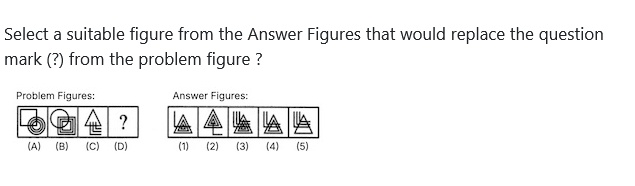
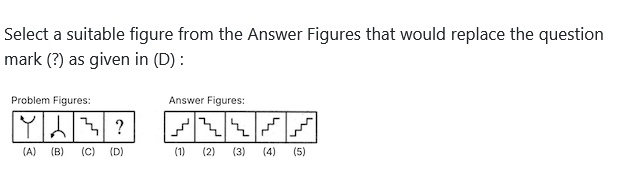
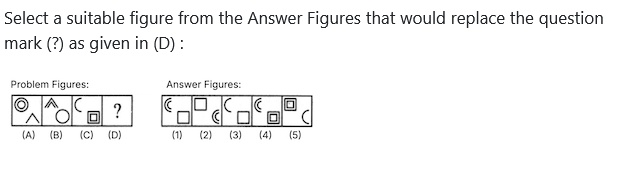
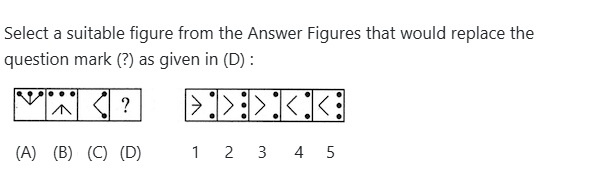
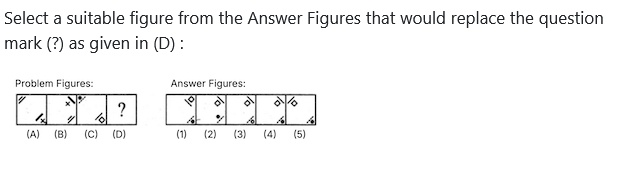
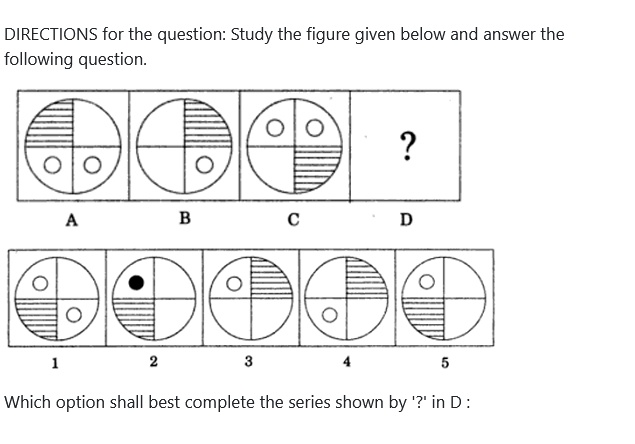
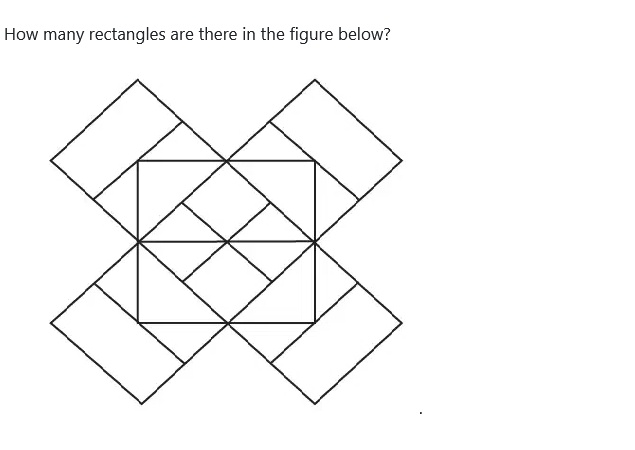
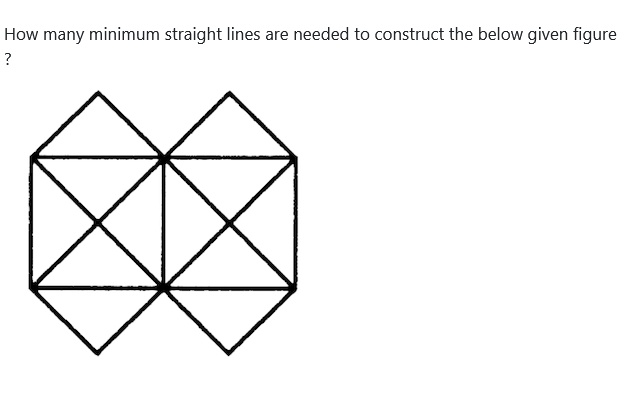
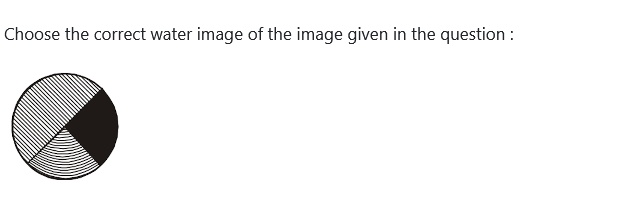
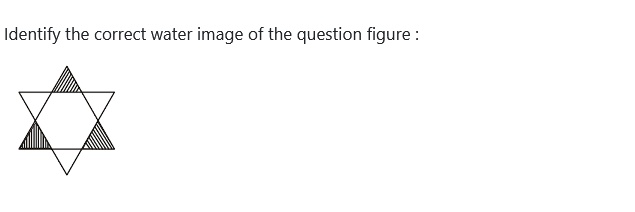
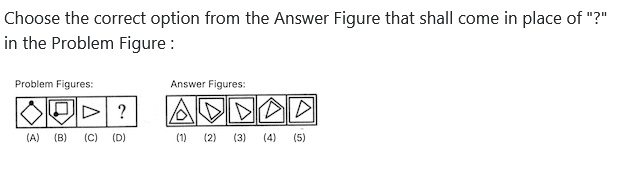
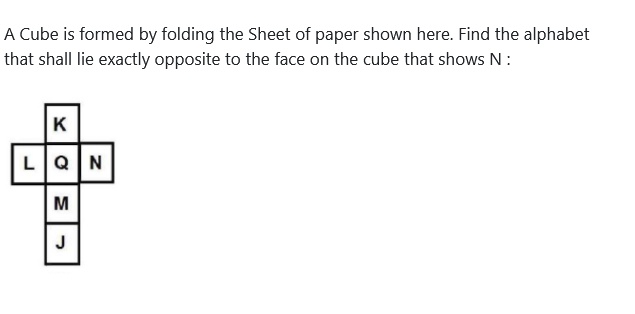
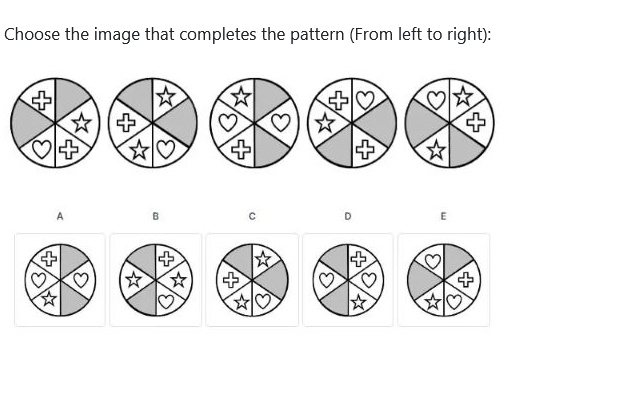
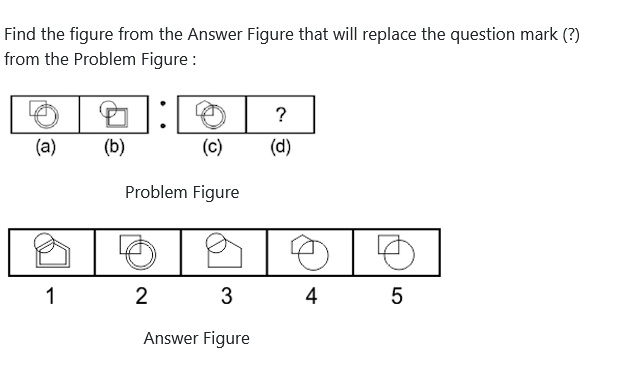
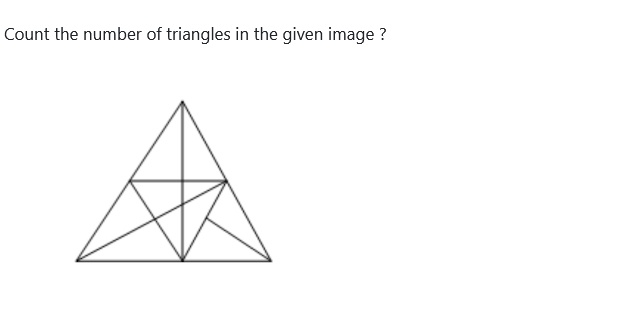
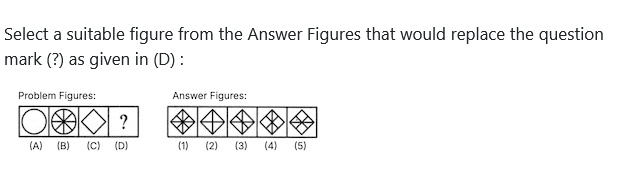
DIRECTION for the question: Solve the following question and mark the best possible option.
587 × 999 = ?
- A586413
- B587523
- C614823
- D615173
- E615976
Show answerHide answer
Answer: A ✓ official key
Approach: Write 999 as 1000 − 1 and distribute.
Solution: 587 × 999 = 587 × (1000 − 1)
= 587000 − 587
= 586413
Cetking shortcut: Last three digits of N × 999 (N < 1000) are 1000 − N = 413; leading part is N − 1 = 586 → 586413. Only option A ends in 413.
Answer: A
How many 3-digit numbers are there in between 100 and 300, having first and the last digit as 2?
- A9
- B10
- C11
- D12
- E13
Show answerHide answer
Answer: B ✓ official key
Approach: Fix the first and last digit, count choices for the middle digit.
Solution: Number must be of the form 2 _ 2 and lie between 100 and 300.
Middle digit can be 0, 1, 2, …, 9 → 10 choices.
Numbers: 202, 212, 222, …, 292 → 10 numbers.
Why the other options are wrong:
A (9): forgets 202 (middle digit 0).
C, D, E: overcount; only 10 middle digits exist.
Answer: B
DIRECTION for the question: Solve the following question and mark the best possible option.
The H.C.F. of 2923 and 3239 is?
- A37
- B47
- C73
- D79
- E22
Show answerHide answer
Answer: D ✓ official key
Approach: Euclid's division method.
Solution: 3239 − 2923 = 316, so HCF(3239, 2923) = HCF(2923, 316).
2923 = 316 × 9 + 79 (316 × 9 = 2844; 2923 − 2844 = 79).
316 = 79 × 4 + 0 → remainder 0.
HCF = 79. Check: 2923 = 79 × 37, 3239 = 79 × 41.
Cetking shortcut: The HCF must divide the difference 316 = 4 × 79. Among options only 79 divides 316 (and 37 does not divide 3239).
Answer: D
DIRECTION for the question: Solve the following question and mark the best possible option.
400 ÷ 0.1 × 0.2 =?
- A0.8
- B8
- C80
- D8000
- E800
Show answerHide answer
Answer: E ✓ official key
Approach: BODMAS — division and multiplication left to right.
Solution: 400 ÷ 0.1 = 4000 (dividing by 0.1 = multiplying by 10).
4000 × 0.2 = 800.
Why the other options are wrong:
A/B/C: decimal-place slips.
D (8000): uses × 2 instead of × 0.2.
Answer: E
DIRECTION for the question: Solve the following question and mark the best possible option.
Given 168 × 32 = 5376, then 5.376 ÷ 16.8 is equal to?
- A0.032
- B0.32
- C3.2
- D320
- E32
Show answerHide answer
Answer: B ✓ official key
Approach: Use 5376 ÷ 168 = 32 and adjust decimals.
Solution: 168 × 32 = 5376 ⇒ 5376 ÷ 168 = 32.
5.376 = 5376 ÷ 1000 and 16.8 = 168 ÷ 10.
5.376 ÷ 16.8 = (5376 ÷ 168) × (10 ÷ 1000) = 32 ÷ 100 = 0.32.
Cetking shortcut: Estimate: 5.4 ÷ 17 ≈ 0.3 → only 0.32 fits.
Answer: B
DIRECTION for the question: Solve the following question and mark the best possible option.
When a sum of money was distributed to 12 persons instead of 16 persons, each person got Rs. 400 more. What was the sum?
- ARs. 14400
- BRs. 16000
- CRs. 19200
- DRs. 14151
- ERs. 16987
Show answerHide answer
Answer: C ✓ official key
Approach: Equate the difference in per-head shares.
Solution: Let the sum be S. S/12 − S/16 = 400.
LCM 48: (4S − 3S)/48 = 400 ⇒ S/48 = 400.
S = 19200.
Cetking shortcut: The 4 removed people's money (4 × S/16) is now shared as 400 each by 12 people = 4800 ⇒ S/16 = 1200 ⇒ S = 19200.
Answer: C
DIRECTION for the question: Solve the following question and mark the best possible option.
On a 26 question test, five points were deducted for each wrong answer and eight points were credited for each correct answer. If all the questions were answered, how many were correct if the score was zero?
- A6
- B9
- C10
- D13
- E17
Show answerHide answer
Answer: C ✓ official key
Approach: Linear equation in number of correct answers.
Solution: Let correct = x, wrong = 26 − x.
8x − 5(26 − x) = 0 ⇒ 13x = 130 ⇒ x = 10.
Check: 10 × 8 = 80 and 16 × 5 = 80 → score 0.
Cetking shortcut: For zero score, correct : wrong = 5 : 8 ⇒ correct = 5/13 × 26 = 10.
Answer: C
DIRECTION for the question: Solve the following question and mark the best possible option.
A library has an average of 510 visitors on Sundays and 240 on other days. The average number of visitors per day in a month of 30 days beginning with a Sunday is
- A250
- B276
- C280
- D285
- E240
Show answerHide answer
Answer: D ✓ official key
Approach: Weighted average over Sundays and other days.
Solution: Sundays on days 1, 8, 15, 22, 29 → 5 Sundays, 25 other days.
Total = 5 × 510 + 25 × 240 = 2550 + 6000 = 8550.
Average = 8550 ÷ 30 = 285.
Why the other options are wrong:
E (240): ignores the Sunday visitors.
B (276): uses 4 Sundays and 26 other days → 8280/30 = 276.
Cetking shortcut: Average = 240 + 5 × 270 / 30 = 240 + 45 = 285.
Answer: D
DIRECTION for the question: Solve the following question and mark the best possible option.
A motorist travels to a place 150 km away at an average speed of 50 km/hr and returns at 30 km/hr. His average speed for the whole journey in km/hr is?
- A35
- B37
- C37.5
- D40.5
- E40
Show answerHide answer
Answer: C ✓ official key
Approach: Harmonic mean for equal distances.
Solution: Average speed = 2 × 50 × 30 / (50 + 30) = 3000/80 = 37.5 km/hr.
Check: time = 150/50 + 150/30 = 3 + 5 = 8 h; 300/8 = 37.5.
Why the other options are wrong:
E (40): simple average — the classic trap.
A, B, D: calculation slips.
Answer: C
DIRECTION for the question: Solve the following question and mark the best possible option.
The population of a town increased from 1,75,000 to 2,62,500 in a decade. The average % increase in the population per year is?
- A4.37%
- B5%
- C6%
- D8.75%
- E8%
Show answerHide answer
Answer: B ✓ official key
Approach: Total percentage increase spread evenly over 10 years.
Solution: Increase = 2,62,500 − 1,75,000 = 87,500.
Total % increase = 87,500/1,75,000 × 100 = 50%.
Average per year = 50% ÷ 10 = 5%.
Why the other options are wrong:
D (8.75%): divides 87,500 by 10,000 (wrong base).
C, E: no valid working gives these; 'average' here is the simple per-year rate, not compound (≈4.1%).
Answer: B
DIRECTION for the question: Solve the following question and mark the best possible option.
If p% of p is 36, then p is equal to
- A15
- B60
- C600
- D3600
- E36
Show answerHide answer
Answer: B ✓ official key
Approach: Convert 'p% of p' into an equation.
Solution: (p/100) × p = 36 ⇒ p² = 3600 ⇒ p = 60.
Check: 60% of 60 = 36.
Why the other options are wrong:
D (3600): stops at p².
C (600): 600% of 600 = 3600.
A, E: 15% of 15 = 2.25; 36% of 36 = 12.96.
Answer: B
DIRECTION for the question: Solve the following question and mark the best possible option.
The profit earned by selling an article for Rs. 900 is double the loss incurred when the same article is sold for Rs. 450. At what price should the article be sold to make a 25% profit?
- ARs. 600
- BRs. 750
- CRs. 800
- DRs. 900
- ERs. 450
Show answerHide answer
Answer: B ✓ official key
Approach: Find CP from the profit–loss relation, then apply 25% markup.
Solution: Let CP = x. Profit at 900 = 900 − x; loss at 450 = x − 450.
900 − x = 2(x − 450) ⇒ 900 − x = 2x − 900 ⇒ 3x = 1800 ⇒ x = 600.
SP for 25% profit = 1.25 × 600 = 750.
Why the other options are wrong:
A (600): that is the CP.
C, D, E: 33%, 50% profit and a loss price respectively.
Cetking shortcut: CP divides 450 to 900 in ratio loss : profit = 1 : 2 ⇒ CP = 450 + 450/3 = 600.
Answer: B
DIRECTION for the question: Solve the following question and mark the best possible option.
A fan is listed at Rs. 1500 and a discount of 20% is offered on the list price. What additional discount must be offered to the customer to bring the net price to Rs. 1104?
- A8%
- B10%
- C12%
- D15%
- E20%
Show answerHide answer
Official CET key: A · Cetking's answer: C — see why below
Approach: Successive discounts — second discount on the reduced price.
Solution: After 20% discount: 1500 × 0.8 = 1200.
Additional discount needed = 1200 − 1104 = 96.
Rate = 96/1200 × 100 = 8%.
Why the other options are wrong:
C (12%): would give 1200 × 0.88 = 1056.
B (10%): gives 1080.
D, E: far too large.
Answer: A
DIRECTION for the question: Solve the following question and mark the best possible option.
The expenses of A and B are in the ratio 2 : 3. A sum of Rs. 2800 is equally divided between them. If A saves Rs. 600, then B saves?
- ARs.200
- BRs.300
- CRs.400
- DRs.500
- ERs.600
Show answerHide answer
Official CET key: A · Cetking's answer: B — see why below
Approach: Income − expense = saving.
Solution: Each gets 2800 ÷ 2 = 1400.
A's expense = 1400 − 600 = 800.
A : B expense = 2 : 3 ⇒ B's expense = 800 × 3/2 = 1200.
B's saving = 1400 − 1200 = Rs. 200.
Why the other options are wrong:
B (300): no consistent working gives this.
E (600): assumes equal savings.
C, D: misuse the ratio on savings.
Answer: A
DIRECTION for the question: Solve the following question and mark the best possible option.
There are 420 coins consisting of one-rupee coins, 50-paise coins and 25-paise coins. If the ratio of their values is 2 : 3 : 5, then the number of one-rupee coins is
- A20
- B30
- C90
- D300
- E50
Show answerHide answer
Answer: B ✓ official key
Approach: Convert value ratio to number ratio.
Solution: Values = 2k, 3k, 5k rupees.
Counts: ₹1 coins = 2k; 50p coins = 3k ÷ 0.5 = 6k; 25p coins = 5k ÷ 0.25 = 20k.
2k + 6k + 20k = 28k = 420 ⇒ k = 15.
One-rupee coins = 2 × 15 = 30.
Why the other options are wrong:
D (300): number of 25p coins.
C (90): number of 50p coins.
A, E: arithmetic slips.
Answer: B
DIRECTION for the question: Solve the following question and mark the best possible option.
Manick received Rs. 6000 as his share out of the total profit of Rs. 9000 which he and Raunaq earned at the end of one year. If Manick invested Rs. 20000 for 6 months, whereas Raunaq invested his amount for the whole year, what was the amount invested by Raunaq?
- ARs. 4000
- BRs. 5000
- CRs. 6000
- DRs. 10,000
- ERs. 9000
Show answerHide answer
Answer: B ✓ official key
Approach: Profit ratio = capital × months.
Solution: Raunaq's profit = 9000 − 6000 = 3000 ⇒ ratio 2 : 1.
Manick: 20000 × 6 = 120000. Raunaq: x × 12.
120000 : 12x = 2 : 1 ⇒ 24x = 120000 ⇒ x = 5000.
Why the other options are wrong:
D (10,000): ignores the time factor.
A, C, E: arithmetic slips.
Answer: B
DIRECTION for the question: Solve the following question and mark the best possible option.
Arun, Kamal and Vinay invested ₹8000, ₹4000 and ₹8000 respectively in a business. Arun left after six months. If after eight months, there was a gain of ₹ 4005, then what will be the share of Kamal ?
- A₹890
- B₹1335
- C₹1602
- D₹1780
- E₹666
Show answerHide answer
Official CET key: A · Cetking's answer: B — see why below
Approach: Capital × time ratio.
Solution: Arun: 8000 × 6 = 48000; Kamal: 4000 × 8 = 32000; Vinay: 8000 × 8 = 64000.
Ratio = 48 : 32 : 64 = 3 : 2 : 4 (total 9 parts).
Kamal's share = 2/9 × 4005 = ₹890.
Why the other options are wrong:
B (₹1335): 4005/3 — treats shares as equal.
D (₹1780): Vinay's share (4/9).
C (₹1602): 2/5 of 4005.
E (₹666): not from any valid split.
Answer: A
DIRECTION for the question: Solve the following question and mark the best possible option.
The cost of 16 packets of salt, each weighing 900 grams, is Rs. 28. What will be the cost of 27 packets if each packet weighs 1 kg?
- ARs. 52.50
- BRs. 56
- CRs. 58.50
- DRs. 64.75
- ERs. 28.50
Show answerHide answer
Answer: A ✓ official key
Approach: Unitary method on total weight.
Solution: Weight bought = 16 × 900 g = 14,400 g for Rs. 28.
Required weight = 27 × 1000 g = 27,000 g.
Cost = 28 × 27000/14400 = 28 × 15/8 = Rs. 52.50.
Why the other options are wrong:
B (56): doubles 28.
C, D, E: calculation slips; 47.25 (packets only) is not offered.
Answer: A
DIRECTION for the question: Solve the following question and mark the best possible option.
In a dairy farm, 40 cows eat 40 bags of husk in 40 days. In how many days will one cow eat one bag of husk?
- A10
- B20
- C40
- D35
- E45
Show answerHide answer
Answer: C ✓ official key
Approach: Unitary method (work = cows × days).
Solution: 40 cows eat 40 bags in 40 days ⇒ 40 cows eat 1 bag in 1 day.
1 cow eats 1 bag in 40 days.
Why the other options are wrong:
A, B, D, E: wrong scaling; time does not change when cows and bags reduce in the same ratio.
Answer: C
DIRECTION for the question: Solve the following question and mark the best possible option.
Two pipes A and B can fill a tank in 15 minutes and 20 minutes respectively. Both the pipes are opened together but after 4 minutes, pipe A is turned off. What is the total time required to fill the tank?
- A10 min 20 sec
- B11 min 45 sec
- C12 min 30 sec
- D14 min 40 sec
- E15 min 20 sec
Show answerHide answer
Answer: D ✓ official key
Approach: LCM-unit method.
Solution: Tank = LCM(15, 20) = 60 units. A = 4 units/min, B = 3 units/min.
First 4 min together: 7 × 4 = 28 units. Remaining = 32 units.
B alone: 32 ÷ 3 = 10 2/3 min = 10 min 40 sec.
Total = 4 min + 10 min 40 sec = 14 min 40 sec.
Why the other options are wrong:
A (10 min 20 sec) and others: miss the first 4 minutes or miscalculate the remainder.
Answer: D
DIRECTION for the question: Solve the following question and mark the best possible option.
Four pipes can fill a reservoir in 15, 20, 30 and 60 hours respectively. The first pipe was opened at 8 am, the second at 9 am, the third at 10 am and the fourth at 11 am. When will the reservoir be full?
- A1:00 pm
- B2:00 pm
- C2:30 pm
- D3:00 pm
- E4:00 pm
Show answerHide answer
Official CET key: D · Cetking's answer: B — see why below
Approach: LCM-unit method with staggered start times.
Solution: Tank = LCM(15, 20, 30, 60) = 60 units. Rates: 4, 3, 2, 1 units/hr.
8–9 am: 4 units. 9–10 am: 4 + 3 = 7 units. 10–11 am: 4 + 3 + 2 = 9 units.
Filled by 11 am = 4 + 7 + 9 = 20 units. Remaining = 40 units.
From 11 am all four pipes: 4 + 3 + 2 + 1 = 10 units/hr ⇒ 40 ÷ 10 = 4 hours.
Full at 11 am + 4 h = 3:00 pm.
Check (x = hours from 8 am = 7): 7/15 + 6/20 + 5/30 + 4/60 = (28 + 18 + 10 + 4)/60 = 1.
Why the other options are wrong:
B (2:00 pm) / C (2:30 pm): wrong combined rate (1/5) or rounding.
A, E: arithmetic slips.
Cetking shortcut: Let pipe 1 run x hours: 4x + 3(x − 1) + 2(x − 2) + (x − 3) = 60 ⇒ 10x − 10 = 60 ⇒ x = 7 ⇒ 8 am + 7 h = 3 pm.
Answer: D
DIRECTION for the question: Solve the following question and mark the best possible option.
A and B together can do a piece of work in 30 days. A having worked for 16 days, B finishes the remaining work alone in 44 days. In how many days shall B finish the whole work alone?
- A30 days
- B40 days
- C60 days
- D70 days
- E80 days
Show answerHide answer
Answer: C ✓ official key
Approach: Convert A's work into (A + B) work.
Solution: A works 16 days and B works 44 days: 16a + 44b = 1, with a + b = 1/30.
Write 16a + 44b = 16(a + b) + 28b = 16/30 + 28b = 1.
28b = 14/30 ⇒ b = 1/60.
B alone takes 60 days. (A alone: 1/30 − 1/60 = 1/60 → also 60 days.)
Why the other options are wrong:
A (30): that is A and B together.
B, D, E: wrong pairing of the 16 and 44 days.
Cetking shortcut: 16 days of A + 44 days of B = 16 days of (A + B) + 28 days of B. 16 of the 30 joint days are done, so 28 days of B = 14 joint days ⇒ B = 2 × 30 = 60 days.
Answer: C
DIRECTION for the question: Solve the following question and mark the best possible option.
Kim can do the work in 3 days, while David can do the same work in 2 days. Both of them finish the work together and get Rs. 150. What is the share of Kim in the amount?
- ARs. 30
- BRs. 60
- CRs. 70
- DRs. 75
- ERs. 90
Show answerHide answer
Answer: B ✓ official key
Approach: Share ∝ efficiency = 1/days.
Solution: Kim : David efficiency = 1/3 : 1/2 = 2 : 3.
Kim's share = 2/5 × 150 = Rs. 60.
Why the other options are wrong:
E (Rs. 90): uses days ratio 3 : 2 — the classic trap; that is David's share.
D (Rs. 75): equal split.
A, C: no valid ratio.
Answer: B
DIRECTION for the question: Solve the following question and mark the best possible option.
If a person walked at 14 km/hr. instead of 10 km/hr., he would have walked 20 km more. The actual distance traveled by him is?
- A50 km
- B56 km
- C70 km
- D80 km
- E30 km
Show answerHide answer
Answer: A ✓ official key
Approach: Time is the same in both cases.
Solution: Extra distance = (14 − 10) × t = 20 ⇒ t = 5 hours.
Actual distance = 10 × 5 = 50 km.
Why the other options are wrong:
C (70 km): distance at 14 km/hr.
B, D, E: arithmetic slips.
Answer: A
DIRECTION for the question: Solve the following question and mark the best possible option.
A train X starts from Meerut at 4 pm and reaches Ghaziabad at 5 pm. While another train Y starts from Ghaziabad at 4pm and reaches Meerut at 5:30pm. The two trains will cross each other at?
- A4.36 pm
- B4.42 pm
- C4.48 pm
- D4.50 pm
- E4.55 pm
Show answerHide answer
Answer: A ✓ official key
Approach: Relative speed with distance as 1 unit.
Solution: X takes 60 min, Y takes 90 min (4:00 to 5:30).
Let distance = 180 units. Speed X = 3 units/min, Y = 2 units/min.
Meeting time = 180 ÷ (3 + 2) = 36 min after 4 pm.
They cross at 4:36 pm.
Why the other options are wrong:
B–E: come from wrong times (e.g. averaging) — the formula gives exactly 36 min.
Cetking shortcut: T = (60 × 90)/(60 + 90) = 5400/150 = 36 min.
Answer: A
DIRECTION for the question: Solve the following question and mark the best possible option.
Two trains, one from Howrah to Patna and the other from Patna to Howrah, start simultaneously. After they meet, the trains reach their destinations after 9 hours and 16 hours respectively. The ratio of their speed is?
- A2:3
- B4:3
- C6:7
- D9:16
- E5:7
Show answerHide answer
Answer: B ✓ official key
Approach: Speed ratio = √(time of the other after meeting).
Solution: Howrah train: 9 h after meeting; Patna train: 16 h.
S1 : S2 = √16 : √9 = 4 : 3.
Why the other options are wrong:
D (9 : 16): takes the time ratio directly.
A (2 : 3): no valid working.
C, E: no valid working.
Answer: B
DIRECTION for the question: Solve the following question and mark the best possible option.
In what ratio must water be mixed with milk to gain 16 (2/3)% on selling the mixture at cost price?
- A1:6
- B6:1
- C2:3
- D4:3
- E5:6
Show answerHide answer
Answer: A ✓ official key
Approach: Profit comes only from the free water.
Solution: Gain = 16 2/3% = 1/6.
If 6 litres of milk are bought, selling 7 litres at CP gives revenue for 7 litres → profit 1 litre's cost = 1/6 of cost.
So water : milk = 1 : 6.
Why the other options are wrong:
B (6 : 1): reversed ratio.
C, D, E: do not give a 1/6 gain.
Answer: A
DIRECTION for the question: Solve the following question and mark the best possible option.
A vessel is filled with liquid, 3 parts of which are water and 5 parts of syrup. How much of the mixture must be drawn off and replaced with water so that the mixture may be half water and half syrup?
- A(1/3)
- B(1/4)
- C(1/5)
- D(1/7)
- E(3/5)
Show answerHide answer
Answer: C ✓ official key
Approach: Track the syrup, which is only removed, never added.
Solution: Take 8 litres: water 3, syrup 5.
Draw off x litres and add x water. Syrup left = 5 − (5/8)x.
Need syrup = 4 (half of 8): 5 − 5x/8 = 4 ⇒ x = 8/5 litres.
Fraction of mixture = (8/5) ÷ 8 = 1/5.
Why the other options are wrong:
E (3/5): would remove too much, leaving only 2 litres of syrup out of 8.
A, B, D: give syrup 3.33, 3.75, 4.29 out of 8 — not half.
Cetking shortcut: Syrup fraction 5/8 must become 1/2: (5/8)(1 − x) = 1/2 ⇒ 1 − x = 4/5 ⇒ x = 1/5.
Answer: C
DIRECTION for the question: Solve the following question and mark the best possible option.
The interest on a certain deposit at 4.5% p.a. is Rs. 202.50 in one year. How much will the additional interest in one year be on the same deposit, at 5% p.a.?
- ARs. 20.25
- BRs. 22.50
- CRs. 25
- DRs. 42.75
- ERs. 42.25
Show answerHide answer
Answer: B ✓ official key
Approach: Find principal, then apply the 0.5% extra rate.
Solution: P = 202.50 ÷ 0.045 = Rs. 4500.
Interest at 5% = 4500 × 0.05 = Rs. 225.
Additional interest = 225 − 202.50 = Rs. 22.50.
Why the other options are wrong:
A (20.25): 10% of 202.50.
D, E: wrongly add values.
C (25): 0.5% of 5000.
Cetking shortcut: Extra = 202.50 × 0.5/4.5 = 202.50/9 = 22.50.
Answer: B
DIRECTION for the question: Solve the following question and mark the best possible option.
A sum of money at simple interest amounts to Rs. 815 in 3 years and Rs. 854 in 4 years. The sum is?
- ARs. 650
- BRs. 690
- CRs. 698
- DRs. 700
- ERs. 750
Show answerHide answer
Answer: C ✓ official key
Approach: SI per year from the difference of amounts.
Solution: SI for 1 year = 854 − 815 = Rs. 39.
SI for 3 years = 3 × 39 = Rs. 117.
Principal = 815 − 117 = Rs. 698.
Why the other options are wrong:
B (690), D (700): close-number traps.
A, E: wrong interest count.
Answer: C
DIRECTION for the question: Solve the following question and mark the best possible option.
There is a 60% increase in the amount in 6 years at simple interest. What will be the compound interest of Rs. 12000 after 3 years at the same rate?
- ARs. 2160
- BRs. 3120
- CRs. 3972
- DRs. 6240
- ERs. 1200
Show answerHide answer
Answer: C ✓ official key
Approach: SI gives the rate; apply CI for 3 years.
Solution: 60% in 6 years at SI ⇒ rate = 10% p.a.
CI = 12000 × (1.1³ − 1) = 12000 × 0.331 = Rs. 3972.
Why the other options are wrong:
E (1200): just one year's interest.
A, B, D: wrong rate or wrong number of years; SI for 3 years would be 3600, and CI must be a bit more.
Cetking shortcut: CI for 3 years at 10% = 33.1% of P → 0.331 × 12000 = 3972.
Answer: C
DIRECTION for the question: Solve the following question and mark the best possible option.
A rectangular parking space is marked out by painting three of its sides. If the length of the unpainted side is 9 feet, and the sum of the lengths of the painted sides is 37 feet, then what is the area of the parking space in square feet?
- A46
- B81
- C126
- D252
- E37
Show answerHide answer
Answer: C ✓ official key
Approach: Identify which sides are painted.
Solution: Unpainted side = 9 ft, so the opposite side (9 ft) is painted along with the two other sides.
9 + 2b = 37 ⇒ b = 14 ft.
Area = 9 × 14 = 126 sq ft.
Why the other options are wrong:
D (252): (37 − 9) × 9, treating 28 as one side.
B (81): 9 × 9 square.
A, E: perimeter-type numbers, not area.
Answer: C
DIRECTION for the question: Solve the following question and mark the best possible option.
A rectangular field is to be fenced on three sides, leaving a side of 20 feet uncovered. If the area of the field is 680 sq. feet, how many feet of fencing will be required?
- A34
- B40
- C68
- D88
- E38
Show answerHide answer
Answer: D ✓ official key
Approach: Find the other side from the area.
Solution: Other side = 680 ÷ 20 = 34 ft.
Fence = 20 + 34 + 34 = 88 ft.
Why the other options are wrong:
C (68): only the two 34-ft sides.
A (34): one side only.
B, E: arithmetic slips.
Answer: D
DIRECTION for the question: Solve the following question and mark the best possible option.
A rectangular carpet has an area of 120 sq. meters and a perimeter of 46 meters. The length of its diagonal is?
- A15 meters
- B16 meters
- C17 meters
- D19 meters
- E20 meters
Show answerHide answer
Answer: C ✓ official key
Approach: Use (l + b)² − 2lb.
Solution: Perimeter 46 ⇒ l + b = 23. Area lb = 120.
d² = 23² − 2 × 120 = 529 − 240 = 289 ⇒ d = 17 m.
(Sides are 15 and 8: 15 × 8 = 120, 2(15 + 8) = 46.)
Why the other options are wrong:
A (15): that is the length.
B, D, E: not √289.
Cetking shortcut: 8-15-17 is a Pythagorean triplet — spot 15 × 8 = 120 instantly.
Answer: C
DIRECTION for the question: Solve the following question and mark the best possible option.
In a 100 m race, A covers the whole distance in 36 seconds and B in 45 seconds. In this race, A beats B by
- A20 m
- B25 m
- C22.5 m
- D9 m
- E10 m
Show answerHide answer
Answer: A ✓ official key
Approach: Distance B covers in A's time.
Solution: B's speed = 100/45 m/s.
In 36 s B runs 36 × 100/45 = 80 m.
A beats B by 100 − 80 = 20 m.
Why the other options are wrong:
D (9 m): takes 45 − 36 seconds as metres.
B (25 m): uses A's speed × 9 s.
C, E: arithmetic slips.
Answer: A
DIRECTION for the question: Solve the following question and mark the best possible option.
In a 200 m race, A beats B by 35 m or 7 seconds. A's time over the course is
- A40 sec
- B47 sec
- C33 sec
- D35 sec
- E20 sec
Show answerHide answer
Answer: C ✓ official key
Approach: Use the beat-margin to find B's speed.
Solution: B runs 35 m in 7 s ⇒ speed = 5 m/s.
B's time for 200 m = 200 ÷ 5 = 40 s.
A's time = 40 − 7 = 33 s.
Why the other options are wrong:
A (40 s): B's time.
B (47 s): adds 7 instead of subtracting.
D, E: no valid working.
Answer: C
DIRECTION for the question: Solve the following question and mark the best possible option.
In how many different ways can the letters of the word OPTICAL can be arranged in such a way that the vowels always come together?
- A120
- B720
- C2160
- D4320
- E6
Show answerHide answer
Answer: B ✓ official key
Approach: Block method.
Solution: OPTICAL has 7 distinct letters: vowels O, I, A (3); consonants P, T, C, L (4).
Vowel block + 4 consonants = 5 units → 5! = 120 ways.
Vowels inside the block: 3! = 6 ways.
Total = 120 × 6 = 720.
Why the other options are wrong:
A (120): forgets internal arrangement.
E (6): only the internal arrangement.
C, D: wrong block counts.
Answer: B
DIRECTION for the question: Solve the following question and mark the best possible option.
In a class, there are 15 boys and 10 girls. Three students are selected at random. The probability that the selected students are 2 boys and 1 girl is:
- A(21/46)
- B(25/117)
- C(1/50)
- D(3/25)
- E(21/31)
Show answerHide answer
Answer: A ✓ official key
Approach: Combinations.
Solution: Total = C(25, 3) = 25 × 24 × 23/6 = 2300.
Favourable = C(15, 2) × C(10, 1) = 105 × 10 = 1050.
P = 1050/2300 = 21/46.
Why the other options are wrong:
B, C, D, E: do not equal 1050/2300; e.g. D (3/25) ignores combinations.
Answer: A
DIRECTION for the question: Solve the following question and mark the best possible option.
Two dice are tossed. The probability that the total score is a prime number is
- A(1/6)
- B(1/2)
- C(5/12)
- D(7/9)
- E(2/3)
Show answerHide answer
Answer: C ✓ official key
Approach: Count outcomes for each prime sum.
Solution: Sum 2: 1; Sum 3: 2; Sum 5: 4; Sum 7: 6; Sum 11: 2.
Favourable = 1 + 2 + 4 + 6 + 2 = 15.
P = 15/36 = 5/12.
Why the other options are wrong:
B (1/2): 18/36 — includes a non-prime sum.
A (1/6): only sum 7.
D, E: overcount.
Answer: C
DIRECTION for the question: Find the next number in the sequence
7, 26, 63, 124, 215, 342, (---)
- A481
- B400
- C511
- D391
- E421
Show answerHide answer
Answer: C ✓ official key
Approach: Compare each term with a perfect cube.
Solution: 7 = 2³ − 1, 26 = 3³ − 1, 63 = 4³ − 1, 124 = 5³ − 1, 215 = 6³ − 1, 342 = 7³ − 1.
Next = 8³ − 1 = 512 − 1 = 511.
Why the other options are wrong:
A (481), E (421), D (391), B (400): none is 8³ − 1.
Cetking shortcut: Differences 19, 37, 61, 91, 127 rise by 18, 24, 30, 36 → next difference 169 → 342 + 169 = 511.
Answer: C
Questions 141–145 share this
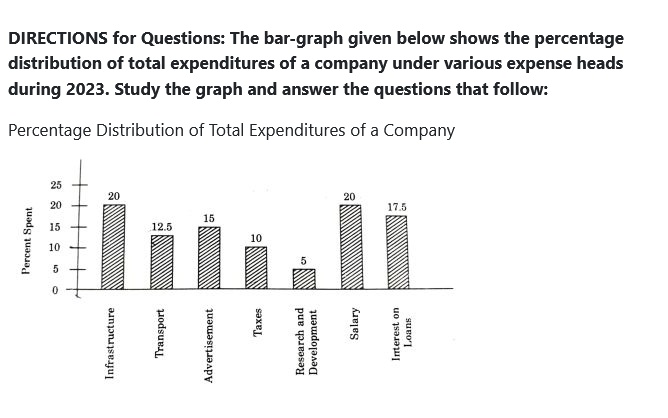
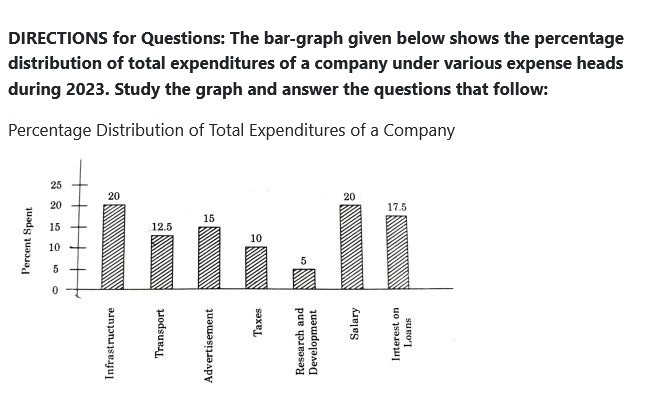
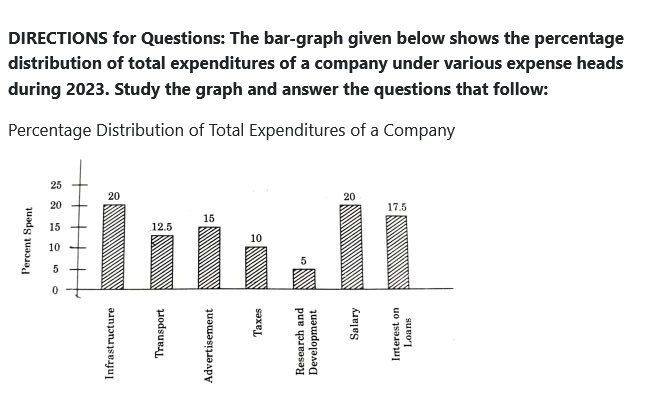
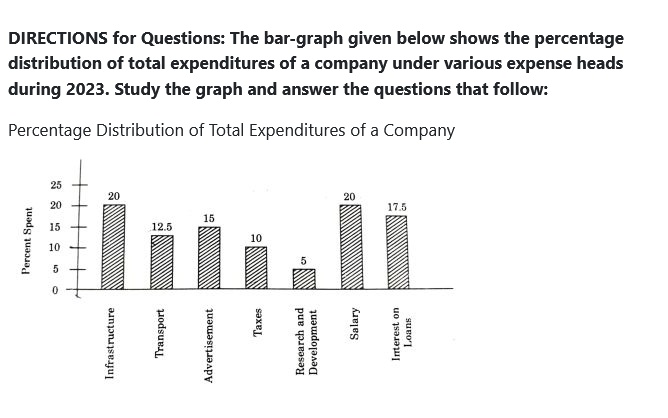
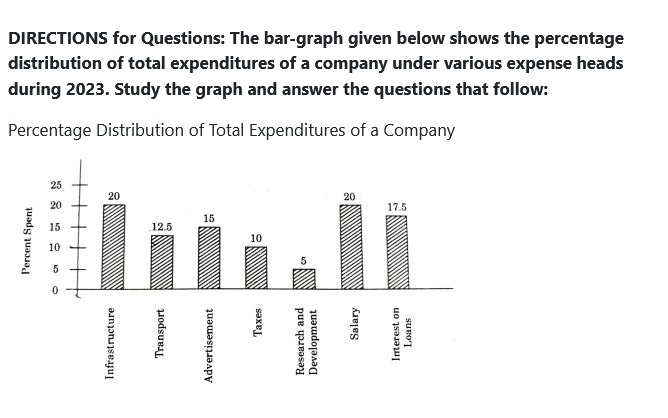
DIRECTIONS for Questions: The bar-graph given below shows the percentage distribution of total expenditures of a company under various expense heads during 2023. Study the graph and answer the questions that follow:
Percentage Distribution of Total Expenditures of a Company
Data read from chart:
| Expense head | Percent Spent |
|---|
| Infrastructure | 20 |
| Transport | 12.5 |
| Advertisement | 15 |
| Taxes | 10 |
| Research and Development | 5 |
| Salary | 20 |
| Interest on Loans | 17.5 |
The expenditure on the interest on loans is by what percentage more than the expenditure on transport?
- A5%
- B10%
- C20%
- D30%
- E40%
Show answerHide answer
Answer: E ✓ official key
Approach: Percentage-more formula on the bar values.
Solution: Interest on loans = 17.5%, Transport = 12.5% of total.
Difference = 5.
% more = 5/12.5 × 100 = 40%.
Why the other options are wrong:
A (5%): the percentage-point gap, not % more.
B, C, D: wrong base or misread bars.
Answer: E
Refer to the passage above ↑
What is the ratio of the total expenditure on infrastructure and transport to the total expenditure on taxes and interest on loans?
- A5:4
- B8:7
- C9:7
- D13:11
- E5:9
Show answerHide answer
Answer: D ✓ official key
Approach: Add the shares, then simplify.
Solution: Infrastructure + Transport = 20 + 12.5 = 32.5.
Taxes + Interest on loans = 10 + 17.5 = 27.5.
Ratio = 32.5 : 27.5 = 65 : 55 = 13 : 11.
Why the other options are wrong:
A, B, C, E: come from misread bars (e.g. 20+15 : 10+17.5 gives 14 : 11, not offered).
Answer: D
Refer to the passage above ↑
If the expenditure on advertisements is Rs. 2.10 crores, then the difference between the expenditures on transport and taxes is:
- ARs. 1.25 crores
- BRs. 95 lakhs
- CRs. 65 lakhs
- DRs. 35 lakhs
- ERs. 25 lakhs
Show answerHide answer
Answer: D ✓ official key
Approach: Use Advertisement as the scale.
Solution: Advertisement 15% = Rs. 2.10 crore ⇒ 1% = Rs. 0.14 crore.
Transport − Taxes = 12.5 − 10 = 2.5%.
Difference = 2.5 × 0.14 = Rs. 0.35 crore = Rs. 35 lakh.
Why the other options are wrong:
A, B, C, E: misread bars (e.g. transport as 10%) or crore–lakh unit slips.
Cetking shortcut: 2.5% is 1/6 of 15% → 2.10 crore ÷ 6 = 0.35 crore.
Answer: D
Refer to the passage above ↑
The total amount of expenditure of the company is how many times the expenditure on research and development?
- A27
- B20
- C18
- D8
- E5
Show answerHide answer
Answer: B ✓ official key
Approach: Share of total.
Solution: R&D = 5% of total.
Total ÷ R&D = 100 ÷ 5 = 20 times.
Why the other options are wrong:
E (5): the R&D % itself.
A, C, D: misread bars.
Answer: B
Refer to the passage above ↑
If the interest on loans amounted to Rs. 2.45 crores, then the total amount of expenditure on advertisements, taxes and research and development is:
- ARs. 7 crores
- BRs. 5.4 crores
- CRs. 4.2 crores
- DRs. 3 crores
- ERs. 2.4 crores
Show answerHide answer
Answer: C ✓ official key
Approach: Use Interest on loans as the scale.
Solution: Interest on loans 17.5% = Rs. 2.45 crore ⇒ total = 2.45 ÷ 0.175 = Rs. 14 crore.
Advertisement + Taxes + R&D = 15 + 10 + 5 = 30%.
Required = 30% of 14 = Rs. 4.2 crore.
Why the other options are wrong:
A (7 crore): 50% of total.
B, D, E: wrong combined share.
Cetking shortcut: 30/17.5 × 2.45 = 2.45 × 12/7 = 0.35 × 12 = 4.2.
Answer: C
Questions 146–150 share this
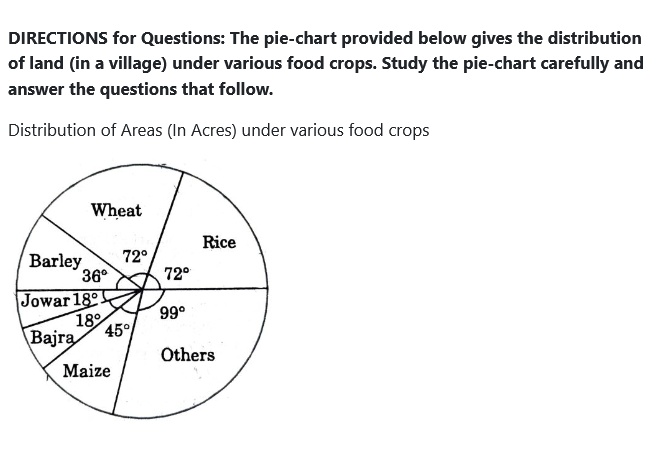
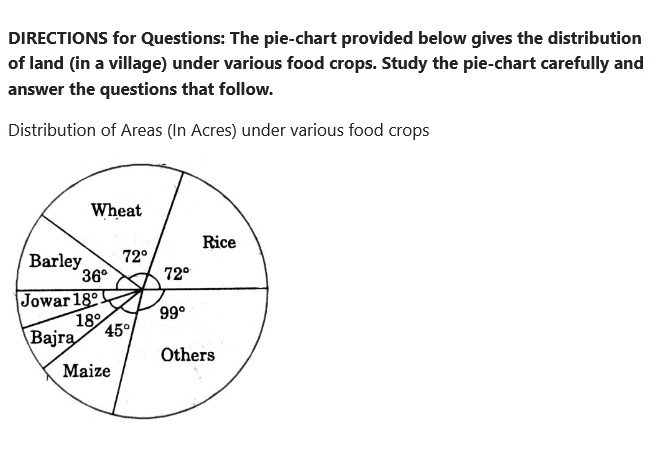
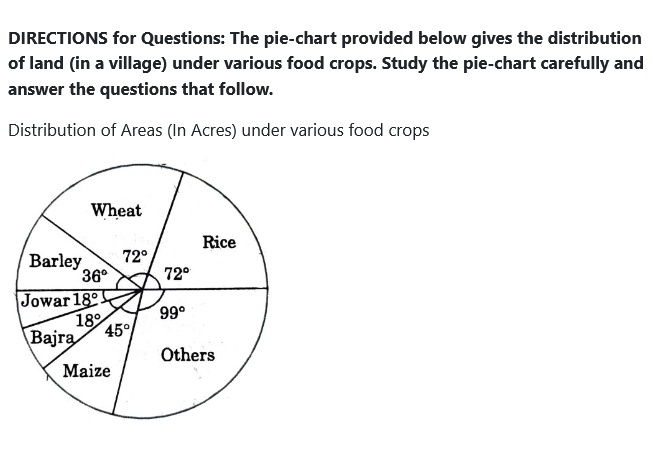
DIRECTIONS for Questions: The pie-chart provided below gives the distribution of land (in a village) under various food crops. Study the pie-chart carefully and answer the questions that follow.
Distribution of Areas (In Acres) under various food crops
Data read from chart (central angles):
| Crop | Angle |
|---|
| Wheat | 72° |
| Rice | 72° |
| Others | 99° |
| Maize | 45° |
| Bajra | 18° |
| Jowar | 18° |
| Barley | 36° |
Which combination of three crops contributes to 50% of the total area under the food crops?
- AWheat, Barley and Jowar
- BRice, Wheat and Jowar
- CRice, Wheat and Barley
- DBajra , Maize and Rice
- EBarley, Jowar and Rice
Show answerHide answer
Answer: C ✓ official key
Approach: Check which options sum to 180°.
Solution: Rice 72° + Wheat 72° + Barley 36° = 180° = 50%.
Why the other options are wrong:
A: 72 + 36 + 18 = 126°.
B: 72 + 72 + 18 = 162°.
D: 18 + 45 + 72 = 135°.
E: 36 + 18 + 72 = 126°.
Answer: C
Refer to the passage above ↑
If the total area under jowar was 1.5 million acres, then what was the area (in million acres) under rice?
- A6
- B7.5
- C9
- D4.5
- E2
Show answerHide answer
Answer: A ✓ official key
Approach: Ratio of angles.
Solution: Rice : Jowar = 72° : 18° = 4 : 1.
Rice area = 4 × 1.5 = 6 million acres.
Why the other options are wrong:
C (9): uses 108°.
B, D, E: wrong angle ratio.
Answer: A
Refer to the passage above ↑
If the production of wheat is 6 times that of barley, then what is the ratio between the yield per acre of wheat and barley?
- A3:2
- B3:1
- C12:1
- D2:3
- E3:5
Show answerHide answer
Answer: B ✓ official key
Approach: Yield = production ÷ area.
Solution: Area ratio Wheat : Barley = 72° : 36° = 2 : 1.
Production ratio = 6 : 1.
Yield ratio = (6/2) : (1/1) = 3 : 1.
Why the other options are wrong:
C (12 : 1): multiplies instead of divides.
A, D, E: inverted or wrong ratios.
Answer: B
Refer to the passage above ↑
If the yield per acre of rice was 50% more than that of barley, then the production of barley is what percentage of that of rice?
- A30%
- B33.33%
- C35.5%
- D36%
- E50.65%
Show answerHide answer
Answer: B ✓ official key
Approach: Production = area × yield.
Solution: Let Barley yield = 2 units/acre ⇒ Rice yield = 3.
Barley production ∝ 36 × 2 = 72; Rice production ∝ 72 × 3 = 216.
Barley as % of Rice = 72/216 × 100 = 33.33%.
Why the other options are wrong:
E (50.65%): near the 50% you get from areas alone — ignores yield.
A, C, D: arithmetic slips.
Answer: B
Refer to the passage above ↑
If the total area goes up by 5%, and the area under wheat production goes up by 12%, then what will be the angle for wheat in the new pie-chart?
- A62.4°
- B76.8°
- C80.6°
- D84.2°
- E12.4°
Show answerHide answer
Answer: B ✓ official key
Approach: Scale the share by relative growth.
Solution: Wheat's old share = 72/360 = 20%.
New share = 20% × 1.12/1.05 = 22.4%/1.05 ≈ 21.33%.
New angle = 72 × 1.12/1.05 = 80.64/1.05 = 76.8°.
Why the other options are wrong:
C (80.6°): ignores the 5% growth in total.
D (84.2°): adds growth instead of dividing.
A, E: wrong direction or nonsense.
Cetking shortcut: 1.12/1.05 = 16/15 → 72 × 16/15 = 76.8°.
Answer: B
Questions 151–155 share this
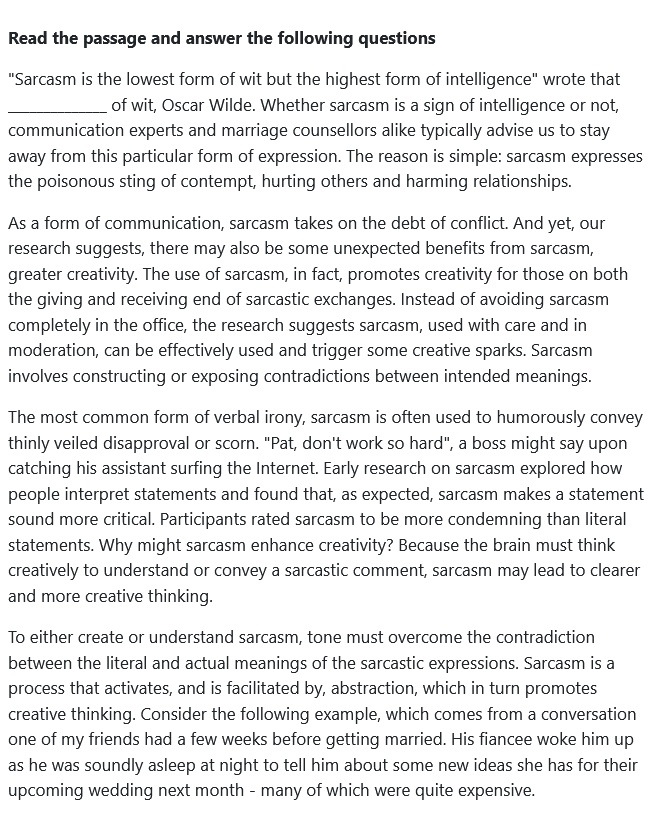
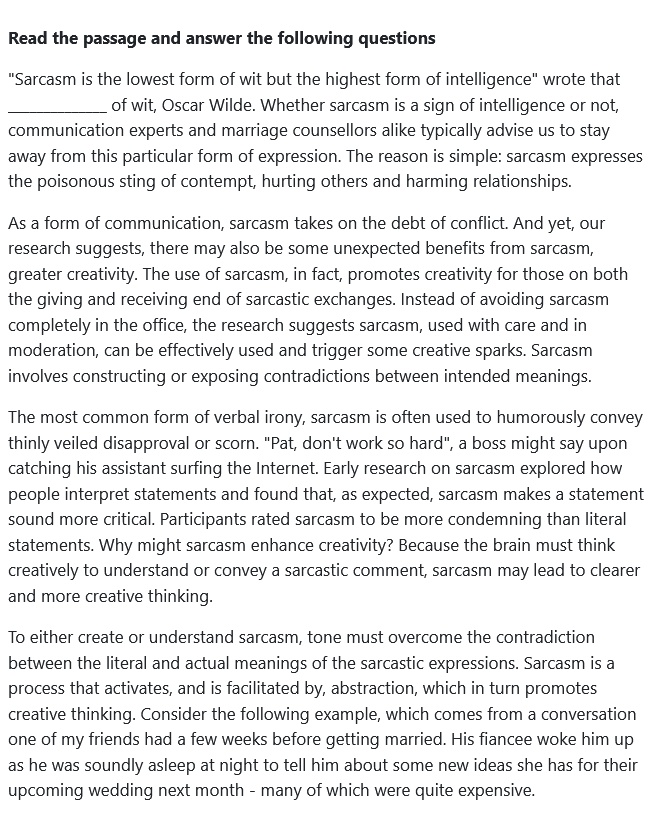
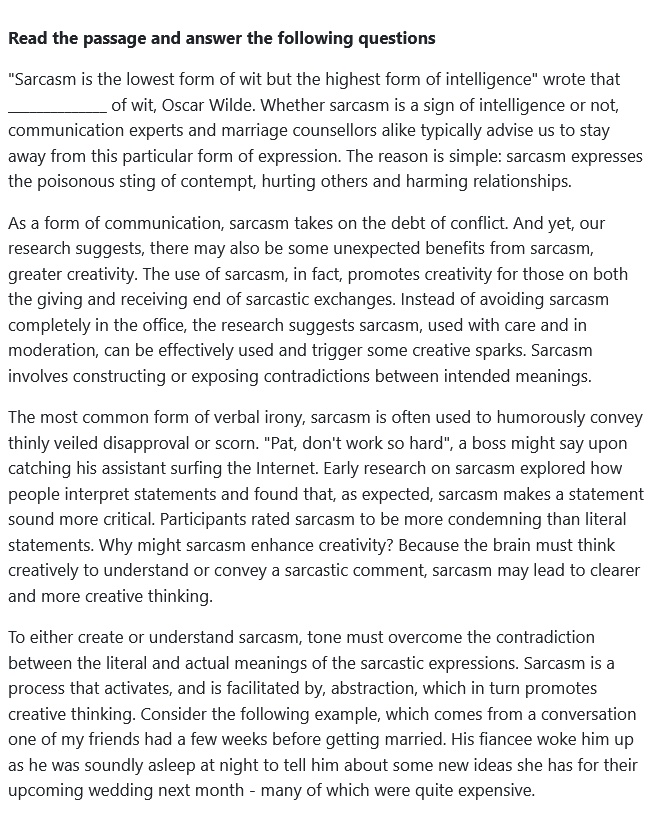
According to the passage, which of the following is most nearly the same in meaning as the word 'condemning' as used in the passage?
- Acensuring
- Bhurting
- Ckilling
- Dshouting
- Escolding
Show answerHide answer
Answer: A ✓ official key
Approach: Vocabulary in context — read the sentence where the word appears.
Solution: Passage: 'Participants rated sarcasm to be more condemning than literal statements' — i.e. sarcasm sounds more critical / disapproving.
To condemn = to express strong disapproval of. 'Censuring' = expressing formal, severe disapproval — the same sense.
Why the other options are wrong:
B hurting — an effect, not disapproval.
C killing — 'condemn to death' sense, not used here.
D shouting — a manner of speaking, not a judgement.
E scolding — angry rebuke of a person (usually a child); weaker and more informal than condemning.
Cetking shortcut: The sentence links 'condemning' with 'more critical' — pick the option that means 'criticise strongly'.
Answer: A
Refer to the passage above ↑
Which of the following is false concerning sarcasm according to the passage?
- ASarcasm expresses the poisonous sting of contempt.
- BSarcasm hurts others and harms relationships.
- CSarcasm takes on the debt of conflict.
- DThere are some unexpected benefits from sarcasm.
- ESarcasm should be entirely avoided as it does not have any beneficial effects.
Show answerHide answer
Answer: E ✓ official key
Approach: 'False according to the passage' — match each option to a line; the one the passage contradicts is the answer.
Solution: Para 2: 'there may also be some unexpected benefits from sarcasm, greater creativity' and 'Instead of avoiding sarcasm completely ... used with care and in moderation, can be effectively used'.
So the claim that sarcasm 'should be entirely avoided as it does not have any beneficial effects' directly contradicts the passage.
Why the other options are wrong:
A — stated: 'sarcasm expresses the poisonous sting of contempt'.
B — stated: 'hurting others and harming relationships'.
C — stated: 'sarcasm takes on the debt of conflict'.
D — stated: 'unexpected benefits from sarcasm'.
Cetking shortcut: Extreme words like 'entirely' and 'does not have any' are the first suspects in a FALSE question.
Answer: E
Refer to the passage above ↑
Fill in the blank given in the passage with the correct given word out of the following options.
- Aexpert
- Bclown
- Cconnoisseur
- Dpersonality
- Eplayer
Show answerHide answer
Answer: C ✓ official key
Approach: Fill the blank with the noun that collocates with 'of wit' and suits Oscar Wilde.
Solution: Sentence: '... wrote that ______ of wit, Oscar Wilde.' Wilde was a celebrated master and judge of witty remarks.
Connoisseur = a person with refined judgement in a field; 'connoisseur of wit' is natural and complimentary.
Why the other options are wrong:
A expert — we say 'expert in/on', and it lacks the sense of refined taste.
B clown — mocking; wrong tone for a quoted authority.
D personality — 'personality of wit' is meaningless.
E player — no such collocation.
Cetking shortcut: Noun + 'of' + field of taste (wine, art, wit) → connoisseur.
Answer: C
Refer to the passage above ↑
Which of the following statements is / are true according to the author of the passage?
A. Words used in sarcasm are to be considered for their literal meaning.
B. Sarcasm does involve an element of humour in it.
C. Tone of voice is one of the essential components of conveying sarcasm.
D. Sarcasm does not have any benefits and should be completely avoided.
E. Sarcasm can be understood only by very intelligent people.
- AOnly A
- BOnly B and C
- COnly D
- DOnly E
- EOnly C
Show answerHide answer
Answer: B ✓ official key
Approach: Check each statement against the passage, then pick the matching combination.
Solution: A — false: sarcasm involves 'contradictions between intended meanings', so words are not to be taken literally.
B — true: 'sarcasm is often used to humorously convey thinly veiled disapproval'.
C — true: 'tone must overcome the contradiction between the literal and actual meanings'.
D — false: the passage lists benefits and says it can be used in moderation.
E — not stated; only Wilde's quote links it to intelligence, and the author does not endorse it.
True set = B and C.
Why the other options are wrong:
A Only A — A is false.
C Only D — D is false.
D Only E — E is unsupported.
E Only C — misses B, which is also true.
Cetking shortcut: Once A and D are clearly false, only options containing B/C survive; B is true, so 'Only B and C'.
Answer: B
Refer to the passage above ↑
What is false concerning the relationship between sarcasm and creativity?
- AThe brain must think creatively to understand or convey a sarcastic comment.
- BSarcasm makes a statement sound less critical.
- CSarcasm may lead to clearer and more creative thinking.
- DTo either create or understand sarcasm, tone must overcome the contradiction between the literal and actual meanings of the sarcastic expressions.
- ESarcasm is a process that activates, and is facilitated by, abstraction, which in turn promotes creative thinking.
Show answerHide answer
Answer: B ✓ official key
Approach: False-statement question — look for an option that reverses a passage fact.
Solution: Para 3: 'as expected, sarcasm makes a statement sound more critical'.
Option B says sarcasm makes a statement sound less critical — the exact opposite, so it is false.
Why the other options are wrong:
A — stated: 'the brain must think creatively to understand or convey a sarcastic comment'.
C — stated: 'sarcasm may lead to clearer and more creative thinking'.
D — stated verbatim in para 4.
E — stated verbatim in para 4.
Cetking shortcut: Options copied almost word-for-word are usually true; hunt for the one with a flipped comparative.
Answer: B
Questions 156–160 share this
Which of the following is not true in the context of the passage?
- AInternet users across the globe are mainly interested in looking for jobs and keeping track of finances
- BGermany and Great Britain are the top countries where online shopping is quite popular
- CMany people in Sweden use e-banking to maintain their finances
- DA majority of Indians prefer shopping online as compared to other online activities
- EMost of the banks in India have introduced customer-friendly on-line banking facility with advanced security features to protect customers against cybercrime
Show answerHide answer
Answer: D ✓ official key
Approach: 'Not true' question — verify each option with the passage figures.
Solution: Para 1: 'A majority of Indians prefer to use the internet for accessing banking ... than shopping online' (57% bank online, 50% shop).
So D — 'a majority of Indians prefer shopping online as compared to other online activities' — contradicts the passage.
Why the other options are wrong:
A — true: globally banking, keeping track of finances and job search are the main tasks.
B — true: Germans and British top online shopping at 74%.
C — true: almost 90% in Sweden use e-banking.
E — true: stated in para 3 almost word for word.
Cetking shortcut: The very first line of the passage contradicts D — read the opening sentence carefully.
Answer: D
Refer to the passage above ↑
According to the passage, why are banks successful in attracting more customers?
- ABanks are successful in attracting more customers due to better training provided to sales staff
- BEasy registration process for net banking
- COpening more branches at more locations
- DProviding higher interest rates on fixed deposits
- EProviding loans at low interest rates
Show answerHide answer
Answer: B ✓ official key
Approach: Direct detail — scan for 'attract new customers'.
Solution: Para 3: 'The easy registration process for net banking has improved customers' access ... and has helped banks attract new customers.'
Option B states exactly this cause.
Why the other options are wrong:
A — staff training is never mentioned.
C — more branches not mentioned; the passage is about online banking.
D — interest rates on deposits not mentioned.
E — low-interest loans not mentioned.
Cetking shortcut: Keyword 'attract' appears only once in the passage — the reason is right before it.
Answer: B
Refer to the passage above ↑
Which of the following activity is done by half of the Indians using internet according to the passage?
- ABanking transasctions
- BSearching for jobs
- COnline shopping
- DSocial networking
- EEntertainment
Show answerHide answer
Answer: C ✓ official key
Approach: Match the figure 'half' = 50% in the passage.
Solution: Para 2: 'Checking information ... 53% while 50% shop for products online.'
Half = 50% → online shopping.
Why the other options are wrong:
A banking — 57%, more than half.
B jobs — around 42%.
D social networking — not given.
E entertainment — not given.
Answer: C
Refer to the passage above ↑
Which of the following is most nearly the same in meaning as the word, 'hassle-free' as used in the passage?
- AUnskilled
- BNegotiable
- CSubtle
- DNotable
- ENot annoying
Show answerHide answer
Answer: E ✓ official key
Approach: Vocabulary in context — 'hassle' = annoying trouble or bother.
Solution: Para 1: '... due to hassle-free access and time saving features of online banking'.
Hassle-free = without bother or annoyance → 'Not annoying'.
Why the other options are wrong:
A Unskilled — unrelated.
B Negotiable — open to discussion; unrelated.
C Subtle — delicate / not obvious.
D Notable — worth noticing.
Cetking shortcut: Break the compound: hassle (annoyance) + free (without) = without annoyance.
Answer: E
Refer to the passage above ↑
According to the passage, what inference can be made as regards the internet?
- AIt has increased the number of cybercrimes
- BIt has made lives easier than before
- CInternet is most popular for online shopping
- DThe registration process for netbanking is difiicult, yet people prefer online banking than traditional banking
- EIt is more popular for online shopping than anything else
Show answerHide answer
Answer: B ✓ official key
Approach: Inference — pick the option the passage supports without going beyond it.
Solution: Para 3: 'Online banking has made things much easier for the people and it saves a lot of time. It has eliminated the problems ... queue ... several forms.'
So the internet has made lives easier than before — option B.
Why the other options are wrong:
A — the passage mentions protection against cybercrime, not a rise in it.
C — globally banking (60%) beats shopping (48%).
D — the passage says registration is easy, not difficult.
E — same error as C; in India too, banking (57%) beats shopping (50%).
Cetking shortcut: C and E say the same thing — two options with the same claim are usually both wrong.
Answer: B
Questions 161–165 share this
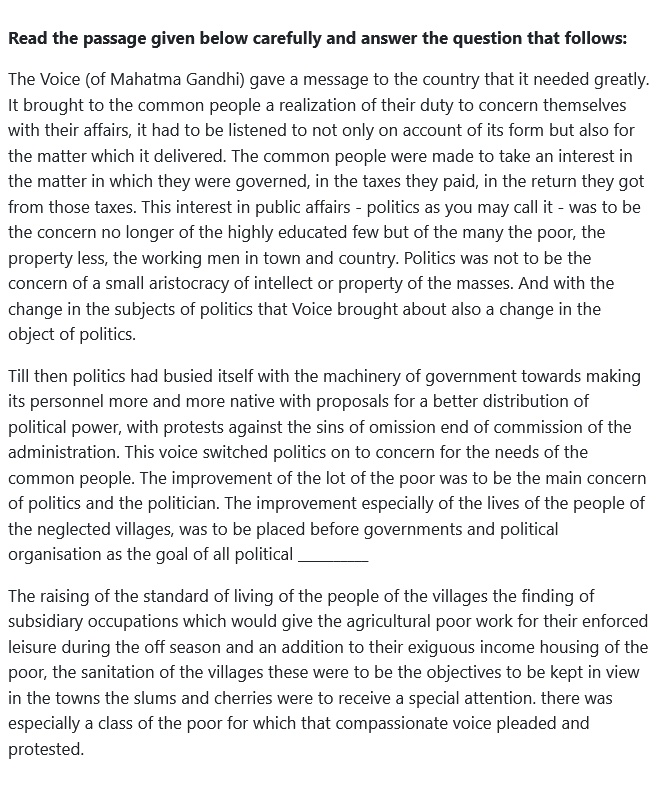
According to the passage, who did not get interested in public affairs and politics on account of the voice?
- Athe poor
- Bthe property less
- Cthe working men in town and country
- Dthe common people
- Ethe aristocracy
Show answerHide answer
Answer: E ✓ official key
Approach: Find the groups the passage says became interested in public affairs; the one left out is the answer.
Solution: Para 1: politics 'was to be the concern no longer of the highly educated few but of the many poor, the property less, the working men in town and country'.
'Politics was not to be the concern of a small aristocracy of intellect or property' — the aristocracy is the group excluded.
Why the other options are wrong:
A the poor — named.
B the property less — named.
C the working men in town and country — named.
D the common people — 'brought to the common people a realization of their duty'.
Cetking shortcut: The question has 'not' — look for the group mentioned in a 'no longer / not' clause.
Answer: E
Refer to the passage above ↑
What was the change in the subject of politics on account of the voice?
- Amaking the government personnel more and more native
- Bconcern for the needs of the common people
- Cproposals for better distribution of political power
- Dprotests against the sins of omission of the administration.
- Eprotests against the sins of commission of the administration.
Show answerHide answer
Answer: B ✓ official key
Approach: Separate 'before' from 'after' in para 2.
Solution: 'Till then politics had busied itself with ... making its personnel more and more native, with proposals for a better distribution of political power, with protests against the sins of omission and commission' — this is the OLD subject.
'This voice switched politics on to concern for the needs of the common people' — this is the CHANGE.
Why the other options are wrong:
A — old focus (personnel more native).
C — old focus (distribution of political power).
D — old focus (sins of omission).
E — old focus (sins of commission).
Cetking shortcut: Four options lifted from one 'Till then' sentence = all old; the odd one out is the change.
Answer: B
Refer to the passage above ↑
Which of the following was not the objective to be kept in view according to the voice?
- AThe improvement especially of the lives of the people of the neglected villages
- BThe raising of the standard of living of the people of the villages
- CTaxes for common people
- DThe sanitation of the villages
- EThe finding of subsidiary occupations which would give the agricultural poor work for their enforced leisure during the off season
Show answerHide answer
Answer: C ✓ official key
Approach: Match each option to the list of objectives in paras 2–3.
Solution: Para 3 lists: raising the standard of living of village people, finding subsidiary occupations for the agricultural poor, addition to income, housing of the poor, sanitation of villages — 'these were to be the objectives to be kept in view'.
Para 2 also names improvement of the lives of people of neglected villages as the goal.
'Taxes for common people' is not an objective anywhere.
Why the other options are wrong:
A — stated in para 2.
B — stated in para 3.
D — stated in para 3.
E — stated in para 3 almost verbatim.
Cetking shortcut: Options copied verbatim from the passage are 'mentioned'; the short, vague one is the outsider.
Answer: C
Refer to the passage above ↑
Why did the people listen to the voice of Mahatma Gandhi?
- APeople listened to the voice because it was aimed at the government machinery
- BPeople listened to the voice because it gave a strong message to the aristocracy
- CPeople listened to the voice because it gave a trivial message.
- DPeople listened to the voice not only on account of its form, but also for the matter that it delivered
- EPeople listened to the voice because it propagated for better distribution of political power
Show answerHide answer
Answer: D ✓ official key
Approach: Direct detail — scan for 'listened to'.
Solution: Para 1: 'it had to be listened to not only on account of its form but also for the matter which it delivered'.
Option D restates this exactly.
Why the other options are wrong:
A — the Voice turned politics away from government machinery.
B — the aristocracy is the group politics moved away from.
C — 'trivial' contradicts 'a message the country needed greatly'.
E — this was the old focus of politics.
Answer: D
Refer to the passage above ↑
Fill in the blank in the given passage with a word that fits perfectly grammatically and also contextually out of the given options below.
- Astrife
- Bendeavour
- Cmethods
- Dstudies
- Escience
Show answerHide answer
Answer: B ✓ official key
Approach: Fill the blank with a noun that collocates with 'political' and fits 'the goal of all political ___'.
Solution: The sentence says village improvement was to be placed before governments 'as the goal of all political ______'.
We need a word for purposeful political effort → 'endeavour' (a serious attempt to achieve something).
Why the other options are wrong:
A strife — conflict/struggle; a goal of conflict is illogical here.
C methods — methods have aims but 'goal of all political methods' is awkward and plural clashes with style.
D studies — the passage is about action, not academic study.
E science — 'political science' is an academic subject, wrong sense.
Cetking shortcut: 'Goal of all ___' needs an effort-word: endeavour/effort/activity.
Answer: B
Questions 166–170 share this
What is the advantage of paper money over Rupee coins according to the passage?
- APaper money is guaranteed by the government.
- BPaper money is easier to carry and count.
- CPaper is the more durable form of currency.
- DPaper money is the acceptable form of payment in every transaction.
- EIt is not easy to print a great deal of paper money.
Show answerHide answer
Answer: B ✓ official key
Approach: Direct detail — the advantage is stated in para 1.
Solution: Para 1: coins 'are heavy to carry and also ... it takes much time to count them'; paper notes 'save the trouble of carrying metal coins ... paper is lighter than metal'.
So paper money is easier to carry and count.
Why the other options are wrong:
A — the guarantee explains why paper has value, not why it beats coins.
C — durability is never claimed.
D — 'every transaction' is an overstatement not in the passage.
E — the passage says the opposite: it is very easy to print paper money.
Answer: B
Refer to the passage above ↑
What would not happen if all paper money was abolished and only coins were used?
- ACarrying money would become heavier
- BMoney transactions will become easier
- CMinting money will become difficult
- DMaking payments will become cumbersome
- ECrores and crores of rupee coins would have to be maintained
Show answerHide answer
Official CET key: B · Cetking's answer: D — see why below
Approach: 'What would NOT happen' — list the consequences the passage predicts; the one that contradicts them is the answer.
Solution: If paper money were abolished: coins are heavy to carry (A happens), payments become cumbersome (D happens), 'crores and crores more of Rupee-coins would have to be minted' (E happens), and it is 'not at all easy to increase the number of Rupee-coins' (C happens).
Transactions becoming EASIER contradicts all of this — it would not happen.
Why the other options are wrong:
A — would happen: coins are heavy.
C — would happen: increasing coins is not easy.
D — would happen: paying in coins is 'cumbersome'.
E — would happen: crores more coins would have to be minted.
Cetking shortcut: In a NOT question, pick the only option with a positive outcome when the passage predicts only negatives.
Answer: B
Refer to the passage above ↑
What is the need to still have silver, nickel and copper coins in spite of the advantages of paper money according to the passage?
- APrinting paper money is easier than minting coins.
- BSilver, nickel and copper coins are the best form of payment for large transactions.
- CIt is impossible to print just the right amount of paper money that would keep prices at their proper natural level.
- DPaper money depreciates in value faster as compared to silver, nickel and copper coins.
- EPaper money can be easily counterfeited.
Show answerHide answer
Answer: C ✓ official key
Approach: Direct detail — answer to 'why not have paper money only?' in para 3.
Solution: Reasons given: money must be something everyone wants; metals are the best form of money; 'thirdly because it would be impossible to print just the right amount of paper money that would keep prices at their proper natural level'.
Option C reproduces the third reason.
Why the other options are wrong:
A — the passage says printing is easy, but that is not given as the reason for keeping coins in this form.
B — distorts 'best form of money' into 'best for large transactions'; para 1 says coins are cumbersome for big payments.
D — depreciation speed is never compared.
E — counterfeiting is never mentioned.
Answer: C
Refer to the passage above ↑
Which statement is false according to the passage?
- AMoney is only useful for what it will buy
- BThe more money there is, the lower will be the prices of everything.
- CIt is very easy to print a great deal of paper money
- DIt is not at all easy to increase the number of Rupee-coins.
- EIt is no good at all having more money if there are no more things to buy with it
Show answerHide answer
Answer: B ✓ official key
Approach: False-statement question — look for a reversed fact.
Solution: Para 4: 'the more money there is, the higher will be the prices of everything'.
Option B says 'lower' — false.
Why the other options are wrong:
A — stated: 'money is only useful for what it will buy'.
C — stated: 'it is very easy to print a great deal of paper money'.
D — stated: 'not at all easy to increase the number of Rupee-coins'.
E — stated: 'no good at all having more money if there are no more things to buy'.
Cetking shortcut: Same trap as the sarcasm set: a near-verbatim line with one word flipped.
Answer: B
Refer to the passage above ↑
Which of the options given below can be used to fill in the blank in the given passage with a word that fits perfectly grammatically and also contextually?
- Adecides
- Bassumes
- Cdiscovers
- Dguarantees
- Erealises
Show answerHide answer
Answer: D ✓ official key
Approach: Fill the blank so it pairs logically with 'and promises to pay'.
Solution: 'The reason is that Government ______ that the piece of paper is worth the amount printed on it and promises to pay that amount ...'
The idea is an assurance/pledge of value → 'guarantees'.
Why the other options are wrong:
A decides — a decision is not an assurance to the holder.
B assumes — mere supposition gives no value.
C discovers — value is not found; it is assured.
E realises — understanding something does not make paper worth money.
Cetking shortcut: The second verb ('promises') signals the first must be a commitment word too.
Answer: D
This passage consists of jumbled up sentences / parts of sentence. Rearrange the sentences as per the proper order and identify the third sentence after rearrangement
a. everybody had exactly the same amount of money,
b. however, they forget that very few people would work at all,
c. One common mistake that many people have made is that,
d. if it were not for the money their work brings them,
e. they think it would be a very good thing if
f. and that without work there would be no money
g. no matter whether they worked hard or lived idly,
- Aa
- Bb
- Cd
- Df
- Eg
Show answerHide answer
Answer: A ✓ official key
Approach: Build the sentence using capitalisation and connectors (that / if / however / and that).
Solution: c is the only capitalised opener ('One common mistake ... is that,').
'is that, they think' → e; e ends with 'if' → needs a clause: a.
g ('no matter whether ...') qualifies a; b ('however, they forget') gives the counter-point.
b's 'very few people would work at all' → d's condition 'if it were not for the money ...'; f ('and that ...') is a second 'forget that' clause and closes.
Correct order: c – e – a – g – b – d – f
'One common mistake that many people have made is that, (c) they think it would be a very good thing if (e) everybody had exactly the same amount of money, (a) no matter whether they worked hard or lived idly, (g) however, they forget that very few people would work at all, (b) if it were not for the money their work brings them, (d) and that without work there would be no money (f).'
Third part = a.
Cetking shortcut: Lock c-e-a from grammar alone — the third slot is found without solving the full chain.
Answer: A
This passage consists of jumbled up sentences / parts of sentence. Rearrange the sentences as per the proper order and identify the sixth sentence after rearrangement.
a. everybody had exactly the same amount of money,
b. however, they forget that very few people would work at all,
c. One common mistake that many people have made is that,
d. if it were not for the money their work brings them,
e. they think it would be a very good thing if
f. and that without work there would be no money
g. no matter whether they worked hard or lived idly,
- Aa
- Bb
- Cc
- Dd
- Ef
Show answerHide answer
Answer: D ✓ official key
Approach: Build the full chain first, then read off the position asked.
Solution: c is the only capitalised opener ('One common mistake ... is that,').
'is that, they think' → e; e ends with 'if' → needs a clause: a.
g ('no matter whether ...') qualifies a; b ('however, they forget') gives the counter-point.
b's 'very few people would work at all' → d's condition 'if it were not for the money ...'; f ('and that ...') is a second 'forget that' clause and closes.
Correct order: c – e – a – g – b – d – f
'One common mistake that many people have made is that, (c) they think it would be a very good thing if (e) everybody had exactly the same amount of money, (a) no matter whether they worked hard or lived idly, (g) however, they forget that very few people would work at all, (b) if it were not for the money their work brings them, (d) and that without work there would be no money (f).'
Sixth part = d.
Cetking shortcut: b–d–f is a fixed tail: 'they forget that X would not work if not for money, and that without work no money'.
Answer: D
This passage consists of jumbled up sentences / parts of sentence. Rearrange the sentences as per the proper order and identify the second sentence after rearrangement.
a. also, at several places in the desert
b. A great part of Arabia is desert
c. The sand is so hot that you cannot walk over it with your bare feet in the daytime
d. here there is nothing but sand and rock
e. one can find springs of water
f. so deep that the sun cannot dry them up
g. that come from deep down under the ground
- Aa
- Bc
- Cd
- Df
- Eg
Show answerHide answer
Answer: C ✓ official key
Approach: Opener + pointer word: b introduces the desert, d's 'here' points back to it.
Solution: b opens (capitalised, introduces Arabia's desert); d's 'here' refers back to the desert.
c follows d: 'sand' was just mentioned, so 'The sand is so hot ...'.
a ('also, at several places in the desert') adds a new point → e (one can find springs of water) → g (that come from deep down) → f (so deep that ...).
Correct order: b – d – c – a – e – g – f
'A great part of Arabia is desert (b); here there is nothing but sand and rock (d). The sand is so hot that you cannot walk over it with your bare feet in the daytime (c). Also, at several places in the desert (a) one can find springs of water (e) that come from deep down under the ground (g), so deep that the sun cannot dry them up (f).'
Second part = d.
Cetking shortcut: Demonstratives/adverbs like 'here', 'there', 'this' attach immediately after the noun they refer to.
Answer: C
This passage consists of jumbled up sentences / parts of sentence. Rearrange the sentences as per the proper order and identify the fourth sentence after rearrangement.
a. also, at several places in the desert
b. A great part of Arabia is desert
c. The sand is so hot that you cannot walk over it with your bare feet in the daytime
d. here there is nothing but sand and rock
e. one can find springs of water
f. so deep that the sun cannot dry them up
g. that come from deep down under the ground
- Aa
- Bc
- Cd
- Df
- Eg
Show answerHide answer
Answer: A ✓ official key
Approach: Build the full chain first, then read off the position asked.
Solution: b opens (capitalised, introduces Arabia's desert); d's 'here' refers back to the desert.
c follows d: 'sand' was just mentioned, so 'The sand is so hot ...'.
a ('also, at several places in the desert') adds a new point → e (one can find springs of water) → g (that come from deep down) → f (so deep that ...).
Correct order: b – d – c – a – e – g – f
'A great part of Arabia is desert (b); here there is nothing but sand and rock (d). The sand is so hot that you cannot walk over it with your bare feet in the daytime (c). Also, at several places in the desert (a) one can find springs of water (e) that come from deep down under the ground (g), so deep that the sun cannot dry them up (f).'
Fourth part = a.
Cetking shortcut: e-g-f is a fixed relative chain (springs → that come from deep → so deep that ...), so a must sit just before it.
Answer: A
This passage consists of jumbled up sentences / parts of sentence. Rearrange the sentences as per the proper order and identify the second sentence after rearrangement.
a. partly according to the climate in which they live
b. The people of which it is made up
c. The human race is spread all over the world
d. and partly according to the kind of food
e. which their country produces
f. from the polar region to the tropics
g. eat different kinds of food
- Aa
- Bc
- Cd
- De
- Ef
Show answerHide answer
Answer: E ✓ official key
Approach: Opener + phrase that completes it.
Solution: c is the capitalised opener: 'The human race is spread all over the world'.
f extends the spread: 'from the polar region to the tropics'.
b ('The people of which it is made up') + g ('eat different kinds of food') + a ('partly according to the climate ...') + d ('and partly according to the kind of food') + e ('which their country produces').
Correct order: c – f – b – g – a – d – e. Second part = f.
Cetking shortcut: 'partly ... and partly ...' fixes a before d; 'which their country produces' must follow 'kind of food' — the tail a-d-e locks fast.
Answer: E
Which of the phrases given below the sentence should replace the word/phrase given in bold in the sentence to make it grammatically correct? If the sentence is correct as it is given and no correction is required, select 'No correction required' as your answer.
Vimal had a habit of pass the buck when it came to important issues at work.
- Apass to bucking
- Bpassing buck
- Cpassing the buck
- Dpass buck
- Epass bill
Show answerHide answer
Answer: C ✓ official key
Approach: Preposition + gerund; keep the idiom intact.
Solution: 'habit of' → 'of' is a preposition, so the verb must be a gerund: passing.
The idiom is 'pass the buck' = shift responsibility to someone else; the article 'the' is part of it.
→ 'Vimal had a habit of passing the buck ...'.
Why the other options are wrong:
A pass to bucking — meaningless.
B passing buck — article missing.
D pass buck — wrong form and no article.
E pass bill — different (and wrong) idiom.
Answer: C
Read the Instructions and answer the question
Out of the given options below, choose the word that is closest in meaning to the word given in capital:
CONVALESCENT
- AConvergent
- BPertinent
- CHealing
- DAcute
- EBlend
Show answerHide answer
Answer: C ✓ official key
Approach: Word meaning recall.
Solution: CONVALESCENT = (a person) recovering from illness or injury; in recovery.
Closest option: 'Healing'.
Why the other options are wrong:
A Convergent — meeting at a point; look-alike trap.
B Pertinent — relevant.
D Acute — severe/sharp; nearly opposite in medical sense.
E Blend — to mix.
Cetking shortcut: Link to 'convalescent home' — a place where patients recover.
Answer: C
Read the Instructions and answer the question
Out of the given options below, choose the word that is closest in meaning to the word given in capital:
RUMBUSTIOUS
- AAntithesis
- BSlow
- CPlayful
- DBoisterous
- ECheerful
Show answerHide answer
Answer: D ✓ official key
Approach: Word meaning recall.
Solution: RUMBUSTIOUS (British, = rambunctious) = boisterous, noisy and full of energy.
Closest option: 'Boisterous'.
Why the other options are wrong:
A Antithesis — direct opposite; a noun.
B Slow — opposite in spirit.
C Playful — fun-loving but not noisy/unruly.
E Cheerful — happy mood, not rowdiness.
Cetking shortcut: Rumbustious ≈ rambunctious ≈ boisterous — all describe loud, energetic behaviour.
Answer: D
Read the Instructions and answer the question
Out of the given options below, choose the word that is closest in meaning to the word given in capital:
DEBILITATE
- ADebate
- BDisperse
- CMeditate
- DAnticipate
- EWeaken
Show answerHide answer
Answer: E ✓ official key
Approach: Word meaning recall.
Solution: DEBILITATE = to weaken (body, person or system); related to 'debility' = weakness.
Closest option: 'Weaken'.
Why the other options are wrong:
A Debate — argue.
B Disperse — scatter.
C Meditate — think deeply.
D Anticipate — expect.
Cetking shortcut: Debility = weakness → debilitate = make weak.
Answer: E
Read the Instructions and answer the question
Out of the given options below, choose the word that is opposite in meaning to the word given in capital:
DISMAL
- ADespair
- BCheerful
- CTrivial
- DOrdinary
- ESmiling
Show answerHide answer
Answer: B ✓ official key
Approach: Find the meaning, then its opposite in the same part of speech.
Solution: DISMAL (adjective) = gloomy, depressing, bleak.
Opposite = bright, happy → 'Cheerful' (adjective).
Why the other options are wrong:
A Despair — a noun with similar (gloomy) meaning.
C Trivial — unimportant; unrelated.
D Ordinary — unrelated.
E Smiling — describes a facial action; 'cheerful' is the direct mood opposite.
Cetking shortcut: Match part of speech: an adjective of mood needs an adjective of opposite mood.
Answer: B
Read the Instructions and answer the question
Out of the given options below, choose the word that is opposite in meaning to the word given in capital:
PLIABLE
- AConvenient
- BEasy
- CBrittle
- DArrogant
- ERigid
Show answerHide answer
Answer: E ✓ official key
Approach: Meaning first, then the direct opposite.
Solution: PLIABLE = flexible, easily bent; (of a person) easily influenced.
Direct opposite = stiff, unbending → 'Rigid'.
Why the other options are wrong:
A Convenient — unrelated.
B Easy — unrelated.
C Brittle — hard but breaks easily; contrasts with 'tough', not exactly with 'flexible'.
D Arrogant — unrelated personality trait.
Cetking shortcut: Pliable ≈ flexible ↔ rigid — the textbook antonym pair.
Answer: E
Questions 182–186 share this
In the given passage, there are words / group of words highlighted in bold and underlined. You have to decide if the words / group of words given is / are correct grammatically and contextually. If not find out the appropriate word / group of words from the given options. In case the given highlighted words / group of words is / are correct, then mark that option as your answer.
Every year over a lakh of our students, seek admissions abroad spending about $ 4 billion (Rs. 16,400 crore) annually. The demand in seats in metros is maddening. Even the less rated institutes are crowded with students. There is an urgent need in our country to expand the capacity of higher education. To link this huge demand – supply gap, one of the recommendations of the Knowledge Commission is to allow foreign universities in the country. The government it seems is all set to follow this recommendation. There is a possibility that the craze for a foreign label and lack of information about these institutes can leave thousands of students duped by fly by night operators, especially the franchisees. The government has to be skeptical in allowing entry to foreign universities. Only those institutions that are accredited by reputed organizations should be given permission to set up here
- Asurge in
- Brush for
- Csplit in
- Dline for
- EThe given and highlighted word(s) is / are correct
Show answerHide answer
Answer: B ✓ official key
Approach: Check the preposition and the meaning of the bold phrase.
Solution: 'The demand in seats in metros is maddening' — 'demand' takes 'for' (demand for seats), so the given phrase is wrong.
We need 'X for seats' meaning heavy demand → 'rush for' (rush for seats = scramble to get seats).
Why the other options are wrong:
A surge in — would mean the seats themselves increased.
C split in — meaningless here.
D line for — informal and does not convey 'maddening' demand.
E — the given 'demand in' has the wrong preposition.
Cetking shortcut: Fix the preposition first ('for'), then choose among the 'for' options by meaning.
Answer: B
Refer to the passage above ↑
- Adesperation
- Brush
- Cimperative
- Dimmediate focus
- EThe given and highlighted word(s) is / are correct
Show answerHide answer
Answer: E ✓ official key
Approach: Test the bold phrase in its sentence before trying replacements.
Solution: 'There is an urgent need in our country to expand the capacity of higher education.'
'Urgent need to + verb' is a standard collocation; meaning and grammar are both fine.
Why the other options are wrong:
A desperation — 'a desperation to expand' is unidiomatic and overstated.
B rush — 'a rush to expand' changes meaning to haste.
C imperative — possible as a noun but awkward with 'There is an ... in our country'.
D immediate focus — 'immediate focus to expand' is ungrammatical (focus on).
Cetking shortcut: If the original phrase reads naturally and the options are only near-synonyms, mark it correct.
Answer: E
Refer to the passage above ↑
- Aorchestrate
- Bmanipulate
- Cbridge
- Dalign
- Ejoin
Show answerHide answer
Answer: C ✓ official key
Approach: Collocation: verb + 'gap'.
Solution: 'To link this huge demand – supply gap ...' — one does not 'link' a gap.
The standard collocation is 'bridge the gap' = reduce/close the difference.
Why the other options are wrong:
A orchestrate — organise; wrong collocation.
B manipulate — negative sense; wrong.
D align — things are aligned, not gaps.
E join — same problem as 'link'.
Cetking shortcut: Remember the fixed pair: bridge / close / narrow the gap.
Answer: C
Refer to the passage above ↑
- Aoblige
- Bapply
- Cchange
- Dunderstand
- EThe given and highlighted word(s) is / are correct
Show answerHide answer
Answer: E ✓ official key
Approach: Test the bold word in its sentence.
Solution: 'The government it seems is all set to follow this recommendation.'
'Follow a recommendation' = accept and act on it — correct collocation and meaning.
Why the other options are wrong:
A oblige — oblige a person, not a recommendation.
B apply — 'apply a recommendation' is unidiomatic.
C change — contradicts the next sentence, which discusses its effects.
D understand — the government is set to act, not merely understand.
Answer: E
Refer to the passage above ↑
- Ajudicious in
- Benvious in
- Cdiscriminatory in
- Dflambouyant in
- Eproactive in
Show answerHide answer
Answer: A ✓ official key
Approach: Read the surrounding sentences for the author's stand, then check the collocation.
Solution: Before: students may be 'duped by fly by night operators'. After: 'Only those institutions ... accredited ... should be given permission'.
So the government must be careful/discerning. 'Skeptical' takes 'about/of', so 'skeptical in' is wrong; 'judicious in allowing entry' (sensible, careful judgement) fits both grammar and meaning.
Why the other options are wrong:
B envious in — jealousy is irrelevant.
C discriminatory in — implies unfair bias, a negative sense.
D flambouyant in — showy; meaningless here.
E proactive in — implies eagerness to allow, against the author's caution.
Cetking shortcut: No 'correct as is' option → the bold phrase must be replaced; pick the word matching the author's cautious tone.
Answer: A
In the following question, a sentence is written in different ways. Choose the sentence that is grammatically correct.
a) Knowing the area is prone for earthquakes, all the buildings were reinforced with additional steel and concrete.
b) Since the area was knowing to be prone to earthquakes, all the buildings were reinforced with additional steel and concrete.
c) Being prone to earthquake, all the buildings were reinforced with additional steel and concrete.
d) Since the area was prone to earthquakes, all the buildings were reinforced with additional steel and concrete.
e) As the area was known to earthquakes, all the buildings were reinforced with additional steel and concrete.
- AKnowing the area is prone for earthquakes, all the buildings were reinforced with additional steel and concrete.
- BSince the area was knowing to be prone to earthquakes, all the buildings were reinforced with additional steel and concrete.
- CBeing prone to earthquake, all the buildings were reinforced with additional steel and concrete.
- DSince the area was prone to earthquakes, all the buildings were reinforced with additional steel and concrete.
- EAs the area was known to earthquakes, all the buildings were reinforced with additional steel and concrete.
Show answerHide answer
Answer: D ✓ official key
Approach: Check each version for modifier, preposition and verb-form errors.
Solution: D: 'Since the area was prone to earthquakes, all the buildings were reinforced ...' — clear cause clause, correct preposition 'prone to', correct tense.
Why the other options are wrong:
A — dangling 'Knowing ...' (the buildings did not know) + 'prone for'.
B — 'was knowing' is wrong; should be 'was known'.
C — dangling 'Being prone ...' and 'earthquake' should be plural.
E — 'known to earthquakes' is meaningless; should be 'prone to'.
Cetking shortcut: Any sentence opening with a participle (-ing) must have the doer as the next noun — A and C fail that test instantly.
Answer: D
In the following question, a sentence is written in different ways. Choose the sentence that is grammatically correct.
a) It must be noted that under no circumstance should the company go in for diversification.
b) It must be noticed that under no circumstance should the company go in for diversification.
c) It must be noted that under no circumstance should the company enter for diversification.
d) It must be noted that under no circumstance should, company go in for diversification.
e) It must be noted that under no circumstance should the company go in diversification.
- AIt must be noted that under no circumstance should the company go in for diversification.
- BIt must be noticed that under no circumstance should the company go in for diversification.
- CIt must be noted that under no circumstance should the company enter for diversification.
- DIt must be noted that under no circumstance should, company go in for diversification.
- EIt must be noted that under no circumstance should the company go in diversification.
Show answerHide answer
Answer: A ✓ official key
Approach: Negative inversion + correct phrasal verb.
Solution: A: 'It must be noted that under no circumstance should the company go in for diversification.' — 'should the company go' is correct inversion; 'go in for' = choose to take up.
Why the other options are wrong:
B — 'noticed' wrong word; 'noted' = kept in mind.
C — 'enter for diversification' wrong phrasal verb.
D — stray comma and missing article 'the'.
E — 'go in diversification' drops 'for'.
Cetking shortcut: All five share the frame; spot the single change in each and reject it.
Answer: A
In the following question, a sentence is written in different ways. Choose the sentence that is grammatically correct.
a) Some buildings that were destroyed and heavily damaged in the earthquake last year, are constructed in violation of the city's building code.
b) Some buildings that were destroyed or heavily damaged in the earthquake last year, had been constructed in violation of the city's building code.
c) Some buildings that are destroyed and heavily damaged in the earthquake last year, were constructed on violation of the city's building code.
d) The earthquake destroyed some buildings and heavily damaged them last year, these are constructed in violation of the city's building code.
e) The earthquake destroyed some buildings and heavily damaged them last year because they were constructed in violating the city's building code.
- ASome buildings that were destroyed and heavily damaged in the earthquake last year, are constructed in violation of the city's building code.
- BSome buildings that were destroyed or heavily damaged in the earthquake last year, had been constructed in violation of the city's building code.
- CSome buildings that are destroyed and heavily damaged in the earthquake last year, were constructed on violation of the city's building code.
- DThe earthquake destroyed some buildings and heavily damaged them last year, these are constructed in violation of the city's building code.
- EThe earthquake destroyed some buildings and heavily damaged them last year because they were constructed in violating the city's building code.
Show answerHide answer
Answer: B ✓ official key
Approach: Tense sequence and logical connector.
Solution: B: 'Some buildings that were destroyed or heavily damaged in the earthquake last year had been constructed in violation of the city's building code.'
Construction happened before the earthquake → past perfect 'had been constructed'; 'destroyed or heavily damaged' is logical (a building can't be both).
Why the other options are wrong:
A — 'destroyed and damaged' illogical; 'are constructed' wrong tense.
C — 'are destroyed ... last year' tense clash; 'on violation' wrong preposition.
D — comma splice and wrong tense 'are constructed'.
E — 'destroyed ... and heavily damaged them' illogical; 'in violating' wrong form.
Cetking shortcut: 'Last year' + an even earlier event = past perfect for the earlier one.
Answer: B
In the following question, a sentence is written in different ways. Choose the sentence that is grammatically correct.
a) The article tells the story of the famous author and the effective strategy he used to overcome his chronic illness.
b) The article tells the story of the famous author and the effective strategy he used to overcoming his chronic illness.
c) These article tells the story of the famous author and the effective strategy he used to overcome his chronic illness.
d) The article tells the story of the famous author and his effective strategy, he used to overcome his chronic illness.
e) The article tells the story of the famous author and how his effective strategy helped him to overcoming chronic illness.
- AThe article tells the story of the famous author and the effective strategy he used to overcome his chronic illness.
- BThe article tells the story of the famous author and the effective strategy he used to overcoming his chronic illness.
- CThese article tells the story of the famous author and the effective strategy he used to overcome his chronic illness.
- DThe article tells the story of the famous author and his effective strategy, he used to overcome his chronic illness.
- EThe article tells the story of the famous author and how his effective strategy helped him to overcoming chronic illness.
Show answerHide answer
Answer: A ✓ official key
Approach: Infinitive of purpose, determiner agreement and clause structure.
Solution: A: 'The article tells the story of the famous author and the effective strategy he used to overcome his chronic illness.' — 'to overcome' is the infinitive of purpose; all parts agree.
Why the other options are wrong:
B — 'to overcoming' wrong after 'used' (purpose).
C — 'These article' — plural determiner with singular noun.
D — the comma makes 'he used to overcome ...' a run-on clause.
E — 'helped him to overcoming' — wrong verb form.
Answer: A
In the following question, a sentence is written in different ways. Choose the sentence that is grammatically correct.
a) Had this notification been amended earlier, we should have stopped the transfer of funds.
b) Had this notification been amended earlier, we would have stopped the transfer of funds.
c) Had this notification have been amended earlier, we would have stopped the transfer of funds.
d) Were this notification been amended earlier, we would have stopped the transfer of funds.
e) Should this notification been amended earlier, we would have stopped the transfer of funds.
- AHad this notification been amended earlier, we should have stopped the transfer of funds.
- BHad this notification been amended earlier, we would have stopped the transfer of funds.
- CHad this notification have been amended earlier, we would have stopped the transfer of funds.
- DWere this notification been amended earlier, we would have stopped the transfer of funds.
- EShould this notification been amended earlier, we would have stopped the transfer of funds.
Show answerHide answer
Answer: B ✓ official key
Approach: Inverted third conditional (unreal past).
Solution: 'Had this notification been amended earlier' = 'If this notification had been amended earlier'.
Result clause of a third conditional: 'would have + V3' → 'we would have stopped the transfer of funds'.
Why the other options are wrong:
A — 'should have' changes meaning to obligation.
C — 'Had ... have been' double auxiliary.
D — 'Were ... been' mixes second-conditional inversion with a past participle.
E — 'Should ... been' is not a valid inversion (should + be).
Cetking shortcut: Inverted 'Had' at the start → the other half must be 'would have + V3'.
Answer: B
In the following question a phrase of the sentence is printed in bold, find the option which can replace the phrase to make the sentence grammatically correct. If the given sentence is already grammatically correct then choose, 'No correction required' as the option.
The director insisted on his order being carried out with the letter.
- Afor the letter
- Bto the letter
- Cby the letter
- Dinto the letter
- ENo correction required
Show answerHide answer
Answer: B ✓ official key
Approach: Fixed idiom with a fixed preposition.
Solution: Carry out an order to the letter = follow it exactly and precisely.
'with the letter' is not idiomatic, so it must be replaced.
Why the other options are wrong:
A for the letter — wrong preposition.
C by the letter — confuses with 'by the book'.
D into the letter — meaningless.
E — the given phrase is wrong.
Cetking shortcut: 'Follow/carry out to the letter' and 'by the book' are separate idioms — don't mix prepositions.
Answer: B
In the following question a phrase of the sentence is printed in bold, find the option which can replace the phrase to make the sentence grammatically correct. If the given sentence is already grammatically correct then choose, 'No correction required' as the option.
He admired the speed with which Kaushal completed the work and appreciating the method adopted by him.
- Aappreciate the method being adopted
- Bappreciated the method adopted
- Cappreciate the method of adoption
- Dappreciate the adopting method
- ENo correction required
Show answerHide answer
Answer: B ✓ official key
Approach: Parallel structure with 'and'.
Solution: 'He admired the speed ... and appreciated the method adopted by him.' — both verbs simple past, same subject 'He'.
'appreciating' breaks the parallel.
Why the other options are wrong:
A — 'appreciate' wrong tense.
C — base form + 'method of adoption' changes meaning.
D — base form + 'adopting method' is ungrammatical.
E — 'appreciating' is not parallel to 'admired'.
Cetking shortcut: Look left of 'and': the first verb's form decides the second.
Answer: B
In the following sentence, the words in bold are gramatically wrong. Choose the option which is grammatically correct and expresses the meaning of sentence correctly.
I asked her that how she got time to write all these books.
- Athat how did she got
- Bthat how she was getting
- Chow did she getting
- Dhow she got
- Ethat how did she get
Show answerHide answer
Answer: D ✓ official key
Approach: Reported (indirect) question rules.
Solution: Direct: 'How did you get time ...?' → Reported: 'I asked her how she got time to write all these books.'
Rule 1: the wh-word ('how') is the connector — do not add 'that'.
Rule 2: use statement order (subject + verb), so no 'did' and no inversion.
Why the other options are wrong:
A — extra 'that' and 'did ... got' (double past).
B — extra 'that'; past continuous changes meaning.
C — question order and 'did ... getting' is ungrammatical.
E — extra 'that' and question inversion.
Cetking shortcut: Any option with 'that how' or 'did she' is out — only D survives.
Answer: D
Identify the correct sentence from the given options that represents, 'Personification' as a figure of speech.
A. The wind whispered secrets through the rustling leaves.
B. The wind was rustling the leaves.
C. The wind was the lifeline of the wrecked ship.
D. The wind is a broom, clearing the sidewalk of leaves.
E. The wind was as sharp as a razor.
- AThe wind whispered secrets through the rustling leaves.
- BThe wind was rustling the leaves.
- CThe wind was the lifeline of the wrecked ship.
- DThe wind is a broom, clearing the sidewalk of leaves.
- EThe wind was as sharp as a razor.
Show answerHide answer
Answer: A ✓ official key
Approach: Identify the figure used in each sentence.
Solution: A: 'The wind whispered secrets' — whispering secrets is a human act → personification.
Why the other options are wrong:
B — literal description (wind rustling leaves).
C — metaphor: wind = lifeline.
D — metaphor: wind = broom.
E — simile: 'as sharp as a razor'.
Cetking shortcut: 'as / like' → simile; 'is a ...' → metaphor; human verb for a thing → personification.
Answer: A
In this question, four words are given in bold. One of these words given in bold may be wrongly spelt or inappropriate in the context of the sentence.
Find out the word that is inappropriately or wrongly spelt, if any. That word is your answer. If all the words given in bold are correctly spelt or appropriate in the context of the sentence, then mark 'All correct' as your answer.
My heart isn't simple or straightforward, it's a complicated mess of wants and needs.
- Asimple
- Bstraightforward
- Ccomplicated
- Dmess
- EAll correct
Show answerHide answer
Answer: E ✓ official key
Approach: Check spelling, then meaning in context, word by word.
Solution: 'simple', 'straightforward', 'complicated', 'mess' — all spelt correctly.
Meaning: 'isn't simple or straightforward' contrasts naturally with 'a complicated mess of wants and needs'. No word is out of place.
Why the other options are wrong:
A simple — correct spelling and fits the contrast.
B straightforward — correct (one word).
C complicated — correct spelling and sense.
D mess — correct; 'a complicated mess' is a standard phrase.
Cetking shortcut: Check the double-letter / compound traps first (straightforward); if they pass, go with 'All correct'.
Answer: E
Identify the correct figure of speech as represented by the given sentence:
"The food tasted awfully good."
- APersonification
- BMetaphor
- CExaggeration
- DIrony
- EOxymoron
Show answerHide answer
Answer: E ✓ official key
Approach: Spot the contradictory word pair.
Solution: 'awfully' (from awful = very bad) + 'good' → contradictory terms placed together → oxymoron.
Why the other options are wrong:
A Personification — no human quality given to a thing.
B Metaphor — no implied comparison.
C Exaggeration (hyperbole) — no overstatement.
D Irony — meaning not reversed; the food really was good.
Cetking shortcut: Two adjacent words that contradict each other (deafening silence, awfully good) = oxymoron.
Answer: E
IDIOM
In the question an idiom is given, select the correct interpretation of the idiom from the given options below
“Throw in the towel”
- ATo surrender to temptation
- BTo accept defeat
- CTo give up a job
- DTo make a sacrifice
- ETo throw the towel to someone
Show answerHide answer
Answer: B ✓ official key
Approach: Idiom meaning recall.
Solution: In boxing, a trainer throws a towel into the ring to concede the fight.
So 'throw in the towel' = admit defeat, give up.
Why the other options are wrong:
A — temptation is unrelated.
C — too narrow; it is not about jobs.
D — sacrifice is a different idea.
E — literal reading.
Cetking shortcut: Literal options (E) are almost never the meaning of an idiom.
Answer: B
IDIOM
In the question an idiom is given, select the correct interpretation of the idiom from the given options below
“Break the ice”
- ATo start a fight
- BTo solve a difficult problem
- CTo clear misunderstanding
- DTo clear the ice on the road
- ETo overcome social awkwardness
Show answerHide answer
Answer: E ✓ official key
Approach: Idiom meaning recall.
Solution: 'Break the ice' = do or say something to relieve tension and get people talking, especially at a first meeting.
→ to overcome social awkwardness.
Why the other options are wrong:
A — starting a fight is the opposite.
B — problem-solving is 'crack the problem'.
C — clearing misunderstanding is 'clear the air'.
D — literal reading.
Cetking shortcut: Pair it with its cousins: 'clear the air' (misunderstanding) vs 'break the ice' (awkwardness).
Answer: E
IDIOM
In the question an idiom is given, select the correct interpretation of the idiom from the given options below
"Play the devil’s advocate"
- ATo argue that something bad is coming, even though it’s calm right now
- BTo hear news of something that is a secret
- CTo follow a trend, and do what everyone else is doing
- DTo defend the guilty person by arguing on his behalf
- ETo argue the opposite of what you believe, just for the sake of argument
Show answerHide answer
Answer: E ✓ official key
Approach: Idiom meaning recall.
Solution: Devil's advocate = someone who takes the opposing view for the sake of argument or to test the strength of an idea.
→ option E.
Why the other options are wrong:
A — that is 'calm before the storm'.
B — that is 'hear through the grapevine'.
C — that is 'jump on the bandwagon'.
D — literal reading of 'advocate'.
Cetking shortcut: Options A–C are definitions of other well-known idioms — eliminate them quickly.
Answer: E
Select the option that is related to the third word in the same way as the second word is related to the first word:
Currency: Inflation : : Metal : ?
- AHunger
- BDisease
- CRust
- DFuel
- ERecycling
Show answerHide answer
Answer: C ✓ official key
Approach: Cause–effect analogy: the second word is the process that erodes / devalues the first.
Solution:
Inflation erodes the value of currency over time.
Rust (corrosion) erodes metal over time.
So Currency : Inflation :: Metal : Rust.
Why the other options are wrong:
- A Hunger – affects living beings, not metal.
- B Disease – affects organisms, not metal.
- D Fuel – no deterioration relation with metal.
- E Recycling – a reuse process, not deterioration.
Cetking shortcut: Ask 'what slowly eats away X?' – inflation eats currency, rust eats metal.
Answer: C
Choose the analogy that best matches the example provided:
Potter : Vase
A) Author : Idea
B) Carpenter : Chair
C) Painter : Brush
D) Chef : Recipe
E) Sculptor : Marble
- AAuthor : Idea
- BCarpenter : Chair
- CPainter : Brush
- DChef : Recipe
- ESculptor : Marble
Show answerHide answer
Answer: B ✓ official key
Approach: Maker–product analogy.
Solution:
A potter makes a vase (finished product made by the craftsman).
A carpenter makes a chair – same maker → product relation.
Why the other options are wrong:
- A Author : Idea – an author produces a book; an idea is not a crafted object.
- C Painter : Brush – worker : tool, not product.
- D Chef : Recipe – a chef makes a dish; a recipe is the instruction.
- E Sculptor : Marble – worker : raw material, not product.
Cetking shortcut: Frame a sentence: 'A potter MAKES a vase' – only 'a carpenter MAKES a chair' fits the same sentence.
Answer: B
Select the option that completes the number analogy.
18 : 441 : : 21 : 576 : : 24: ?
- A564
- B478
- C729
- D446
- E676
Show answerHide answer
Answer: C ✓ official key
Approach: Number analogy: second term = (first term + 3)².
Solution:
18 → (18 + 3)² = 21² = 441 ✓
21 → (21 + 3)² = 24² = 576 ✓
24 → (24 + 3)² = 27² = 729
Cetking shortcut: 441 and 576 are perfect squares (21², 24²) – the chain 18, 21, 24 itself tells you the next square is 27².
Answer: C
Select the option in which the numbers follow the same relationship as in the given set.
40 : 49 : 22
- A31 : 41 : 21
- B35 : 47 : 28
- C45 : 56 : 22
- D27 : 37 : 12
- E42 : 51 : 24
Show answerHide answer
Answer: E ✓ official key
Approach: Number-triad relation: first + 9 = second; second − 27 = third (equivalently, all three numbers have the same digit sum root).
Solution:
Given: 40 + 9 = 49; 49 − 27 = 22 ✓ (digit roots 4, 4, 4).
E: 42 + 9 = 51; 51 − 27 = 24 ✓ (digit roots 6, 6, 6).
Why the other options are wrong:
- A 31 : 41 : 21 – 31 + 9 = 40 ≠ 41.
- B 35 : 47 : 28 – 35 + 9 = 44 ≠ 47.
- C 45 : 56 : 22 – 45 + 9 = 54 ≠ 56.
- D 27 : 37 : 12 – 27 + 9 = 36 ≠ 37.
Cetking shortcut: Check only 'first + 9 = second': it alone eliminates A–D in seconds.
Answer: E
Select the option that is related to the third word in the same way as the second word is related to the first word:
Democracy : Ballot :: Monarchy : ?
- AJustice
- BCharity
- CHelp
- DCrown
- EBorrow
Show answerHide answer
Answer: D ✓ official key
Approach: System : its defining instrument/symbol of power.
Solution:
In a democracy, power is conferred through the ballot.
In a monarchy, power is held through the crown.
So Democracy : Ballot :: Monarchy : Crown.
Why the other options are wrong:
- A Justice, B Charity, C Help, E Borrow – none is the instrument or symbol of a system of rule.
Answer: D
In the following question, find the odd letters/group from the given alternatives.
A) WTYX
B) KHML
C) PMRQ
D) GDIH
E) TPWU
- AWTYX
- BKHML
- CPMRQ
- DGDIH
- ETPWU
Show answerHide answer
Official CET key: E · Cetking's answer: D — see why below
Approach: Letter-group odd one out: check the gaps between consecutive letters.
Solution:
WTYX: W(23) T(20) Y(25) X(24) → −3, +5, −1
KHML: 11, 8, 13, 12 → −3, +5, −1
PMRQ: 16, 13, 18, 17 → −3, +5, −1
GDIH: 7, 4, 9, 8 → −3, +5, −1
TPWU: 20, 16, 23, 21 → −4, +7, −2 ✗
Only TPWU breaks the −3, +5, −1 pattern.
Cetking shortcut: Check just the first gap: W→T, K→H, P→M, G→D are all −3, T→P is −4 – done.
Answer: E
Find the odd one out:
A) Inch
B) Foot
C) Yard
D) Mile
E) Acre
- AInch
- BFoot
- CYard
- DMile
- EAcre
Show answerHide answer
Answer: E ✓ official key
Approach: Classification by the quantity measured.
Solution:
Inch, Foot, Yard and Mile are units of length.
Acre is a unit of area.
Answer: E
Which pair does NOT belong with the others?
A.12 – 84
B. 36 – 62
C. 48 – 72
D. 84 – 96
E. 24 – 48
- A12 – 84
- B36 – 62
- C48 – 72
- D84 – 96
- E24 – 48
Show answerHide answer
Official CET key: B · Cetking's answer: A — see why below
Approach: Number-pair odd one out: check divisibility by 12.
Solution:
12 – 84: 12 = 12×1, 84 = 12×7 ✓
48 – 72: 12×4, 12×6 ✓
84 – 96: 12×7, 12×8 ✓
24 – 48: 12×2, 12×4 ✓
36 – 62: 36 = 12×3 but 62 is not a multiple of 12 (it is not even a multiple of 3) ✗
Cetking shortcut: Digit-sum test for 3: 6+2 = 8, so 62 is not divisible by 3 – it is the only number in the list that fails.
Answer: B
Choose the number which is DIFFERENT from the rest?
A. 3727
B. 4668
C. 5847
D. 5364
E. 6745
- A3727
- B4668
- C5847
- D5364
- E6745
Show answerHide answer
Answer: A ✓ official key
Approach: Number odd one out: digit sum parity / primality.
Solution:
Digit sums: 3727 → 19, 4668 → 24, 5847 → 24, 5364 → 18, 6745 → 22.
Only 3727 has an odd digit sum; all others are even.
Also, 3727 is a prime number, while 4668 and 5364 are even, 5847 is divisible by 3 and 6745 by 5.
Cetking shortcut: Digit sums take five seconds – 19 is the lone odd sum.
Answer: A
Rajesh walks 15 km towards North. He turns right and walks another 15 km. He turns right and walks another 15 km. In which direction is he with respect to the starting point?
- ANorth
- BNorth-west
- CWest
- DSouth
- EEast
Show answerHide answer
Answer: E ✓ official key
Approach: Direction tracing with right turns.
Solution:
Start O. 15 km North → (0, 15).
Turn right → East, 15 km → (15, 15).
Turn right → South, 15 km → (15, 0).
Final point is 15 km directly East of O.
Cetking shortcut: Two equal opposite legs (North 15, South 15) cancel – only the East leg remains.
Answer: E
Find the odd one out:
17, 19, 23, 29, 31
- A17
- B19
- C23
- D29
- E31
Show answerHide answer
Answer: E ✓ official key
Approach: Odd one out in a number list: all are primes, so look at the gap pattern.
Solution:
All five numbers are prime, so primality does not separate them.
Gaps: 17 → 19 (+2) → 23 (+4) → 29 (+6) → next should be +8 = 37.
31 (+2 after 29) breaks the +2, +4, +6, +8 progression, so 31 is the odd one.
Cetking shortcut: When every term shares the obvious property (prime), check the differences – the series 17, 19, 23, 29 has gaps 2, 4, 6.
Answer: E
Find the missing number in the series:
11, 19, 31, 43, ____, 71
- A47
- B53
- C59
- D71
- E67
Show answerHide answer
Answer: C ✓ official key
Approach: Prime-number series: every third prime.
Solution:
Primes in order: 11, 13, 17, 19, 23, 29, 31, 37, 41, 43, 47, 53, 59, 61, 67, 71.
Series picks every 3rd prime: 11, (13, 17) 19, (23, 29) 31, (37, 41) 43, (47, 53) 59, (61, 67) 71.
So the missing term is 59.
Cetking shortcut: Notice all terms are prime; count how many primes are skipped between 11 and 19 (two) – keep skipping two.
Answer: C
Complete the series
1, 2, 6, 24, 120, ?
- A720
- B600
- C687
- D268
- E432
Show answerHide answer
Answer: A ✓ official key
Approach: Factorial series: each term = previous term × next natural number.
Solution:
1 ×2 = 2, 2 ×3 = 6, 6 ×4 = 24, 24 ×5 = 120, 120 ×6 = 720.
(Terms are 1!, 2!, 3!, 4!, 5!, 6!.)
Cetking shortcut: 1, 2, 6, 24, 120 is the factorial sequence – recognise it on sight.
Answer: A
Complete the series
2 Z 5, 7 Y 7, 14 X 9, 23 W 11, 34 V 13, ?
- A37 Y 16
- B47 U 15
- C40 H 12
- D45 U 17
- E43 X 14
Show answerHide answer
Answer: B ✓ official key
Approach: Alphanumeric series with three independent parts.
Solution:
First number: 2, 7, 14, 23, 34 → differences +5, +7, +9, +11 → next +13 = 47.
Letter: Z, Y, X, W, V → next U.
Last number: 5, 7, 9, 11, 13 → next 15.
Next term = 47 U 15.
Why the other options are wrong:
- A 37 Y 16, C 40 H 12, E 43 X 14 – wrong letter.
- D 45 U 17 – letter fits but 45 and 17 do not.
Cetking shortcut: The letter alone (U) leaves only B and D; the last number 15 then picks B.
Answer: B
What comes next in the series:
50, B, 210, F, 380, J, 460, .., ...?
- AH, 510
- BQ, 500
- CV, 480
- DN, 550
- EU, 525
Show answerHide answer
Answer: D ✓ official key
Approach: Two interleaved series – letters and numbers.
Solution:
Letters: B(2), F(6), J(10) → +4 each → next N(14).
Numbers: 50, 210, 380, 460 → differences 160, 170 | 80, 90 – in each pair the second gap is 10 more than the first.
So the series continues N, then 460 + 90 = 550.
Next pair: N, 550.
Why the other options are wrong:
- A H, 510 / B Q, 500 / C V, 480 / E U, 525 – none has the letter N (+4 from J).
Cetking shortcut: Only one option contains N – the letter series alone settles it.
Answer: D
Find the missing number in the series:
94, 99, 108, 119, 130, ? , 144
- A128
- B135
- C139
- D140
- E132
Show answerHide answer
Answer: C ✓ official key
Approach: Number series with symmetric differences.
Solution:
Differences: 99 − 94 = 5, 108 − 99 = 9, 119 − 108 = 11, 130 − 119 = 11.
The gaps mirror: 5, 9, 11, 11, 9, 5.
130 + 9 = 139, and 139 + 5 = 144 ✓
Cetking shortcut: When gaps rise then repeat (11, 11), expect them to fall back in reverse – verify with the last term 144.
Answer: C
Ram is facing west. He turns 45° clockwise, 135° counter clockwise, and 135° counter clockwise again. Which direction is he now facing?
- ANorth-West
- BNorth-East
- CSouth-East
- DSouth-West
- ESouth
Show answerHide answer
Answer: B ✓ official key
Approach: Track facing direction as a bearing (N = 0°, clockwise positive).
Solution:
Facing West = 270°.
45° clockwise → 315° = North-West.
135° anticlockwise → 315° − 135° = 180° = South.
135° anticlockwise again → 180° − 135° = 45° = North-East.
Cetking shortcut: Net turn = +45 − 135 − 135 = −225° (i.e. 135° clockwise). West + 135° clockwise = North-East.
Answer: B
A person facing South-West turns and faces East. In the same way, if a person facing North-East turns, which direction will she face?
- ASouth
- BEast
- CWest
- DNorth
- ENorth-West
Show answerHide answer
Answer: C ✓ official key
Approach: Same rotation applied to a new starting direction.
Solution:
South-West (225°) → East (90°): a turn of 135° anticlockwise (equivalently 225° clockwise).
North-East (45°) turned 135° anticlockwise → 45° − 135° = −90° = 270° = West.
(225° clockwise also gives 45° + 225° = 270° = West.)
Cetking shortcut: SW and NE are opposite, so the results are opposite too: opposite of East = West.
Answer: C
Mahesh is facing North and walks 10kms. He turns 270° anti-clockwise and walks 15kms. Now, he again turns 45° clockwise and walks for 25kms. Which direction is he facing now?
- ANorth-east
- BSouth-east
- CSouth-west
- DNorth-west
- ESouth
Show answerHide answer
Answer: B ✓ official key
Approach: Convert turns into facing directions; distances are irrelevant to the question.
Solution:
Starts facing North, walks 10 km.
270° anticlockwise = 90° clockwise → faces East, walks 15 km.
45° clockwise from East → South-East, walks 25 km.
He is now facing South-East.
Cetking shortcut: 270° anticlockwise = 90° clockwise – always convert large turns to the smaller equivalent.
Answer: B
Rohit starts from a point A and travels 3 km eastwards to B and then turns left and travels thrice that distance to reach C. He again turns left and travels five times the distance he covered between A and B and reaches his destination D. What is the shortest distance between the starting point and the destination ?
- A15 km
- B20 km
- C25 km
- D18 km
- E19 km
Show answerHide answer
Answer: A ✓ official key
Approach: Coordinate tracing + Pythagoras.
Solution:
A = (0, 0). 3 km East → B = (3, 0).
Turn left → North, 3 × 3 = 9 km → C = (3, 9).
Turn left → West, 5 × 3 = 15 km → D = (3 − 15, 9) = (−12, 9).
AD = √(12² + 9²) = √(144 + 81) = √225 = 15 km.
Cetking shortcut: (12, 9) is 3 × (4, 3) – a 3-4-5 triangle, so the distance is 3 × 5 = 15.
Answer: A
Savita is mother-in-law of Eashita who is sister-in-law of Aniket. Pranjal is father of Sanjeev, the only brother of Aniket. How is Savita related to Aniket?
- AMother
- BMother-in-law
- CDaughter
- DSister
- ENiece
Show answerHide answer
Answer: A ✓ official key
Approach: Decode 'sister-in-law' through the only brother.
Solution:
Sanjeev is the only brother of Aniket.
Eashita is Aniket's sister-in-law → she is the wife of Aniket's brother Sanjeev.
Savita is Eashita's mother-in-law → Savita is the mother of Eashita's husband Sanjeev.
Sanjeev and Aniket are brothers, so Savita is Aniket's mother too (Pranjal, the father, is her husband).
Why the other options are wrong:
- B Mother-in-law – she is the brother's mother, not the wife's mother.
- C Daughter, D Sister, E Niece – wrong generation.
Answer: A
If Aruna is the sister of Babita, Babita is the daughter of Chitra, and Chitra is the wife of Dinesh, how is Dinesh related to Aruna?
- AUncle
- BSon-in-law
- CFather-in-law
- DFather
- ENephew
Show answerHide answer
Answer: D ✓ official key
Approach: Simple parent chain.
Solution:
Babita is the daughter of Chitra; Chitra is Dinesh's wife → Dinesh is Babita's father.
Aruna is Babita's sister → Dinesh is Aruna's father too.
Answer: D
Looking at the photo of a man. David said, “His mother is the wife of my father’s son. Brothers and sisters I have none”. Whose photo was David looking at?
- AHis uncle
- BHis nephew
- CHis son
- DHis cousin
- EHis Father-in-law
Show answerHide answer
Answer: C ✓ official key
Approach: 'My father's son' with no siblings = the speaker himself.
Solution:
David has no brothers or sisters, so 'my father's son' = David.
'The wife of my father's son' = David's wife.
The man's mother is David's wife → the man is David's son.
Why the other options are wrong:
- A Uncle, B Nephew, D Cousin – need a sibling, but David has none.
- E Father-in-law – wrong generation.
Cetking shortcut: The phrase 'brothers and sisters I have none' always collapses 'my father's son' into 'me'.
Answer: C
Pointing to Tanya, a woman says,
“She is the daughter of the only brother of the only daughter of my father.”
How is Tanya related to the woman?
- AMother
- BSister
- CNiece
- DCousin sister
- EAunt
Show answerHide answer
Answer: C ✓ official key
Approach: Collapse 'only daughter of my father' to the speaker.
Solution:
The only daughter of the woman's father = the woman herself.
Her only brother = Tanya's father.
Tanya is her brother's daughter → Tanya is her niece.
Why the other options are wrong:
- B Sister / D Cousin sister – same generation, wrong.
- A Mother / E Aunt – older generation, wrong.
Answer: C
If Ajit is the brother of Balaji, Balaji is the son of Chaya, Chaya is the daughter of Diya, and Diya is the wife of Eknath, how is Eknath related to Balaji?
- AUncle
- BFather
- CGrandfather
- DMother
- EGrandmother
Show answerHide answer
Official CET key: C · Cetking's answer: B — see why below
Approach: Three-generation chain.
Solution:
Balaji is the son of Chaya.
Chaya is the daughter of Diya; Diya is Eknath's wife → Chaya is Eknath's daughter.
Eknath is the father of Balaji's mother → Eknath is Balaji's (maternal) grandfather.
Why the other options are wrong:
- A Uncle / B Father – wrong generation.
- D Mother / E Grandmother – Eknath is male (husband of Diya).
Cetking shortcut: Count generations: Eknath → Chaya → Balaji = two steps down → grandfather.
Answer: C
In a single row of 54 persons, Manoj is seated 35th from the left end and Suraj is seated 22nd from the right end. How many persons are seated between Manoj and Suraj?
- A4
- B6
- C2
- D5
- E1
Show answerHide answer
Answer: E ✓ official key
Approach: Position conversion in a row: left position = Total − right position + 1.
Solution:
Suraj is 22nd from the right → from the left = 54 − 22 + 1 = 33rd.
Manoj is 35th from the left.
Persons between 33rd and 35th = 35 − 33 − 1 = 1 (the 34th person).
Cetking shortcut: Between = |p₁ − p₂| − 1 once both positions are from the same end.
Answer: E
In these question, relationship between different elements is shown in the statements. Some statements are followed by some conclusions. Choose the correct answer on the basis of information given below.
Statements:
I: H ≥ V = O > R
II: X ≤ D > Y > R
III: Y > N = L < Z
Conclusions:
I. O < D
II. R > N
- ANeither conclusion I nor II follows.
- BOnly conclusion I follows.
- CBoth conclusions I and II follow.
- DOnly conclusion II follows.
- EEither conclusion I or II follows.
Show answerHide answer
Answer: A ✓ official key
Approach: Coded/direct inequalities: a conclusion follows only through a chain with no opposite signs.
Solution:
Combine: H ≥ V = O > R < Y < D ≥ X and Y > N = L < Z.
I. O < D: O > R and R < Y < D – the signs change direction at R, so O and D cannot be compared → does not follow.
II. R > N: R < Y and Y > N – opposite signs at Y, so R and N cannot be compared → does not follow.
Neither conclusion follows.
Why the other options are wrong:
- B / C – conclusion I is not established.
- D – conclusion II is not established.
- E – 'either–or' needs a complementary pair on the same two elements; I and II involve different pairs.
Cetking shortcut: Look at the common link: if the arrows point away from or towards it from both sides (O > R < D, R < Y > N), no relation can be drawn.
Answer: A
The digits of the number 694128573 are rearranged in ascending order within the number.
How many digits will remain in their original positions after the rearrangement?
- A0
- B3
- C1
- D4
- E5
Show answerHide answer
Official CET key: A · Cetking's answer: C — see why below
Approach: Digit rearrangement: compare each position before and after sorting.
Solution:
Original: 6 9 4 1 2 8 5 7 3
Ascending: 1 2 3 4 5 6 7 8 9
Position-wise: 6/1, 9/2, 4/3, 1/4, 2/5, 8/6, 5/7, 7/8, 3/9 – no position matches.
Digits unchanged in position = 0.
Cetking shortcut: Since the digits are exactly 1–9, the sorted number is 123456789 – digit d stays only if it already sits at position d; none does.
Answer: A
There are 25 persons in a row.
Rahul is 10th from the left.
Five persons sitting to the left of Rahul leave the row.
What is Rahul’s new position from the right end?
- A17th
- B9th
- C16th
- D11th
- E7th
Show answerHide answer
Answer: C ✓ official key
Approach: People leaving on one side do not change the rank counted from the other side.
Solution:
Rahul is 10th from the left in 25 → from the right = 25 − 10 + 1 = 16th.
5 persons to his left leave – nobody to his right moves.
So he is still 16th from the right (row now has 20; from the left he is 5th: 20 − 5 + 1 = 16 ✓).
Cetking shortcut: Changes on the left never affect the count from the right.
Answer: C
Three persons Amey, Bhavan and Charan are standing in a queue. There are 5 people between Amey and Bhavan and 8 people between Bhavan and Charan. If there are three people ahead of Charan and 21 people behind Amey, then what could be the minimum number of persons in the queue?
- A38
- B35
- C23
- D32
- E28
Show answerHide answer
Answer: E ✓ official key
Approach: Queue positions from the front; minimise by packing everyone close to the front.
Solution:
3 people ahead of Charan → Charan is 4th.
8 people between Bhavan and Charan → Bhavan is 4 + 9 = 13th (cannot be in front: 4 − 9 < 1).
5 people between Amey and Bhavan → Amey is 13 − 6 = 7th or 13 + 6 = 19th; take 7th for the minimum.
21 people behind Amey → total = 7 + 21 = 28.
Cetking shortcut: Total = Amey's position + 21, so just place Amey as far forward as the gaps allow.
Answer: E
In the word “ANALYTICS”:
- Letters at odd positions are changed to the letter two steps forward in the English alphabetical series,
- Letters at even positions are changed to the letter one step backward in the English alphabetical series,
- After this change, the letters at positions which are perfect squares are interchanged with the letters immediately following them.
After performing all the above operations, determine the alphabets that shall appear between the third and the seventh alphabets of the newly formed word, when compared to the alphabets that appear in an ordinary English dictionary.
- A8
- B5
- C7
- D9
- E4
Show answerHide answer
Answer: C ✓ official key
Approach: Apply the three operations in order, then count letters between two letters in the alphabet.
Solution:
ANALYTICS: 1 A, 2 N, 3 A, 4 L, 5 Y, 6 T, 7 I, 8 C, 9 S.
Odd positions +2: A→C, A→C, Y→A, I→K, S→U. Even positions −1: N→M, L→K, T→S, C→B.
Word: C M C K A S K B U.
Perfect-square positions 1, 4, 9 swap with the next letter: 1↔2 → M C; 4↔5 → A K; 9 has no 10th letter.
New word: M C C A K S K B U.
3rd letter = C, 7th letter = K. Letters between C and K in the alphabet: D, E, F, G, H, I, J = 7.
Cetking shortcut: Between two letters = difference of positions − 1: K(11) − C(3) − 1 = 7.
Answer: C
If all the alphabets of the word UNIDENTIFIED are arranged in an alphabetical order, then the position of how many alphabets shall remain unchanged in the newly formed word?
- A3
- B2
- C1
- D4
- E5
Show answerHide answer
Official CET key: C · Cetking's answer: A — see why below
Approach: Sort the letters alphabetically and compare position by position.
Solution:
UNIDENTIFIED: U N I D E N T I F I E D (12 letters).
Alphabetical: D D E E F I I I N N T U.
Compare: U/D, N/D, I/E, D/E, E/F, N/I, T/I, I/I, F/N, I/N, E/T, D/U.
Only the 8th letter (I) stays in place → 1.
Cetking shortcut: Write the sorted word directly under the original – a match jumps out.
Answer: C
If in the word SEPTUAGENARIAN first three and then next three letters are written in reverse order and the rest of the letters are written as they appear in English alphabet, the positions of how many letters get changed in the new arrangement?
- A10
- B8
- C9
- D11
- E12
Show answerHide answer
Official CET key: E · Cetking's answer: A — see why below
Approach: Rewrite the word per the rule and compare positions.
Solution:
SEPTUAGENARIAN: S E P T U A G E N A R I A N (14 letters).
First three reversed: SEP → P E S. Next three reversed: TUA → A U T.
Remaining G E N A R I A N in alphabetical order: A A E G I N N R.
New word: P E S A U T A A E G I N N R.
Compare with S E P T U A G E N A R I A N: only positions 2 (E) and 5 (U) are unchanged.
Letters whose positions change = 14 − 2 = 12.
Cetking shortcut: Reversing a group of 3 keeps its middle letter fixed – so check positions 2 and 5 first, then the sorted tail.
Answer: E
Each consonant of the word “EDUCATION” is changed to the next alphabet in the English alphabet and each vowel is changed to the previous alphabet.
If the new alphabets are arranged in alphabetical order, which alphabet will be the 4th from the left end?
- AN
- BU
- CH
- DE
- EO
Show answerHide answer
Official CET key: C · Cetking's answer: D — see why below
Approach: Transform each letter, then sort.
Solution:
EDUCATION: E D U C A T I O N.
Consonants +1: D→E, C→D, T→U, N→O. Vowels −1: E→D, U→T, A→Z, I→H, O→N.
New letters: D E T D Z U H N O.
Alphabetical: D D E H N O T U Z.
4th from the left = H.
Why the other options are wrong:
- D E is 3rd, not 4th (D, D, E, H…).
- A N, B U, E O – later positions.
Answer: C
How many meaningful four letter English word (s) can be formed by using the first and fifth alphabet of the word BARBER along with the second and sixth alphabet of the word PARKING, such that each alphabet gets used at least once in the newly formed word (s)?
- A3
- B1
- C4
- D2
- E5
Show answerHide answer
Official CET key: D · Cetking's answer: B — see why below
Approach: Pick the required letters exactly, then form anagrams.
Solution:
BARBER: 1st = B, 5th = E.
PARKING: P A R K I N G → 2nd = A, 6th = N.
Letters: B, E, A, N – each used once in a four-letter word.
Meaningful words: BEAN, BANE → 2 words.
Cetking shortcut: Write the letter positions under the word before picking – the 6th letter of PARKING is N, not G.
Answer: D
If MONKEY → PRQOACY, how will ELEPHANT be coded in the same language?
- AHTGQGGLW
- BHQGTGGLW
- CHGQTGGLW
- DHQGTGQWL
- EHTGQGGWL
Show answerHide answer
Answer: B ✓ official key
Approach: Letter-shift coding – compare the options against the starting shifts.
Solution:
MONKEY → PRQ…: M→P, O→R, N→Q are each +3, so the first letter of ELEPHANT is E + 3 = H (all options agree).
The printed example (7-letter code for the 6-letter MONKEY) does not give a single consistent rule for the remaining letters, so the options are compared with the official key.
Official code: ELEPHANT → H Q G T G G L W (E+3, L+5, E+2, P+4, H−1, A+6, N−2, T+3).
Why the other options are wrong:
- A HTGQGGLW / E HTGQGGWL – 2nd and 4th letters swapped relative to the key.
- C HGQTGGLW – 2nd and 3rd letters swapped.
- D HQGTGQWL – last three letters scrambled.
Cetking shortcut: The options differ only by swapped letters – once the shifts for L and P are fixed (Q and T), only B keeps them in order.
Answer: B
A puzzle club assigns unique codes to animals. For instance, HORSE is represented as 1620363810, What code would they assign to RHINOCEROS?
- A6316142820160362028
- B3616182824610352038
- C3616142820610362038
- D5616162821610762038
- E3686142870610364038
Show answerHide answer
Answer: C ✓ official key
Approach: Decode the rule from HORSE = 16 20 36 38 10: consonants are coded as twice their alphabet position, vowels as position + 5.
Solution:
H(8) → 16, R(18) → 36, S(19) → 38 (consonants × 2); O(15) → 20, E(5) → 10 (vowels + 5).
RHINOCEROS: R 36, H 16, I(9) 14, N(14) 28, O 20, C(3) 6, E 10, R 36, O 20, S 38.
Code: 36 16 14 28 20 6 10 36 20 38 = 3616142820610362038.
Why the other options are wrong:
- A starts 63… – R must be 36.
- B has I = 18, O = 24 and R = 35 – none follows the rule.
- D starts 56… – R must be 36.
- E has H = 86 – H must be 16.
Cetking shortcut: R = 36 and H = 16 leave B, C and E; then I = 14 (vowel + 5) leaves only C.
Answer: C
If BRIGHT = 150, then SHADOW = ?
- A195
- B251
- C243.5
- D201.5
- E212.8
Show answerHide answer
Answer: D ✓ official key
Approach: Word-value code – compare the two words' letter values.
Solution:
Letter values: BRIGHT = 2 + 18 + 9 + 7 + 8 + 20 = 64; SHADOW = 19 + 8 + 1 + 4 + 15 + 23 = 70.
SHADOW has the larger letter total and two vowels (A, O) against one in BRIGHT, so its code must exceed 150.
Per the official key, SHADOW = 201.5.
Why the other options are wrong:
- B 251 and A 195, E 212.8 – not the official value; the printed example alone does not fix a unique rule to derive them.
Answer: D
In a certain code, 'GONE' is written as 5 % 2 # and 'MEDAL' is written as 4 # 3 $ @, then how will 'GOLD' be written in that code?
- A5 @ % 3
- B5 % @ 3
- C5 # @ 3
- D5 % # 3
- E5 # % 3
Show answerHide answer
Official CET key: B · Cetking's answer: D — see why below
Approach: Symbol coding: map each letter using the common letter between the two words.
Solution:
GONE → 5 % 2 #, MEDAL → 4 # 3 $ @. E is common and # is the common symbol → E = #.
Then G = 5, O = %, N = 2; M = 4, D = 3, A = $, L = @.
GOLD → G O L D → 5 % @ 3.
Why the other options are wrong:
- A 5 @ % 3 – O and L swapped.
- C 5 # @ 3 / E 5 # % 3 – # is E, not O.
- D 5 % # 3 – # is E, not L.
Answer: B
If PLANET is coded as NKYBVR and GARDEN is coded as EZNVBK, what will MARKET be coded as?
- AKZNVQX
- BKZNCVQ
- CKZNVPR
- DKZNYCQ
- EKZEARQ
Show answerHide answer
Answer: B ✓ official key
Approach: Position-wise letter shifts taken from GARDEN (same positions apply to MARKET).
Solution:
GARDEN → EZNVBK: G−2 = E, A−1 = Z, R−4 = N, D−8 = V (shifts −2, −1, −4, −8 for positions 1–4; 6th letter N−3 = K).
MARKET: M−2 = K, A−1 = Z, R−4 = N, K−8 = C, T−3 = Q (6th position).
The 5th letter E is coded V, as E is coded in PLANET (PLANET → NKYBVR).
Code: K Z N C V Q.
Why the other options are wrong:
- A KZNVQX, C KZNVPR, D KZNYCQ – 4th letter must be C (K−8).
- E KZEARQ – 3rd letter must be N (R−4).
Cetking shortcut: All options start KZN – decide on the 4th letter: K − 8 = C appears only in B.
Answer: B
There are 200 students in a particular class. 50% students play cricket, 20% students play football and 10% students play both the games. What is the number of students who play neither cricket nor football?
- A150
- B130
- C80
- D135
- E140
Show answerHide answer
Answer: C ✓ official key
Approach: Two-set inclusion–exclusion.
Solution:
Cricket = 50% of 200 = 100; Football = 20% = 40; Both = 10% = 20.
At least one = 100 + 40 − 20 = 120.
Neither = 200 − 120 = 80.
Cetking shortcut: Work in %: 50 + 20 − 10 = 60% play some game → 40% of 200 = 80.
Answer: C
Study the Diagram shown below carefully and answer the question that follows :
Legend: triangle = Tennis players; rectangle = Hockey players; circle = Chess players.
Data read from diagram:
| Region | Number |
|---|
| Tennis only (top) | 5 |
| Tennis only (bottom) | 5 |
| Tennis ∩ Chess, not Hockey (upper) | 11 |
| Tennis ∩ Chess, not Hockey (lower) | 14 |
| Tennis ∩ Hockey ∩ Chess | 10 |
| Chess only | 13, 4, 12, 6 |
| Hockey ∩ Chess, not Tennis | 2, 3, 15 |
| Hockey only | 5, 20 |
How many tennis players are not hockey players?
- A35
- B56
- C37
- D29
- E45
Show answerHide answer
Answer: A ✓ official key
Approach: Read the Venn figure: Tennis (triangle) regions that lie outside the Hockey rectangle.
Solution:
Tennis regions outside the rectangle: top tip 5, Tennis ∩ Chess above the rectangle 11, Tennis ∩ Chess below the rectangle 14, bottom tip 5.
Tennis not Hockey = 5 + 11 + 14 + 5 = 35.
(10 lies in all three shapes, so it is excluded.)
Why the other options are wrong:
- B 56 / E 45 – include hockey regions (10 etc.).
- C 37 / D 29 – miss or wrongly add a region.
Cetking shortcut: Shade the triangle, then strike out everything inside the rectangle – add what is left.
Answer: A
From a supermarket, 15 customers bought orange, 15 bought watermelon, 20 bought blueberry, 2 bought all the three fruits and 8 bought at least two of these. How many bought at least one fruit from the supermarket?
- A43
- B42
- C38
- D40
- E45
Show answerHide answer
Answer: D ✓ official key
Approach: Three-set union with 'at least two' and 'all three'.
Solution:
Sum of individual counts = 15 + 15 + 20 = 50.
At least two = 8, all three = 2 → exactly two = 8 − 2 = 6.
Union = Σ − (exactly two) − 2 × (all three) = 50 − 6 − 2 × 2 = 40.
Cetking shortcut: Σ counts exactly-two buyers twice and all-three buyers thrice – subtract the extras: 6 × 1 + 2 × 2 = 10.
Answer: D
In the given Venn diagram, the ‘circle’ represents the number of students passing in maths, the ‘triangle’ represents the number of students passing in science, and the ‘rectangle’ represents the number of students passing in history.
Data read from diagram:
| Region | Number |
|---|
| Science only (triangle only) | 2 |
| Maths only (circle only) | 4 |
| Maths ∩ Science, not History | 6 |
| Maths ∩ History, not Science | 7 |
| Maths ∩ Science ∩ History | 3 |
| History only (rectangle only) | 3 |
Identify the number of students passing in science only in the given diagram :
- A6
- B2
- C3
- D7
- E4
Show answerHide answer
Answer: B ✓ official key
Approach: Read the region inside only the triangle.
Solution:
Triangle (Science) regions: 2 (outside circle and rectangle), 6 (with Maths), 3 (with Maths and History).
Science only = region in the triangle alone = 2.
Why the other options are wrong:
- A 6 – Maths and Science.
- C 3 – all three subjects (or History only).
- D 7 – Maths and History.
- E 4 – Maths only.
Answer: B
Out of the 100 players, 20 people love only football, 30 people love both football and hockey, 15 people love only cricket, 25 people love only hockey, 5 people love both football and cricket and the remaining love only basketball. How many players like football?
- A35
- B20
- C25
- D55
- E60
Show answerHide answer
Answer: D ✓ official key
Approach: Add every region that contains football.
Solution:
Football only = 20; Football & Hockey = 30; Football & Cricket = 5.
Football lovers = 20 + 30 + 5 = 55.
(Check: only basketball = 100 − 20 − 30 − 15 − 25 − 5 = 5.)
Why the other options are wrong:
- B 20 – football only.
- A 35 / C 25 – miss one overlap.
Answer: D
Lata is elder than Meera. Lalita is elder than Meera but younger than Lata. Lila is younger than both Meera and Hema but Hema is younger than Meera. Who is the youngest?
- ALata
- BLalita
- CHema
- DLila
- EMeera
Show answerHide answer
Answer: D ✓ official key
Approach: Build an age order from the comparisons.
Solution:
Lata > Lalita > Meera (Lalita elder than Meera, younger than Lata).
Hema is younger than Meera: Meera > Hema.
Lila is younger than both Meera and Hema: Hema > Lila.
Order: Lata > Lalita > Meera > Hema > Lila → Lila is youngest.
Cetking shortcut: Lila is younger than Hema, who is already the lowest of the others – no need to rank everyone.
Answer: D
Priya scored more than Raju, Yamini scored as much as Diya. Laxmi scored less than Manisha. Raju scored more than Yamini. Manisha scored less than Diya. Who scored the lowest?
- ALaxmi
- BRaju
- CManisha
- DYamini
- EDiya
Show answerHide answer
Answer: A ✓ official key
Approach: Chain the score comparisons.
Solution:
Priya > Raju; Raju > Yamini; Yamini = Diya; Diya > Manisha; Manisha > Laxmi.
Order: Priya > Raju > Yamini = Diya > Manisha > Laxmi.
Lowest = Laxmi.
Answer: A
Read the given information and answer the question given below carefully.
Eight people named from A to H sit along a straight row and are facing north direction. Less than two people sit to the left of H. G sits in the middle of H and F but is not an immediate neighbour of either of the two. C sits second to the right of B, who is an immediate neighbour of H. D sits immediately between F and A. E is neither an immediate neighbour of G nor of A.
How many people sit(s) to the left of G?
- A1
- B2
- C3
- D4
- E5
Show answerHide answer
Official CET key: C · Cetking's answer: A — see why below
Approach: Linear seating (8, facing North): fix H, then test cases.
Solution:
H has fewer than 2 people to its left → H is 1st or 2nd. B is H's neighbour; C is 2nd to the right of B.
G is exactly midway between H and F, not adjacent to either → G = H + k, F = H + 2k, k ≥ 2.
Case H = 1: B = 2, C = 4 → G = 3, F = 5 → D = 6, A = 7 → E = 8 is next to A ✗.
Case H = 2, B = 1: C = 3 → (G 4, F 6, D 7, A 8, E 5 next to G ✗) or (G 5, F 8, D 7, A 6, E 4 next to G ✗).
Case H = 2, B = 3: C = 5 → G = 4, F = 6, D = 7, A = 8, E = 1 ✓.
Row (left→right): E H B G C F D A. People to the left of G: E, H, B = 3.
Cetking shortcut: Lock H and B first (only three seat options), then G–F 'midway' leaves very few cases – kill each with E's condition.
Answer: C
Five girls are sitting on a bench to be photographed,all facing North. Kajal is to the left of Aakansha. Divya is to the right of Aakansha. Anita is between Aakansha and Divya. Lila is to the left of Kajal. Who would be third from the right in the photograph?
- ALila
- BDivya
- CAakansha
- DAnita
- EKajal
Show answerHide answer
Official CET key: C · Cetking's answer: A — see why below
Approach: Linear order from left/right clues.
Solution:
Kajal is left of Aakansha; Divya is right of Aakansha; Anita is between Aakansha and Divya → Kajal, Aakansha, Anita, Divya.
Lila is left of Kajal → Lila, Kajal, Aakansha, Anita, Divya.
From the right: Divya (1), Anita (2), Aakansha (3).
Why the other options are wrong:
- A Lila – 1st from the left, i.e. 5th from the right.
- B Divya – 1st from right; D Anita – 2nd from right; E Kajal – 4th from right.
Cetking shortcut: With 5 people, 3rd from the right = 3rd from the left = the middle person.
Answer: C
There are six persons sitting in a row facing north. Ajit is sitting towards immediate left of Bhola and immediate right of Chetan. Chetan is sitting to immediate right of Firoj. Dilip is immediate right of Eknath who is to the left of Firoj, then which two people are sitting in the center?
- ADilip and Bhola
- BAjit and Bhola
- CFiroj and Chetan
- DEknath and Dilip
- EDilip and Chetan
Show answerHide answer
Answer: C ✓ official key
Approach: Chain the 'immediate' clues into one block.
Solution:
Ajit is immediately left of Bhola and immediately right of Chetan → Chetan, Ajit, Bhola.
Chetan is immediately right of Firoj → Firoj, Chetan, Ajit, Bhola.
Dilip is immediately right of Eknath, and Eknath is left of Firoj → Eknath, Dilip, Firoj, Chetan, Ajit, Bhola.
Centre (3rd and 4th seats) = Firoj and Chetan.
Answer: C
Study the following information carefully and answer the given question:
A word and number arrangement device when given an input line of words and numbers rearranges them following a particular pattern in each step. The following is an illustration of input and rearrangement.
Input: 18 Quickly Teacher Pacer 40 28 86 Heaven
Step 1: Heave Quickl Teache Pace 40 28 86 18
Step 2: Heave 18 Quickl Teache Pace 40 28 86
Step 3: Heav 18 Pac 28 Quick Teach 40 86
Step 4: Hea 18 Pa 28 Quic 40 Teac 86
Step 5: He 18 P 28 Qui 40 Tea 86
And Step 5 is the last step of the above input.
As per the pattern followed in the above steps, find out in each of the following questions the appropriate step for the given input.
Input: 20 Quicker towel Parker 41 29 87 Harness
Which of the following will be the last step of the rearrangement?
- A3
- B4
- C5
- D6
- E7
Show answerHide answer
Answer: C ✓ official key
Approach: Find what decides the last step in the illustration, then apply it to the new input.
Solution:
In the illustration, Step 1 drops the last letter of every word and moves the smallest number to the end; Step 2 only shifts that number behind the first word; Steps 3, 4 and 5 each drop one more letter from every word. The machine stops when the shortest word, Pacer (5 letters), is down to 1 letter: Pace (Step 1), Pace (Step 2), Pac, Pa, P (Step 5).
New input: 20 Quicker towel Parker 41 29 87 Harness. The shortest word is towel (5 letters), the same length as Pacer; the others (Parker 6, Quicker 7, Harness 7) are longer.
So towel reaches 1 letter in Step 5, and the arrangement is complete there: Har 20 Pa 29 Qui 41 t 87.
Why the other options are wrong:
A (3), B (4): the shortest word still has 2 or more letters at these steps.
D (6), E (7): the process has already stopped at Step 5.
Cetking shortcut: Here the last step number equals the length of the shortest word (5 letters, Step 5); compare only the shortest word with the illustration.
Answer: C
Read the information carefully and answer the question given below.
A word arrangement machine when given an input of words, rearranges them by following a particular rule in each step. The following is an illustration of input and steps rearrangement.
Input: 9 cat box 2 65 solve 47 when
Step 1: 65 9 cat box 2 solve 47 when
Step 2: 65 box 9 cat 2 solve 47 when
Step 3: 65 box 47 9 cat 2 solve when
Step 4: 65 box 47 cat 9 2 solve when
Step 5: 65 box 47 cat 9 solve 2 when
This is the final arrangement and Step 5 is the last step.
As per the rules followed in the given input, answer the question given below for the following input.
INPUT: denizen 41 denial 18 28 denitrify 5 63 denim denigrate
What is the difference between 80 and the number which is fourth from right end in step 5?
- A67
- B77
- C65
- D80
- E62
Show answerHide answer
Answer: E ✓ official key
Approach: Machine places one element per step: numbers in descending order alternating with words in alphabetical order (number, word, number, word …).
Solution:
Rule from illustration: 65 box 47 cat 9 solve 2 when → largest number, 1st word, next number, 2nd word …; one element moved per step.
New input: denizen 41 denial 18 28 denitrify 5 63 denim denigrate.
Numbers descending: 63, 41, 28, 18, 5. Words alphabetical (all start "deni"): denial, denigrate, denim, denitrify, denizen.
Step 1: 63 denizen 41 denial 18 28 denitrify 5 denim denigrate
Step 2: 63 denial denizen 41 18 28 denitrify 5 denim denigrate
Step 3: 63 denial 41 denizen 18 28 denitrify 5 denim denigrate
Step 4: 63 denial 41 denigrate denizen 18 28 denitrify 5 denim
Step 5: 63 denial 41 denigrate 28 denizen 18 denitrify 5 denim
From the right: denim (1), 5 (2), denitrify (3), 18 (4). Fourth from right = 18.
Required difference = 80 − 18 = 62.
Why the other options are wrong:
A (67) = 80 − 13, B (77) = 80 − 3, C (65) = 80 − 15, D (80) = 80 − 0: none of 13, 3, 15, 0 sits 4th from right in Step 5.
Cetking shortcut: Words sharing a long prefix (deni-) are ranked by the 5th letter: a < g < m < t < z.
Answer: E
Questions 53–54 share this
Study the following information carefully and answer the given question:
A word and number arrangement machine when given an input line of words and numbers, rearranges them following a particular rule in each step. The following is an illustration of input and rearrangement. (All the numbers are two digit numbers).
Input: monk 79 bill rock 34 73 hole 80 sand fog 22 jam 60 99
Step I: sand 99 monk 79 bill rock 34 73 hole 80 fog 22 jam 60
Step II: sand rock 99 80 monk 79 bill 34 73 hole fog 22 jam 60
Step III: sand rock monk 99 80 79 bill 34 73 hole fog 22 jam 60
Step IV: sand rock monk 99 80 79 jam 73 bill 34 hole fog 22 60
Step V: sand rock monk 99 80 79 jam hole 73 60 bill 34 fog 22
Step VI: sand rock monk 99 80 79 jam hole fog 73 60 34 bill 22
And Step VI is the last step of the above input, as the desired arrangement is obtained.
As per the rule followed in the above steps, find out in each of the following questions the appropriate step for the given input.
Input: 23 mat belt 50 car 36 73 hay 66 owl 40 sell fool 47
How many elements (words or numbers) are there between '50' and '36' in the sixth step?
- AThree
- BFour
- CTwo
- DFive
- Eone
Show answerHide answer
Answer: D ✓ official key
Approach: Input–output: words in reverse alphabetical order and numbers in descending order, arranged in blocks of three words + three numbers, one word and one number per step.
Solution:
Rule from illustration: each step brings the next word in reverse alphabetical order into the word block at the front and the next largest number into the number block; elements are placed in groups of three words followed by three numbers (sand rock monk 99 80 79, then jam hole fog 73 60 34 …). The rest keep their order.
New input: 23 mat belt 50 car 36 73 hay 66 owl 40 sell fool 47.
Words (reverse alphabetical): sell, owl, mat, hay, fool, car, belt. Numbers (descending): 73, 66, 50, 47, 40, 36, 23.
Step I: sell 73 23 mat belt 50 car 36 hay 66 owl 40 fool 47
Step II: sell owl 73 66 23 mat belt 50 car 36 hay 40 fool 47
Step III: sell owl mat 73 66 50 23 belt car 36 hay 40 fool 47
Step IV: sell owl mat 73 66 50 hay 47 23 belt car 36 40 fool
Step V: sell owl mat 73 66 50 hay fool 47 40 23 belt car 36
Step VI: sell owl mat 73 66 50 hay fool car 47 40 36 23 belt
In Step VI, between 50 and 36 lie: hay, fool, car, 47, 40 → 5 elements.
Why the other options are wrong:
A (Three), B (Four), C (Two), E (one): miscounts; exactly five elements (hay, fool, car, 47, 40) sit between 50 and 36.
Cetking shortcut: Write only the finished front part of Step VI (sell owl mat 73 66 50 hay fool car 47 40 36) — the question needs nothing else.
Answer: D
Refer to the passage above ↑
In which step are '47 23 belt car' found in same order?
- A2
- B3
- C4
- D5
- E6
Show answerHide answer
Official CET key: C · Cetking's answer: B — see why below
Approach: Same machine as the previous question: build steps until the string "47 23 belt car" appears.
Solution:
Rule from illustration: each step brings the next word in reverse alphabetical order into the word block at the front and the next largest number into the number block; elements are placed in groups of three words followed by three numbers (sand rock monk 99 80 79, then jam hole fog 73 60 34 …). The rest keep their order.
New input: 23 mat belt 50 car 36 73 hay 66 owl 40 sell fool 47.
Words (reverse alphabetical): sell, owl, mat, hay, fool, car, belt. Numbers (descending): 73, 66, 50, 47, 40, 36, 23.
Step I: sell 73 23 mat belt 50 car 36 hay 66 owl 40 fool 47
Step II: sell owl 73 66 23 mat belt 50 car 36 hay 40 fool 47
Step III: sell owl mat 73 66 50 23 belt car 36 hay 40 fool 47
Step IV: sell owl mat 73 66 50 hay 47 23 belt car 36 40 fool
Step V: sell owl mat 73 66 50 hay fool 47 40 23 belt car 36
Step VI: sell owl mat 73 66 50 hay fool car 47 40 36 23 belt
"47 23 belt car" appears consecutively only in Step IV (… hay 47 23 belt car 36 40 fool).
Why the other options are wrong:
A (2), B (3): 47 has not yet moved next to 23 (Step III: … 50 23 belt car 36 hay 40 fool 47).
D (5), E (6): fool and 40 are inserted, breaking the run (Step V: … 47 40 23 belt car 36).
Cetking shortcut: The remaining elements keep their input order (23 belt car …); just find the step where 47 is placed right before 23 — that is the step in which 47 enters the number block (Step IV).
Answer: C
Study the following information and answer the question given below:
An alphabetical machine, when given an input of words rearranges them following a particular rule in each step. The following is an illustration of input and step of rearrangement.
INPUT: COVER LAYER MINIMUM CONTROL AMAZE UNIQUE INITIAL ENTER FINAL EXIT
Step I: COVER LAYER MINIMUM CONTROL AMAZE INITIAL ENTER FINAL
Step II: COVER LAYER MINIMUM CONTROL FINAL
Step III: CONTROL COVER FINAL LAYER MINIMUM
Step IV: COVER FINAL LAYER CONTROL MINIMUM
Step IV is the final step of the arrangement.
As per the rule followed in the above steps, find out in each of the following questions the appropriate step for the given input.
INPUT: FILES GRADE INSIDE AWARE ADVANCE PAIRS FOREIGN ALTER OVER TOWARDS
Which word is given between the words FOREIGN and TOWARDS in step I?
- AALTER
- BADVANCE
- CAWARE
- DGRADE
- ECONTROL
Show answerHide answer
Answer: A ✓ official key
Approach: Step I of the machine removes every word with an even number of letters; the remaining words keep their order.
Solution:
Illustration: COVER(5) LAYER(5) MINIMUM(7) CONTROL(7) AMAZE(5) UNIQUE(6) INITIAL(7) ENTER(5) FINAL(5) EXIT(4).
Step I drops UNIQUE(6) and EXIT(4) — the only even-length words — and keeps the rest in order. ✔
New input: FILES(5) GRADE(5) INSIDE(6) AWARE(5) ADVANCE(7) PAIRS(5) FOREIGN(7) ALTER(5) OVER(4) TOWARDS(7).
Remove INSIDE and OVER → Step I: FILES GRADE AWARE ADVANCE PAIRS FOREIGN ALTER TOWARDS.
Word between FOREIGN and TOWARDS = ALTER.
Why the other options are wrong:
B (ADVANCE), C (AWARE), D (GRADE): these lie before FOREIGN.
E (CONTROL): not in the new input at all.
Cetking shortcut: Count letters first whenever words disappear in an input-output step — odd/even length or vowel-start rules are the usual filters.
Answer: A
Study the following arrangement carefully and answer the question given below
6 R 0 T 4 A 8 % B F 1 E # W @ 9 H I $ M N * 3 2 V $ 5 G P 7 Q
If all the symbols are eliminated from the above arrangement, then which of the following will be the 5th to the right of 10th element from the right end?
- A5
- BV
- C4
- DA
- EG
Show answerHide answer
Answer: A ✓ official key
Approach: Alphanumeric series: delete the stated elements, renumber, then use position arithmetic.
Solution:
After removing symbols (%, #, @, $, *, $): 6 R 0 T 4 A 8 B F 1 E W 9 H I M N 3 2 V 5 G P 7 Q → 25 elements.
10th from right = 25 − 10 + 1 = 16th from left = M.
5th to the right of M = 16 + 5 = 21st from left = 5.
Why the other options are wrong:
B (V) is 20th, C (4) 5th, D (A) 6th, E (G) 22nd from left — none is the 21st.
Cetking shortcut: Convert everything to "position from left": 10th from right → (n − 10 + 1); moving right adds.
Answer: A
Study the following sequence carefully. Perform the swap as described below and answer the question.
Sequence:
P 3 Q % R 5 S $ T 7 U & V 9 W # X 2 Y @ Z
Instruction:
All symbols immediately followed by consonants interchange positions with that consonant.
Which element is 6th from the left after performing the swaps?
- AS
- B$
- CU
- D5
- E@
Show answerHide answer
Answer: D ✓ official key
Approach: Apply the swap rule pair by pair, then count from the left.
Solution:
Symbols immediately followed by a consonant: % R, $ T, & V, # X, @ Z → each pair swaps.
New series: P 3 Q R % 5 S T $ 7 U V & 9 W X # 2 Y Z @
Count from left: P(1) 3(2) Q(3) R(4) %(5) 5(6).
6th from left = 5.
Why the other options are wrong:
A (S) is 7th, B ($) 9th, C (U) 11th, E (@) 21st.
Cetking shortcut: Only the first six positions matter: swaps after position 6 cannot affect the answer — just fix % R.
Answer: D
In the given sequence, certain pairs of elements are interchanged as shown. After performing all interchanges, find the required element.
Sequence:
A 7 B % C 3 D & E 9 F $ G 2 H #
Swaps:
A ↔ 7, B ↔ %, C ↔ 3, D ↔ &, E ↔ 9, F ↔ $, G ↔ 2, H ↔ #
Which element will be 12th from the left after all interchanges?
- AE
- BD
- C$
- DF
- EC
Show answerHide answer
Answer: D ✓ official key
Approach: Each adjacent pair is interchanged; rewrite and count.
Solution:
Original: A 7 B % C 3 D & E 9 F $ G 2 H #
After all swaps: 7 A % B 3 C & D 9 E $ F 2 G # H
Count: 7(1) A(2) %(3) B(4) 3(5) C(6) &(7) D(8) 9(9) E(10) $(11) F(12).
12th from left = F.
Why the other options are wrong:
A (E) is 10th, B (D) 8th, C ($) 11th, E (C) 6th.
Cetking shortcut: When every pair (1,2), (3,4)… swaps, an even position 2k takes the element originally at 2k − 1: 12th ← original 11th = F.
Answer: D
Study the following arrangement carefully and answer the question given below:
W 1 R % 4 J E # 7 M 2 I 9 B H 3 A $ 9 F Q 5 G 6 U S P
Which of the following is the eighth to the right of the eighteenth from the right end?
- AA
- BE
- C$
- D#
- EU
Show answerHide answer
Answer: C ✓ official key
Approach: Position arithmetic in a series of n elements.
Solution:
Series has 27 elements: W 1 R % 4 J E # 7 M 2 I 9 B H 3 A $ 9 F Q 5 G 6 U S P.
18th from right = 27 − 18 + 1 = 10th from left = M.
8th to the right of it = 10 + 8 = 18th from left = $.
Why the other options are wrong:
A (A) is 17th, B (E) 7th, D (#) 8th, E (U) 25th from left.
Cetking shortcut: 8th to the right of 18th from right = (18 − 8) = 10th from right = 27 − 10 + 1 = 18th from left.
Answer: C
Study the following arrangement carefully and answer the question that follows.
7 A M 4 E 9 U B 6 T A 3 C E 8 M U 5 B A 2 E T 9 C M U
If all the vowels and even numbers are dropped from the above arrangement, which of the following will be the 10th from the left end of the remaining arrangement?
- AB
- BC
- CM
- DT
- E5
Show answerHide answer
Official CET key: A · Cetking's answer: C — see why below
Approach: Delete the stated elements, then count from the left.
Solution:
Original: 7 A M 4 E 9 U B 6 T A 3 C E 8 M U 5 B A 2 E T 9 C M U
Drop vowels (A, E, U) and even numbers (4, 6, 8, 2).
Remaining: 7 M 9 B T 3 C M 5 B T 9 C M
Count: 7(1) M(2) 9(3) B(4) T(5) 3(6) C(7) M(8) 5(9) B(10).
10th from left = B.
Why the other options are wrong:
B (C) is 7th/13th, C (M) 8th, D (T) 11th, E (5) 9th.
Cetking shortcut: Only scan until you have 10 survivors — no need to clean the full series.
Answer: A
Arrange the given words in logical and meaningful sequence:
1. Hecto
2. Centi
3. Deca
4. Kilo
5. Deci
- A1,3,4,5,2
- B1,5,3,4,2
- C2,5,3,1,4
- D5,2,1,4,3
- E1,4,5,3,2
Show answerHide answer
Answer: C ✓ official key
Approach: Arrange metric prefixes by size.
Solution:
Centi = 1/100, Deci = 1/10, Deca = 10, Hecto = 100, Kilo = 1000.
Increasing order: Centi (2) → Deci (5) → Deca (3) → Hecto (1) → Kilo (4) = 2, 5, 3, 1, 4.
Why the other options are wrong:
A, B, E start with Hecto and are not monotonic.
D puts Deci before Centi and Kilo before Deca.
Cetking shortcut: Memorise "King Henry Died By Drinking Chocolate Milk": kilo, hecto, deca, base, deci, centi, milli.
Answer: C
If the following five words are arranged in alphabetical order, then which word will come in the middle ?
(a) Electric
(b) Elector
(c) Electrode
(d) Elect
(e) Electron
- Aa
- Bb
- Cc
- Dd
- Ee
Show answerHide answer
Answer: A ✓ official key
Approach: Dictionary order: compare letter by letter after the common prefix "Elect".
Solution:
Elect is shortest → first.
After "Elect": Elector has "o", Electric/Electrode/Electron have "r" → Elector second.
Among Electr-: Electric (i) < Electrode (o-d) < Electron (o-n).
Order: Elect, Elector, Electric, Electrode, Electron.
Middle (3rd) word = Electric = (a).
Why the other options are wrong:
B (Elector) is 2nd, C (Electrode) 4th, D (Elect) 1st, E (Electron) 5th.
Cetking shortcut: Strip the common prefix and compare only the leftovers: "", "or", "ric", "rode", "ron".
Answer: A
Arrange the following in a logical order:
1. Millennium 2. Diamond Jubilee 3. Silver Jubilee 4. Centenary 5. Golden Jubilee
- A2, 3, 5, 4, 1
- B3, 2, 4, 1, 5
- C3, 5, 2, 4, 1
- D3, 1, 5, 2, 4
- E2, 4, 1, 3, 5
Show answerHide answer
Answer: C ✓ official key
Approach: Order anniversaries by number of years.
Solution:
Silver Jubilee = 25, Golden Jubilee = 50, Diamond Jubilee = 60, Centenary = 100, Millennium = 1000.
Increasing order: 3, 5, 2, 4, 1.
Why the other options are wrong:
A starts with Diamond (60).
B puts Diamond (60) before Golden (50) and Millennium last-but-one.
D puts Millennium second.
E starts with Diamond.
Cetking shortcut: Only C starts 3, 5 (Silver, Golden) — the rest is automatic.
Answer: C
Arrange the following in a logical order:
1. Never
2. Sometimes
3. Generally
4. Seldom
5. Always
- A5, 2, 1, 3, 4
- B5, 2, 4, 1, 3
- C5, 3, 2, 1, 4
- D5, 3, 2, 4, 1
- E5, 2, 4, 3, 1
Show answerHide answer
Answer: D ✓ official key
Approach: Order frequency adverbs from most to least frequent.
Solution:
Always (5) → Generally (3) → Sometimes (2) → Seldom (4) → Never (1).
Sequence: 5, 3, 2, 4, 1.
Why the other options are wrong:
A, B, E put Sometimes before Generally.
C puts Never before Seldom.
Cetking shortcut: All options start with 5 and end in 1 or 4/3 — decide only "Generally vs Sometimes" and "Seldom vs Never".
Answer: D
Arrange the following steps involved in policy formulation and implementation in the correct chronological order.
A. Monitoring and evaluation
B. Identification of public problem
C. Policy approval by authority
D. Policy design and drafting
E. Policy impact assessment
F. Stakeholder consultation
G. Policy implementation
- AB → F → D → C → G → A → E
- BB → D → F → C → G → A → E
- CB → F → C → D → G → A → E
- DB → D → C → F → G → A → E
- EF → B → D → C → G → A → E
Show answerHide answer
Answer: A ✓ official key
Approach: Policy cycle: problem → consultation → design → approval → implementation → monitoring → impact assessment.
Solution:
B: identify the public problem first.
F: consult stakeholders to understand needs and options.
D: design and draft the policy using that input.
C: get approval from the authority.
G: implement the approved policy.
A: monitor and evaluate while it runs.
E: assess the final impact.
Sequence: B → F → D → C → G → A → E.
Why the other options are wrong:
B: drafts before consulting stakeholders.
C: approval before the policy is drafted.
D: consults after approval.
E: consults before the problem is even identified.
Cetking shortcut: Fix the anchors: B first, G after C, A & E last — only F/D order varies; consultation precedes drafting.
Answer: A
Figure: a rectangle divided by its two diagonals, a vertical centre line and a horizontal centre line into 8 triangular regions. Numbers: top triangle 25200 (left of vertical line) and 5 (right of vertical line); left triangle 3600 (upper) and ? (lower); right triangle 5 (upper) and 10 (lower); bottom triangle 120 (left of vertical line) and 30 (right of vertical line).
Insert the missing number in the figure given below
- A600
- B400
- C360
- D500
- E550
Show answerHide answer
Answer: A ✓ official key
Approach: Numbers in the 8 regions form a chain, read clockwise, with multipliers ×1, ×2, ×3 …
Solution:
Start at the top-right region (5) and go clockwise:
5 ×1 = 5 (right-upper), 5 ×2 = 10 (right-lower), 10 ×3 = 30 (bottom-right), 30 ×4 = 120 (bottom-left),
120 ×5 = 600 (left-lower, the ?), 600 ×6 = 3600 (left-upper) ✔, 3600 ×7 = 25200 (top-left) ✔.
Why the other options are wrong:
B (400), C (360), D (500), E (550): none gives 3600 when multiplied by 6.
Cetking shortcut: Large neighbours like 3600 and 25200 signal factorial-type growth: 25200/3600 = 7, so check 3600/6 = 600 directly.
Answer: A
Figure (3 columns x 4 rows grid):
Insert the missing number in the figure given below
- A200
- B180
- C190
- D150
- E160
Show answerHide answer
Official CET key: E · Cetking's answer: B — see why below
Approach: Column rule: (2nd number × 3rd number) − 1st number = bottom number.
Solution:
Column 1: 5 × 9 − 7 = 45 − 7 = 38 ✔
Column 2: 9 × 11 − 22 = 99 − 22 = 77 ✔
Column 3: 11 × 15 − 5 = 165 − 5 = 160.
Why the other options are wrong:
A (200), B (180), C (190), D (150): none fits the rule that works for both known columns.
Cetking shortcut: Bottom row numbers close to a product of the two middle numbers (38 ≈ 45, 77 ≈ 99) → test product minus the top number.
Answer: E
Insert the missing number in the following question?
- A34
- B42
- C44
- D45
- E38
Show answerHide answer
Answer: A ✓ official key
Approach: Row rule: (1st × 4th) − (2nd + 3rd) = 5th.
Solution:
Row 1: 4 × 2 − (5 + 3) = 8 − 8 = 0 ✔
Row 2: 7 × 4 − (3 + 4) = 28 − 7 = 21 ✔
Row 3: 6 × 5 − (4 + 4) = 30 − 8 = 22 ✔
Row 4: 9 × 5 − (6 + 5) = 45 − 11 = 34.
Why the other options are wrong:
B (42), C (44), D (45), E (38): do not satisfy the rule verified on three rows (45 is just the product, ignoring the subtraction).
Cetking shortcut: The 0 in row 1 is the giveaway: some product must equal a sum — 4×2 = 5+3.
Answer: A
Three inverted-V/diamond number diagrams:
Diagram 1: top 18; middle 24 (left) and 6 (right); bottom 8.
Diagram 2: top 12; middle 16 (left) and 3 (right); bottom 4.
Diagram 3: top ?; middle 20 (left) and 5 (right); bottom 5.
Insert the missing number in the following question.
- A25
- B35
- C64
- D20
- E56
Show answerHide answer
Answer: D ✓ official key
Approach: Top = (left × right) ÷ bottom.
Solution:
Figure 1: 24 × 6 ÷ 8 = 144 ÷ 8 = 18 ✔
Figure 2: 16 × 3 ÷ 4 = 48 ÷ 4 = 12 ✔
Figure 3: 20 × 5 ÷ 5 = 100 ÷ 5 = 20.
Why the other options are wrong:
A (25), B (35), C (64), E (56): do not satisfy (left × right) ÷ bottom.
Cetking shortcut: When bottom divides the product cleanly in every figure, test product ÷ bottom first.
Answer: D
Insert the missing number in the following question
- A18
- B20
- C16
- D12
- E22
Show answerHide answer
Answer: D ✓ official key
Approach: Row rule: (2nd × 3rd) ÷ 2 = 1st.
Solution:
Row 1: 24 × 6 = 144, ÷ 2 = 72 ✔
Row 2: 16 × 12 = 192, ÷ 2 = 96 ✔
Row 3: ? × 18 ÷ 2 = 108 → ? × 18 = 216 → ? = 12.
Why the other options are wrong:
A (18): 18 × 18 / 2 = 162.
B (20): 180.
C (16): 144.
E (22): 198 — none equals 108.
Cetking shortcut: Check ratio 1st ÷ (2nd × 3rd): 72/144 = 96/192 = ½ → constant.
Answer: D
In question below are given two statements followed by two conclusions numbered I and II. You have to take the given two statements to be true even if they seem to be at variance from commonly known facts. Read the conclusion and then decide which of the given conclusions logically follows from the two given statements, disregarding commonly known facts.
Give answer:
(A) If only conclusion I follows
(B) If only conclusion II follows
(C) If either I or II follows
(D) If neither I nor II follows and
(E) If both I and II follow.
Statements: All young scientists are open-minded.
No open-minded men are superstitious.
Conclusions:
1. No scientist is superstitious.
2. No young people are superstitious.
- AA
- BB
- CC
- DD
- EE
Show answerHide answer
Answer: D ✓ official key
Approach: Syllogism: All A are B + No B is C ⇒ No A is C (only for A).
Solution:
All young scientists are open-minded; no open-minded man is superstitious.
Valid inference: No young scientist is superstitious.
Conclusion I talks of all scientists — older scientists are not covered by the statements → does not follow.
Conclusion II talks of all young people — young non-scientists are not covered → does not follow.
Neither follows.
Why the other options are wrong:
A, E: Conclusion I generalises "young scientists" to all scientists.
B, E: Conclusion II generalises to all young people.
C: I and II are not a complementary pair, so "either-or" does not apply.
Cetking shortcut: The derived conclusion must keep the exact subject term ("young scientists"); any wider subject fails.
Answer: D
In question below two statements are given followed by two conclusions numbered I and II. You have to take the given two statements to be true even if they seem to be at variance from commonly known facts. Read the conclusion and then decide which of the given conclusions logically follows from the two given statements, disregarding commonly known facts.
Give answer:
(A) If only conclusion I follows
(B) If only conclusion II follows
(C) If either I or II follows
(D) If neither I nor II follows and
(E) If both I and II follow.
Statements: Raman is always successful.
No fool is always successful.
Conclusions:
1. Raman is a fool.
2. Raman is not a fool.
- AA
- BB
- CC
- DD
- EE
Show answerHide answer
Answer: B ✓ official key
Approach: If a member belongs to a class, and no fool belongs to that class, the member is not a fool.
Solution:
Raman ∈ {always successful}.
No fool ∈ {always successful}.
So Raman ∉ {fools} → Conclusion II follows, Conclusion I is contradicted.
Why the other options are wrong:
A: Conclusion I contradicts the statements.
C: "either" needs both to be possible; I is impossible.
D: II follows definitely.
E: I does not follow.
Answer: B
The question below consists of a question and three statements numbered I, II and III given below it. You have to decide whether the data provided in the statements are sufficient to answer the question. Read all the statements and give answer:
Statement :
I. The average age of five family members is 36 years.
II. The total age of Nidhi, Vidhi and Anil is 75 years.
III. The present age of Anil is 12 years more than the age of Ajay.
A. The data in statements I alone is sufficient to answer the question, while the data in statement II and III is not sufficient to answer the question.
B. The data in statements II and III is sufficient to answer the question, while the data in statement I is not sufficient to answer the question.
C. The data in statements I and II or in statement II and III is sufficient to answer the question.
D. The data in all the statements I, II and III is not sufficient to answer the question.
E. The data in all the statements I, II and III together is necessary to answer the question.
Question : In a family there are 5 members, Nidhi, Vidhi, Nitya, Ajay and Anil. Find the present age of Anil.
- AA
- BB
- CC
- DD
- EE
Show answerHide answer
Answer: D ✓ official key
Approach: Data sufficiency: count unknowns vs independent equations.
Solution:
Unknowns: Nidhi, Vidhi, Nitya, Ajay, Anil (5).
I: total = 5 × 36 = 180.
II: Nidhi + Vidhi + Anil = 75 → Nitya + Ajay = 180 − 75 = 105.
III: Anil = Ajay + 12.
Combined: we know Nitya + Ajay = 105 and Anil − Ajay = 12, but Ajay (or Nitya) individually is unknown, and II gives Anil only together with Nidhi + Vidhi.
Anil cannot be fixed even with all three statements.
Why the other options are wrong:
A: I gives only the total.
B: II + III leave Nidhi, Vidhi, Ajay unknown.
C: neither pair isolates Anil.
E: even all three together are insufficient.
Cetking shortcut: Three equations for five unknowns, with no equation isolating Anil or Ajay → insufficient immediately.
Answer: D
If × stands for –, + means ×, ÷ means + and – means ÷, then what is the value of the given expression ?
175 – 25 ÷ 5 + 20 × 3 + 10 = ?
- A80
- B85
- C92
- D77
- E65
Show answerHide answer
Answer: D ✓ official key
Approach: Replace symbols, then apply BODMAS.
Solution:
Given: × → −, + → ×, ÷ → +, − → ÷.
175 – 25 ÷ 5 + 20 × 3 + 10 becomes 175 ÷ 25 + 5 × 20 − 3 × 10.
= 7 + 100 − 30
= 77.
Why the other options are wrong:
A (80), B (85), C (92), E (65): arise from left-to-right evaluation or a wrong substitution.
Cetking shortcut: Rewrite the whole expression once before calculating — substituting while computing causes most errors.
Answer: D
In a certain code language, the symbols ×, –, ÷, and + do not represent their usual meanings.
Instead:
- × is used for division (÷)
- – is used for multiplication (×)
- ÷ is used for addition (+)
- + is used for subtraction (–)
Using this information, find the value of the expression:
(5–17÷5)×9+13
- A-3
- B3
- C2
- D-4
- E5
Show answerHide answer
Answer: A ✓ official key
Approach: Replace symbols, then apply BODMAS.
Solution:
Given: × → ÷, − → ×, ÷ → +, + → −.
(5 – 17 ÷ 5) × 9 + 13 becomes (5 × 17 + 5) ÷ 9 − 13.
= (85 + 5) ÷ 9 − 13 = 90 ÷ 9 − 13
= 10 − 13 = −3.
Why the other options are wrong:
B (3): sign error.
C (2), D (−4), E (5): wrong substitution or order of operations.
Answer: A
DIRECTIONS for the question: Study the figure given below and answer the following question.
Which of the following figure shall come in place of ' ? ':
- A1
- B2
- C3
- D4
- E5
Show answerHide answer
Answer: C ✓ official key
Approach: 3×3 figure matrix: small circles outside the big circle and inside it cancel each other; column 3 shows the net result of columns 1 and 2.
Solution:
Row 1: 6 outside + 0 → 6 outside (column 3) ✔
Row 2: 2 outside + 8 inside → 2 cancel 2 → 6 inside (column 3) ✔
Row 3: 0 + ? = 3 inside (column 3) → ? must have 3 small circles inside the big circle.
Figure 3 is the only option with exactly 3 small circles inside.
Why the other options are wrong:
1: 5 inside.
2 and 4: 8 / 7 circles, some outside.
5: 4 circles outside.
Cetking shortcut: Row 3, column 1 is empty, so the missing figure is simply a copy of column 3 in count and side.
Answer: C
Select a suitable figure from the Answer Figures that would replace the question mark (?) from the problem figure ?
- A(1)
- B(2)
- C(3)
- D(4)
- E(5)
Show answerHide answer
Answer: A ✓ official key
Approach: Figure analogy A : B :: C : D — the two shapes swap places, the single shape becomes multi-layered and the multi-layered shape becomes single.
Solution:
A: single square (top-left) + nested circles (bottom-right).
B: single circle (top-left) + nested squares (bottom-right) — shapes swapped, "single" ↔ "nested".
C: single triangle (top) + nested L-lines (bottom-right).
So D: single L-line on the left + nested triangles — this is figure (1).
Why the other options are wrong:
(2): the single L sits below the triangle instead of at the left.
(3), (4): the L-lines are still multiple.
(5): the triangle part is not nested.
Cetking shortcut: Count layers: whatever had several layers must end with one, and vice versa.
Answer: A
Select a suitable figure from the Answer Figures that would replace the question mark (?) as given in (D) :
- A(1)
- B(2)
- C(3)
- D(4)
- E(5)
Show answerHide answer
Answer: A ✓ official key
Approach: Figure analogy: B is the water image (top-bottom flip) of A, so D is the water image of C.
Solution:
A: Y-shape with a curved arrow on the left arm at the top.
B: the same shape upside down, arrow still on the left — a vertical flip, not a rotation.
C: staircase going down from top-left to bottom-right, starting with a horizontal stroke at top-left and ending with a vertical stroke at bottom-right.
Water image: staircase rising from bottom-left to top-right, horizontal stroke at bottom-left, vertical stroke ending at top-right → figure (1).
Why the other options are wrong:
(2), (3): same direction as C (not flipped).
(4): starts with a vertical stroke at bottom-left.
(5): ends with a horizontal stroke at top-right.
Cetking shortcut: Left stays left in a water image; only the end strokes change from top to bottom.
Answer: A
Select a suitable figure from the Answer Figures that would replace the question mark (?) as given in (D) :
- A(1)
- B(2)
- C(3)
- D(4)
- E(5)
Show answerHide answer
Answer: B ✓ official key
Approach: Figure analogy: the two elements swap corners (top-left ↔ bottom-right) and the double-lined element becomes single while the single one becomes double.
Solution:
A: double circle (top-left), single caret (bottom-right).
B: double caret (top-left), single circle (bottom-right).
C: single arc "C" (top-left), double square (bottom-right).
D: single square at top-left, double arc at bottom-right → figure (2).
Why the other options are wrong:
(1), (4): double arc stays top-left.
(3): both elements single.
(5): square stays double.
Answer: B
Select a suitable figure from the Answer Figures that would replace the question mark (?) as given in (D) :
- A1
- B2
- C3
- D4
- E5
Show answerHide answer
Answer: C ✓ official key
Approach: Figure analogy: dots stay where they are; the line figure joining them detaches, turns 180° and moves to the opposite side.
Solution:
A: three dots at the top joined by lines meeting below them.
B: same three dots; the line figure is now an inverted "^" at the bottom, not touching the dots.
C: two dots on the right joined by a "<" shape.
D: two dots stay on the right; the "<" detaches and turns into ">" on the left → figure (3).
Why the other options are wrong:
(1): extra middle stroke (arrow).
(2), (5): three dots instead of two.
(4): "<" not inverted.
Answer: C
Select a suitable figure from the Answer Figures that would replace the question mark (?) as given in (D) :
- A(1)
- B(2)
- C(3)
- D(4)
- E(5)
Show answerHide answer
Answer: B ✓ official key
Approach: Figure analogy: the top-left element moves to the bottom-right unchanged; the bottom-right element moves to the top-right and is mirrored (its two parts change order and the line tilts the other way).
Solution:
A: "//" at top-left; thick line + "×" at bottom-right.
B: "//" now at bottom-right (unchanged); "× \" at top-right (mirrored).
C: dot + line at top-left; line + diamond at bottom-right.
D: dot + line at bottom-right (unchanged); diamond + "\" at top-right → figure (2).
Why the other options are wrong:
(1): diamond group not mirrored, and placed wrongly.
(3), (4): dot sits on the wrong side of the line at bottom-right.
(5): diamond group at top-left.
Cetking shortcut: Check the unchanged element first — only (2) keeps "dot then line" exactly as in C.
Answer: B
DIRECTIONS for the question: Study the figure given below and answer the following question.
Which option shall best complete the series shown by '?' in D :
- A1
- B2
- C3
- D4
- E5
Show answerHide answer
Answer: E ✓ official key
Approach: Figure series: the shaded quadrant moves clockwise one quadrant per step; the number of small circles alternates 2, 1, 2, 1.
Solution:
Shading: A top-left → B top-right → C bottom-right → D bottom-left.
Circles: A 2 (bottom row) → B 1 → C 2 (top row) → D 1.
The single circle sits in the quadrant just after the shaded one (B: shade top-right, circle bottom-right; D: shade bottom-left, circle top-left).
Figure 5: shade bottom-left, one circle top-left.
Why the other options are wrong:
1: two circles.
2: black circle (colour changed).
3, 4: shading at top-right (not moved).
Cetking shortcut: Fix the shading first (bottom-left) — it removes 3 and 4 at once; then count circles.
Answer: E
How many rectangles are there in the figure below?
- A37
- B44
- C48
- D41
- E34
Show answerHide answer
Answer: E ✓ official key
Approach: Count every tilted rectangle by choosing two down-right lines and two up-right lines whose four sides are fully drawn, add the upright ones, then remove the squares (the key counts only non-square rectangles).
Solution:
There are 7 down-right lines and 7 up-right lines. Two long lines of each slant cross to form the large central tilted square; the other lines are the flap edges and one short line of each slant through the centre.
Tilted rectangles:
- both long down-right lines with any 2 of the 7 up-right lines: C(7,2) = 21
- both long up-right lines with any 2 of the 7 down-right lines, excluding the pair already counted: 21 − 1 = 20
- short centre line of each slant with one long line of each slant: 2 × 2 = 4
Tilted total = 45.
Upright rectangles: the upright square has 3 horizontal lines and 2 vertical lines, so C(3,2) × 1 = 3.
All rectangles = 45 + 3 = 48.
Squares among them: 13 tilted + 1 (the whole upright square) = 14.
Rectangles other than squares = 48 − 14 = 34.
Why the other options are wrong:
C (48) includes the squares; the key counts only non-square rectangles.
A (37), B (44), D (41): partial counts that miss or double-count some tilted rectangles.
Cetking shortcut: Treat each slant as a set of parallel lines: any two lines of one slant with any two of the other slant make a rectangle if all four sides are drawn.
Answer: E
How many minimum straight lines are needed to construct the below given figure ?
- A17
- B13
- C11
- D15
- E10
Show answerHide answer
Answer: B ✓ official key
Approach: Minimum lines = number of maximal straight lines, joining collinear pieces into one.
Solution:
Horizontal: the top line and the bottom line each run across the whole figure → 2.
Vertical: left side, middle line, right side → 3.
Down-right slant: (i) from the top-left peak down through the centre of the right square to the bottom-right corner; (ii) from the left shoulder down through the centre of the left square and on to the bottom-right peak; (iii) the right side of the top-right peak; (iv) the left side of the bottom-left peak → 4.
Up-right slant: by the mirror symmetry of the figure, another 4.
Total = 2 + 3 + 4 + 4 = 13.
Why the other options are wrong:
A (17), D (15): count collinear pieces as separate lines.
C (11), E (10): miss the short outer sides of the four peaks.
Cetking shortcut: Look for slanting lines that pass straight through a vertex into the next part of the figure; each such pair is one line.
Answer: B
Find the number of squares in the given figure ?
- A12
- B13
- C14
- D18
- E10
Show answerHide answer
Answer: A ✓ official key
Approach: Count squares unit by unit; the figure is four identical units.
Solution:
Each unit = 1 big square + 2 small squares attached along its lower edge.
Unit 1 (top): 3 squares; Unit 2: 3; Unit 3: 3; Unit 4 (bottom): 3.
No new square is formed where units touch (the joins make L-shapes, not squares).
Total = 4 × 3 = 12.
Why the other options are wrong:
B (13), C (14): count a corner join as an extra square.
D (18): counts small rectangles as squares.
E (10): misses small squares partly inside big ones.
Cetking shortcut: Spot the repeating unit, count it once, multiply.
Answer: A
Find the number of triangles in the given figure ?
- A11
- B12
- C10
- D9
- E13
Show answerHide answer
Answer: B ✓ official key
Approach: Two concentric hexagons with three long diagonals through the centre: triangles exist only with the centre as apex.
Solution:
The 3 diagonals cut the inner hexagon into 6 small triangles (centre + one inner edge) → 6.
They also form 6 larger triangles with the outer hexagon (centre + one outer edge) → 6.
The ring pieces are trapezoids; joining two adjacent triangles gives a rhombus, not a triangle.
Total = 6 + 6 = 12.
Why the other options are wrong:
A (11), C (10), D (9): miss some outer triangles.
E (13): counts the hexagon or a rhombus as a triangle.
Cetking shortcut: Every triangle here has its apex at the centre: 6 directions × 2 bases (inner, outer edge) = 12.
Answer: B
Find the number of triangles in the given figure.
- A19
- B25
- C32
- D28
- E35
Show answerHide answer
Answer: D ✓ official key
Approach: Count by region: the 4 outer triangles, the central square, and triangles crossing from the side points into the square.
Solution:
Top triangle split by a vertical line: 2 small + 1 whole = 3. Same for bottom, left and right → 4 × 3 = 12.
Central square (2 diagonals + horizontal mid-line): 6 smallest triangles, 2 side triangles (left/right halves of the X), 4 half-square triangles → 12.
Crossing triangles: left point with top-left corner and centre, left point with bottom-left corner and centre, and the same two on the right → 4.
Total = 12 + 12 + 4 = 28.
Why the other options are wrong:
A (19), B (25): miss the crossing or half-square triangles.
C (32), E (35): count quadrilaterals or non-existent lines.
Cetking shortcut: The horizontal line runs tip to tip, so each side tip forms triangles with the square centre — easy to miss.
Answer: D
DIRECTIONS for the question: Study the figure given below and answer the following question.
How many rectangles are there in the following figure?
- A9
- B11
- C10
- D12
- E13
Show answerHide answer
Answer: B ✓ official key
Approach: Count closed rectangles; lines broken by a box do not make full rectangles.
Solution:
Corner boxes: 4.
Inner boxes along the two vertical lines: 4; boxes on the horizontal connector: 2 → 6.
Outer border: 1.
Could the vertical lines split the outer rectangle? No — each is interrupted by boxes, so no larger rectangle is closed.
Total = 4 + 6 + 1 = 11.
Why the other options are wrong:
A (9), C (10): miss the outer border or a box.
D (12), E (13): treat interrupted lines as full dividers.
Answer: B
Given below are five images named A, B, C, D and E that follow a certain pattern.
Choose from the other series of five images named, 1, 2, 3, 4 and 5, the image that correctly continues the pattern that is found in the first set of five images :
- A1
- B2
- C3
- D4
- E5
Show answerHide answer
Answer: B ✓ official key
Approach: Figure series: the arrowhead moves 45° clockwise around the 8-spoke star each step.
Solution:
A: north-west → B: north → C: north-east → D: east → E: south-east.
Next: south → figure 2 (arrow pointing down).
Why the other options are wrong:
1: east (repeat of D).
3: north-west (back to A).
4: south-west (90° jump).
5: two arrowheads.
Answer: B
Which of the given option represents the water image of the problem image correctly ?
- A
- B
- C
- D
- E
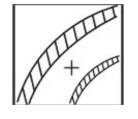
Show answerHide answer
Answer: B ✓ official key
Approach: Water image = flip top ↔ bottom; left and right stay the same.
Solution:
Question figure: big hatched band from bottom-left curving up to top-right; small band near bottom-right; "+" between the bands.
After a top-bottom flip: big band from top-left curving down to bottom-right; small band near top-right; "+" still between the bands.
Option B matches all three.
Why the other options are wrong:
A: "+" moved to the bottom-left corner.
C: bands curve the wrong way (mirror image).
D: "+" in the top-right corner, outside the gap.
E: unchanged original.
Cetking shortcut: Fix one landmark (the "+" between bands) to eliminate A and D fast.
Answer: B
Select the option that shall correctly come in place of "?" as given in (D) of the problem figure :
- A(1)
- B(2)
- C(3)
- D(4)
- E(5)
Show answerHide answer
Answer: B ✓ official key
Approach: Figure analogy: B is the water image (top-bottom flip) of A, so D is the water image of C.
Solution:
A → B: the S-curve is flipped top to bottom (it becomes a reversed S).
C: triangle pointing down with its vertical side on the right; a hook on top whose short arm points right.
Water image: triangle pointing up, vertical side still on the right; hook at the bottom with the short arm still pointing right (an "L").
Figure (2) matches.
Why the other options are wrong:
(1), (3), (5): vertical side of the triangle on the left (left-right also flipped).
(4): hook arm turned the other way ("J").
Cetking shortcut: In a water image the left/right side of every feature is preserved — check which side the vertical edge is on.
Answer: B
Identify the correct option from the Answer Figures that shall come in place of "?" :
- A(1)
- B(2)
- C(3)
- D(4)
- E(5)
Show answerHide answer
Answer: A ✓ official key
Approach: Figure analogy: the figure is flipped top-to-bottom and the internal hatching changes from vertical to horizontal.
Solution:
A: upright triangle with vertical lines in its left part.
B: the triangle flipped (pointing down), lines still on the left but now horizontal.
C: frame (left side, top, right side) with a diagonal from top-left to bottom-right and vertical lines in the upper-right part.
Flip C: frame opens at the top, diagonal runs from bottom-left to top-right, lines move to the lower-right part and become horizontal → figure (1).
Why the other options are wrong:
(2): diagonal and frame not flipped.
(3): diagonal still top-left to bottom-right.
(4), (5): lines remain vertical.
Cetking shortcut: First eliminate options keeping vertical lines (4, 5) — the line-direction switch is the easiest check.
Answer: A
Choose the correct water image of the image given in the question :
- A
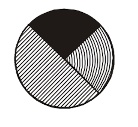
- B
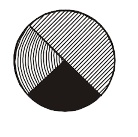
- C
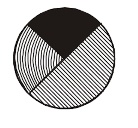
- D
- E
Show answerHide answer
Answer: D ✓ official key
Approach: Water image = flip top ↔ bottom; left and right stay the same.
Solution:
Question figure: diagonal-hatched half on the upper-left, black sector on the right, arc-hatched sector at the bottom.
After the flip: diagonal-hatched half on the lower-left, black sector still on the right, arc-hatched sector at the top.
Option D matches.
Why the other options are wrong:
A, C: black sector at the top.
B: black sector at the bottom.
E: the original figure, not reflected.
Cetking shortcut: The black sector is on the right and must stay on the right — removes A, B, C instantly.
Answer: D
Identify the correct water image of the question figure :
- A

- B

- C

- D

- E

Show answerHide answer
Answer: E ✓ official key
Approach: Water image = flip top ↔ bottom: shaded points move from top to bottom (and vice versa) and slanted hatching reverses its slant; vertical hatching stays vertical.
Solution:
Question figure: shaded top point (slanted hatch), bottom-left point (vertical hatch), bottom-right point (slanted hatch).
After the flip: shaded bottom point, top-left point (vertical hatch), top-right point — and both slanted hatches now slope the opposite way.
Options C and E both shade top-left, top-right and bottom; only E reverses the slant of the hatching.
Why the other options are wrong:
A, D: same shading positions as the original.
B: bottom point unshaded, top point shaded.
C: positions right but hatching slant not reversed.
Cetking shortcut: After locating the shaded points, compare hatch direction — the usual tie-breaker in water-image questions.
Answer: E
Choose the correct option from the Answer Figure that shall come in place of "?" in the Problem Figure :
- A(1)
- B(2)
- C(3)
- D(4)
- E(5)
Show answerHide answer
Answer: C ✓ official key
Approach: Figure analogy: the shape goes inside a new outer shape having one more side, and the inner shape is turned by 45°; any dot travels with the shape (C has no dot).
Solution:
A: square standing on a corner (4 sides) → B: the square, turned upright, sits inside a 5-sided outer figure.
C: triangle (3 sides) → D: the triangle, turned, sits inside a 4-sided outer figure (square).
Options 3 and 5 have a square outside a triangle; in 3 the triangle is turned the same way the square turned in A → B.
Answer: figure 3.
Why the other options are wrong:
1: outer triangle, inner pentagon — reversed.
2, 4: outer figure has 5 sides (should be 4).
5: square outside, but the triangle is turned the other way.
Cetking shortcut: Count sides: outer = inner + 1. That leaves only two options; then check the turn.
Answer: C
A Cube is formed by folding the Sheet of paper shown here. Find the alphabet that shall lie exactly opposite to the face on the cube that shows N :
- AK
- BJ
- CL
- DM
- EQ
Show answerHide answer
Answer: C ✓ official key
Approach: In a cube net, faces in a straight line with one face between them are opposite.
Solution:
Net: column K–Q–M–J, with L and N on either side of Q.
Column: K opposite M, Q opposite J (alternate faces).
Row: L – Q – N → L opposite N.
Face opposite N = L.
Why the other options are wrong:
A (K), D (M), E (Q): share an edge with N when folded.
B (J): J is opposite Q, and adjacent to N.
Cetking shortcut: Skip one face in any straight row/column of the net → opposite pair.
Answer: C
Choose the image that completes the pattern (From left to right):
- AA
- BB
- CC
- DD
- EE
Show answerHide answer
Answer: D ✓ official key
Approach: Figure series in a 6-sector circle: each grey sector moves one sector clockwise per step, and the symbol that appears twice cycles plus → star → heart.
Solution:
Grey sector 1: top-right → right → bottom-right → bottom-left → left → next top-left.
Grey sector 2: left → top-left → top-right → right → bottom-right → next bottom-left.
So figure 6 has grey sectors at top-left and bottom-left → options B or D.
Doubled symbol: fig 1 plus, fig 2 star, fig 3 heart, fig 4 plus, fig 5 star → fig 6 heart.
D has two hearts (plus one plus and one star); B has two stars.
Why the other options are wrong:
A, C, E: grey sectors in the wrong positions.
B: two stars instead of two hearts.
Cetking shortcut: Solve the shading first to cut five options to two, then use the symbol count.
Answer: D
Find the figure from the Answer Figure that will replace the question mark (?) from the Problem Figure :
- A1
- B2
- C3
- D4
- E5
Show answerHide answer
Answer: A ✓ official key
Approach: Figure analogy: the two shapes swap positions, and the double-outlined shape becomes single while the single shape becomes double.
Solution:
(a): single square (top-left) + double circle (bottom-right).
(b): single circle (top-left) + double square (bottom-right).
(c): single pentagon (top-left) + double circle (bottom-right).
(d): single circle (top-left) + double pentagon (bottom-right) → figure 1.
Why the other options are wrong:
2: square instead of pentagon, no swap.
3: pentagon single.
4: no swap, both single.
5: square, both single.
Answer: A
Count the number of triangles in the given image ?
- A29
- B31
- C28
- D30
- E26
Show answerHide answer
Answer: A ✓ official key
Approach: Label every point and list triangles vertex by vertex so none is repeated.
Solution:
Points: apex A; base B (left), M (middle), C (right); D on AB and E on AC (ends of the horizontal line); R = DE ∩ AM; P = BE ∩ AM; X = BE ∩ DM; F = end of the short line from C on EM.
Lines drawn: AB, AC, BC, AM, DE, DM, EM, BE, CF.
Triangles using A (11): ABC, ABM, ACM, ABE, ABP, ADE, ADR, ARE, APE, ADM, AEM.
Using B but not A (7): BCE, BDE, BDM, BDX, BEM, BXM, BPM.
Using C but not A/B (3): CEF, CEM, CFM.
Remaining (8): DEM, DEX, DRM, EXM, EPM, ERM, EPR, MXP.
Total = 11 + 7 + 3 + 8 = 29.
Why the other options are wrong:
B (31), D (30): include "triangles" that need an undrawn side (e.g. F joined to B or D).
C (28), E (26): miss triangles formed by the slanting line BE (such as ABP, BPM, EPR).
Cetking shortcut: Go vertex by vertex in alphabetical order and never revisit an earlier vertex — the cleanest way to avoid double counting.
Answer: A
Select a suitable figure from the Answer Figures that would replace the question mark (?) as given in (D) :
- A(1)
- B(2)
- C(3)
- D(4)
- E(5)
Show answerHide answer
Answer: A ✓ official key
Approach: Figure analogy: B is A with 4 lines through the centre (vertical, horizontal and both diagonals) — 8 spokes.
Solution:
A: plain circle → B: circle with vertical, horizontal and two diagonal lines through the centre.
C: plain diamond → D: diamond with vertical, horizontal and two diagonal lines through the centre → figure (1).
Why the other options are wrong:
(2): only 2 lines.
(3): one of the spokes is missing (incomplete diagonal).
(4): missing the horizontal line.
(5): missing the vertical line.
Answer: A