Statements:
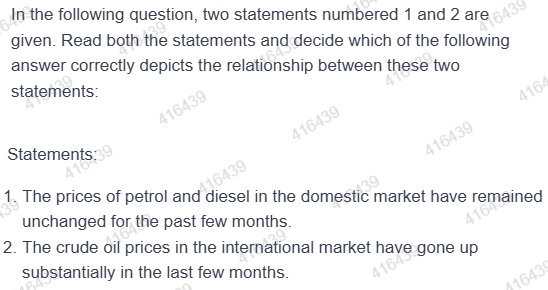
1. The prices of petrol and diesel in the domestic market have remained unchanged for the past few months.
2. The crude oil prices in the international market have gone up substantially in the last few months.
- Statement 1 is the cause and Statement 2 is its effect
- Statement 2 is the cause and Statement 1 is its effect
- Both the Statement 1 and 2 are independent causes
- Both the Statements 1 and 2 are effects of independent causes
- Both the Statements 1 and 2 are effects of some common cause
Show answerHide answer
Answer: D
Approach: Cause–effect pair: check whether one statement produces the other, or each is the result of its own separate cause.
Solution:
Statement 2 (crude prices rising) would, if it acted on Statement 1, push domestic petrol/diesel prices up — not keep them unchanged. So 2 is not the cause of 1.
Statement 1 cannot cause a rise in international crude prices either.
Unchanged domestic prices are the result of a domestic pricing decision (government / oil companies absorbing the cost).
Rising crude is the result of global supply–demand factors.
So both statements are effects, each of its own, independent cause.
Why the other options are wrong:
A: domestic prices cannot move international crude prices.
B: a crude rise would cause a price hike, not a freeze.
C: both statements describe outcomes, not triggering events.
E: no single factor explains both a global price rise and a domestic freeze.
Cetking shortcut: If the expected effect of one statement is the opposite of what the other says, they are not cause–effect; ask "what caused each?"
Answer: D