Let’s Crack CAT 2026

Your CAT check-up · tap a ring to see yours

CAT 2026Papers & G StrategyRoutes & Maps

CAT Routes & Maps questions (2017–2025) — actual DILR sets with solutions

61 real CAT Routes & Maps questions from CAT 2017 to CAT 2025, each with options, the verified answer and a step-by-step solution. Practice one topic at a time,

61 real CAT questions · CAT 2017–2025 · 5 Medium

Q1CAT 2025 · Slot 1 · CAT Medium✓ Answer verified

DILR SET: Train Tickets | Routes & Maps | CAT 2025 DILR Slot 1 | Moderate

A train travels from Station A to Station E, passing through stations B, C, and D, in that order. The train has a seating capacity of 200. A ticket may be booked from any station to any other station ahead on the route, but not to any earlier station. A ticket from one station to another reserves one seat on every intermediate segment of the route. For example, a ticket from B to E reserves a seat in the intermediate segments B – C, C – D, and D – E. The occupancy factor for a segment is the total number of seats reserved in the segment as a percentage of the seating capacity. The total number of seats reserved for any segment cannot exceed 200. The following information is known. 1. Segment C – D had an occupancy factor of 95%. Only segment B – C had a higher occupancy factor. 2. Exactly 40 tickets were booked from B to C and 30 tickets were booked from B to E. 3. Among the seats reserved on segment D – E, exactly four-sevenths were from stations before C. 4. The number of tickets booked from A to C was equal to that booked from A to E, and it was higher than that from B to E. 5. No tickets were booked from A to B, from B to D and from D to E. 6. The number of tickets booked for any segment was a multiple of 10.

What was the occupancy factor for segment D – E?

Q2CAT 2025 · Slot 1 · CAT Medium · TITA✓ Answer verified

DILR SET: Train Tickets | Routes & Maps | CAT 2025 DILR Slot 1 | Moderate

A train travels from Station A to Station E, passing through stations B, C, and D, in that order. The train has a seating capacity of 200. A ticket may be booked from any station to any other station ahead on the route, but not to any earlier station. A ticket from one station to another reserves one seat on every intermediate segment of the route. For example, a ticket from B to E reserves a seat in the intermediate segments B – C, C – D, and D – E. The occupancy factor for a segment is the total number of seats reserved in the segment as a percentage of the seating capacity. The total number of seats reserved for any segment cannot exceed 200. The following information is known. 1. Segment C – D had an occupancy factor of 95%. Only segment B – C had a higher occupancy factor. 2. Exactly 40 tickets were booked from B to C and 30 tickets were booked from B to E. 3. Among the seats reserved on segment D – E, exactly four-sevenths were from stations before C. 4. The number of tickets booked from A to C was equal to that booked from A to E, and it was higher than that from B to E. 5. No tickets were booked from A to B, from B to D and from D to E. 6. The number of tickets booked for any segment was a multiple of 10.

How many tickets were booked from Station A to Station E? ____

Q3CAT 2025 · Slot 1 · CAT Medium · TITA✓ Answer verified

DILR SET: Train Tickets | Routes & Maps | CAT 2025 DILR Slot 1 | Moderate

A train travels from Station A to Station E, passing through stations B, C, and D, in that order. The train has a seating capacity of 200. A ticket may be booked from any station to any other station ahead on the route, but not to any earlier station. A ticket from one station to another reserves one seat on every intermediate segment of the route. For example, a ticket from B to E reserves a seat in the intermediate segments B – C, C – D, and D – E. The occupancy factor for a segment is the total number of seats reserved in the segment as a percentage of the seating capacity. The total number of seats reserved for any segment cannot exceed 200. The following information is known. 1. Segment C – D had an occupancy factor of 95%. Only segment B – C had a higher occupancy factor. 2. Exactly 40 tickets were booked from B to C and 30 tickets were booked from B to E. 3. Among the seats reserved on segment D – E, exactly four-sevenths were from stations before C. 4. The number of tickets booked from A to C was equal to that booked from A to E, and it was higher than that from B to E. 5. No tickets were booked from A to B, from B to D and from D to E. 6. The number of tickets booked for any segment was a multiple of 10.

How many tickets were booked from Station C? ___

Q4CAT 2025 · Slot 1 · CAT Medium · TITA✓ Answer verified

DILR SET: Train Tickets | Routes & Maps | CAT 2025 DILR Slot 1 | Moderate

A train travels from Station A to Station E, passing through stations B, C, and D, in that order. The train has a seating capacity of 200. A ticket may be booked from any station to any other station ahead on the route, but not to any earlier station. A ticket from one station to another reserves one seat on every intermediate segment of the route. For example, a ticket from B to E reserves a seat in the intermediate segments B – C, C – D, and D – E. The occupancy factor for a segment is the total number of seats reserved in the segment as a percentage of the seating capacity. The total number of seats reserved for any segment cannot exceed 200. The following information is known. 1. Segment C – D had an occupancy factor of 95%. Only segment B – C had a higher occupancy factor. 2. Exactly 40 tickets were booked from B to C and 30 tickets were booked from B to E. 3. Among the seats reserved on segment D – E, exactly four-sevenths were from stations before C. 4. The number of tickets booked from A to C was equal to that booked from A to E, and it was higher than that from B to E. 5. No tickets were booked from A to B, from B to D and from D to E. 6. The number of tickets booked for any segment was a multiple of 10.

What is the difference between the number of tickets booked to Station C and the number of tickets booked to Station D? ____

Q5CAT 2025 · Slot 1 · CAT Medium · TITA✓ Answer verified

DILR SET: Train Tickets | Routes & Maps | CAT 2025 DILR Slot 1 | Moderate

A train travels from Station A to Station E, passing through stations B, C, and D, in that order. The train has a seating capacity of 200. A ticket may be booked from any station to any other station ahead on the route, but not to any earlier station. A ticket from one station to another reserves one seat on every intermediate segment of the route. For example, a ticket from B to E reserves a seat in the intermediate segments B – C, C – D, and D – E. The occupancy factor for a segment is the total number of seats reserved in the segment as a percentage of the seating capacity. The total number of seats reserved for any segment cannot exceed 200. The following information is known. 1. Segment C – D had an occupancy factor of 95%. Only segment B – C had a higher occupancy factor. 2. Exactly 40 tickets were booked from B to C and 30 tickets were booked from B to E. 3. Among the seats reserved on segment D – E, exactly four-sevenths were from stations before C. 4. The number of tickets booked from A to C was equal to that booked from A to E, and it was higher than that from B to E. 5. No tickets were booked from A to B, from B to D and from D to E. 6. The number of tickets booked for any segment was a multiple of 10.

How many tickets were booked to travel in exactly one segment? ____

Q6CAT 2024✓ Answer verified
The above is a schematic diagram of walkways (indicated by all the straight-lines) and lakes(3 of them, each in the shape of rectangles – shaded in the diagram) of a gated area. Different points on the walkway are indicated by letters (A through P) with distances being OP = 150 m, ON = MN = 300 m, ML = 400 m, EL = 200 m, DE = 400 m. The following additional information about the facilities in the area is known. The only entry/exit point is at C. There are many residences within the gated area; all of them are located on the path AH and ML with four of them being at A, H, M, and L. The post office is located at P and the bank is located at B.
Figure for this questionFigure for this questionFigure for this question

Q. 1 One resident whose house is located at L, needs to visit the post office as well as the bank. What is the minimum distance (in m) he has to walk starting from his residence and returning to his residence after visiting both the post office and the bank?

Q7CAT 2024✓ Answer verified
The above is a schematic diagram of walkways (indicated by all the straight-lines) and lakes(3 of them, each in the shape of rectangles – shaded in the diagram) of a gated area. Different points on the walkway are indicated by letters (A through P) with distances being OP = 150 m, ON = MN = 300 m, ML = 400 m, EL = 200 m, DE = 400 m. The following additional information about the facilities in the area is known. The only entry/exit point is at C. There are many residences within the gated area; all of them are located on the path AH and ML with four of them being at A, H, M, and L. The post office is located at P and the bank is located at B.
Figure for this questionFigure for this questionFigure for this question

Q. 2 One person enters the gated area and decides to walk as much as possible before leaving the area without walking along any path more than once and always walking next to one of the lakes. Note that he may cross a point multiple times. How much distance (in m) will he walk within the gated area?

Q8CAT 2024 · TITA✓ Answer verified
The above is a schematic diagram of walkways (indicated by all the straight-lines) and lakes(3 of them, each in the shape of rectangles – shaded in the diagram) of a gated area. Different points on the walkway are indicated by letters (A through P) with distances being OP = 150 m, ON = MN = 300 m, ML = 400 m, EL = 200 m, DE = 400 m. The following additional information about the facilities in the area is known. The only entry/exit point is at C. There are many residences within the gated area; all of them are located on the path AH and ML with four of them being at A, H, M, and L. The post office is located at P and the bank is located at B.
Figure for this questionFigure for this questionFigure for this question

Q. 3 One resident takes a walk within the gated area starting from A and returning to A without going through any point (other than A) more than once. What is the maximum distance (in m) she can walk in this way?

Q9CAT 2024 · TITA✓ Answer verified
The above is a schematic diagram of walkways (indicated by all the straight-lines) and lakes(3 of them, each in the shape of rectangles – shaded in the diagram) of a gated area. Different points on the walkway are indicated by letters (A through P) with distances being OP = 150 m, ON = MN = 300 m, ML = 400 m, EL = 200 m, DE = 400 m. The following additional information about the facilities in the area is known. The only entry/exit point is at C. There are many residences within the gated area; all of them are located on the path AH and ML with four of them being at A, H, M, and L. The post office is located at P and the bank is located at B.
Figure for this questionFigure for this questionFigure for this question

Q. 4 Visitors coming for morning walks are allowed to enter as long as they do not pass by any of the residences and do not cross any point (except C) more than once.What is the maximum distance (in m) that such a visitor can walk within the gated area?

Q10CAT 2023 · Slot 3✓ Answer verified
A, B, C, D, E and F are the six police stations in an area, which are connected by streets as shown below. Four teams – Team 1, Team 2, Team 3 and Team 4 – patrol these streets continuously between 09:00 hrs. and 12:00 hrs. each day. The teams need 30 minutes to cross a street connecting one police station to another. All four teams start from Station A at 09:00 hrs. and must return to Station A by 12:00 hrs. They can also pass via Station A at any point on their journeys. The following facts are known. None of the streets has more than one team traveling along it in any direction at any point in time. Teams 2 and 3 are the only ones in stations E and D respectively at 10:00 hrs. Teams 1 and 3 are the only ones in station E at 10:30 hrs. Teams 1 and 4 are the only ones in stations B and E respectively at 11:30 hrs. Team 1 and Team 4 are the only teams that patrol the street connecting stations A and E. Team 4 never passes through Stations B, D or F.
Figure for this question

Q.6 Which one among the following stations is visited the largest number of times?

Q11CAT 2023 · Slot 3 · TITA✓ Answer verified
A, B, C, D, E and F are the six police stations in an area, which are connected by streets as shown below. Four teams – Team 1, Team 2, Team 3 and Team 4 – patrol these streets continuously between 09:00 hrs. and 12:00 hrs. each day. The teams need 30 minutes to cross a street connecting one police station to another. All four teams start from Station A at 09:00 hrs. and must return to Station A by 12:00 hrs. They can also pass via Station A at any point on their journeys. The following facts are known. None of the streets has more than one team traveling along it in any direction at any point in time. Teams 2 and 3 are the only ones in stations E and D respectively at 10:00 hrs. Teams 1 and 3 are the only ones in station E at 10:30 hrs. Teams 1 and 4 are the only ones in stations B and E respectively at 11:30 hrs. Team 1 and Team 4 are the only teams that patrol the street connecting stations A and E. Team 4 never passes through Stations B, D or F.
Figure for this question

Q.7 How many times do the teams pass through Station B in a day?

Q12CAT 2023 · Slot 3✓ Answer verified
A, B, C, D, E and F are the six police stations in an area, which are connected by streets as shown below. Four teams – Team 1, Team 2, Team 3 and Team 4 – patrol these streets continuously between 09:00 hrs. and 12:00 hrs. each day. The teams need 30 minutes to cross a street connecting one police station to another. All four teams start from Station A at 09:00 hrs. and must return to Station A by 12:00 hrs. They can also pass via Station A at any point on their journeys. The following facts are known. None of the streets has more than one team traveling along it in any direction at any point in time. Teams 2 and 3 are the only ones in stations E and D respectively at 10:00 hrs. Teams 1 and 3 are the only ones in station E at 10:30 hrs. Teams 1 and 4 are the only ones in stations B and E respectively at 11:30 hrs. Team 1 and Team 4 are the only teams that patrol the street connecting stations A and E. Team 4 never passes through Stations B, D or F.
Figure for this question

Q.8 Which team patrols the street connecting Stations D and E at 10:15 hrs?

Q13CAT 2023 · Slot 3 · TITA✓ Answer verified
A, B, C, D, E and F are the six police stations in an area, which are connected by streets as shown below. Four teams – Team 1, Team 2, Team 3 and Team 4 – patrol these streets continuously between 09:00 hrs. and 12:00 hrs. each day. The teams need 30 minutes to cross a street connecting one police station to another. All four teams start from Station A at 09:00 hrs. and must return to Station A by 12:00 hrs. They can also pass via Station A at any point on their journeys. The following facts are known. None of the streets has more than one team traveling along it in any direction at any point in time. Teams 2 and 3 are the only ones in stations E and D respectively at 10:00 hrs. Teams 1 and 3 are the only ones in station E at 10:30 hrs. Teams 1 and 4 are the only ones in stations B and E respectively at 11:30 hrs. Team 1 and Team 4 are the only teams that patrol the street connecting stations A and E. Team 4 never passes through Stations B, D or F.
Figure for this question

Q.9 How many times does Team 4 pass through Station E in a day?

Q14CAT 2023 · Slot 3✓ Answer verified
A, B, C, D, E and F are the six police stations in an area, which are connected by streets as shown below. Four teams – Team 1, Team 2, Team 3 and Team 4 – patrol these streets continuously between 09:00 hrs. and 12:00 hrs. each day. The teams need 30 minutes to cross a street connecting one police station to another. All four teams start from Station A at 09:00 hrs. and must return to Station A by 12:00 hrs. They can also pass via Station A at any point on their journeys. The following facts are known. None of the streets has more than one team traveling along it in any direction at any point in time. Teams 2 and 3 are the only ones in stations E and D respectively at 10:00 hrs. Teams 1 and 3 are the only ones in station E at 10:30 hrs. Teams 1 and 4 are the only ones in stations B and E respectively at 11:30 hrs. Team 1 and Team 4 are the only teams that patrol the street connecting stations A and E. Team 4 never passes through Stations B, D or F.
Figure for this question

Q.10 How many teams pass through Station C in a day?

Q15CAT 2023 · Slot 1 · TITA✓ Answer verified
The schematic diagram below shows 12 rectangular houses in a housing complex. House numbers are mentioned in the rectangles representing the houses. The houses are located in six columns – Column-A through Column-F, and two rows – Row-1 and Row-2. The houses are divided into two blocks − Block XX and Block YY. The diagram also shows two roads, one passing in front of the houses in Row-2 and another between the two blocks Some of the houses are occupied. The remaining ones are vacant and are the only ones available for sale. The road adjacency value of a house is the number of its sides adjacent to a road. For example, the road adjacency values of C2, F2, and B1 are 2, 1, and 0, respectively. The neighbour count of a house is the number of sides of that house adjacent to occupied houses in the same block. For example, E1 and C1 can have the maximum possible neighbour counts of 3 and 2, respectively. The base price of a vacant house is Rs. 10 lakhs if the house does not have a parking space, and Rs. 12 lakhs if it does. The quoted price (in lakhs of Rs.) of a vacant house is calculated as (base price) + 5 × (road adjacency value) + 3 × (neighbour count). The following information is also known. 1. The maximum quoted price of a house in Block XX is Rs. 24 lakhs. The minimum quoted price of a house in block YY is Rs. 15 lakhs, and one such house is in Column-E. 2. Row-1 has two occupied houses, one in each block. 3. Both houses in Column-E are vacant. Each of Column-D and Column-F has at least one occupied house. 4. There is only one house with parking space in Block YY.
Figure for this question

Question 6- How many houses are vacant in Block XX?

Q16CAT 2023 · Slot 1✓ Answer verified
The schematic diagram below shows 12 rectangular houses in a housing complex. House numbers are mentioned in the rectangles representing the houses. The houses are located in six columns – Column-A through Column-F, and two rows – Row-1 and Row-2. The houses are divided into two blocks − Block XX and Block YY. The diagram also shows two roads, one passing in front of the houses in Row-2 and another between the two blocks Some of the houses are occupied. The remaining ones are vacant and are the only ones available for sale. The road adjacency value of a house is the number of its sides adjacent to a road. For example, the road adjacency values of C2, F2, and B1 are 2, 1, and 0, respectively. The neighbour count of a house is the number of sides of that house adjacent to occupied houses in the same block. For example, E1 and C1 can have the maximum possible neighbour counts of 3 and 2, respectively. The base price of a vacant house is Rs. 10 lakhs if the house does not have a parking space, and Rs. 12 lakhs if it does. The quoted price (in lakhs of Rs.) of a vacant house is calculated as (base price) + 5 × (road adjacency value) + 3 × (neighbour count). The following information is also known. 1. The maximum quoted price of a house in Block XX is Rs. 24 lakhs. The minimum quoted price of a house in block YY is Rs. 15 lakhs, and one such house is in Column-E. 2. Row-1 has two occupied houses, one in each block. 3. Both houses in Column-E are vacant. Each of Column-D and Column-F has at least one occupied house. 4. There is only one house with parking space in Block YY.
Figure for this question

Which of the following houses is definitely occupied?

Q17CAT 2023 · Slot 1✓ Answer verified
The schematic diagram below shows 12 rectangular houses in a housing complex. House numbers are mentioned in the rectangles representing the houses. The houses are located in six columns – Column-A through Column-F, and two rows – Row-1 and Row-2. The houses are divided into two blocks − Block XX and Block YY. The diagram also shows two roads, one passing in front of the houses in Row-2 and another between the two blocks Some of the houses are occupied. The remaining ones are vacant and are the only ones available for sale. The road adjacency value of a house is the number of its sides adjacent to a road. For example, the road adjacency values of C2, F2, and B1 are 2, 1, and 0, respectively. The neighbour count of a house is the number of sides of that house adjacent to occupied houses in the same block. For example, E1 and C1 can have the maximum possible neighbour counts of 3 and 2, respectively. The base price of a vacant house is Rs. 10 lakhs if the house does not have a parking space, and Rs. 12 lakhs if it does. The quoted price (in lakhs of Rs.) of a vacant house is calculated as (base price) + 5 × (road adjacency value) + 3 × (neighbour count). The following information is also known. 1. The maximum quoted price of a house in Block XX is Rs. 24 lakhs. The minimum quoted price of a house in block YY is Rs. 15 lakhs, and one such house is in Column-E. 2. Row-1 has two occupied houses, one in each block. 3. Both houses in Column-E are vacant. Each of Column-D and Column-F has at least one occupied house. 4. There is only one house with parking space in Block YY.
Figure for this question

Which of the following options best describes the number of vacant houses in Row-2?

Q18CAT 2023 · Slot 1 · TITA✓ Answer verified
The schematic diagram below shows 12 rectangular houses in a housing complex. House numbers are mentioned in the rectangles representing the houses. The houses are located in six columns – Column-A through Column-F, and two rows – Row-1 and Row-2. The houses are divided into two blocks − Block XX and Block YY. The diagram also shows two roads, one passing in front of the houses in Row-2 and another between the two blocks Some of the houses are occupied. The remaining ones are vacant and are the only ones available for sale. The road adjacency value of a house is the number of its sides adjacent to a road. For example, the road adjacency values of C2, F2, and B1 are 2, 1, and 0, respectively. The neighbour count of a house is the number of sides of that house adjacent to occupied houses in the same block. For example, E1 and C1 can have the maximum possible neighbour counts of 3 and 2, respectively. The base price of a vacant house is Rs. 10 lakhs if the house does not have a parking space, and Rs. 12 lakhs if it does. The quoted price (in lakhs of Rs.) of a vacant house is calculated as (base price) + 5 × (road adjacency value) + 3 × (neighbour count). The following information is also known. 1. The maximum quoted price of a house in Block XX is Rs. 24 lakhs. The minimum quoted price of a house in block YY is Rs. 15 lakhs, and one such house is in Column-E. 2. Row-1 has two occupied houses, one in each block. 3. Both houses in Column-E are vacant. Each of Column-D and Column-F has at least one occupied house. 4. There is only one house with parking space in Block YY.
Figure for this question

What is the maximum possible quoted price (in lakhs of Rs.) for a vacant house in Column-E?

Q19CAT 2023 · Slot 1✓ Answer verified
The schematic diagram below shows 12 rectangular houses in a housing complex. House numbers are mentioned in the rectangles representing the houses. The houses are located in six columns – Column-A through Column-F, and two rows – Row-1 and Row-2. The houses are divided into two blocks − Block XX and Block YY. The diagram also shows two roads, one passing in front of the houses in Row-2 and another between the two blocks Some of the houses are occupied. The remaining ones are vacant and are the only ones available for sale. The road adjacency value of a house is the number of its sides adjacent to a road. For example, the road adjacency values of C2, F2, and B1 are 2, 1, and 0, respectively. The neighbour count of a house is the number of sides of that house adjacent to occupied houses in the same block. For example, E1 and C1 can have the maximum possible neighbour counts of 3 and 2, respectively. The base price of a vacant house is Rs. 10 lakhs if the house does not have a parking space, and Rs. 12 lakhs if it does. The quoted price (in lakhs of Rs.) of a vacant house is calculated as (base price) + 5 × (road adjacency value) + 3 × (neighbour count). The following information is also known. 1. The maximum quoted price of a house in Block XX is Rs. 24 lakhs. The minimum quoted price of a house in block YY is Rs. 15 lakhs, and one such house is in Column-E. 2. Row-1 has two occupied houses, one in each block. 3. Both houses in Column-E are vacant. Each of Column-D and Column-F has at least one occupied house. 4. There is only one house with parking space in Block YY.
Figure for this question

Which house in Block YY has parking space?

Q20CAT 2023✓ Answer verified
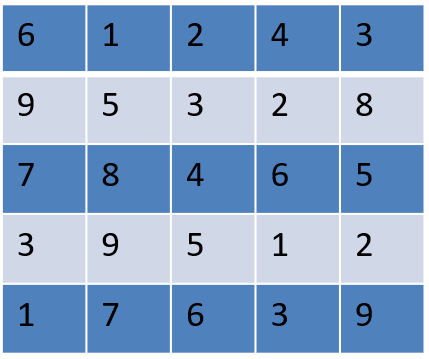
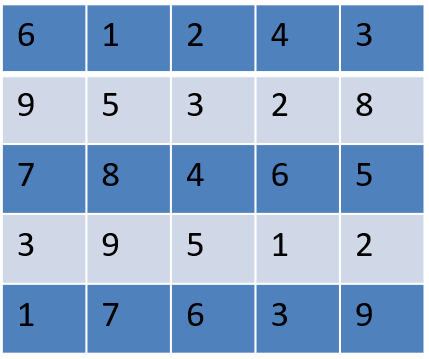
There are nine boxes arranged in a 3 × 3 array as shown in Tables 1 and 2. Each box contains three sacks. Each sack has a certain number of coins, between 1 and 9, both inclusive. The average number of coins per sack in the boxes are all distinct integers. The total number of coins in each row is the same. The total number of coins in each column is also the same. Table 1 gives information regarding the median of the numbers of coins in the three sacks in a box for some of the boxes. In Table 2 each box has a number which represents the number of sacks in that box having more than 5 coins. That number is followed by a × if the sacks in that box satisfy exactly one among the following three conditions, and it is followed by ×× if two or more of these conditions are satisfied. i) The minimum among the numbers of coins in the three sacks in the box is 1. ii) The median of the numbers of coins in the three sacks is 1. iii) The maximum among the numbers of coins in the three sacks in the box is 9.
Figure for this question

Q. 1 What is the total number of coins in all the boxes in the 3rd row?

Q21CAT 2023✓ Answer verified
There are nine boxes arranged in a 3 × 3 array as shown in Tables 1 and 2. Each box contains three sacks. Each sack has a certain number of coins, between 1 and 9, both inclusive. The average number of coins per sack in the boxes are all distinct integers. The total number of coins in each row is the same. The total number of coins in each column is also the same. Table 1 gives information regarding the median of the numbers of coins in the three sacks in a box for some of the boxes. In Table 2 each box has a number which represents the number of sacks in that box having more than 5 coins. That number is followed by a × if the sacks in that box satisfy exactly one among the following three conditions, and it is followed by ×× if two or more of these conditions are satisfied. i) The minimum among the numbers of coins in the three sacks in the box is 1. ii) The median of the numbers of coins in the three sacks is 1. iii) The maximum among the numbers of coins in the three sacks in the box is 9.
Figure for this question

Q. 2 How many boxes have at least one sack containing 9 coins?

Q22CAT 2023 · TITA✓ Answer verified
There are nine boxes arranged in a 3 × 3 array as shown in Tables 1 and 2. Each box contains three sacks. Each sack has a certain number of coins, between 1 and 9, both inclusive. The average number of coins per sack in the boxes are all distinct integers. The total number of coins in each row is the same. The total number of coins in each column is also the same. Table 1 gives information regarding the median of the numbers of coins in the three sacks in a box for some of the boxes. In Table 2 each box has a number which represents the number of sacks in that box having more than 5 coins. That number is followed by a × if the sacks in that box satisfy exactly one among the following three conditions, and it is followed by ×× if two or more of these conditions are satisfied. i) The minimum among the numbers of coins in the three sacks in the box is 1. ii) The median of the numbers of coins in the three sacks is 1. iii) The maximum among the numbers of coins in the three sacks in the box is 9.
Figure for this question

Q. 3 For how many boxes are the average and median of the numbers of coins contained in the three sacks in that box the same?

Q23CAT 2023 · TITA✓ Answer verified
There are nine boxes arranged in a 3 × 3 array as shown in Tables 1 and 2. Each box contains three sacks. Each sack has a certain number of coins, between 1 and 9, both inclusive. The average number of coins per sack in the boxes are all distinct integers. The total number of coins in each row is the same. The total number of coins in each column is also the same. Table 1 gives information regarding the median of the numbers of coins in the three sacks in a box for some of the boxes. In Table 2 each box has a number which represents the number of sacks in that box having more than 5 coins. That number is followed by a × if the sacks in that box satisfy exactly one among the following three conditions, and it is followed by ×× if two or more of these conditions are satisfied. i) The minimum among the numbers of coins in the three sacks in the box is 1. ii) The median of the numbers of coins in the three sacks is 1. iii) The maximum among the numbers of coins in the three sacks in the box is 9.
Figure for this question

Q. 4 How many sacks have exactly one coin?

Q24CAT 2023 · TITA✓ Answer verified
There are nine boxes arranged in a 3 × 3 array as shown in Tables 1 and 2. Each box contains three sacks. Each sack has a certain number of coins, between 1 and 9, both inclusive. The average number of coins per sack in the boxes are all distinct integers. The total number of coins in each row is the same. The total number of coins in each column is also the same. Table 1 gives information regarding the median of the numbers of coins in the three sacks in a box for some of the boxes. In Table 2 each box has a number which represents the number of sacks in that box having more than 5 coins. That number is followed by a × if the sacks in that box satisfy exactly one among the following three conditions, and it is followed by ×× if two or more of these conditions are satisfied. i) The minimum among the numbers of coins in the three sacks in the box is 1. ii) The median of the numbers of coins in the three sacks is 1. iii) The maximum among the numbers of coins in the three sacks in the box is 9.
Figure for this question

Q. 5 In how many boxes do all three sacks contain different numbers of coins?

Q25CAT 2023 · TITA
Question Numbers (1 to 5): The schematic diagram below shows 12 rectangular houses in a housing complex. House numbers are mentioned in the rectangles representing the houses. The houses are located in six columns – Column-A through Column-F, and two rows – Row-1 and Row-2. The houses are divided into two blocks − Block XX and Block YY. The diagram also shows two roads, one passing in front of the houses in Row-2 and another between the two blocks. Some of the houses are occupied. The remaining ones are vacant and are the only ones available for sale. The road adjacency value of a house is the number of its sides adjacent to a road. For example, the road adjacency values of C2, F2, and B1 are 2, 1, and 0, respectively. The neighbour count of a house is the number of sides of that house adjacent to occupied houses in the same block. For example, E1 and C1 can have the maximum possible neighbour counts of 3 and 2, respectively. The base price of a vacant house is Rs. 10 lakhs if the house does not have a parking space, and Rs. 12 lakhs if it does. The quoted price (in lakhs of Rs.) of a vacant house is calculated as (base price) + 5 × (road adjacency value) + 3 × (neighbour count). The following information is also known. 1. The maximum quoted price of a house in Block XX is Rs. 24 lakhs. The minimum quoted price of a house in block YY is Rs. 15 lakhs, and one such house is in Column-E. 2. Row-1 has two occupied houses, one in each block. 3. Both houses in Column-E are vacant. Each of Column-D and Column-F has at least one occupied house. 4. There is only one house with parking space in Block YY.
Figure for this question

Q. 1 How many houses are vacant in Block XX? ____________

Q26CAT 2023
Question Numbers (1 to 5): The schematic diagram below shows 12 rectangular houses in a housing complex. House numbers are mentioned in the rectangles representing the houses. The houses are located in six columns – Column-A through Column-F, and two rows – Row-1 and Row-2. The houses are divided into two blocks − Block XX and Block YY. The diagram also shows two roads, one passing in front of the houses in Row-2 and another between the two blocks. Some of the houses are occupied. The remaining ones are vacant and are the only ones available for sale. The road adjacency value of a house is the number of its sides adjacent to a road. For example, the road adjacency values of C2, F2, and B1 are 2, 1, and 0, respectively. The neighbour count of a house is the number of sides of that house adjacent to occupied houses in the same block. For example, E1 and C1 can have the maximum possible neighbour counts of 3 and 2, respectively. The base price of a vacant house is Rs. 10 lakhs if the house does not have a parking space, and Rs. 12 lakhs if it does. The quoted price (in lakhs of Rs.) of a vacant house is calculated as (base price) + 5 × (road adjacency value) + 3 × (neighbour count). The following information is also known. 1. The maximum quoted price of a house in Block XX is Rs. 24 lakhs. The minimum quoted price of a house in block YY is Rs. 15 lakhs, and one such house is in Column-E. 2. Row-1 has two occupied houses, one in each block. 3. Both houses in Column-E are vacant. Each of Column-D and Column-F has at least one occupied house. 4. There is only one house with parking space in Block YY.
Figure for this question

Q. 2 Which of the following houses is definitely occupied?

Q27CAT 2023
Question Numbers (1 to 5): The schematic diagram below shows 12 rectangular houses in a housing complex. House numbers are mentioned in the rectangles representing the houses. The houses are located in six columns – Column-A through Column-F, and two rows – Row-1 and Row-2. The houses are divided into two blocks − Block XX and Block YY. The diagram also shows two roads, one passing in front of the houses in Row-2 and another between the two blocks. Some of the houses are occupied. The remaining ones are vacant and are the only ones available for sale. The road adjacency value of a house is the number of its sides adjacent to a road. For example, the road adjacency values of C2, F2, and B1 are 2, 1, and 0, respectively. The neighbour count of a house is the number of sides of that house adjacent to occupied houses in the same block. For example, E1 and C1 can have the maximum possible neighbour counts of 3 and 2, respectively. The base price of a vacant house is Rs. 10 lakhs if the house does not have a parking space, and Rs. 12 lakhs if it does. The quoted price (in lakhs of Rs.) of a vacant house is calculated as (base price) + 5 × (road adjacency value) + 3 × (neighbour count). The following information is also known. 1. The maximum quoted price of a house in Block XX is Rs. 24 lakhs. The minimum quoted price of a house in block YY is Rs. 15 lakhs, and one such house is in Column-E. 2. Row-1 has two occupied houses, one in each block. 3. Both houses in Column-E are vacant. Each of Column-D and Column-F has at least one occupied house. 4. There is only one house with parking space in Block YY.
Figure for this question

Q. 3 Which of the following options best describes the number of vacant houses in Row-2?

Q28CAT 2023 · TITA
Question Numbers (1 to 5): The schematic diagram below shows 12 rectangular houses in a housing complex. House numbers are mentioned in the rectangles representing the houses. The houses are located in six columns – Column-A through Column-F, and two rows – Row-1 and Row-2. The houses are divided into two blocks − Block XX and Block YY. The diagram also shows two roads, one passing in front of the houses in Row-2 and another between the two blocks. Some of the houses are occupied. The remaining ones are vacant and are the only ones available for sale. The road adjacency value of a house is the number of its sides adjacent to a road. For example, the road adjacency values of C2, F2, and B1 are 2, 1, and 0, respectively. The neighbour count of a house is the number of sides of that house adjacent to occupied houses in the same block. For example, E1 and C1 can have the maximum possible neighbour counts of 3 and 2, respectively. The base price of a vacant house is Rs. 10 lakhs if the house does not have a parking space, and Rs. 12 lakhs if it does. The quoted price (in lakhs of Rs.) of a vacant house is calculated as (base price) + 5 × (road adjacency value) + 3 × (neighbour count). The following information is also known. 1. The maximum quoted price of a house in Block XX is Rs. 24 lakhs. The minimum quoted price of a house in block YY is Rs. 15 lakhs, and one such house is in Column-E. 2. Row-1 has two occupied houses, one in each block. 3. Both houses in Column-E are vacant. Each of Column-D and Column-F has at least one occupied house. 4. There is only one house with parking space in Block YY.
Figure for this question

Q. 4 What is the maximum possible quoted price (in lakhs of Rs.) for a vacant house in Column-E?

Q29CAT 2023
Question Numbers (1 to 5): The schematic diagram below shows 12 rectangular houses in a housing complex. House numbers are mentioned in the rectangles representing the houses. The houses are located in six columns – Column-A through Column-F, and two rows – Row-1 and Row-2. The houses are divided into two blocks − Block XX and Block YY. The diagram also shows two roads, one passing in front of the houses in Row-2 and another between the two blocks. Some of the houses are occupied. The remaining ones are vacant and are the only ones available for sale. The road adjacency value of a house is the number of its sides adjacent to a road. For example, the road adjacency values of C2, F2, and B1 are 2, 1, and 0, respectively. The neighbour count of a house is the number of sides of that house adjacent to occupied houses in the same block. For example, E1 and C1 can have the maximum possible neighbour counts of 3 and 2, respectively. The base price of a vacant house is Rs. 10 lakhs if the house does not have a parking space, and Rs. 12 lakhs if it does. The quoted price (in lakhs of Rs.) of a vacant house is calculated as (base price) + 5 × (road adjacency value) + 3 × (neighbour count). The following information is also known. 1. The maximum quoted price of a house in Block XX is Rs. 24 lakhs. The minimum quoted price of a house in block YY is Rs. 15 lakhs, and one such house is in Column-E. 2. Row-1 has two occupied houses, one in each block. 3. Both houses in Column-E are vacant. Each of Column-D and Column-F has at least one occupied house. 4. There is only one house with parking space in Block YY.
Figure for this question

Q. 5 Which house in Block YY has parking space?

Q30CAT 2023✓ Answer verified
A, B, C, D, E and F are the six police stations in an area, which are connected by streets as shown below. Four teams – Team 1, Team 2, Team 3 and Team 4 patrol these streets continuously between 09:00 hrs. and 12:00 hrs. each day. The teams need 30 minutes to cross a street connecting one police station to another. All four teams start from Station A at 09:00 hrs. and must return to Station A by 12:00 hrs. They can also pass via Station A at any point on their journeys. The following facts are known. 1. None of the streets has more than one team traveling along it in any direction at any point in time. 2. Teams 2 and 3 are the only ones in stations E and D respectively at 10:00 hrs. 3. Teams 1 and 3 are the only ones in station E at 10:30 hrs. 4. Teams 1 and 4 are the only ones in stations B and E respectively at 11:30 hrs. 5. Team 1 and Team 4 are the only teams that patrol the street connecting stations A and E. 6. Team 4 never passes through Stations B, D or F.
Figure for this question

Q. 1 Which one among the following stations is visited the largest number of times?

Q31CAT 2023 · TITA✓ Answer verified
A, B, C, D, E and F are the six police stations in an area, which are connected by streets as shown below. Four teams – Team 1, Team 2, Team 3 and Team 4 patrol these streets continuously between 09:00 hrs. and 12:00 hrs. each day. The teams need 30 minutes to cross a street connecting one police station to another. All four teams start from Station A at 09:00 hrs. and must return to Station A by 12:00 hrs. They can also pass via Station A at any point on their journeys. The following facts are known. 1. None of the streets has more than one team traveling along it in any direction at any point in time. 2. Teams 2 and 3 are the only ones in stations E and D respectively at 10:00 hrs. 3. Teams 1 and 3 are the only ones in station E at 10:30 hrs. 4. Teams 1 and 4 are the only ones in stations B and E respectively at 11:30 hrs. 5. Team 1 and Team 4 are the only teams that patrol the street connecting stations A and E. 6. Team 4 never passes through Stations B, D or F.
Figure for this question

Q. 2 How many times do the teams pass through Station B in a day?

Q32CAT 2023✓ Answer verified
A, B, C, D, E and F are the six police stations in an area, which are connected by streets as shown below. Four teams – Team 1, Team 2, Team 3 and Team 4 patrol these streets continuously between 09:00 hrs. and 12:00 hrs. each day. The teams need 30 minutes to cross a street connecting one police station to another. All four teams start from Station A at 09:00 hrs. and must return to Station A by 12:00 hrs. They can also pass via Station A at any point on their journeys. The following facts are known. 1. None of the streets has more than one team traveling along it in any direction at any point in time. 2. Teams 2 and 3 are the only ones in stations E and D respectively at 10:00 hrs. 3. Teams 1 and 3 are the only ones in station E at 10:30 hrs. 4. Teams 1 and 4 are the only ones in stations B and E respectively at 11:30 hrs. 5. Team 1 and Team 4 are the only teams that patrol the street connecting stations A and E. 6. Team 4 never passes through Stations B, D or F.
Figure for this question

Q. 3 Which team patrols the street connecting Stations D and E at 10:15 hrs?

Q33CAT 2023 · TITA✓ Answer verified
A, B, C, D, E and F are the six police stations in an area, which are connected by streets as shown below. Four teams – Team 1, Team 2, Team 3 and Team 4 patrol these streets continuously between 09:00 hrs. and 12:00 hrs. each day. The teams need 30 minutes to cross a street connecting one police station to another. All four teams start from Station A at 09:00 hrs. and must return to Station A by 12:00 hrs. They can also pass via Station A at any point on their journeys. The following facts are known. 1. None of the streets has more than one team traveling along it in any direction at any point in time. 2. Teams 2 and 3 are the only ones in stations E and D respectively at 10:00 hrs. 3. Teams 1 and 3 are the only ones in station E at 10:30 hrs. 4. Teams 1 and 4 are the only ones in stations B and E respectively at 11:30 hrs. 5. Team 1 and Team 4 are the only teams that patrol the street connecting stations A and E. 6. Team 4 never passes through Stations B, D or F.
Figure for this question

Q. 4 How many times does Team 4 pass through Station E in a day?

Q34CAT 2023✓ Answer verified
A, B, C, D, E and F are the six police stations in an area, which are connected by streets as shown below. Four teams – Team 1, Team 2, Team 3 and Team 4 patrol these streets continuously between 09:00 hrs. and 12:00 hrs. each day. The teams need 30 minutes to cross a street connecting one police station to another. All four teams start from Station A at 09:00 hrs. and must return to Station A by 12:00 hrs. They can also pass via Station A at any point on their journeys. The following facts are known. 1. None of the streets has more than one team traveling along it in any direction at any point in time. 2. Teams 2 and 3 are the only ones in stations E and D respectively at 10:00 hrs. 3. Teams 1 and 3 are the only ones in station E at 10:30 hrs. 4. Teams 1 and 4 are the only ones in stations B and E respectively at 11:30 hrs. 5. Team 1 and Team 4 are the only teams that patrol the street connecting stations A and E. 6. Team 4 never passes through Stations B, D or F.
Figure for this question

Q. 5 How many teams pass through Station C in a day?

Q35CAT 2022✓ Answer verified

Metro Route Map

Given above is the schematic map of the metro lines in a city with rectangles denoting terminal stations (e.g. A), diamonds denoting junction stations (e.g. R) and small filled-up circles denoting other stations. Each train runs either in east-west or north-south direction, but not both. All trains stop for 2 minutes at each of the junction stations on the way and for 1 minute at each of the other stations. It takes 2 minutes to reach the next station for trains going in east-west direction and 3 minutes to reach the next station for trains going in north-south direction. From each terminal station, the first train starts at 6 am; the last trains leave the terminal stations at midnight. Otherwise, during the service hours, there are metro service every 15 minutes in the north-south lines and every 10 minutes in the east-west lines. A train must rest for at least 15 minutes after completing a trip at the terminal station, before it can undertake the next trip in the reverse direction. (All questions are related to this metro service only. Assume that if someone reaches a station exactly at the time a train is supposed to leave, (s)he can catch that train.)
Figure for this questionFigure for this question

If Hari is ready to board a train at 8:05 am from station M, then when is the earliest that he can reach station N?

Q36CAT 2022✓ Answer verified

Metro Route Map

Given above is the schematic map of the metro lines in a city with rectangles denoting terminal stations (e.g. A), diamonds denoting junction stations (e.g. R) and small filled-up circles denoting other stations. Each train runs either in east-west or north-south direction, but not both. All trains stop for 2 minutes at each of the junction stations on the way and for 1 minute at each of the other stations. It takes 2 minutes to reach the next station for trains going in east-west direction and 3 minutes to reach the next station for trains going in north-south direction. From each terminal station, the first train starts at 6 am; the last trains leave the terminal stations at midnight. Otherwise, during the service hours, there are metro service every 15 minutes in the north-south lines and every 10 minutes in the east-west lines. A train must rest for at least 15 minutes after completing a trip at the terminal station, before it can undertake the next trip in the reverse direction. (All questions are related to this metro service only. Assume that if someone reaches a station exactly at the time a train is supposed to leave, (s)he can catch that train.)
Figure for this questionFigure for this question

If Priya is ready to board a train at 10:25 am from station T, then when is the earliest that she can reach station S?

Q37CAT 2022✓ Answer verified

Metro Route Map

Given above is the schematic map of the metro lines in a city with rectangles denoting terminal stations (e.g. A), diamonds denoting junction stations (e.g. R) and small filled-up circles denoting other stations. Each train runs either in east-west or north-south direction, but not both. All trains stop for 2 minutes at each of the junction stations on the way and for 1 minute at each of the other stations. It takes 2 minutes to reach the next station for trains going in east-west direction and 3 minutes to reach the next station for trains going in north-south direction. From each terminal station, the first train starts at 6 am; the last trains leave the terminal stations at midnight. Otherwise, during the service hours, there are metro service every 15 minutes in the north-south lines and every 10 minutes in the east-west lines. A train must rest for at least 15 minutes after completing a trip at the terminal station, before it can undertake the next trip in the reverse direction. (All questions are related to this metro service only. Assume that if someone reaches a station exactly at the time a train is supposed to leave, (s)he can catch that train.)
Figure for this questionFigure for this question

Haripriya is expected to reach station S late. What is the latest time by which she must be ready to board at station S if she must reach station B before 1 am via station R?

Q38CAT 2022 · TITA✓ Answer verified

Metro Route Map

Given above is the schematic map of the metro lines in a city with rectangles denoting terminal stations (e.g. A), diamonds denoting junction stations (e.g. R) and small filled-up circles denoting other stations. Each train runs either in east-west or north-south direction, but not both. All trains stop for 2 minutes at each of the junction stations on the way and for 1 minute at each of the other stations. It takes 2 minutes to reach the next station for trains going in east-west direction and 3 minutes to reach the next station for trains going in north-south direction. From each terminal station, the first train starts at 6 am; the last trains leave the terminal stations at midnight. Otherwise, during the service hours, there are metro service every 15 minutes in the north-south lines and every 10 minutes in the east-west lines. A train must rest for at least 15 minutes after completing a trip at the terminal station, before it can undertake the next trip in the reverse direction. (All questions are related to this metro service only. Assume that if someone reaches a station exactly at the time a train is supposed to leave, (s)he can catch that train.)
Figure for this questionFigure for this question

What is the minimum number of trains that are required to provide the service on the AB line (considering both north and south directions)?

Q39CAT 2022 · TITA✓ Answer verified

Warehouse Routes Probability

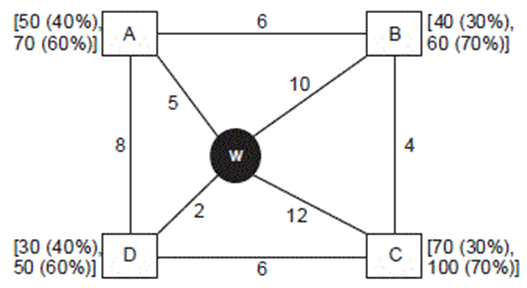
Every day a widget supplier supplies widgets from the warehouse (W) to four locations – Ahmednagar (A), Bikrampore (B), Chitrachak (C), and Deccan Park (D). The daily demand for widgets in each location is uncertain and independent of each other. Demands and corresponding probability values (in parenthesis) are given against each location (A, B, C, and D) in the figure below. For example, there is a 40% chance that the demand in Ahmednagar will be 50 units and a 60% chance that the demand will be 70 units. The lines in the figure connecting the locations and warehouse represent two-way roads connecting those places with the distances (in km) shown beside the line. The distances in both the directions along a road are equal. For example, the road from Ahmednagar to Bikrampore and the road from Bikrampore to Ahmednagar are both 6 km long. Every day the supplier gets the information about the demand values of the four locations and creates the travel route that starts from the warehouse and ends at a location after visiting all the locations exactly once. While making the route plan, the supplier goes to the locations in decreasing order of demand. If there is a tie for the choice of the next location, the supplier will go to the location closest to the current location. Also, while creating the route, the supplier can either follow the direct path (if available) from one location to another or can take the path via the warehouse. If both paths are available (direct and via warehouse), the supplier will choose the path with minimum distance.
Figure for this questionFigure for this questionFigure for this questionFigure for this question

If the last location visited is Ahmednagar, then what is the total distance covered in the route (in km)?

Q40CAT 2022 · TITA✓ Answer verified

Warehouse Routes Probability

Every day a widget supplier supplies widgets from the warehouse (W) to four locations – Ahmednagar (A), Bikrampore (B), Chitrachak (C), and Deccan Park (D). The daily demand for widgets in each location is uncertain and independent of each other. Demands and corresponding probability values (in parenthesis) are given against each location (A, B, C, and D) in the figure below. For example, there is a 40% chance that the demand in Ahmednagar will be 50 units and a 60% chance that the demand will be 70 units. The lines in the figure connecting the locations and warehouse represent two-way roads connecting those places with the distances (in km) shown beside the line. The distances in both the directions along a road are equal. For example, the road from Ahmednagar to Bikrampore and the road from Bikrampore to Ahmednagar are both 6 km long. Every day the supplier gets the information about the demand values of the four locations and creates the travel route that starts from the warehouse and ends at a location after visiting all the locations exactly once. While making the route plan, the supplier goes to the locations in decreasing order of demand. If there is a tie for the choice of the next location, the supplier will go to the location closest to the current location. Also, while creating the route, the supplier can either follow the direct path (if available) from one location to another or can take the path via the warehouse. If both paths are available (direct and via warehouse), the supplier will choose the path with minimum distance.
Figure for this questionFigure for this questionFigure for this questionFigure for this question

If the total number of widgets delivered in a day is 250 units, then what is the total distance covered in the route (in km)?

Q41CAT 2022

Warehouse Routes Probability

Every day a widget supplier supplies widgets from the warehouse (W) to four locations – Ahmednagar (A), Bikrampore (B), Chitrachak (C), and Deccan Park (D). The daily demand for widgets in each location is uncertain and independent of each other. Demands and corresponding probability values (in parenthesis) are given against each location (A, B, C, and D) in the figure below. For example, there is a 40% chance that the demand in Ahmednagar will be 50 units and a 60% chance that the demand will be 70 units. The lines in the figure connecting the locations and warehouse represent two-way roads connecting those places with the distances (in km) shown beside the line. The distances in both the directions along a road are equal. For example, the road from Ahmednagar to Bikrampore and the road from Bikrampore to Ahmednagar are both 6 km long. Every day the supplier gets the information about the demand values of the four locations and creates the travel route that starts from the warehouse and ends at a location after visiting all the locations exactly once. While making the route plan, the supplier goes to the locations in decreasing order of demand. If there is a tie for the choice of the next location, the supplier will go to the location closest to the current location. Also, while creating the route, the supplier can either follow the direct path (if available) from one location to another or can take the path via the warehouse. If both paths are available (direct and via warehouse), the supplier will choose the path with minimum distance.
Figure for this questionFigure for this questionFigure for this questionFigure for this question

What is the chance that the total number of widgets delivered in a day is 260 units and the route ends at Bikrampore?

Q42CAT 2022

Warehouse Routes Probability

Every day a widget supplier supplies widgets from the warehouse (W) to four locations – Ahmednagar (A), Bikrampore (B), Chitrachak (C), and Deccan Park (D). The daily demand for widgets in each location is uncertain and independent of each other. Demands and corresponding probability values (in parenthesis) are given against each location (A, B, C, and D) in the figure below. For example, there is a 40% chance that the demand in Ahmednagar will be 50 units and a 60% chance that the demand will be 70 units. The lines in the figure connecting the locations and warehouse represent two-way roads connecting those places with the distances (in km) shown beside the line. The distances in both the directions along a road are equal. For example, the road from Ahmednagar to Bikrampore and the road from Bikrampore to Ahmednagar are both 6 km long. Every day the supplier gets the information about the demand values of the four locations and creates the travel route that starts from the warehouse and ends at a location after visiting all the locations exactly once. While making the route plan, the supplier goes to the locations in decreasing order of demand. If there is a tie for the choice of the next location, the supplier will go to the location closest to the current location. Also, while creating the route, the supplier can either follow the direct path (if available) from one location to another or can take the path via the warehouse. If both paths are available (direct and via warehouse), the supplier will choose the path with minimum distance.
Figure for this questionFigure for this questionFigure for this questionFigure for this question

If the first location visited from the warehouse is Ahmednagar, then what is the chance that the total distance covered in the route is 40 km?

Q43CAT 2022✓ Answer verified

Warehouse Routes Probability

Every day a widget supplier supplies widgets from the warehouse (W) to four locations – Ahmednagar (A), Bikrampore (B), Chitrachak (C), and Deccan Park (D). The daily demand for widgets in each location is uncertain and independent of each other. Demands and corresponding probability values (in parenthesis) are given against each location (A, B, C, and D) in the figure below. For example, there is a 40% chance that the demand in Ahmednagar will be 50 units and a 60% chance that the demand will be 70 units. The lines in the figure connecting the locations and warehouse represent two-way roads connecting those places with the distances (in km) shown beside the line. The distances in both the directions along a road are equal. For example, the road from Ahmednagar to Bikrampore and the road from Bikrampore to Ahmednagar are both 6 km long. Every day the supplier gets the information about the demand values of the four locations and creates the travel route that starts from the warehouse and ends at a location after visiting all the locations exactly once. While making the route plan, the supplier goes to the locations in decreasing order of demand. If there is a tie for the choice of the next location, the supplier will go to the location closest to the current location. Also, while creating the route, the supplier can either follow the direct path (if available) from one location to another or can take the path via the warehouse. If both paths are available (direct and via warehouse), the supplier will choose the path with minimum distance.
Figure for this questionFigure for this questionFigure for this questionFigure for this question

If Ahmednagar is not the first location to be visited in a route and the total route distance is 29 km, then which of the following is a possible number of widgets delivered on that day?

Q44CAT 2019 · Slot 1✓ Answer verified

Set 2 : Street intersection

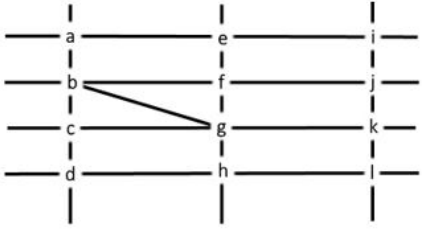
The figure below shows the street map for a certain region with the street intersections marked from a through l. A person standing at an intersection can see along straight lines to other intersections that are in her line of sight and all other people standing at these intersections. For example, a person standing at intersection g can see all people standing at intersections b, c, e, f, h, and k. In particular, the person standing at intersection g can see the person standing at intersection e irrespective of whether there is a person standing at intersection f. Six people U, V, W, X, Y, and Z, are standing at different intersections. No two people are standing at the same intersection. The following additional facts are known. 1. X, U, and Z are standing at the three corners of a triangle formed by three street segments. 2. X can see only U and Z. 3. Y can see only U and W. 4. U sees V standing in the next intersection behind Z. 5. W cannot see V or Z. 6. No one among the six is standing at intersection d.
Figure for this question

Who is standing at intersection a?

Q45CAT 2019 · Slot 1

Set 2 : Street intersection

The figure below shows the street map for a certain region with the street intersections marked from a through l. A person standing at an intersection can see along straight lines to other intersections that are in her line of sight and all other people standing at these intersections. For example, a person standing at intersection g can see all people standing at intersections b, c, e, f, h, and k. In particular, the person standing at intersection g can see the person standing at intersection e irrespective of whether there is a person standing at intersection f. Six people U, V, W, X, Y, and Z, are standing at different intersections. No two people are standing at the same intersection. The following additional facts are known. 1. X, U, and Z are standing at the three corners of a triangle formed by three street segments. 2. X can see only U and Z. 3. Y can see only U and W. 4. U sees V standing in the next intersection behind Z. 5. W cannot see V or Z. 6. No one among the six is standing at intersection d.
Figure for this question

Who can V see?

Q46CAT 2019 · Slot 1✓ Answer verified

Set 2 : Street intersection

The figure below shows the street map for a certain region with the street intersections marked from a through l. A person standing at an intersection can see along straight lines to other intersections that are in her line of sight and all other people standing at these intersections. For example, a person standing at intersection g can see all people standing at intersections b, c, e, f, h, and k. In particular, the person standing at intersection g can see the person standing at intersection e irrespective of whether there is a person standing at intersection f. Six people U, V, W, X, Y, and Z, are standing at different intersections. No two people are standing at the same intersection. The following additional facts are known. 1. X, U, and Z are standing at the three corners of a triangle formed by three street segments. 2. X can see only U and Z. 3. Y can see only U and W. 4. U sees V standing in the next intersection behind Z. 5. W cannot see V or Z. 6. No one among the six is standing at intersection d.
Figure for this question

What is the minimum number of street segments that X must cross to reach Y?

Q47CAT 2019 · Slot 1✓ Answer verified

Set 2 : Street intersection

The figure below shows the street map for a certain region with the street intersections marked from a through l. A person standing at an intersection can see along straight lines to other intersections that are in her line of sight and all other people standing at these intersections. For example, a person standing at intersection g can see all people standing at intersections b, c, e, f, h, and k. In particular, the person standing at intersection g can see the person standing at intersection e irrespective of whether there is a person standing at intersection f. Six people U, V, W, X, Y, and Z, are standing at different intersections. No two people are standing at the same intersection. The following additional facts are known. 1. X, U, and Z are standing at the three corners of a triangle formed by three street segments. 2. X can see only U and Z. 3. Y can see only U and W. 4. U sees V standing in the next intersection behind Z. 5. W cannot see V or Z. 6. No one among the six is standing at intersection d.
Figure for this questionFigure for this question

Should a new person stand at intersection d, who among the six would she see?

Q48CAT 2019 · Slot 1 · TITA

Intersections Routes G Strategy CAT 2019 Slot 1

The figure below shows the street map for a certain region with the street intersections marked from a through l. A person standing at an intersection can see along straight lines to other intersections that are in her line of sight and all other people standing at these intersections. For example, a person standing at intersection g can see all people standing at intersections b, c, e, f, h, and k. In particular, the person standing at intersection g can see the person standing at intersection e irrespective of whether there is a person standing at intersection f. Six people U, V, W, X, Y, and Z, are standing at different intersections. No two people are standing at the same intersection. The following additional facts are known. 1. X, U, and Z are standing at the three corners of a triangle formed by three street segments. 2. X can see only U and Z. 3. Y can see only U and W. 4. U sees V standing in the next intersection behind Z. 5. W cannot see V or Z. 6. No one among the six is standing at intersection d.
Figure for this question

Minimum number of street segments X must cross to reach Y

Q49CAT 2019 · Slot 1 · TITA✓ Answer verified

Intersections Routes G Strategy CAT 2019 Slot 1

The figure below shows the street map for a certain region with the street intersections marked from a through l. A person standing at an intersection can see along straight lines to other intersections that are in her line of sight and all other people standing at these intersections. For example, a person standing at intersection g can see all people standing at intersections b, c, e, f, h, and k. In particular, the person standing at intersection g can see the person standing at intersection e irrespective of whether there is a person standing at intersection f. Six people U, V, W, X, Y, and Z, are standing at different intersections. No two people are standing at the same intersection. The following additional facts are known. 1. X, U, and Z are standing at the three corners of a triangle formed by three street segments. 2. X can see only U and Z. 3. Y can see only U and W. 4. U sees V standing in the next intersection behind Z. 5. W cannot see V or Z. 6. No one among the six is standing at intersection d.
Figure for this question

If a new person stands at intersection d, who would they see?

Q50CAT 2019✓ Answer verified
The figure below shows the street map for a certain region with the street intersections marked from a through l. A person standing at an intersection can see along straight lines to other intersections that are in her line of sight and all other people standing at these intersections. For example, a person standing at intersection g can see all people standing at intersections b, c, e, f, h, and k. In particular, the person standing at intersection g can see the person standing at intersection e irrespective of whether there is a person standing at intersection f. Six people U, V, W, X, Y, and Z, are standing at different intersections. No two people are standing at the same intersection. The following additional facts are known. X, U, and Z are standing at the three corners of a triangle formed by three street segments. X can see only U and Z. Y can see only U and W. U sees V standing in the next intersection behind Z W cannot see V or Z. No one among the six is standing at intersection d.
Figure for this question

Q.1 Who is standing at intersection a?

Q51CAT 2019✓ Answer verified
The figure below shows the street map for a certain region with the street intersections marked from a through l. A person standing at an intersection can see along straight lines to other intersections that are in her line of sight and all other people standing at these intersections. For example, a person standing at intersection g can see all people standing at intersections b, c, e, f, h, and k. In particular, the person standing at intersection g can see the person standing at intersection e irrespective of whether there is a person standing at intersection f. Six people U, V, W, X, Y, and Z, are standing at different intersections. No two people are standing at the same intersection. The following additional facts are known. X, U, and Z are standing at the three corners of a triangle formed by three street segments. X can see only U and Z. Y can see only U and W. U sees V standing in the next intersection behind Z W cannot see V or Z. No one among the six is standing at intersection d.
Figure for this question

Q.2 Who can V see?

Q52CAT 2019✓ Answer verified
The figure below shows the street map for a certain region with the street intersections marked from a through l. A person standing at an intersection can see along straight lines to other intersections that are in her line of sight and all other people standing at these intersections. For example, a person standing at intersection g can see all people standing at intersections b, c, e, f, h, and k. In particular, the person standing at intersection g can see the person standing at intersection e irrespective of whether there is a person standing at intersection f. Six people U, V, W, X, Y, and Z, are standing at different intersections. No two people are standing at the same intersection. The following additional facts are known. X, U, and Z are standing at the three corners of a triangle formed by three street segments. X can see only U and Z. Y can see only U and W. U sees V standing in the next intersection behind Z W cannot see V or Z. No one among the six is standing at intersection d.
Figure for this question

Q.3 What is the minimum number of street segments that X must cross to reach Y?

Q53CAT 2019✓ Answer verified
The figure below shows the street map for a certain region with the street intersections marked from a through l. A person standing at an intersection can see along straight lines to other intersections that are in her line of sight and all other people standing at these intersections. For example, a person standing at intersection g can see all people standing at intersections b, c, e, f, h, and k. In particular, the person standing at intersection g can see the person standing at intersection e irrespective of whether there is a person standing at intersection f. Six people U, V, W, X, Y, and Z, are standing at different intersections. No two people are standing at the same intersection. The following additional facts are known. X, U, and Z are standing at the three corners of a triangle formed by three street segments. X can see only U and Z. Y can see only U and W. U sees V standing in the next intersection behind Z W cannot see V or Z. No one among the six is standing at intersection d.
Figure for this question

Q.4 Should a new person stand at intersection d, who among the six would she see?

Q54CAT 2017 · Slot 1 · TITA✓ Answer verified

Set 2 : Cars Travel Route

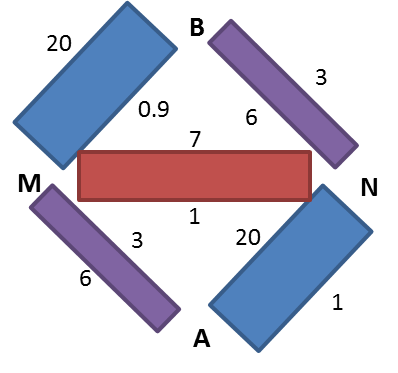
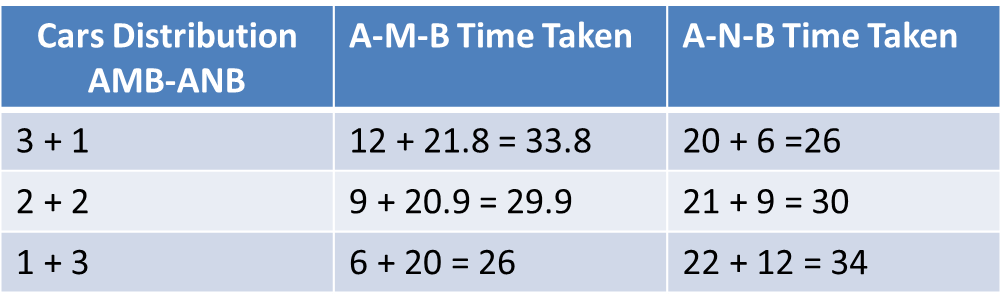
Q1-4. Four cars need to travel from Akala (A) to Bakala (B). Two routes are available, one via Mamur (M) and the other via Nanur (N). The roads from A to M, and from N to B, are both short and narrow. In each case, one car takes 6 minutes to cover the distance, and each additional car increases the travel time per car by 3 minutes because of congestion. (For example, if only two cars drive from A to M, each car takes 9 minutes.) On the road from A to N, one car takes 20 minutes, and each additional car increases the travel time per car by 1 minute. On the road from M to B, one car takes 20 minutes, and each additional car increases the travel time per car by 0.9 minute. The police department orders each car to take a particular route in such a manner that it is not possible for any car to reduce its travel time by not following the order, while the other cars are following the order.
Figure for this questionFigure for this questionFigure for this questionFigure for this questionFigure for this questionFigure for this question

1. How many cars would be asked to take the route A-N-B, that is Akala-Nanur-Bakala route, by the police department? (TITA)

Q55CAT 2017 · Slot 1✓ Answer verified

Set 2 : Cars Travel Route

Q1-4. Four cars need to travel from Akala (A) to Bakala (B). Two routes are available, one via Mamur (M) and the other via Nanur (N). The roads from A to M, and from N to B, are both short and narrow. In each case, one car takes 6 minutes to cover the distance, and each additional car increases the travel time per car by 3 minutes because of congestion. (For example, if only two cars drive from A to M, each car takes 9 minutes.) On the road from A to N, one car takes 20 minutes, and each additional car increases the travel time per car by 1 minute. On the road from M to B, one car takes 20 minutes, and each additional car increases the travel time per car by 0.9 minute. The police department orders each car to take a particular route in such a manner that it is not possible for any car to reduce its travel time by not following the order, while the other cars are following the order.
Figure for this questionFigure for this questionFigure for this questionFigure for this questionFigure for this questionFigure for this question

2. If all the cars follow the police order, what is the difference in travel time (in minutes) between a car which takes the route A-N-B and a car that takes the route A-M-B?

Q56CAT 2017 · Slot 1 · TITA✓ Answer verified

Set 2 : Cars Travel Route

Q1-4. Four cars need to travel from Akala (A) to Bakala (B). Two routes are available, one via Mamur (M) and the other via Nanur (N). The roads from A to M, and from N to B, are both short and narrow. In each case, one car takes 6 minutes to cover the distance, and each additional car increases the travel time per car by 3 minutes because of congestion. (For example, if only two cars drive from A to M, each car takes 9 minutes.) On the road from A to N, one car takes 20 minutes, and each additional car increases the travel time per car by 1 minute. On the road from M to B, one car takes 20 minutes, and each additional car increases the travel time per car by 0.9 minute. The police department orders each car to take a particular route in such a manner that it is not possible for any car to reduce its travel time by not following the order, while the other cars are following the order.
Figure for this questionFigure for this questionFigure for this questionFigure for this questionFigure for this questionFigure for this question

3. A new one-way road is built from M to N. Each car now has three possible routes to travel from A to B: A-M-B, A-N-B and A-M-N-B. On the road from M to N, one car takes 7 minutes and each additional car increases the travel time per car by 1 minute. Assume that any car taking the A-M-N-B route travels the A-M portion at the same time as other cars taking the A-M-B route, and the N-B portion at the same time as other cars taking the A-N-B route. How many cars would the police department order to take the A-M-N-B route so that it is not possible for any car to reduce its travel time by not following the order while the other cars follow the order? (Assume that the police department would never order all the cars to take the same route.) (TITA)

Q57CAT 2017 · Slot 1✓ Answer verified

Set 2 : Cars Travel Route

Q1-4. Four cars need to travel from Akala (A) to Bakala (B). Two routes are available, one via Mamur (M) and the other via Nanur (N). The roads from A to M, and from N to B, are both short and narrow. In each case, one car takes 6 minutes to cover the distance, and each additional car increases the travel time per car by 3 minutes because of congestion. (For example, if only two cars drive from A to M, each car takes 9 minutes.) On the road from A to N, one car takes 20 minutes, and each additional car increases the travel time per car by 1 minute. On the road from M to B, one car takes 20 minutes, and each additional car increases the travel time per car by 0.9 minute. The police department orders each car to take a particular route in such a manner that it is not possible for any car to reduce its travel time by not following the order, while the other cars are following the order.
Figure for this questionFigure for this questionFigure for this questionFigure for this questionFigure for this questionFigure for this question

4. A new one-way road is built from M to N. Each car now has three possible routes to travel from A to B: A-M-B, A-N-B and A-M-N-B. On the road from M to N, one car takes 7 minutes and each additional car increases the travel time per car by 1 minute. Assume that any car taking the A-M-N-B route travels the A-M portion at the same time as other cars taking the A-M-B route, and the N-B portion at the same time as other cars taking the A-N-B route. If all the cars follow the police order, what is the minimum travel time (in minutes) from A to B? (Assume that the police department would never order all the cars to take the same route.)

Q58CAT 2017 · Slot 1✓ Answer verified

Set 7 : Square Layout

In a square layout of size 5m × 5m, 25 equal sized square platforms of different heights are built. The heights (in metres) of individual platforms are as shown below: Individuals (all of same height) are seated on these platforms. We say an individual A can reach an individual B if all the three following conditions are met: i.) A and B are In the same row or column ii.) A is at a lower height than B iii.) If there is/are any individual(s) between A and B, such individual(s) must be at a height lower than that of A. Thus in the table given above, consider the Individual seated at height 8 on 3rd row and 2nd column. He can be reached by four individuals. He can be reached by the individual on his left at height 7, by the two individuals on his right at heights of 4 and 6 and by the individual above at height 5. Rows in the layout are numbered from top to bottom and columns are numbered from left to right.
Figure for this questionFigure for this questionFigure for this questionFigure for this questionFigure for this questionFigure for this question

1. How many individuals in this layout can be reached by just one individual?

Q59CAT 2017 · Slot 1✓ Answer verified

Set 7 : Square Layout

In a square layout of size 5m × 5m, 25 equal sized square platforms of different heights are built. The heights (in metres) of individual platforms are as shown below: Individuals (all of same height) are seated on these platforms. We say an individual A can reach an individual B if all the three following conditions are met: i.) A and B are In the same row or column ii.) A is at a lower height than B iii.) If there is/are any individual(s) between A and B, such individual(s) must be at a height lower than that of A. Thus in the table given above, consider the Individual seated at height 8 on 3rd row and 2nd column. He can be reached by four individuals. He can be reached by the individual on his left at height 7, by the two individuals on his right at heights of 4 and 6 and by the individual above at height 5. Rows in the layout are numbered from top to bottom and columns are numbered from left to right.
Figure for this questionFigure for this questionFigure for this questionFigure for this questionFigure for this questionFigure for this question

2. Which of the following is true for any individual at a platform of height 1m in this layout?

Q60CAT 2017 · Slot 1✓ Answer verified

Set 7 : Square Layout

In a square layout of size 5m × 5m, 25 equal sized square platforms of different heights are built. The heights (in metres) of individual platforms are as shown below: Individuals (all of same height) are seated on these platforms. We say an individual A can reach an individual B if all the three following conditions are met: i.) A and B are In the same row or column ii.) A is at a lower height than B iii.) If there is/are any individual(s) between A and B, such individual(s) must be at a height lower than that of A. Thus in the table given above, consider the Individual seated at height 8 on 3rd row and 2nd column. He can be reached by four individuals. He can be reached by the individual on his left at height 7, by the two individuals on his right at heights of 4 and 6 and by the individual above at height 5. Rows in the layout are numbered from top to bottom and columns are numbered from left to right.
Figure for this questionFigure for this questionFigure for this questionFigure for this questionFigure for this questionFigure for this question

3. We can find two individuals who cannot be reached by anyone?

Q61CAT 2017 · Slot 1✓ Answer verified

Set 7 : Square Layout

In a square layout of size 5m × 5m, 25 equal sized square platforms of different heights are built. The heights (in metres) of individual platforms are as shown below: Individuals (all of same height) are seated on these platforms. We say an individual A can reach an individual B if all the three following conditions are met: i.) A and B are In the same row or column ii.) A is at a lower height than B iii.) If there is/are any individual(s) between A and B, such individual(s) must be at a height lower than that of A. Thus in the table given above, consider the Individual seated at height 8 on 3rd row and 2nd column. He can be reached by four individuals. He can be reached by the individual on his left at height 7, by the two individuals on his right at heights of 4 and 6 and by the individual above at height 5. Rows in the layout are numbered from top to bottom and columns are numbered from left to right.
Figure for this questionFigure for this questionFigure for this questionFigure for this questionFigure for this questionFigure for this question

4. Which of the following statements is true about this layout?

0/61 tried · 0 right

Every question here appeared in an actual CAT paper. For the full paper, open its page from the question's year and slot, or browse another topic from the list. Also on IIMking.com.